

Trump 'Not A Big Fan' Of Pope After Pontiff's Call For Peace
US President Donald Trump told reporters on April 12 that he is "not a big fan" of Pope Leo XIV, after the pontiff made a plea for peace a day earlier.
"I'm not a big fan of Pope Leo. He's a very liberal person, and he's a man that doesn't believe in stopping crime," Trump told reporters, accusing the pontiff of "toying with a country that wants a nuclear weapon."
Hours earlier, Trump attacked the pope in an exceptionally long post on social media, saying, among other things, that "I don’t want a Pope who thinks it’s OK for Iran to have a Nuclear Weapon."
The pope, a 70-year-old American, without mentioning Iran or Trump directly, publicly called on leaders to end the violence.
"Enough of the idolatry of self and money! Enough of the display of power! Enough of war!" the pope said.
On April 7, the pope called Trump's threat to wipe out Iranian civilization "truly unacceptable."
Netanyahu Visits Southern Lebanon, Says 'The War Continues'
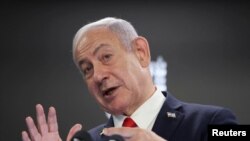
Israeli Prime Minister Benjamin Netanyahu visited southern Lebanon on April 12 and said military operations against the Iran-allied Hezbollah militia would go on despite international calls for a cease-fire.
"The war continues, even within the security zone in Lebanon," Netanyahu said in a video released by his office.
He was in southern Lebanon with Defense Minister Israel Katz and Chief of Staff Eyal Zamir. The exact location wasn't specified.
"What we are seeing is that we have thwarted the threat of an invasion from Lebanon through this security zone," he said.
"There is still more to do, and we are doing it," he said.
The visit came two days before US, Lebanese, and Israeli officials are scheduled to hold direct talks in Washington on April 14.
Lebanon was dragged unwillingly into the Middle East war when Iran-allied Hezbollah launched rockets at Israel after US-Israeli air strikes killed Iran's supreme leader on the first day of the conflict on February 28.
Hezbollah has been deemed a terrorist organization by Israel and the United States.
Separately, Lebanese Prime Minister Nawaf Salam said he was working to stop the Israel-Hezbollah conflict amid the ongoing battles.
"We will continue to work to stop this war, to ensure the Israeli withdrawal from all our lands," Salam said in a televised address.
Lebanon's Health Ministry has said the war's overall toll has risen to more than 2,050 dead, including 165 children and more than 80 health workers.
Trump Confirms Blockade Of Iranian Ports
President Donald Trump has confirmed that the US will start blockading ships from entering or exiting Iranian ports from 10 a.m. Eastern Time (5.30 p.m. in Iran) on April 13.
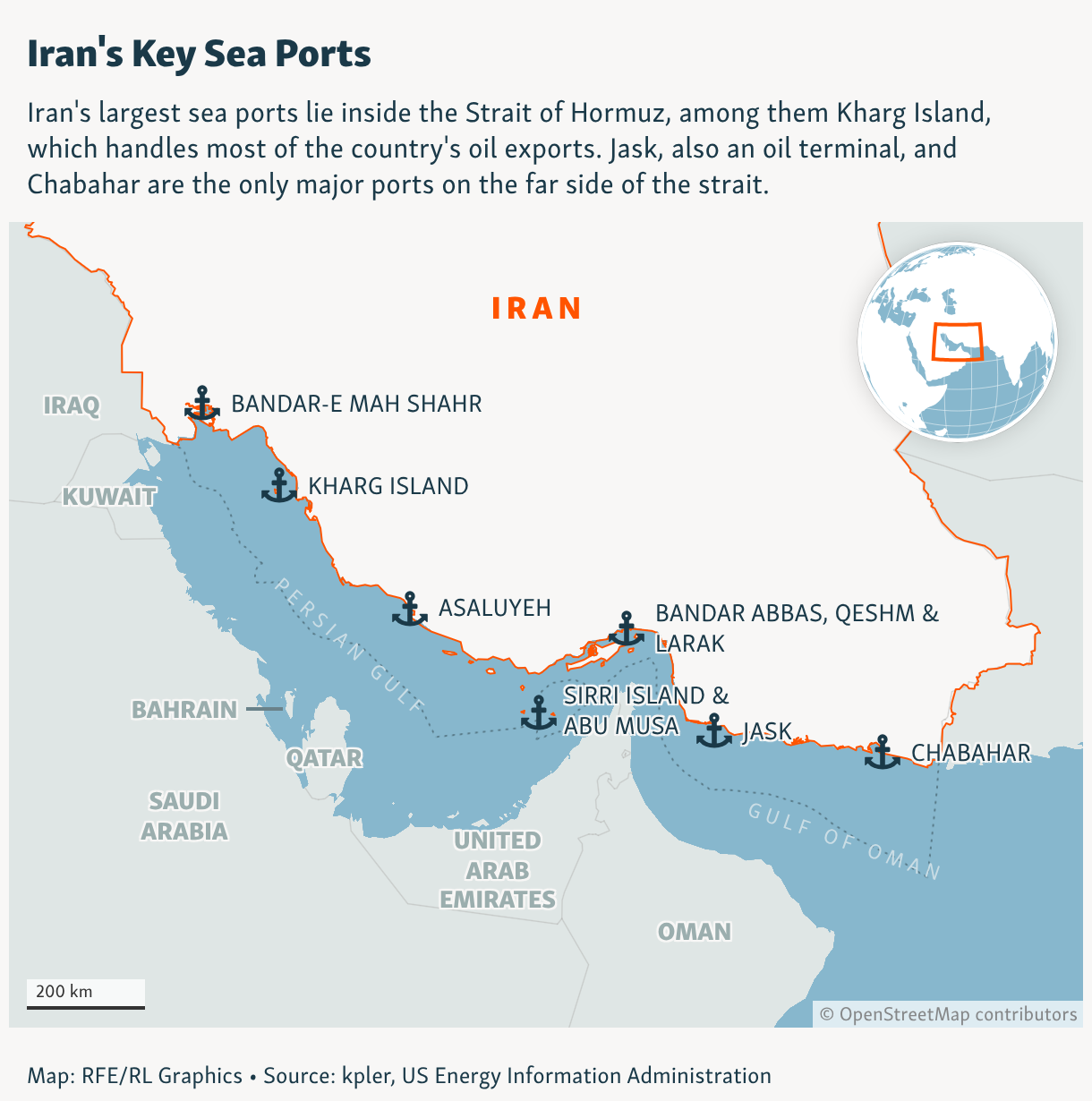
Announcing the blockade earlier, US Central Command (CENTCOM), which is responsible for all American forces in the Middle East, said it will be enforced "impartially" against vessels of all nations entering or leaving Iranian ports and coastal areas on the "Arabian Gulf" -- also known as the Persian Gulf -- and the Gulf of Oman.
CENTCOM did not disclose details of the blockade, such as the number of US vessels that would enforce it, but stated it would apply solely to ships bound to or from Iran.
Earlier on April 12, Trump announced a broader blockade of "any and all Ships trying to enter, or leave, the Strait of Hormuz."
Since the beginning of the conflict, Iran has halted all maritime traffic through the Strait of Hormuz, driving global energy prices sharply higher. Tehran also declared it would start collecting tolls from vessels seeking to pass through the chokepoint.
Iran Executes Record 1,639 People In 2025
Iranian authorities executed at least 1,639 people in 2025 -- the highest annual total since 1989 -- according to a joint report by two NGOs. The groups warned that the regime could expand its use of the death penalty even further following January protests and the war with Israel and the United States
The number of executions represented an increase of 68 percent on the 975 people Iran put to death in 2024, and also included 48 women who were hanged, Norway-based Iran Human Rights (IHR) and Paris-based Together Against the Death Penalty (ECPM) said in their joint annual report released on April 13.
Iran was wracked by that were brutally suppressed by security forces. HRANA, a US-based human rights monitoring group, said it had verified nearly 7,000 deaths during Iran's crackdown on protesters in January and many more arrests.
It says over 1,500 civilians have died since the United States and Israel launched air strikes on Iran on February 28.
Oil Prices Rise And Dollar Strengthens
Following the breakdown in negotiations between Iran and the United States and increasing concerns about the conflict in the Middle East, oil prices and the value of the dollar rose on April 13.
According to Reuters, Brent crude oil prices rose about 7.5 percent in early trading to $102.37 a barrel. At the same time, the dollar index strengthened and the euro fell about half a percent.
Stock markets also showed signs of decline, with S&P 500 futures down about 1.1 percent and Asian stocks also opened lower.
Meanwhile, the price of gold, which had previously risen as a safe-haven asset, fell about 2 percent and US bonds also came under pressure.
Acting Attorney General Blanche Says US Will 'Vigorously Prosecute' Parties Who Buy Iranian Oil
Acting Attorney General Todd Blanche said the US Department of Justice will "vigorously prosecute anyone who buys or sells sanctioned Iranian oil" after President Donald Trump announced a blockade of the strategic Strait of Hormuz.
Blanche gave no further details in a social media post.
Since Trump's initial comments, US Central Command (CENTCOM) has clarified that the blockade is narrower in scope than a full closure of the Strait of Hormuz. Instead, it focuses on blockading all maritime traffic entering or exiting Iranian ports.
Trump later confirmed the US military will start the blockade from 10 a.m. Eastern Time (5.30 p.m. in Iran) on April 13.
British PM Rules Out Aiding US Blockade Of Iranian Ports
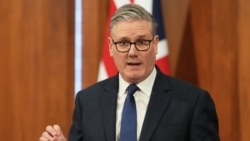
British Prime Minister Keir Starmer says the United Kingdom will not back the US blockade of Iranian ports, adding his focus was on getting the Strait of Hormuz "fully open."
Speaking live on BBC Radio 5 Live on April 13, Starmer said it is "vital that we get the strait open and fully open, and that's where we've put all of our efforts...and we'll continue to do so."
The US military will block all maritime traffic entering and exiting Iranian ports and coastal areas in the Persian Gulf from April 13 at 10 a.m. Eastern time (5.30 p.m. Iran time), according to President Donald Trump.
The American leader announced the move after peace talks in Islamabad over the weekend with Iran failed.
Ships using the Strait of Hormuz to and from non-Iranian ports will not be impeded, the US military has said.
Iran Warns No Gulf Ports Will Be Safe If US Begins Blockade
On April 13, the Khatam al-Anbiya headquarters, which is the central operational headquarters of Iran's armed forces, said that if the announced US naval blockade of Iranian ports was implemented, "no port in the Persian Gulf and the Gulf of Oman will be safe."
The military body says that the US "imposition of restrictions" on the movement of ships in international waters was "an illegal act and an example of piracy."
Following the failure of peace talks in Pakistan over the weekend, President Donald Trump has said that the US will start blockading ships from entering or exiting Iranian ports from 10 a.m. Eastern Time (5.30 p.m. in Iran) on April 13.
The spokesman for the Iran's military headquarters added that "the security of ports in the Persian Gulf and the Gulf of Oman is either for everyone or for no one."
"Enemy-affiliated vessels do not and will not have the right to pass through the Strait of Hormuz, and other vessels will continue to be allowed to pass through the strait, subject to the regulations of the Islamic Republic of Iran's armed forces," the spokesman said.
Since the beginning of the conflict, Iran has severely restricted maritime traffic through the Strait of Hormuz, reducing flows to a small fraction of normal levels and driving global energy prices sharply higher. Tehran has also declared it will require vessels seeking to pass through the chokepoint to pay tolls.
War Critic Spain Reopens Embassy In Tehran
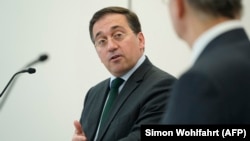
The Spanish Embassy in Tehran, which had been temporarily closed for security reasons following the US and Israeli war with Iran, has reopened.
Iranian news agencies reported that the embassy resumed its work on April 13 to support "mediation" following the two-week cease-fire, which went into force on April 8.
The Spanish ambassador who arrived in Iran a day earlier, said that he would attempt "to support peace efforts from all sides."
Spain has positioned itself as one of the main Western critics of the US and Israel since the war began.
Speaking after Israeli strikes on Lebanon on April 8, Spanish Foreign Minister Jose Manuel Albares said a day later that the strikes violated the cease-fire and international law.
The US, Iran, and Israel had disagreed about whether the cease-fire applied to Lebanon, where Israel has been targeting Iran-backed Hezbollah fighters.
Iranian officials have played up Spain's opposition to the war. There have been reports inside Iran, which can not be verified by RFE/RL, of pro-government forces gathering in the streets in the evening and holding Spanish flags.
Pope Responds To Trump Remarks, Says He Will 'Continue To Speak Out'
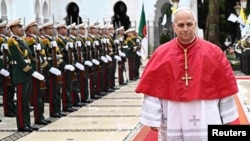
Pope Leo has said that he intends to continue taking a stand against war, following criticism by US President Donald Trump on the leader of the 1.4-billion-member church.
"I will continue to speak out loudly against war, looking to promote peace, promoting dialogue and multilateral relationships among the states to look for just solutions to problems," Leo told Reuters aboard a papal flight to Algiers on April 13, where he is embarking on a 10-day tour of four African countries.
"Too many people are suffering in the world today," he said. "Too many innocent people are being killed. And I think someone has to stand up and say there's a better way."
The pope also told reporters that he had "no fear of the Trump administration, or speaking out loudly."
The US president had criticized the Catholic leader on April 12, saying he was “not a big fan” and accusing the pontiff of "toying with a country that wants a nuclear weapon."
"Pope Leo is WEAK on Crime, and terrible for Foreign Policy." Trump wrote in a post on Truth Social.