




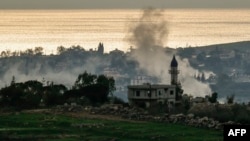
As the uncertainty surrounding indirect negotiations between Washington and Tehran intensifies, air strikes on Iran, Israel, and surrounding states also continued -- "business as usual," as one Israeli military official called it on March 25.
Meanwhile, the Pentagon, while not acknowledging media reports of shortages, said it had struck deals with several US defense contractors to bolster stocks of munitions, including parts for the Terminal High Altitude Area Defense (THAAD) interceptors being widely used in the Middle East war.
It came as the White House said President Donald Trump was prepared to "unleash hell" on Iran if it doesn't accept his deal to end the war, while Tehran said it did not intend to negotiate.
In comments to Republican lawmakers late on March 25, Trump insisted Tehran was taking part in peace talks despite negotiators' denials.
"They are negotiating, by the way, and they want to make a deal so badly. But they're afraid to say it, because they figure they'll be killed by their own people," Trump said.
Also looming is an ultimatum set by Trump for Iran to "fully open" the Strait of Hormuz, where Iranian actions have created a bottleneck in the crucial oil transit waterway. On March 21, Trump set a 48-hour deadline but extended it the next day for five days.
The details of the latest US peace proposal -- reported by media outlets citing unnamed sources on March 24 and delivered to Iran by way of Pakistan -- have not been made public.
The terms, however, are widely believed to be similar in many respects to proposals made before the conflict began with Israeli and US air strikes on February 28.
No Nukes
The single most important US demand is one that Trump has repeatedly stated. He says Tehran has agreed to it.
"They’d like to make a deal," Trump told reporters on March 24. "They've agreed they will never have a nuclear weapon."

Iran's response, delivered via Iranian state TV on March 25, said the US conditions were excessive and Tehran will end the war when it chooses and if its conditions are met.
Still, Iranian Foreign Minister Abbas Araqchi suggested senior officials were reviewing US proposals, seemingly indicating no outright rejection so far.
The United States "put forward ideas in their messages that were conveyed to top [Iranian] authorities, and if necessary, a position will be announced by them," Araqchi said.
Araqchi rejected the notion that Iran has been defeated, asserting the US administration had failed to achieve its war goals.
Iran's conditions include a cessation of hostilities on all regional fronts and against all "resistance groups" -- an implicit reference to the Tehran-backed Lebanese group Hezbollah.
Tehran also wants international recognition and guarantees of Iran's rights to exercise its sovereignty over the Strait of Hormuz.

"At present, our policy is the continuation of resistance," he said, adding: "We do not intend to negotiate."
Officially, the White House was not commenting on the media reports on the specifics of the proposed peace plan.
White House spokeswoman Karoline Leavitt said she had seen reports of a 15-point plan. "The White House never confirmed that full plan," she said.
"I would caution reporters in this room from reporting about speculative points or speculative plans from anonymous sources," she added.
She added, though, that diplomatic contacts continue. "They are productive, as the president said on [March 23], and they continue to be."
The back-and-forth discourse came as additional US forces -- including the elite 82nd Airborne Division -- were reportedly on the way to the Middle East to bolster American forces and provide US political and military leaders with additional options.

On the battlefront, violence continued with -- along with Iran and Israel -- targets in Lebanon, Bahrain, Kuwait, Jordan, and Saudi Arabia came under attack.
Russia Sending Drones, Civilian Supplies: FT
Amid reports of armament shortages in the Iranian military and civilian sectors, the Financial Times reported that Russia is close to completing a phased shipment of drones, medicine, and food to Iran. The paper cited Western intelligence reports that detail the Kremlin's effort to keep its ally afloat.
The report said processing of deliveries began early this month and was expected to be completed within the next few days.
US Admiral Brad Cooper, head of Central Command -- responsible for American forces in the Middle East -- said US air strikes have hit two-thirds of Iran's production facilities for missiles and drones and a similar proportion of its naval production.
In a video posted on X, he said some 92 percent of the Iranian Navy's largest vessels had been damaged or destroyed.
"And my operational assessment is that they've now lost the ability to meaningfully project naval power and influence around the region and around the world." Cooper said.
Tehran Under Attack
Israel said it struck at the heart of the capital, Tehran, and targeted a submarine development facility in the central city of Isfahan.
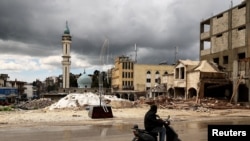
AFP quoted witnesses inside Tehran as saying there is "gasoline, water, and electricity. But there is a sense of helplessness in all of us. We don't know what to do and there's really nothing we can do."
In Israel, Prime Minister Benjamin Netanyahu said his country's forces were expanding a "buffer zone" in southern Lebanon as the military pressed ahead with its campaign against Iran-backed Hezbollah.
"We have created a genuine security zone preventing any infiltration toward Galilee and the northern border," Netanyahu said in a video statement.
"We are expanding this zone to push the threat from anti-tank missiles further away and to establish a broader buffer zone."
When asked if Israel had adjusted its war effort after Trump said peace talks were under way, he said it was "pretty much business as usual."
Amid it all, UN Secretary-General Antonio Guterres said the war was "out of control." He said he has appointed a special envoy to work toward the ending of the conflict, French diplomat Jean Arnault.

