



Accessibility links

Breaking News

A Century Later, Faberge Still Dazzles

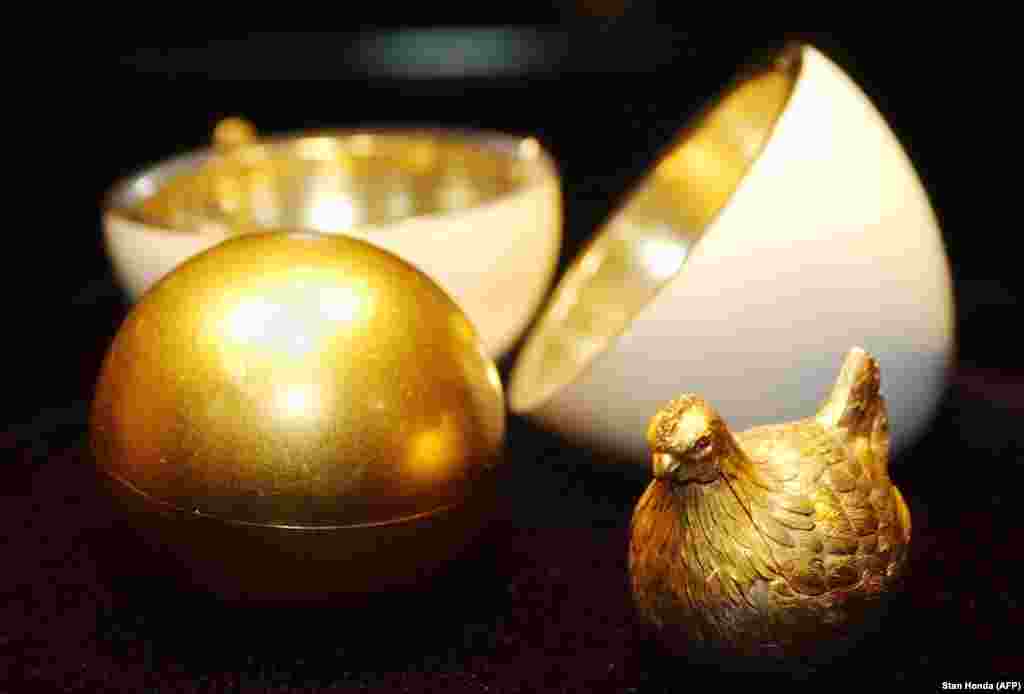
A tradition was hatched in 1885 when Tsar Alexander III commissioned Peter Carl Faberge to create an Easter gift for his wife, the tsarina. The jeweler delivered this white enamel egg, which twists open to reveal a golden "yolk" hiding a ruby-eyed hen. The tsarina was delighted with the gift, and Faberge was soon named official jeweler to the tsar.
1/15 A tradition was hatched in 1885 when Tsar Alexander III commissioned Peter Carl Faberge to create an Easter gift for his wife, the tsarina. The jeweler delivered this white enamel egg, which twists open to reveal a golden "yolk" hiding a ruby-eyed hen. The tsarina was delighted with the gift, and Faberge was soon named official jeweler to the tsar.
They are some of the most exquisite objects ever created and, a century after the last Faberge Egg was crafted, in 1917, the tiny treasures continue to fascinate for both their beauty and the tragic story that entangled them.
Over the next three decades, Carl Faberge would create another 49 eggs for Russia's last two tsars. Pictured is the Winter Egg, one of his most famous, crafted from rock crystal and etched with platinum and diamonds to resemble frost. The 14-centimeter egg opens to reveal a bejeweled basket of spring flowers.
2/15 Over the next three decades, Carl Faberge would create another 49 eggs for Russia's last two tsars. Pictured is the Winter Egg, one of his most famous, crafted from rock crystal and etched with platinum and diamonds to resemble frost. The 14-centimeter egg opens to reveal a bejeweled basket of spring flowers.
They are some of the most exquisite objects ever created and, a century after the last Faberge Egg was crafted, in 1917, the tiny treasures continue to fascinate for both their beauty and the tragic story that entangled them.
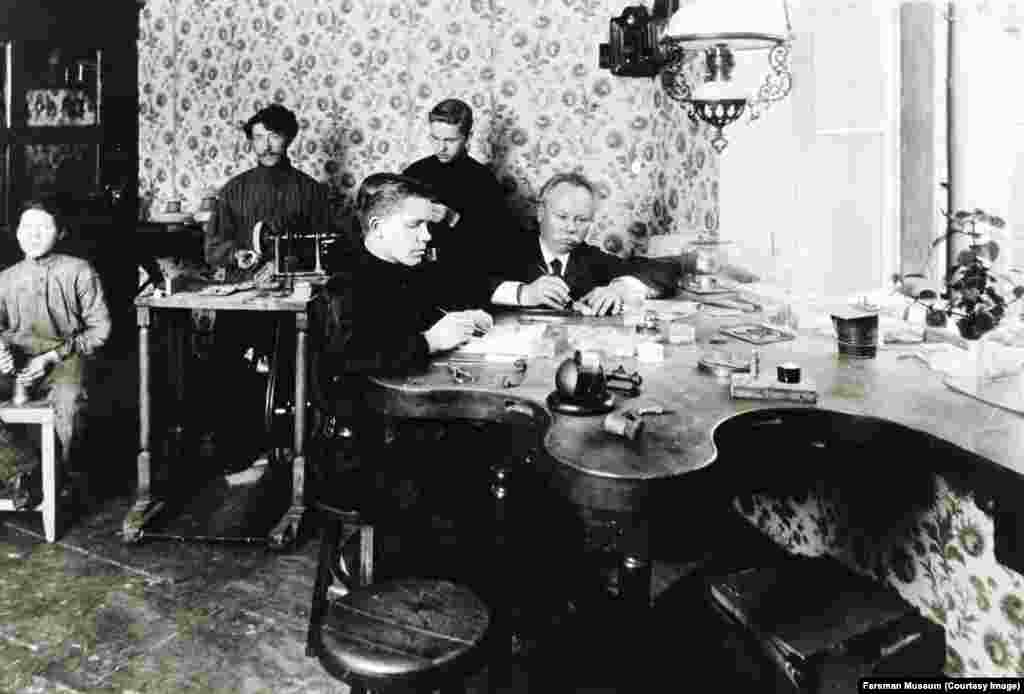
Peter Carl Faberge at work. The master jeweler did not craft the eggs himself but functioned as a kind of Steve Jobs of tsarist Russia, coming up with the ideas and driving his workers to achieve near-impossible feats of craftsmanship.
3/15 Peter Carl Faberge at work. The master jeweler did not craft the eggs himself but functioned as a kind of Steve Jobs of tsarist Russia, coming up with the ideas and driving his workers to achieve near-impossible feats of craftsmanship.
They are some of the most exquisite objects ever created and, a century after the last Faberge Egg was crafted, in 1917, the tiny treasures continue to fascinate for both their beauty and the tragic story that entangled them.
The Mosaic Egg. In Russia, it is tradition to gift loved ones decorated eggshells during Easter as a symbol of rebirth and fertility. The tsars and their chosen jeweler raised this Orthodox Christian tradition to a spectacular art form. But at the turn of the century, as diamonds twinkled in the royal drawing rooms, Russia was sliding into turmoil.
4/15 The Mosaic Egg. In Russia, it is tradition to gift loved ones decorated eggshells during Easter as a symbol of rebirth and fertility. The tsars and their chosen jeweler raised this Orthodox Christian tradition to a spectacular art form. But at the turn of the century, as diamonds twinkled in the royal drawing rooms, Russia was sliding into turmoil.
They are some of the most exquisite objects ever created and, a century after the last Faberge Egg was crafted, in 1917, the tiny treasures continue to fascinate for both their beauty and the tragic story that entangled them.
Tsar Nicholas II and his young family are most closely associated with the Faberge eggs. Nicholas, a reserved family man, was, as one historian put it, "as good a father as he was a poor tsar." The gifting of the eggs to his wife and mother each Easter provided a welcome distraction from the missteps that marked his doomed rule.
5/15 Tsar Nicholas II and his young family are most closely associated with the Faberge eggs. Nicholas, a reserved family man, was, as one historian put it, "as good a father as he was a poor tsar." The gifting of the eggs to his wife and mother each Easter provided a welcome distraction from the missteps that marked his doomed rule.
They are some of the most exquisite objects ever created and, a century after the last Faberge Egg was crafted, in 1917, the tiny treasures continue to fascinate for both their beauty and the tragic story that entangled them.
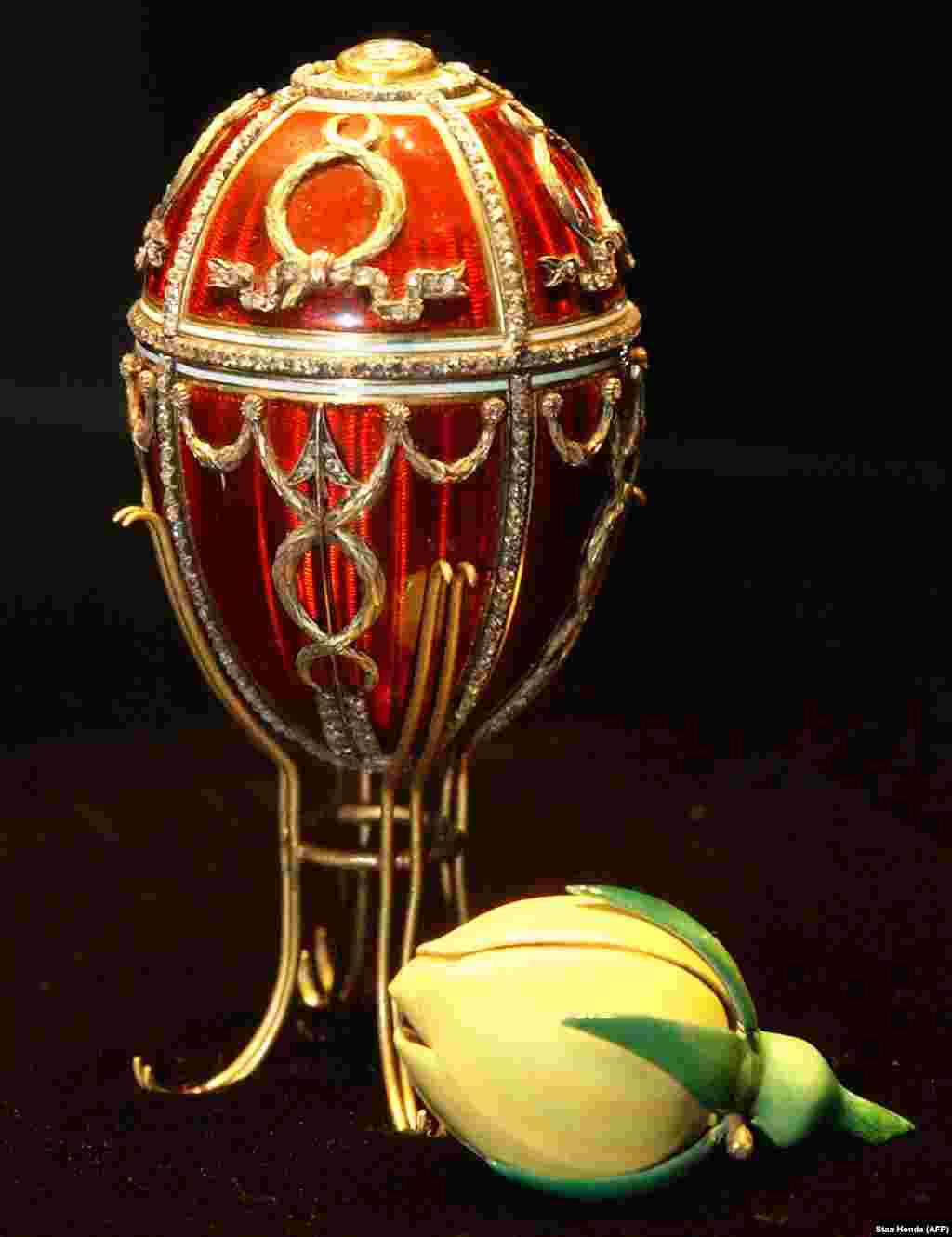
The Rosebud Egg, the first that Nicholas II gifted to his wife, Aleksandra. A cupid's arrow made from diamonds enlivens the red lacquer, while inside, an enamel rosebud symbolizes the love blooming between the newlyweds. A year after this egg was presented, a stampede at a celebration following Nicholas's coronation killed hundreds in the crowd. Following the advice of relatives, Nicholas proceeded with the coronation celebrations as ordinary Russians mourned their dead. It was his first fateful mistake as tsar.
6/15 The Rosebud Egg, the first that Nicholas II gifted to his wife, Aleksandra. A cupid's arrow made from diamonds enlivens the red lacquer, while inside, an enamel rosebud symbolizes the love blooming between the newlyweds. A year after this egg was presented, a stampede at a celebration following Nicholas's coronation killed hundreds in the crowd. Following the advice of relatives, Nicholas proceeded with the coronation celebrations as ordinary Russians mourned their dead. It was his first fateful mistake as tsar.
They are some of the most exquisite objects ever created and, a century after the last Faberge Egg was crafted, in 1917, the tiny treasures continue to fascinate for both their beauty and the tragic story that entangled them.
The 7.7-centimeter-tall Rose Trellis Egg, created in 1907 from gold, enamel, and strings of tiny diamonds. As Faberge oversaw the creation of this egg, Russia was reeling from a disastrous war with Japan and the events known as &quot;Bloody Sunday,&quot; in which scores of peaceful protesters were shot dead in front of the tsar&#39;s Winter Palace.<br />
&nbsp;<br />
<br />
<br />
&nbsp;
7/15 The 7.7-centimeter-tall Rose Trellis Egg, created in 1907 from gold, enamel, and strings of tiny diamonds. As Faberge oversaw the creation of this egg, Russia was reeling from a disastrous war with Japan and the events known as "Bloody Sunday," in which scores of peaceful protesters were shot dead in front of the tsar's Winter Palace.


They are some of the most exquisite objects ever created and, a century after the last Faberge Egg was crafted, in 1917, the tiny treasures continue to fascinate for both their beauty and the tragic story that entangled them.
A Faberge workshop. At the peak of Faberge&#39;s success, he employed 500 jewelers, smiths, and apprentices. Each imperial egg took around a year to complete, sometimes more, before being delivered to the Russian royal family by Faberge himself.
8/15 A Faberge workshop. At the peak of Faberge's success, he employed 500 jewelers, smiths, and apprentices. Each imperial egg took around a year to complete, sometimes more, before being delivered to the Russian royal family by Faberge himself.
They are some of the most exquisite objects ever created and, a century after the last Faberge Egg was crafted, in 1917, the tiny treasures continue to fascinate for both their beauty and the tragic story that entangled them.
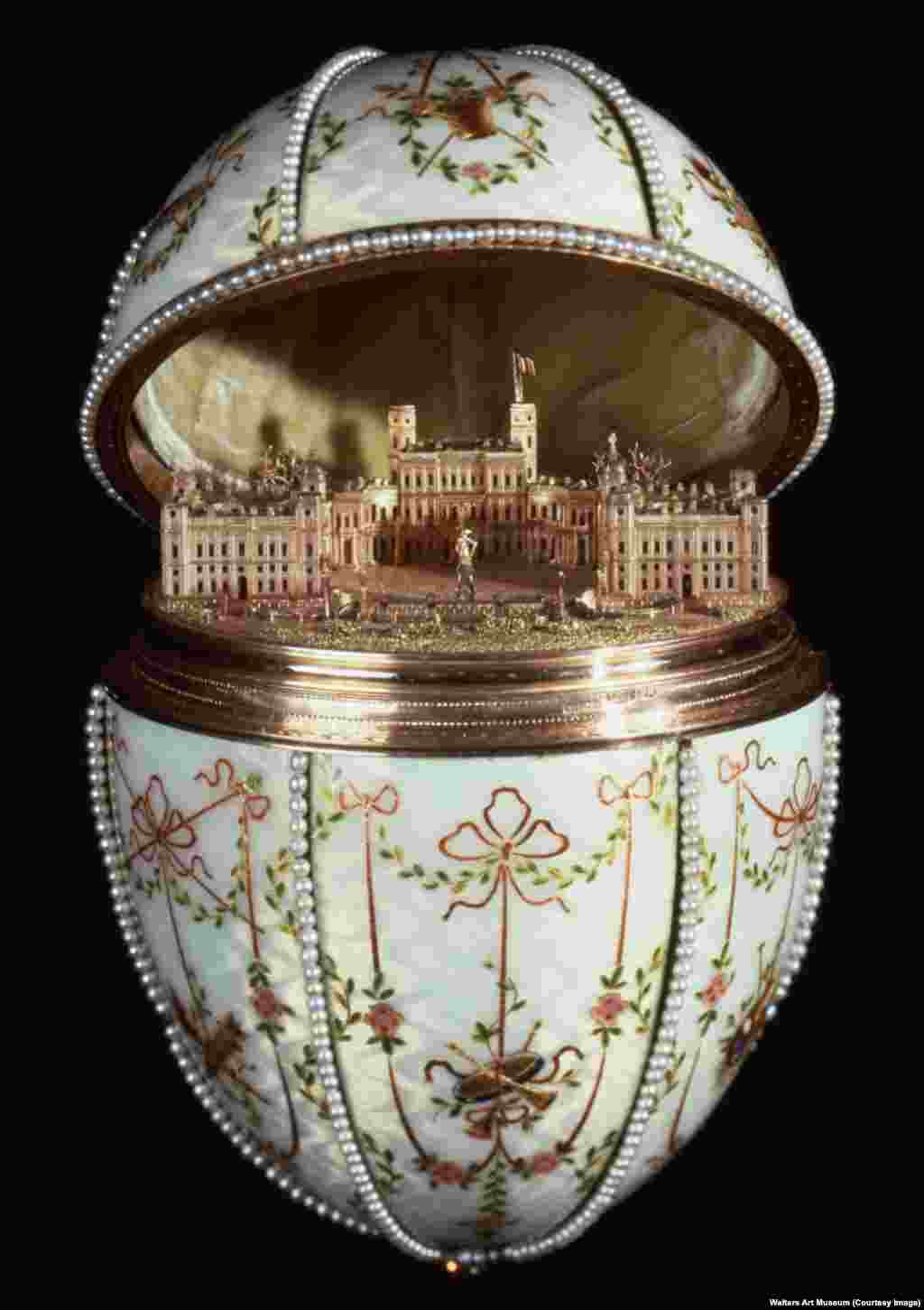
The tsar&#39;s one request for the eggs was that they contain some kind of &quot;surprise.&quot; In the case of the Gatchina Palace Egg, the egg opened to a gold replica of the royal residence in the countryside of St. Petersburg. The 8-centimeter building is precise down to the hedges, gravel courtyard, and fluttering flag of the real palace.
9/15 The tsar's one request for the eggs was that they contain some kind of "surprise." In the case of the Gatchina Palace Egg, the egg opened to a gold replica of the royal residence in the countryside of St. Petersburg. The 8-centimeter building is precise down to the hedges, gravel courtyard, and fluttering flag of the real palace.
They are some of the most exquisite objects ever created and, a century after the last Faberge Egg was crafted, in 1917, the tiny treasures continue to fascinate for both their beauty and the tragic story that entangled them.
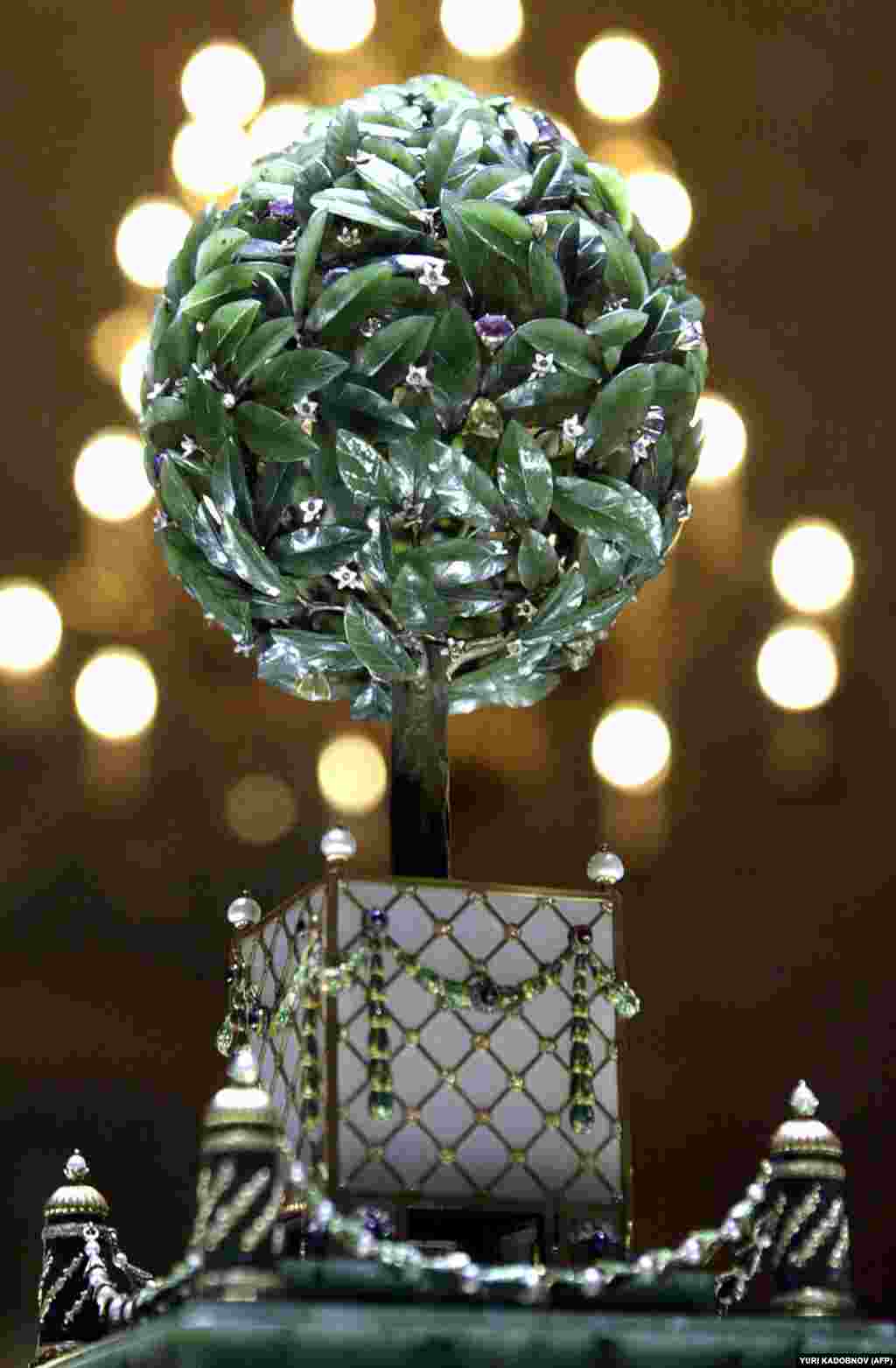
Faberge&#39;s 1911 Bay Tree Egg. One of the diamond &quot;fruits&quot; of the tree serves as a lever that activates a tiny jeweled bird that rises from the top of the tree, shakes its feathers, and sings.&nbsp;Three years after this egg was presented, an ill-prepared Russia marched to the battlefields of World War I.<br />
&nbsp;
10/15 Faberge's 1911 Bay Tree Egg. One of the diamond "fruits" of the tree serves as a lever that activates a tiny jeweled bird that rises from the top of the tree, shakes its feathers, and sings. Three years after this egg was presented, an ill-prepared Russia marched to the battlefields of World War I.
 
They are some of the most exquisite objects ever created and, a century after the last Faberge Egg was crafted, in 1917, the tiny treasures continue to fascinate for both their beauty and the tragic story that entangled them.
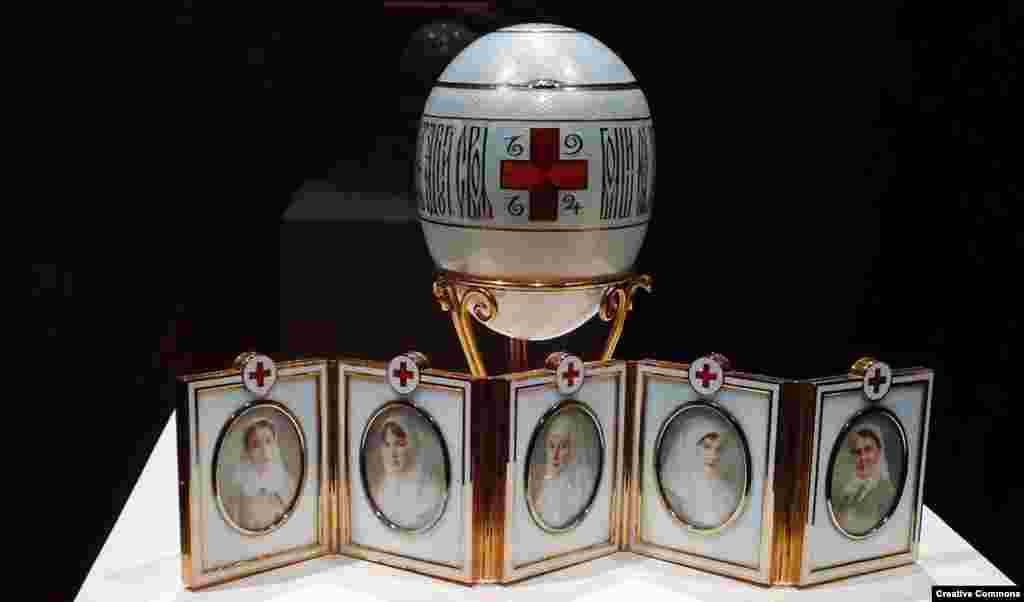
The war was a disaster for Russia, which pitted itself against a highly-industrialized Germany. After the royal palaces were converted into hospitals to tend to the wounded, the tsar&rsquo;s daughters served as nurses. The austere Red Cross Egg of 1915 features the portraits of the tsar&rsquo;s four daughters and a cousin, dressed in their Red Cross uniforms.<br />
&nbsp;
11/15 The war was a disaster for Russia, which pitted itself against a highly-industrialized Germany. After the royal palaces were converted into hospitals to tend to the wounded, the tsar’s daughters served as nurses. The austere Red Cross Egg of 1915 features the portraits of the tsar’s four daughters and a cousin, dressed in their Red Cross uniforms.
 
They are some of the most exquisite objects ever created and, a century after the last Faberge Egg was crafted, in 1917, the tiny treasures continue to fascinate for both their beauty and the tragic story that entangled them.
Time was running out for both the royal family and Faberge. The Karelian Birch Egg was the last Faberge would complete. Finished shortly after the tsar was forced to abdicate during the February Revolution of 1917, the invoice sent by Faberge addressed Nicholas not as &quot;Tsar of all the Russians&quot; but as &quot;Mr. Romanov, Nikolai Aleksandrovich.&quot; The royal family was held captive by Bolsheviks as civil war raged in Russia.
12/15 Time was running out for both the royal family and Faberge. The Karelian Birch Egg was the last Faberge would complete. Finished shortly after the tsar was forced to abdicate during the February Revolution of 1917, the invoice sent by Faberge addressed Nicholas not as "Tsar of all the Russians" but as "Mr. Romanov, Nikolai Aleksandrovich." The royal family was held captive by Bolsheviks as civil war raged in Russia.
They are some of the most exquisite objects ever created and, a century after the last Faberge Egg was crafted, in 1917, the tiny treasures continue to fascinate for both their beauty and the tragic story that entangled them.
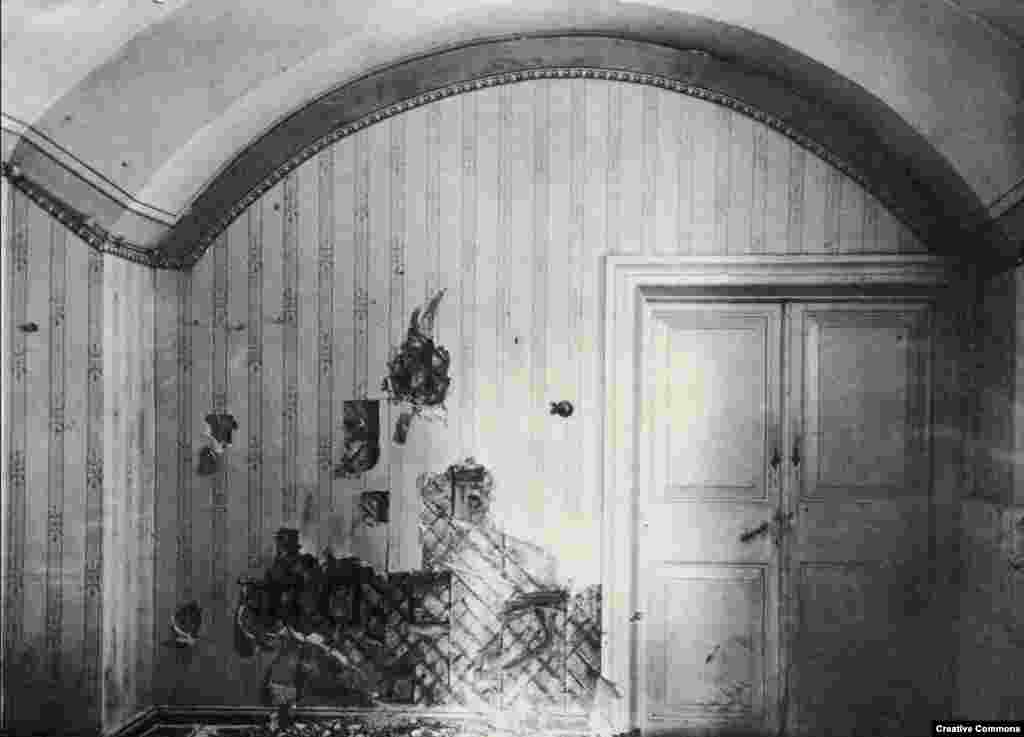
In 1918, the tsar, tsarina, and their five children, along with several servants, were ushered into this cellar then shot and stabbed to death with bayonets by Bolshevik troops.<br />
&nbsp;
13/15 In 1918, the tsar, tsarina, and their five children, along with several servants, were ushered into this cellar then shot and stabbed to death with bayonets by Bolshevik troops.
 
They are some of the most exquisite objects ever created and, a century after the last Faberge Egg was crafted, in 1917, the tiny treasures continue to fascinate for both their beauty and the tragic story that entangled them.
Of the more than 50 eggs Faberge created for the Russian royal family, 43 survived the chaos of Russia&#39;s 1917 revolution. The Third Imperial Egg, pictured here, on display in London, was rediscovered in 2012 after a collector spotted it for sale at a &quot;scrap dealership.&quot; The egg is valued at around $33 million.
14/15 Of the more than 50 eggs Faberge created for the Russian royal family, 43 survived the chaos of Russia's 1917 revolution. The Third Imperial Egg, pictured here, on display in London, was rediscovered in 2012 after a collector spotted it for sale at a "scrap dealership." The egg is valued at around $33 million.
They are some of the most exquisite objects ever created and, a century after the last Faberge Egg was crafted, in 1917, the tiny treasures continue to fascinate for both their beauty and the tragic story that entangled them.
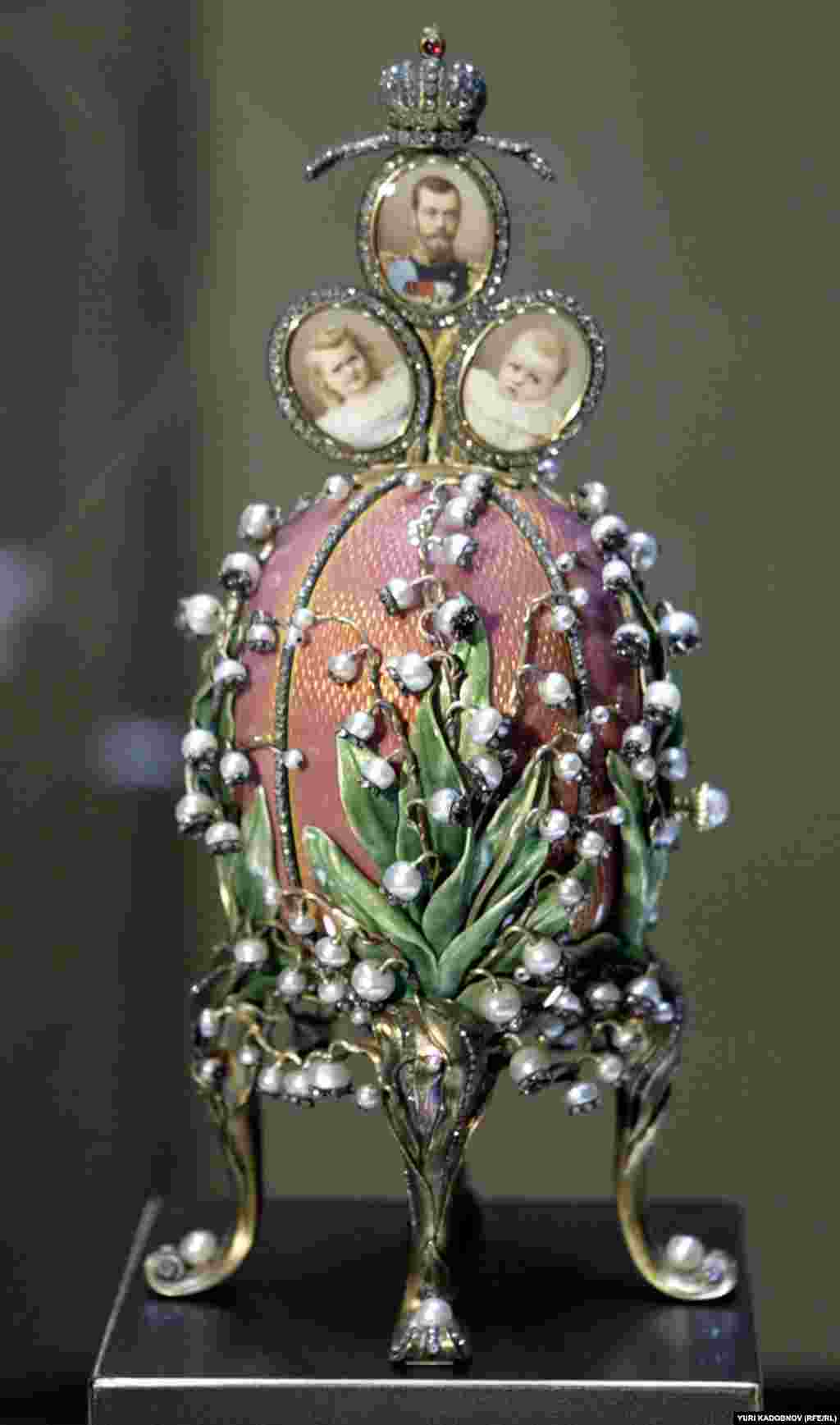
The Lilies of the Valley Egg of 1898, featuring the tsar and his first two daughters. After the 1917 revolution, Faberge fled Russia disguised as a diplomat. He died in exile in Switzerland in 1920. Faberge&#39;s imperial eggs stand today as a symbol of the decadence, as well as the taste and the elegance of an age the likes of which might never be seen again.
15/15 The Lilies of the Valley Egg of 1898, featuring the tsar and his first two daughters. After the 1917 revolution, Faberge fled Russia disguised as a diplomat. He died in exile in Switzerland in 1920. Faberge's imperial eggs stand today as a symbol of the decadence, as well as the taste and the elegance of an age the likes of which might never be seen again.
They are some of the most exquisite objects ever created and, a century after the last Faberge Egg was crafted, in 1917, the tiny treasures continue to fascinate for both their beauty and the tragic story that entangled them.
Previous slide
Next slide

One hundred years ago this month, the legendary St. Petersburg firm of Peter Carl Faberge put the finishing touches on the last imperial Easter egg it ever produced: the so-called Karelian Birch Egg. Before it could be delivered to the palace, however, Russia was rocked by the upheaval of the February Revolution and Tsar Nicholas II's abdication on March 15, 1917.

That egg is now in the collection of the Faberge Museum in Baden Baden, Germany -- along with the unfinished Constellation Egg -- an elegant, mute symbol of an irretrievable era.

"In addition to its mass-market production, Faberge created some very expensive masterpieces," says Aleksandr Ivanov, a Russian billionaire who built the Baden Baden museum to house his personal Faberge collection. "Everyone talks about the imperial Easter eggs. Why are they so expensive? First, there are very few of them. Second, over the last 100 years, no one has been able to equal or surpass them."

A total of 54 eggs were made for the Russian imperial family between 1885 and 1917, of which 43 are accounted for today. The tradition began under Tsar Alexander III, who anointed Faberge as "goldsmith by special appointment to the Imperial Crown." Nicholas II had a standing order for two eggs each year, one for his wife, Alexandra, and one for his mother, the dowager Empress Maria Fyodorovna.

The only condition the Romanov tsars made was that each egg contain a surprise. Otherwise, Faberge's craftsmen had complete creative freedom.

A 'Genius Of Administration'

Ivanov, 54, has been collecting Faberge creations full-time since the late 1990s. Although the Easter eggs are scattered in museums and collections in Russia and around the world, Ivanov boasts the widest-ranging Faberge collection in the world, his museum comprising more than 700 pieces, as well as archives and other artifacts.

The only rival collection belongs to Russian oil billionaire Viktor Vekselberg and is on display at the Faberge Museum in St. Petersburg. In 2004, Vekselberg bought the collection of U.S. publishing magnate Malcolm Forbes, which included a staggering nine imperial eggs.

Although the Baden Baden museum has only one finished egg, it is a unique homage to the Faberge legacy. "The Faberge Museum is not just an exhibition," Ivanov tells RFE/RL's Russian Service. "It is also dedicated to the history of the Faberge company and the Faberge family. We have many documents that have never been published before."

The Faberge company itself was the true work of art, Ivanov says. "Carl Faberge was not a jeweler," he says. "We do not know of a single piece produced by his hand. He was a talented administrator. He created the company and surrounded himself with the greatest craftsmen, giving them complete freedom."

Ivanov calls it "the ideal capitalist enterprise."

"He didn't get involved with the craftsmen; he took care of administrative matters and orders. He was a genius at organizing the production," he says. "I doubt that anything like it could be created today. And, of course, there aren't any craftsmen like that anymore."

'Massive Market' In Fakes

After the October 1917 Bolshevik coup, the firm was nationalized and broken up. Faberge fled the country and ended up in Switzerland, where he died in 1920 at the age of 74. His son, Agafon, tried to survive under the new regime in Russia, although he was periodically arrested and jailed. In 1927, with one suitcase -- itself also now in the Baden Baden collection -- Agafon escaped in a sleigh across the frozen Gulf of Finland carrying the unfinished Constellation Egg and a collection of postage stamps that financed his new life in the West. He died in Helsinki in 1951.

Ivanov says that a major part of his museum's work in guarding Faberge's legacy is combating the massive market in fakes. He has challenged as fakes items for sale at major London auction house Sotheby's and says the museum constantly receives authentication requests from dealers in France, Germany, and other countries.

"We simply cannot manage to give a consultation to everyone," Ivanov says. "There is a huge market of fake Faberge." The highest-quality fakes, he says, are usually the products of Faberge's contemporaries that unscrupulous people have stamped with Faberge's hallmark.

But there are also a lot of real Faberge pieces yet to be discovered. Ivanov estimates the firm produced about 120,000 "high-quality" pieces, of which the whereabouts of only some 20,000 are currently known.

Moscow's 'Very Particular' Market

Asked about the market for Faberge in Moscow, Ivanov laughs. "You can't buy in Moscow," he says. "Even I can't buy in Moscow."

"Who are the main purchasers in Moscow?" he asks. "Bureaucrats and people who don't want to advertise their income. They are people with small salaries and bank accounts in the millions. For these people, it doesn't matter if they pay $5,000 or $50,000 or $100,000 or $1 million. These are very particular buyers."

Such buyers also influence the international market for Faberge, Ivanov says. His main competitors at the London auctions are "dealers working on behalf of [Russian] government officials."

When he decided to create his museum, Ivanov initially wanted it to be in Moscow. At the time, he says, under then-Mayor Yury Luzhkov, the city was not welcoming. "It was impossible to purchase a building or get official status for the museum without the right connections," he says.

Instead, he settled on Baden Baden, where local officials offered complete support and the museum was granted federal status.

Ivanov sees himself as the protector of Faberge's legacy. "In another 100 years," he says, "people will speak of Faberge in the same terms as [Italian Renaissance sculptor and goldsmith Benvenuto] Cellini. He has left his mark on the history of the decorative arts. Already Faberge's art is not just Russian. It is part of the global cultural tradition because there are many times more Faberge pieces in the West than in Russia."

  • 16x9 Image

    Robert Coalson

    Robert Coalson worked as a correspondent for RFE/RL from 2002 to 2024.

This item is part of
XS
SM
MD
LG