


Accessibility links

Breaking News

'AIDS Boy,' 'Dog,' And 'Disgrace To Society': How Russia Greets Gay Men Seeking Asylum

Antigay protesters attempt to remove a rainbow flag from an LGBT rally in central Moscow. (file photo)

In mid-July, a gay, HIV-positive foreigner arrived at an immigration office in Moscow seeking asylum in Russia. Unlike in his native Uzbekistan, where sex between men is punishable by up to three years in prison, Russia has not criminalized homosexual relations.

But as he and his lawyer discussed his case with an immigration officer, their interlocutor made clear she had no sympathy for people like him.

"If it were up to me, they would all be put up against a wall," the officer with the Moscow branch of the Russian Interior Ministry's Main Directorate of Migration Affairs said, according to audio of the conversation obtained by RFE/RL.

At one point in the conversation, the officer, who said she herself hailed from the applicant's Central Asian homeland, switched to the man's native language to express her disapproval of the man's sexual orientation.

"Cursed be your father. Do you understand me, dog?" she is heard saying in Uzbek.

The officer's comments are now the subject of a formal complaint to Russian authorities by the applicant's lawyer on behalf of a rare subset of individuals seeking refuge in Russia: gay men.

Advocacy groups have registered a spike in asylum applications by lesbian, gay, bisexual, and transgender (LGBT) Russians in the West since Russian President Vladimir Putin signed a controversial 2013 law that bans "promoting..nontraditional sexual relations" among minors.

But the number of people fleeing to Russia from governments with more restrictive laws on same-sex relations remains exceedingly small, according to Russian activists who work with such asylum seekers.

Hidden In Plain Sight: LGBT Activists Troll World Cup In Russia

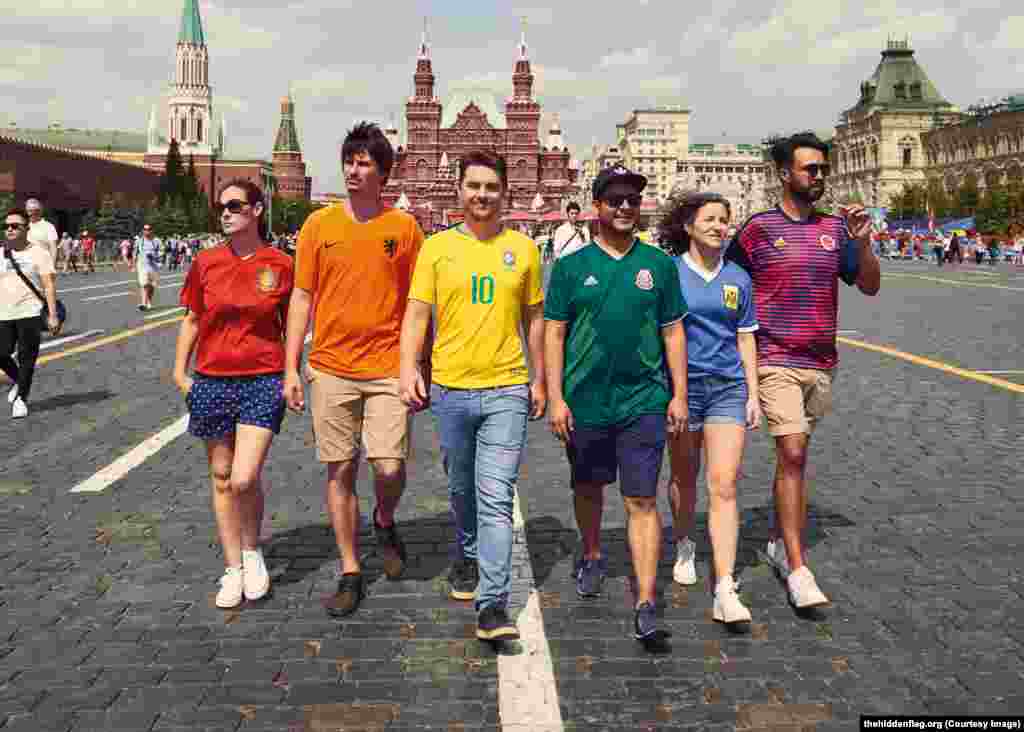
Six gay rights activists from (left to right) Spain, The Netherlands, Brazil, Mexico, Argentina, and Colombia, have taken to the streets of Russia to display the rainbow flag while the World Cup is under way.<br />
&nbsp;<br />
&nbsp;<br />
&nbsp;
1/13 Six gay rights activists from (left to right) Spain, The Netherlands, Brazil, Mexico, Argentina, and Colombia, have taken to the streets of Russia to display the rainbow flag while the World Cup is under way.


A group of activists have found a stealthy way to display the rainbow flag during Russia's moment in the spotlight.
The six, who have launched a <strong><a href="http://thehiddenflag.org/" target="_blank">website</a></strong> to promote the project, are dressed in their national teams&rsquo; colors so as not to attract suspicion.
2/13 The six, who have launched a website to promote the project, are dressed in their national teams’ colors so as not to attract suspicion.
A group of activists have found a stealthy way to display the rainbow flag during Russia's moment in the spotlight.
The activists near a Russian policeman. The officer may have been wondering what a Dutch fan is doing in Russia -- Holland failed to qualify for the 2018 World Cup.
3/13 The activists near a Russian policeman. The officer may have been wondering what a Dutch fan is doing in Russia -- Holland failed to qualify for the 2018 World Cup.
A group of activists have found a stealthy way to display the rainbow flag during Russia's moment in the spotlight.
The activists sitting on a World War II memorial next to Moscow&rsquo;s Kremlin.
4/13 The activists sitting on a World War II memorial next to Moscow’s Kremlin.
A group of activists have found a stealthy way to display the rainbow flag during Russia's moment in the spotlight.
The group in a bar next to a bust of Lenin. Brazilian Eloi Pierozan Junior (in yellow) says his boyfriend warned him of the danger of protesting gay rights in Russia, but says &ldquo;I&rsquo;m not worried about the risk, it&rsquo;s a project that I really want to be involved in.... It&rsquo;s a call to love.&rdquo;
5/13 The group in a bar next to a bust of Lenin. Brazilian Eloi Pierozan Junior (in yellow) says his boyfriend warned him of the danger of protesting gay rights in Russia, but says “I’m not worried about the risk, it’s a project that I really want to be involved in.... It’s a call to love.”
A group of activists have found a stealthy way to display the rainbow flag during Russia's moment in the spotlight.
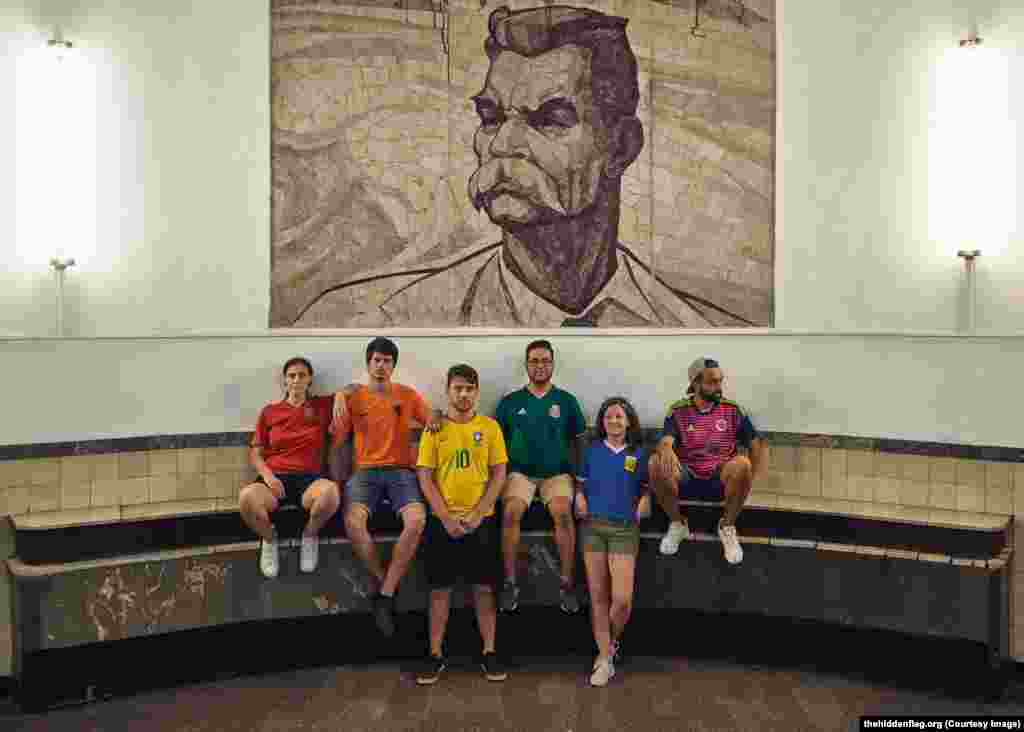
The group under a portrait of Soviet writer Maksim Gorky, in the Moscow subway.
6/13 The group under a portrait of Soviet writer Maksim Gorky, in the Moscow subway.
A group of activists have found a stealthy way to display the rainbow flag during Russia's moment in the spotlight.
The group of mostly creative professionals decided to display their stealthy version of the LGBT-rights flag because they say homosexuality is &ldquo;persecuted, sometimes even by jail sentences&rdquo; in Russia.
7/13 The group of mostly creative professionals decided to display their stealthy version of the LGBT-rights flag because they say homosexuality is “persecuted, sometimes even by jail sentences” in Russia.
A group of activists have found a stealthy way to display the rainbow flag during Russia's moment in the spotlight.
&ldquo;We have taken advantage of the fact that the country is hosting the World Cup at the same time as Pride Month, to denounce their behavior and take the rainbow flag to the streets of Russia.<br />
Yes, in the plain light of day, in front of the Russian authorities, Russian society, and the whole world, we wave the flag with pride.&rdquo;
8/13 “We have taken advantage of the fact that the country is hosting the World Cup at the same time as Pride Month, to denounce their behavior and take the rainbow flag to the streets of Russia.
Yes, in the plain light of day, in front of the Russian authorities, Russian society, and the whole world, we wave the flag with pride.”
A group of activists have found a stealthy way to display the rainbow flag during Russia's moment in the spotlight.
There is no law against homosexuality in Russia, but a 2013 law passed by the Russian Duma made it illegal to distribute &ldquo;propaganda of nontraditional sexual relationships&rdquo; to minors.
9/13 There is no law against homosexuality in Russia, but a 2013 law passed by the Russian Duma made it illegal to distribute “propaganda of nontraditional sexual relationships” to minors.
A group of activists have found a stealthy way to display the rainbow flag during Russia's moment in the spotlight.
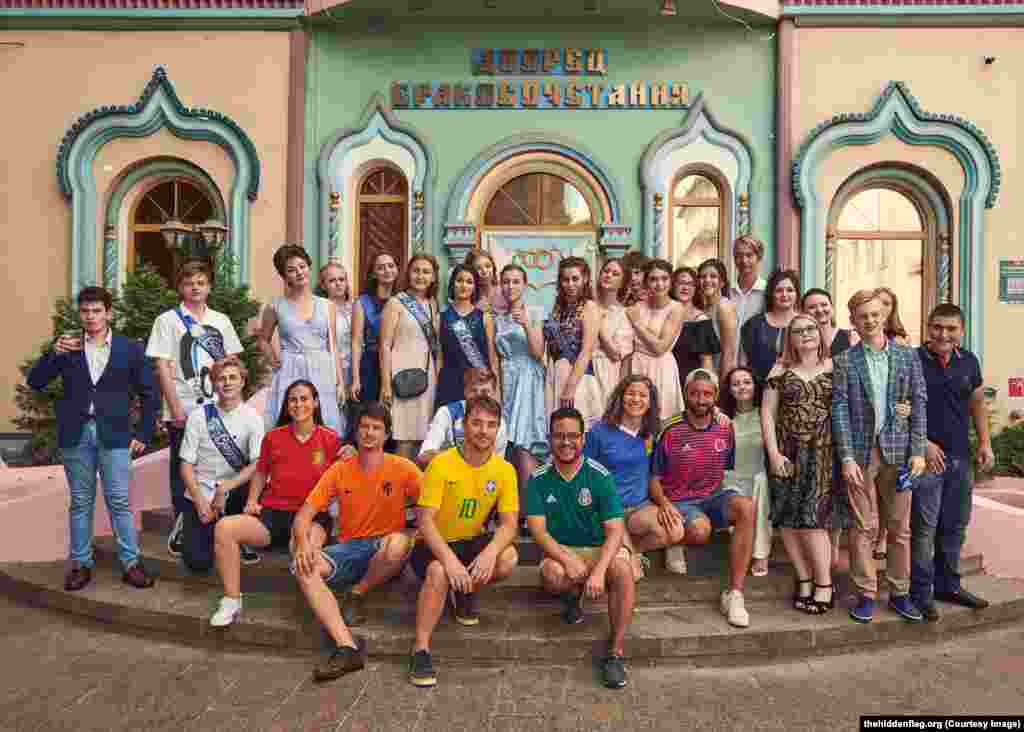
The group pose with a group of unwitting Russian high-school students on their graduation day.<br />
&nbsp;
10/13 The group pose with a group of unwitting Russian high-school students on their graduation day.
 
A group of activists have found a stealthy way to display the rainbow flag during Russia's moment in the spotlight.
When the images were posted to Reddit on July 9, reactions were mixed.
11/13 When the images were posted to Reddit on July 9, reactions were mixed.
A group of activists have found a stealthy way to display the rainbow flag during Russia's moment in the spotlight.
Most commentators applauded the striking visual statement. Others decried the group for not acting like guests.<br />
&nbsp;
12/13 Most commentators applauded the striking visual statement. Others decried the group for not acting like guests.
 
A group of activists have found a stealthy way to display the rainbow flag during Russia's moment in the spotlight.
It is unclear whether the group is still in Russia.&nbsp;
13/13 It is unclear whether the group is still in Russia. 
A group of activists have found a stealthy way to display the rainbow flag during Russia's moment in the spotlight.
Previous slide
Next slide


That number jumped slightly when Russia hosted the World Cup this summer, as some foreign gay men obtained official fan passes for the soccer tournament and sought refuge after arriving in the country, according to Varvara Tretyak, a counselor with the Civic Assistance Committee, a Moscow-based nongovernmental organization that helps refugees and forced migrants.

'They Think It's Like Europe'

Some of the gay men fleeing to Russia, such as the Uzbek man cited in the complaint by his lawyer, hail from predominantly Muslim former Soviet republics in Central Asia, where they risk criminal prosecution and unofficial persecution due to their sexual orientation.

While those applicants have a certain grasp on Russian realities, Tretyak says that others -- such as applicants from Africa -- were unaware of the trajectory of LGBT rights in Russia, which rights groups and Western officials have accused of fostering discrimination and emboldening violence against sexual minorities in recent years.

"They think that it's like Europe in Russia, and that they've found a safe space. And, of course, they are very disappointed when they apply for asylum because there they encounter very strong homophobia from officials who insult them," Tretyak told RFE/RL in a telephone interview.

Antigay protesters attack a gay-rights activist during an LGBT rally in central Moscow in May 2015.

Putin and other officials deny that Russia discriminates against sexual minorities and have said the so-called "gay-propaganda" law enacted in 2013 is merely aimed at protecting children.

Anton Ryzhov, a lawyer for the Russian LGBT organization Stimul representing the Uzbek man who was called a "dog" by the immigration officer, said he and his colleagues decided to file a formal complaint with the Interior Ministry in order to change what he called a "vicious" system for those seeking asylum and refugee status in Russia.

"We agreed that we won't just ignore it and will try to shine a light on this issue, otherwise it will happen again to everyone we bring in," added Ryzhov, who said he submitted the complaint by mail this week on behalf of the Uzbek man and gay men from Turkmenistan, Nigeria, and Cameroon seeking refugee status in Russia.

The complaint, a copy of which was reviewed by RFE/RL, accuses immigration officers dealing with refugees and asylum seekers of stonewalling Ryzhov's clients by demanding evidence that they are gay during the initial application.

'Everything Was So Great Under Stalin'

Russia is not alone in demanding evidence of sexual orientation from LGBT asylum seekers. The United States, for example, requires such proof as well, said Jackie Yodashkin, a spokeswoman for the New York-based Immigration Equality.

"For refugees fleeing a country where it is unsafe or even a crime to be LGBTQ, it can be immensely difficult to provide 'evidence,' as many are forced to live entirely in the closet for fear of being killed," Yodashkin wrote in an e-mail.

But Ryzhov said the issue of evidence is to be considered at a later stage, noting that Russian law allows anyone the right to apply for asylum or refugee status.

"Authorities are required to accept [the application]. But they can't even do that," he said.

Ryzhov's complaint also accuses immigration officers of "insults and discrimination" against his clients.

The complaint cites several other remarks by the immigration officer to the gay Uzbek applicant, including her reference to HIV-positive individuals as "AIDS boys" and her remarks that it is "too bad that they developed a treatment" for the disease.

"A disgrace to society," the officer says during the exchange, according to the audio obtained by RFE/RL.

After the applicant says he hopes that he would eventually be allowed to marry his partner in Russia, the officer suggests he try his luck in Uzbekistan, whose deputy justice minister said in May that international calls for greater LGBT rights in the former Soviet republic are not on Tashkent's agenda.

After Ryzhov and his client point out that criminal punishment for homosexual relations is still on the books in Uzbekistan, the officer appeared to long for a return to the Soviet-era criminalization of sexual activity between men.

"Everything was so great under Stalin," she said.​

Being Gay In Russia: A History Of Attitudes

Soviet leader Leonid Brezhnev and Nikolai Podgrony, the chairman of the Presidium of the Supreme Soviet, are locked into a &quot;socialist fraternal kiss&quot; inside the Kremlin in 1975. Homosexuality was made illegal by Stalin in 1933. The law could punish gay men with up to five years hard labor. Lesbianism was never criminalized but thorazine, an early antipsychotic medication, was recommended to &quot;cure&quot; gay women.
1/14 Soviet leader Leonid Brezhnev and Nikolai Podgrony, the chairman of the Presidium of the Supreme Soviet, are locked into a "socialist fraternal kiss" inside the Kremlin in 1975. Homosexuality was made illegal by Stalin in 1933. The law could punish gay men with up to five years hard labor. Lesbianism was never criminalized but thorazine, an early antipsychotic medication, was recommended to "cure" gay women.
Russia is generally seen as seriously lagging in terms of gay rights, but in the nearly 25 years since the collapse of the Soviet Union the history of attitudes toward Russia's gay community has been a roller coaster. From pushing boundaries with provocative musical exports to a grim U-turn under Vladimir Putin, the path of Russia's LGBT community has been a challenging one.
In 2002, Russian pop duo t.A.T.u exploded onto the international music scene with a video featuring a rain-soaked same-sex kiss. They were soon dubbed &quot;the hottest pop stars in the world right now.&quot;<br />
<br />
&nbsp;
2/14 In 2002, Russian pop duo t.A.T.u exploded onto the international music scene with a video featuring a rain-soaked same-sex kiss. They were soon dubbed "the hottest pop stars in the world right now."

 
Russia is generally seen as seriously lagging in terms of gay rights, but in the nearly 25 years since the collapse of the Soviet Union the history of attitudes toward Russia's gay community has been a roller coaster. From pushing boundaries with provocative musical exports to a grim U-turn under Vladimir Putin, the path of Russia's LGBT community has been a challenging one.
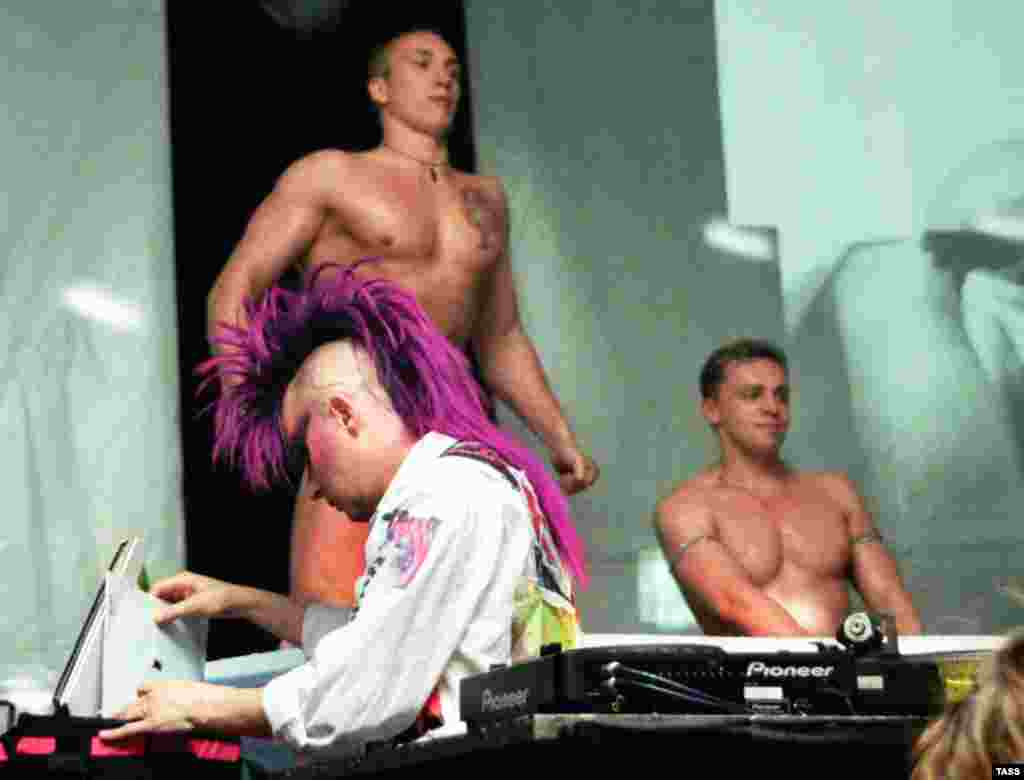
American DJ Tasty Tim hosting a gay dance party at a Moscow club in 2003. Journalist Masha Gessen, who lived in Russia at the time, recalled, &quot;I spent the &#39;90s being pretty much the only publicly out person in the country, and by the 2000s it started getting a little bit better, and by the late 2000s there would be several openly gay people more or less anyplace I worked or went to. So it was a slow process, but it was moving in the right direction.&quot;
3/14 American DJ Tasty Tim hosting a gay dance party at a Moscow club in 2003. Journalist Masha Gessen, who lived in Russia at the time, recalled, "I spent the '90s being pretty much the only publicly out person in the country, and by the 2000s it started getting a little bit better, and by the late 2000s there would be several openly gay people more or less anyplace I worked or went to. So it was a slow process, but it was moving in the right direction."
Russia is generally seen as seriously lagging in terms of gay rights, but in the nearly 25 years since the collapse of the Soviet Union the history of attitudes toward Russia's gay community has been a roller coaster. From pushing boundaries with provocative musical exports to a grim U-turn under Vladimir Putin, the path of Russia's LGBT community has been a challenging one.
Gay women on a cruise in Moscow in 2005
4/14 Gay women on a cruise in Moscow in 2005
Russia is generally seen as seriously lagging in terms of gay rights, but in the nearly 25 years since the collapse of the Soviet Union the history of attitudes toward Russia's gay community has been a roller coaster. From pushing boundaries with provocative musical exports to a grim U-turn under Vladimir Putin, the path of Russia's LGBT community has been a challenging one.
Then things changed. In 2006, under the presidency of Vladimir Putin, the small city of Ryazan imposed a ban on &quot;homosexual propaganda.&quot; Gessen says it was &quot;the first law in Russia that actually enshrined second-class citizenship [for LGBT people].&quot; This picture shows skinheads in Moscow preparing to confront a planned gay-rights parade in 2007.&nbsp;
5/14 Then things changed. In 2006, under the presidency of Vladimir Putin, the small city of Ryazan imposed a ban on "homosexual propaganda." Gessen says it was "the first law in Russia that actually enshrined second-class citizenship [for LGBT people]." This picture shows skinheads in Moscow preparing to confront a planned gay-rights parade in 2007. 
Russia is generally seen as seriously lagging in terms of gay rights, but in the nearly 25 years since the collapse of the Soviet Union the history of attitudes toward Russia's gay community has been a roller coaster. From pushing boundaries with provocative musical exports to a grim U-turn under Vladimir Putin, the path of Russia's LGBT community has been a challenging one.
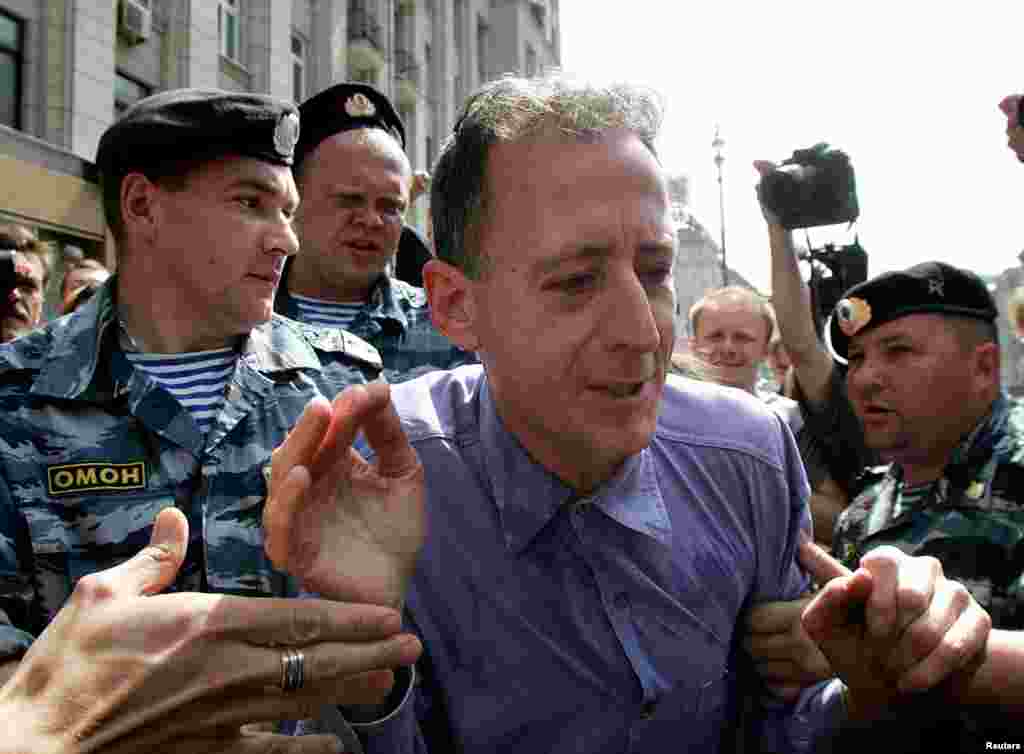
British rights activist Peter Tatchell in Moscow a moment away from being cracked in his right eye in 2007. Requests to hold gay-pride marches in the city in 2006 and 2007 were rejected by the authorities. When activists went ahead, they were attacked.&nbsp;
6/14 British rights activist Peter Tatchell in Moscow a moment away from being cracked in his right eye in 2007. Requests to hold gay-pride marches in the city in 2006 and 2007 were rejected by the authorities. When activists went ahead, they were attacked. 
Russia is generally seen as seriously lagging in terms of gay rights, but in the nearly 25 years since the collapse of the Soviet Union the history of attitudes toward Russia's gay community has been a roller coaster. From pushing boundaries with provocative musical exports to a grim U-turn under Vladimir Putin, the path of Russia's LGBT community has been a challenging one.
Tatchell, moments after the punch, being detained by Russian police. The images of nonviolent protesters being attacked with near impunity ushered in a new era in Russia. Far right groups and Orthodox Christian extremists seemed to have been given carte blanche for violence against gay activists.
7/14 Tatchell, moments after the punch, being detained by Russian police. The images of nonviolent protesters being attacked with near impunity ushered in a new era in Russia. Far right groups and Orthodox Christian extremists seemed to have been given carte blanche for violence against gay activists.
Russia is generally seen as seriously lagging in terms of gay rights, but in the nearly 25 years since the collapse of the Soviet Union the history of attitudes toward Russia's gay community has been a roller coaster. From pushing boundaries with provocative musical exports to a grim U-turn under Vladimir Putin, the path of Russia's LGBT community has been a challenging one.
An egg splatters over young gay-rights activists after an attempted &quot;kiss-in&quot; in front of the Russian parliament in Moscow in 2013. Vladimir Putin himself has maintained a publicly benign attitude to Russia&#39;s LGBT community and has repeatedly claimed Russia does not discriminate against gays.&nbsp;
8/14 An egg splatters over young gay-rights activists after an attempted "kiss-in" in front of the Russian parliament in Moscow in 2013. Vladimir Putin himself has maintained a publicly benign attitude to Russia's LGBT community and has repeatedly claimed Russia does not discriminate against gays. 
Russia is generally seen as seriously lagging in terms of gay rights, but in the nearly 25 years since the collapse of the Soviet Union the history of attitudes toward Russia's gay community has been a roller coaster. From pushing boundaries with provocative musical exports to a grim U-turn under Vladimir Putin, the path of Russia's LGBT community has been a challenging one.
In 2015, the Russian president said,&nbsp;<span style="font-size: 1em; line-height: 1.45em;">&ldquo;I believe there should not be any... prosecution or infringement of people&rsquo;s rights on the basis of their race, ethnicity, religious or sexual orientation.&rdquo;</span>
9/14 In 2015, the Russian president said, “I believe there should not be any... prosecution or infringement of people’s rights on the basis of their race, ethnicity, religious or sexual orientation.”
Russia is generally seen as seriously lagging in terms of gay rights, but in the nearly 25 years since the collapse of the Soviet Union the history of attitudes toward Russia's gay community has been a roller coaster. From pushing boundaries with provocative musical exports to a grim U-turn under Vladimir Putin, the path of Russia's LGBT community has been a challenging one.
Another participant in the protest against the &quot;gay propaganda&quot; ban being attacked by youths in Moscow. Despite Putin&#39;s public statements,&nbsp;activists say the law he signed prohibiting the spread of gay &quot;propaganda&quot; among minors has encouraged discrimination and violence.&nbsp;Putin has also been criticized for bolstering the careers of homophobic&nbsp;public figures.&nbsp;
10/14 Another participant in the protest against the "gay propaganda" ban being attacked by youths in Moscow. Despite Putin's public statements, activists say the law he signed prohibiting the spread of gay "propaganda" among minors has encouraged discrimination and violence. Putin has also been criticized for bolstering the careers of homophobic public figures. 
Russia is generally seen as seriously lagging in terms of gay rights, but in the nearly 25 years since the collapse of the Soviet Union the history of attitudes toward Russia's gay community has been a roller coaster. From pushing boundaries with provocative musical exports to a grim U-turn under Vladimir Putin, the path of Russia's LGBT community has been a challenging one.
Rights activists run a gauntlet of riot police as debris rains down during a gay pride event in St. Petersburg in 2013.&nbsp;<br />
<br />
&nbsp;
11/14 Rights activists run a gauntlet of riot police as debris rains down during a gay pride event in St. Petersburg in 2013. 

 
Russia is generally seen as seriously lagging in terms of gay rights, but in the nearly 25 years since the collapse of the Soviet Union the history of attitudes toward Russia's gay community has been a roller coaster. From pushing boundaries with provocative musical exports to a grim U-turn under Vladimir Putin, the path of Russia's LGBT community has been a challenging one.
A protest against Russian laws relating to gay &quot;propaganda&quot;&nbsp;in the Netherlands.&nbsp;The international outcry at the treatment of Russia&#39;s gays appears to have had little effect. There is widespread sentiment within Russia that&nbsp;Western values&nbsp;are a&nbsp;threat to Russian culture.
12/14 A protest against Russian laws relating to gay "propaganda" in the Netherlands. The international outcry at the treatment of Russia's gays appears to have had little effect. There is widespread sentiment within Russia that Western values are a threat to Russian culture.
Russia is generally seen as seriously lagging in terms of gay rights, but in the nearly 25 years since the collapse of the Soviet Union the history of attitudes toward Russia's gay community has been a roller coaster. From pushing boundaries with provocative musical exports to a grim U-turn under Vladimir Putin, the path of Russia's LGBT community has been a challenging one.
Women at a private gay club in St. Petersburg in 2013. A survey taken in 2013 showed 74 percent of Russians thought homosexuality was unacceptable in society, with a further 5 percent saying gays should be &quot;liquidated.&quot;
13/14 Women at a private gay club in St. Petersburg in 2013. A survey taken in 2013 showed 74 percent of Russians thought homosexuality was unacceptable in society, with a further 5 percent saying gays should be "liquidated."
Russia is generally seen as seriously lagging in terms of gay rights, but in the nearly 25 years since the collapse of the Soviet Union the history of attitudes toward Russia's gay community has been a roller coaster. From pushing boundaries with provocative musical exports to a grim U-turn under Vladimir Putin, the path of Russia's LGBT community has been a challenging one.
By 2015, attitudes had hardened further, with polls revealing that antigay feelings were worse than they had been a decade earlier. In a 2014 interview, former t.A.T.u singer Yulia Volkova, once a poster girl for LGBT people around the world, said she would condemn her son if he came out as gay and that &quot;a man has no right to be a fag.&quot;
14/14 By 2015, attitudes had hardened further, with polls revealing that antigay feelings were worse than they had been a decade earlier. In a 2014 interview, former t.A.T.u singer Yulia Volkova, once a poster girl for LGBT people around the world, said she would condemn her son if he came out as gay and that "a man has no right to be a fag."
Russia is generally seen as seriously lagging in terms of gay rights, but in the nearly 25 years since the collapse of the Soviet Union the history of attitudes toward Russia's gay community has been a roller coaster. From pushing boundaries with provocative musical exports to a grim U-turn under Vladimir Putin, the path of Russia's LGBT community has been a challenging one.
Previous slide
Next slide

The Russian Interior Ministry did not immediately respond to a request for comment on the immigration officer's recorded remarks to the Uzbek asylum seeker or Ryzhov's objection to the treatment of his clients.

A ministry spokeswoman told RFE/RL that the inquiry was received on September 5 and had been passed along to its migrant-affairs directorate.

'It's Not As Bad As In Cameroon'

Thierry, a gay Cameroonian man in his late 20s, said he was unaware of what rights watchdogs call a deteriorating situation for LGBT rights in Russia when he decided to apply for refugee status there this year.

"I didn't know about [the 2013 'gay-propaganda' law]. I learned about it after coming to Russia," Thierry, whose case is cited in Ryzhov's complaint, told RFE/RL in a telephone interview.

Thierry, who agreed to speak on condition that his last name not be published, said he and his boyfriend were attacked "physically and verbally" in Cameroon after people learned that he was gay. He said he was also physically abused by his father and other relatives.

"My mother tried to support me by telling me to leave the country," he said.

Thierry said he ended up in Russia earlier in early 2018 after around four years of trying to flee Cameroon, where same-sex sexual relations are a criminal offense punishable by up to five years in prison.
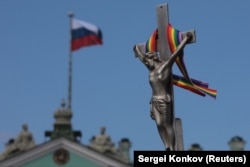
A rainbow-colored ribbon is tied to a crucifix next to a Russian flag fluttering atop the State Hermitage Museum in St. Petersburg last month.

He says he made his way to Morocco and tried to flee to Spain by boat, and that he was rescued after the vessel capsized. An acquaintance in Morocco recommended that he go to Russia, Thierry said.

"He knew someone who could easily send us an invitation to obtain a visa. So he helped, and thank God I obtained a visa. The first time I got a visa I didn't have money for the plane ticket, so the visa I had [expired]. So I got a second visa. That's how I came to Russia. I've been here about three, four months," Thierry said.

He said he left Cameroon "because of violence, because homosexuals are not accepted" there.

"LGBT people are not accepted in Cameroon. We face problems, even death threats in some cases," Thierry said.

He said he feels "a bit more secure here in Russia than in Cameroon."

"The LGBT are not accepted here in Russia, but at least here in Moscow things are different than in Russia's other regions. There are LGBT members that hang out together -- I've found a partner -- so it's not as bad as in Cameroon," Thierry said.

Grounds For Optimism?

LGBT applicants in Russia face a steep challenge in securing asylum or refugee status in Russia. The country had a total of 598 recognized refugees in 2017, the lowest number since 2008, according to official data.

Of the 228,392 people who received temporary asylum in 2017, nearly 99 percent were from Ukraine, where fighting between Russia-backed separatists and Kyiv's forces in the east have killed more than 10,300 since April 2014.

Tretyak of the Civic Assistance Committee said her organization doesn't know "of a single case in which an applicant was granted refugee status or temporary asylum by claiming that he or she is persecuted in their homeland due to their sexual orientation."

Regarding the six LGBT applicants in Russia the group has worked with this year, Tretyak said: "We're very interested to see what immigration services say this time about why they decide not to grant these individuals refugee status."

But there may be some grounds for optimism for the asylum seekers.

Anastasia Soltanovskaya, a spokeswoman for the United Nations High Commissioner for Refugees (UNHCR) in Russia, told RFE/RL that while Interior Ministry data shows that "very few" people receive refugee status in Russia, "we have had LGBTI cases that received temporary asylum."

RFE/RL correspondents Golnaz Esfandiari, Merkhat Sharipzhanov, and Sirojiddin Tolibov contributed to this report.

  • 16x9 Image

    Carl Schreck

    Carl Schreck is an award-winning investigative journalist who has covered Russia and the former Soviet Union for more than 20 years, including a decade in Moscow. He has led investigations into corruption, cronyism, and disinformation campaigns in Russia and Central Asia, as well as on poisoning attacks against Kremlin opponents and assassinations of Iranian exiles in the West. He served as enterprise editor at RFE/RL before leaving the organization in 2025.

This item is part of
XS
SM
MD
LG