



Accessibility links

Breaking News

Victims Of Stalin's Great Terror Commemorated In Russia; Imprisoned Kremlin Critics Hold Hunger Strike

Updated
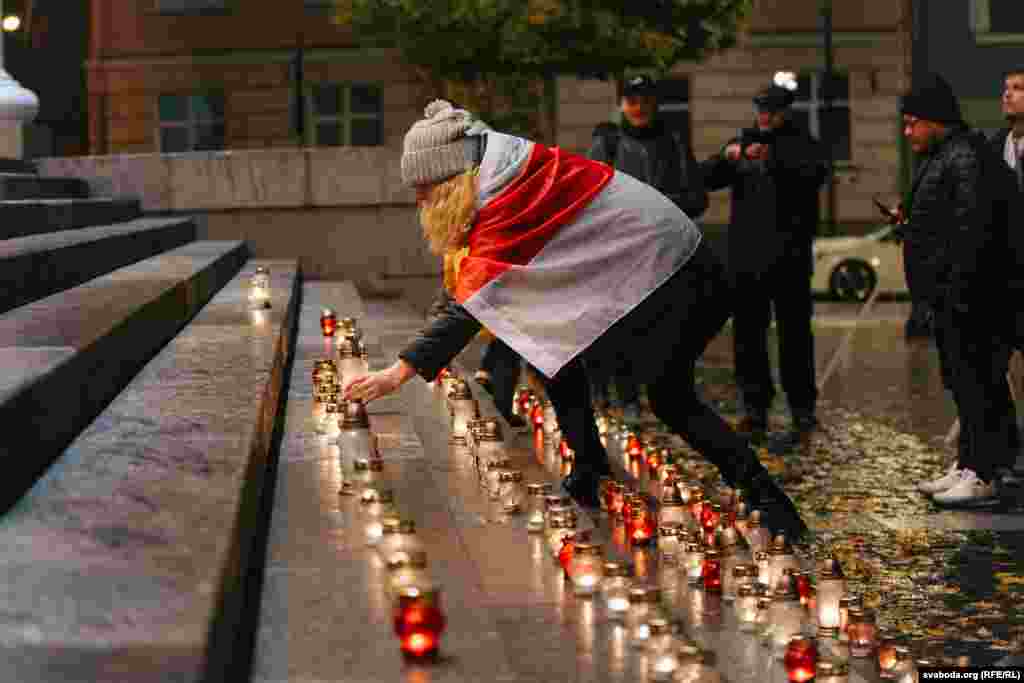
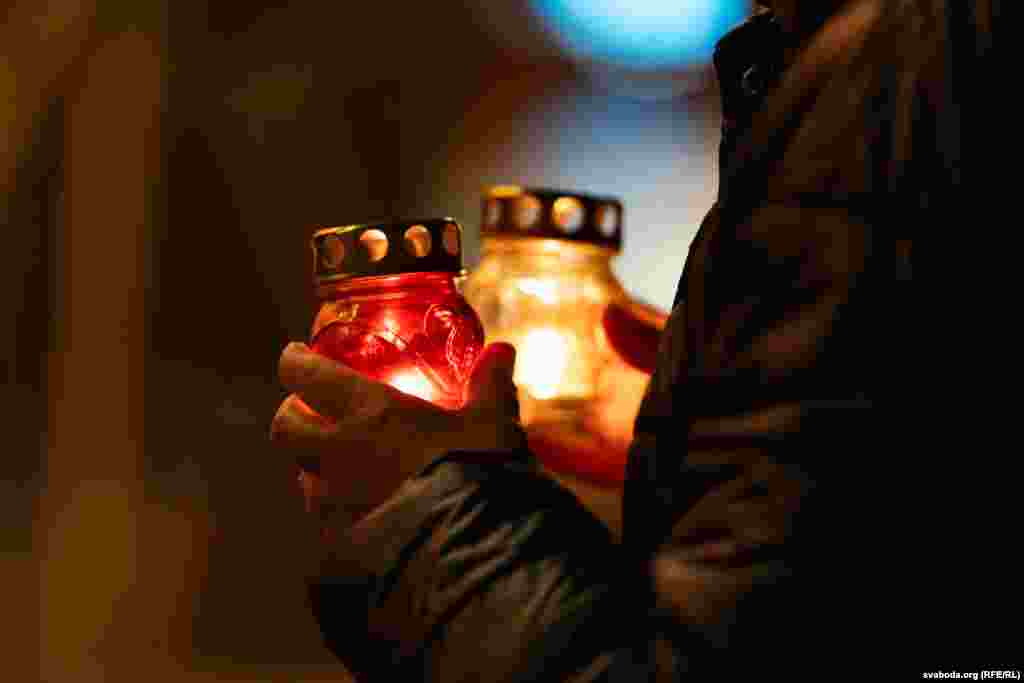
A woman wearing the white-red-white flag of the Belarusian Democratic Republic places a candle on the steps of Vilnius city hall in Lithuania on October 29.<br />
<br />
A total of 132 candles were lit in memory of Belarusian intellectuals, poets, politicians, artists, and scientists who were executed on October 29&ndash;30, 1937.&nbsp;
1/11 A woman wearing the white-red-white flag of the Belarusian Democratic Republic places a candle on the steps of Vilnius city hall in Lithuania on October 29.

A total of 132 candles were lit in memory of Belarusian intellectuals, poets, politicians, artists, and scientists who were executed on October 29–30, 1937. 
In both Lithuania and Russia, memorials took place to mark the Day of Remembrance for Victims of Political Repression including those who were executed during Soviet dictator Josef Stalin's Great Terror campaign in the 1930s-1950s.
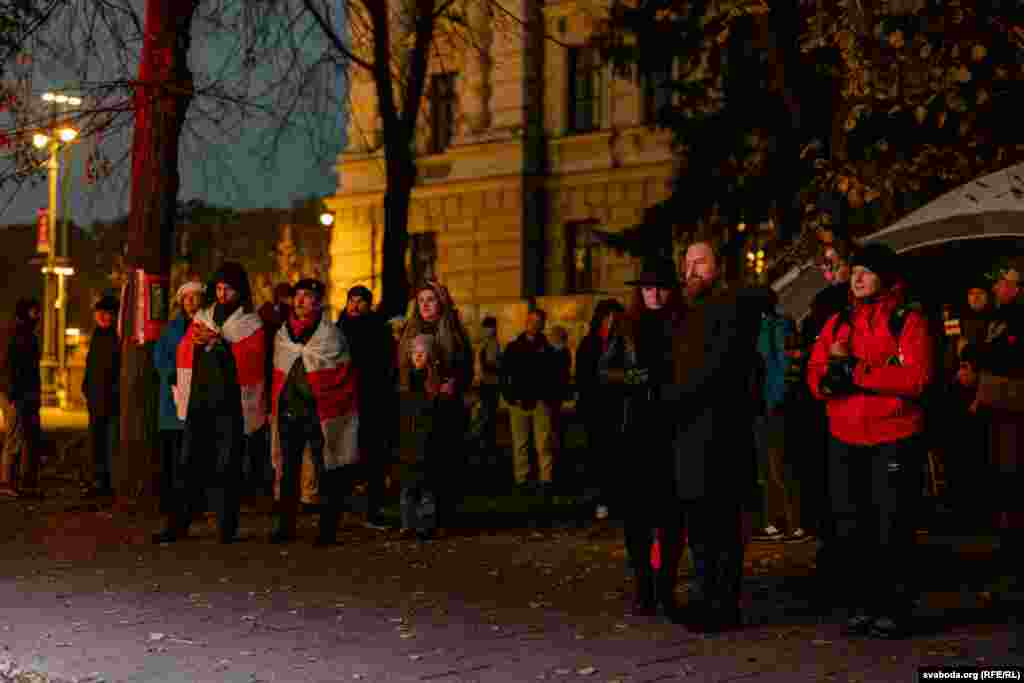
Onlookers stand by during the solemn memorial.<br />
<br />
The persecution in Belarus was part of&nbsp;Soviet dictator Josef Stalin&#39;s repressive policies aimed at eradicating perceived threats to his regime. The killings that took place on October 29&ndash;30, 1937, became known as the Night of the Shot Poets.<br />
&nbsp;
2/11 Onlookers stand by during the solemn memorial.

The persecution in Belarus was part of Soviet dictator Josef Stalin's repressive policies aimed at eradicating perceived threats to his regime. The killings that took place on October 29–30, 1937, became known as the Night of the Shot Poets.
 
In both Lithuania and Russia, memorials took place to mark the Day of Remembrance for Victims of Political Repression including those who were executed during Soviet dictator Josef Stalin's Great Terror campaign in the 1930s-1950s.
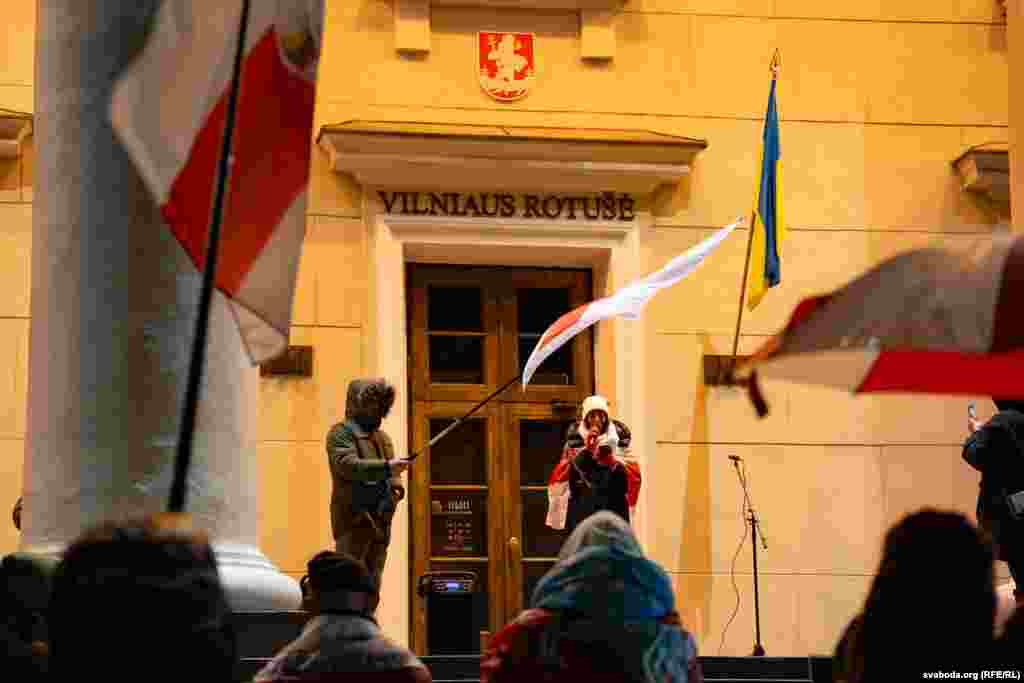
Poems by executed poets are read aloud in Vilnius as Belarusian exiles wave the white-red-white flag, which became a symbol of political activists after Belarus gained independence in 1991.<br />
<br />
The flag was replaced following a 1995 referendum but was then adopted by anti-government protesters in 2020-21 during demonstrations against&nbsp;authoritarian Belarusian leader Alyaksandr Lukashenka. Protesters who displayed the flag faced arrest in a violent crackdown.
3/11 Poems by executed poets are read aloud in Vilnius as Belarusian exiles wave the white-red-white flag, which became a symbol of political activists after Belarus gained independence in 1991.

The flag was replaced following a 1995 referendum but was then adopted by anti-government protesters in 2020-21 during demonstrations against authoritarian Belarusian leader Alyaksandr Lukashenka. Protesters who displayed the flag faced arrest in a violent crackdown.
In both Lithuania and Russia, memorials took place to mark the Day of Remembrance for Victims of Political Repression including those who were executed during Soviet dictator Josef Stalin's Great Terror campaign in the 1930s-1950s.
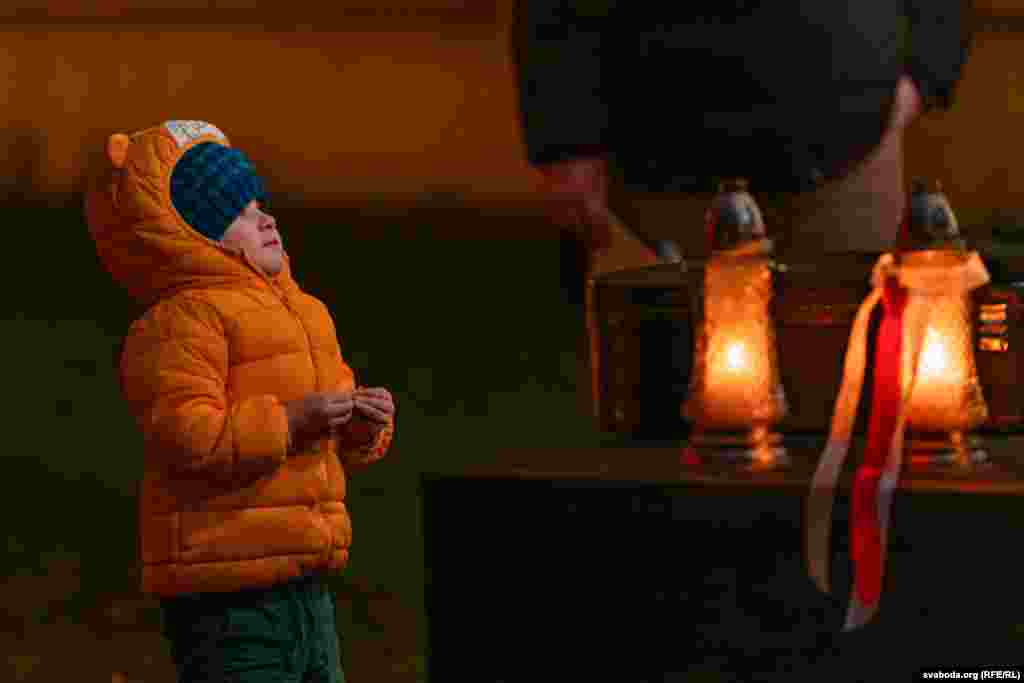
A child looks on during the memorial in the Lithuanian capital. Vilnius has become home to thousands of Belarusian exiles who left their country after the violent crackdown on demonstrations that erupted after Lukashenka declared victory in a 2020 presidential election widely seen as rigged.
4/11 A child looks on during the memorial in the Lithuanian capital. Vilnius has become home to thousands of Belarusian exiles who left their country after the violent crackdown on demonstrations that erupted after Lukashenka declared victory in a 2020 presidential election widely seen as rigged.
In both Lithuania and Russia, memorials took place to mark the Day of Remembrance for Victims of Political Repression including those who were executed during Soviet dictator Josef Stalin's Great Terror campaign in the 1930s-1950s.
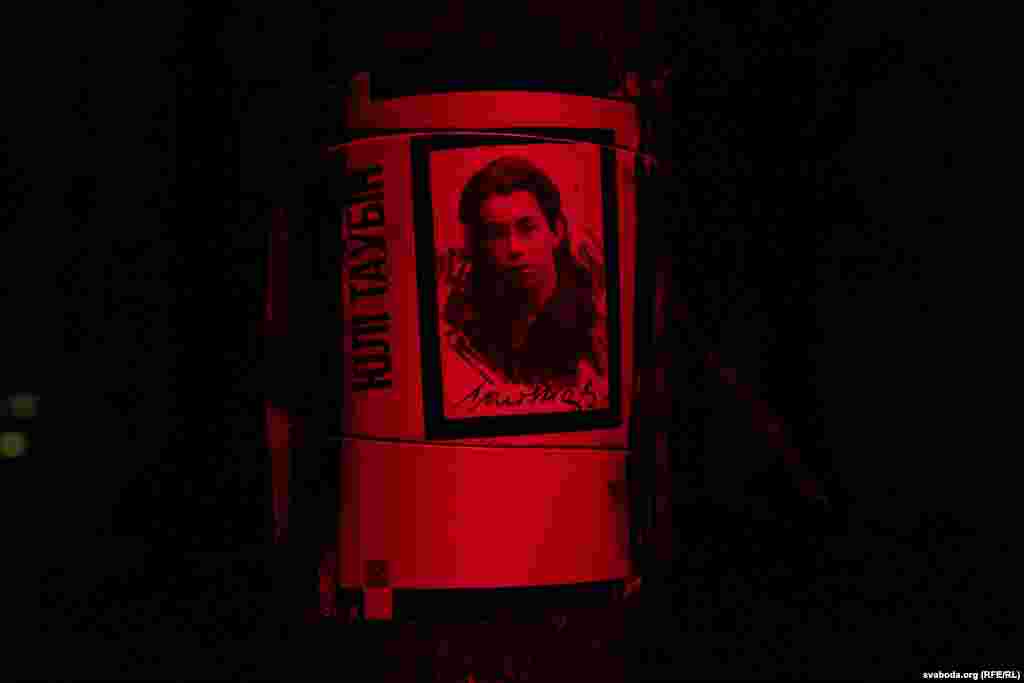
A poster of poet Yuli Taubin, who was 26 years old when he was executed during Stalin&#39;s purges.<br />
<br />
Millions of Soviet citizens were killed, tortured, imprisoned, or exiled by the Soviet state.&nbsp;
5/11 A poster of poet Yuli Taubin, who was 26 years old when he was executed during Stalin's purges.

Millions of Soviet citizens were killed, tortured, imprisoned, or exiled by the Soviet state. 
In both Lithuania and Russia, memorials took place to mark the Day of Remembrance for Victims of Political Repression including those who were executed during Soviet dictator Josef Stalin's Great Terror campaign in the 1930s-1950s.
Belarusian exiles look on during the memorial in Vilnius.
6/11 Belarusian exiles look on during the memorial in Vilnius.
In both Lithuania and Russia, memorials took place to mark the Day of Remembrance for Victims of Political Repression including those who were executed during Soviet dictator Josef Stalin's Great Terror campaign in the 1930s-1950s.
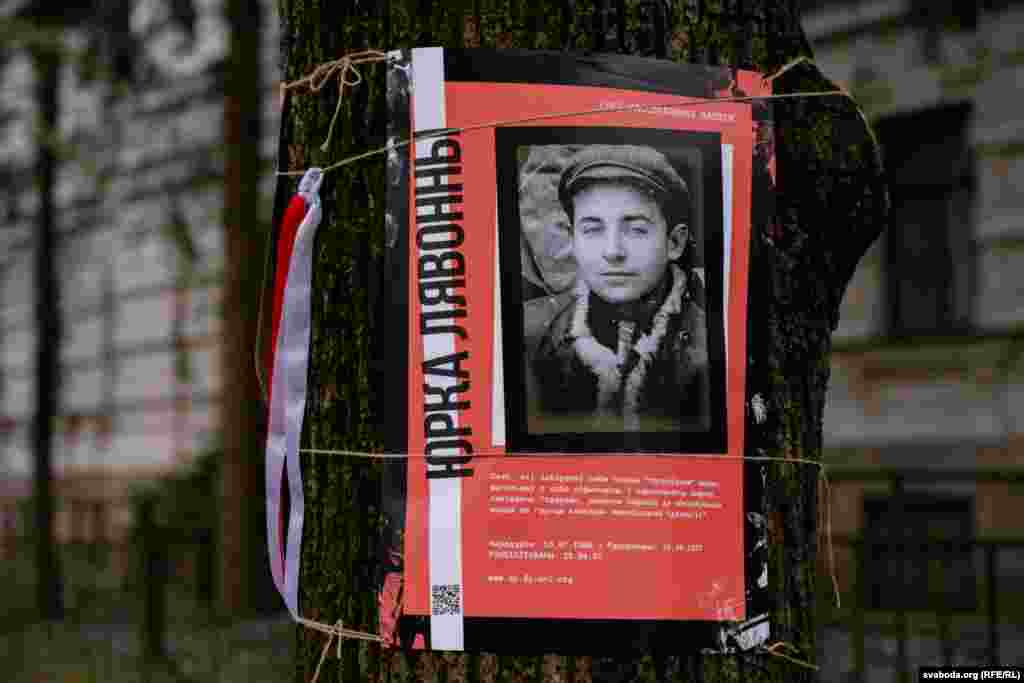
Another poster of an executed victim in Vilnius.<br />
<br />
&quot;Against the backdrop of mass killings and arrests, wherever they occur, the reminder of the cost of each individual life is felt all the more poignantly,&rdquo; the Nobel Peace Prize-winning rights organization Memorial said in an&nbsp;<strong><a href="https://october29.ru/" target="_blank">online statement</a></strong>.
7/11 Another poster of an executed victim in Vilnius.

"Against the backdrop of mass killings and arrests, wherever they occur, the reminder of the cost of each individual life is felt all the more poignantly,” the Nobel Peace Prize-winning rights organization Memorial said in an online statement.
In both Lithuania and Russia, memorials took place to mark the Day of Remembrance for Victims of Political Repression including those who were executed during Soviet dictator Josef Stalin's Great Terror campaign in the 1930s-1950s.
As Belarusian exiles lit candles in Vilnius, commemorations for the victims of Soviet repression were also held in Russia on October 29 at an event organized by the Memorial human rights group, which has itself been banned.
8/11 As Belarusian exiles lit candles in Vilnius, commemorations for the victims of Soviet repression were also held in Russia on October 29 at an event organized by the Memorial human rights group, which has itself been banned.
In both Lithuania and Russia, memorials took place to mark the Day of Remembrance for Victims of Political Repression including those who were executed during Soviet dictator Josef Stalin's Great Terror campaign in the 1930s-1950s.
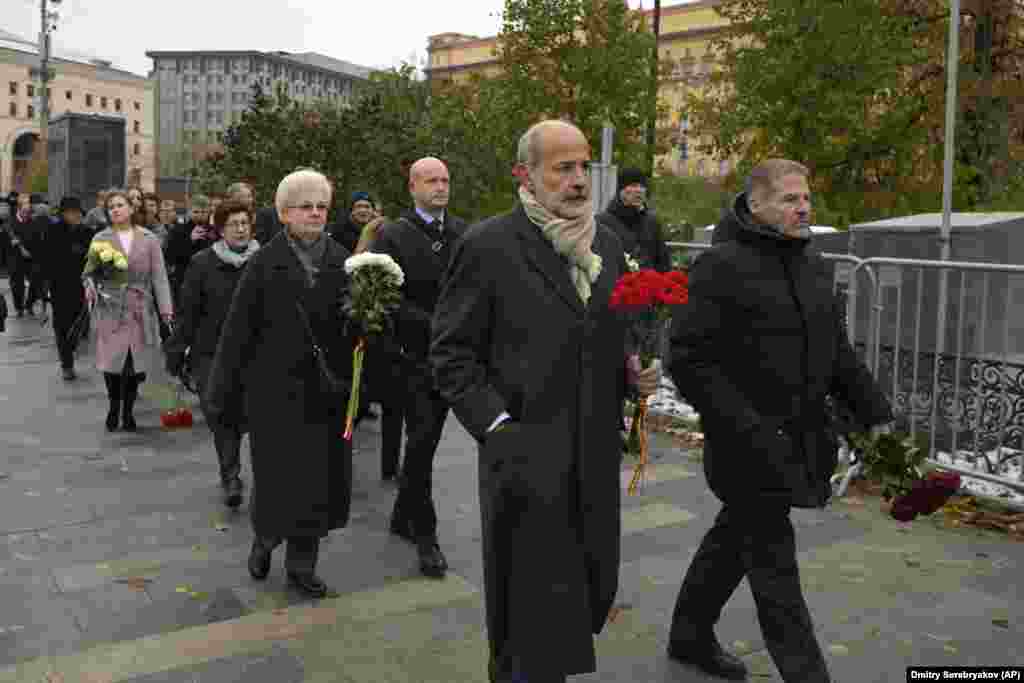
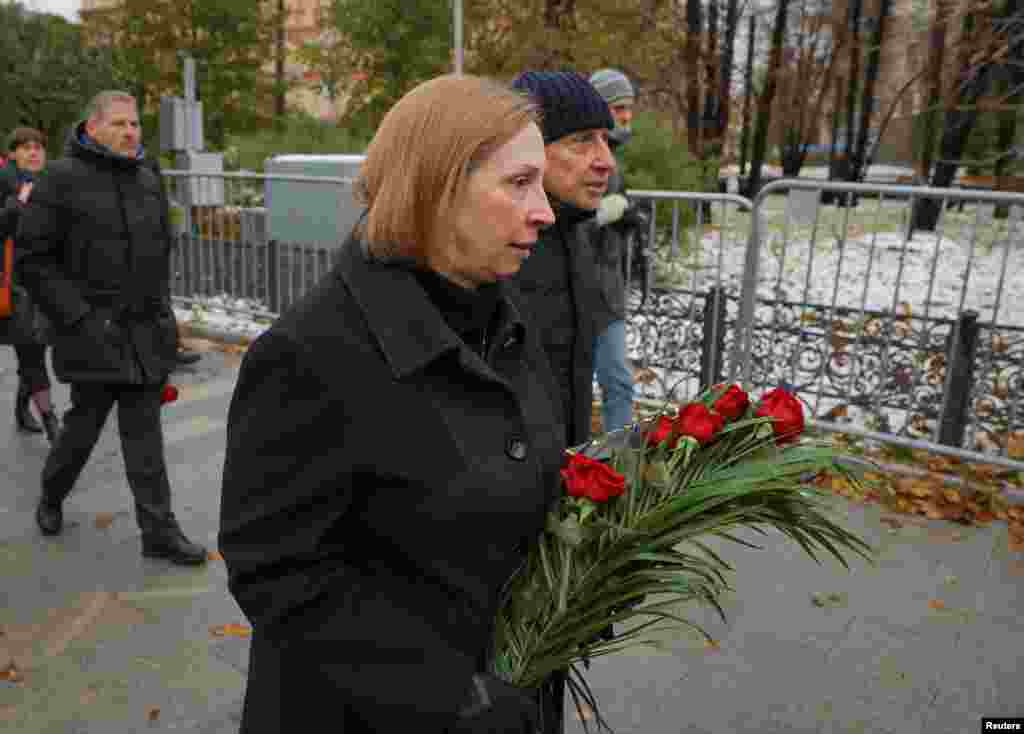
In Moscow, members of diplomatic missions carry flowers to a monument near the Federal Security Service building on the eve of Russia&#39;s Remembrance Day for the Victims of Political Repression.&nbsp;The ceremony was held at the Solovetsky Stone monument, a large boulder from the Solovetsky Islands, where the first camp of the gulag political-prison system was located.<br />
<br />
The October 29 event came amid a Kremlin crackdown on dissent more than 20 months after Russia&#39;s full-scale invasion of Ukraine.<br />
&nbsp;
9/11 In Moscow, members of diplomatic missions carry flowers to a monument near the Federal Security Service building on the eve of Russia's Remembrance Day for the Victims of Political Repression. The ceremony was held at the Solovetsky Stone monument, a large boulder from the Solovetsky Islands, where the first camp of the gulag political-prison system was located.

The October 29 event came amid a Kremlin crackdown on dissent more than 20 months after Russia's full-scale invasion of Ukraine.
 
In both Lithuania and Russia, memorials took place to mark the Day of Remembrance for Victims of Political Repression including those who were executed during Soviet dictator Josef Stalin's Great Terror campaign in the 1930s-1950s.
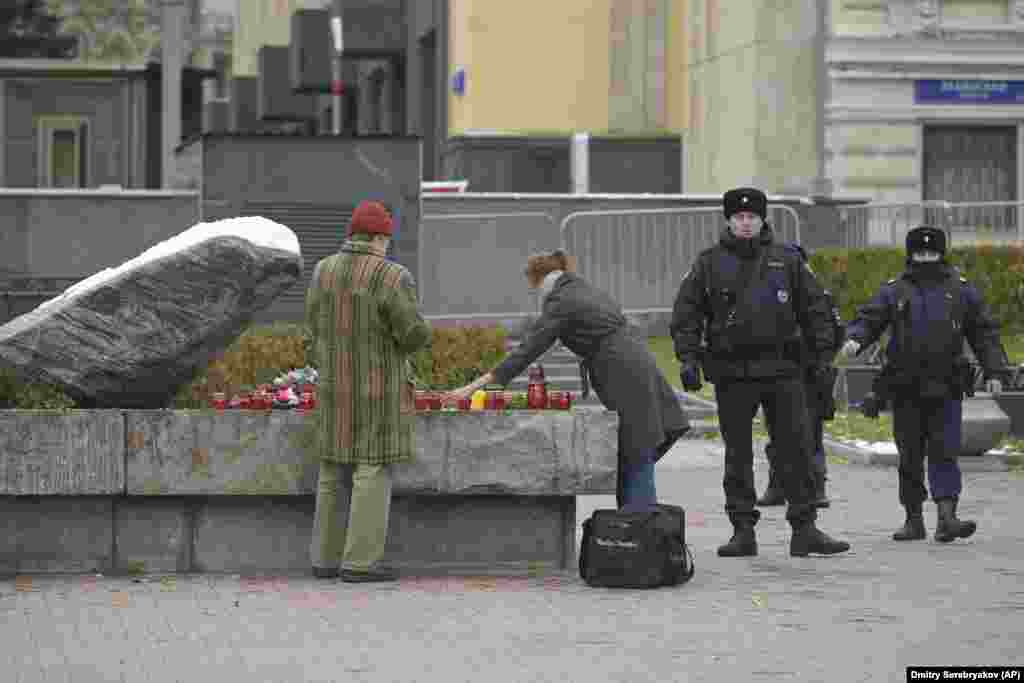
The Memorial human rights group said two police wagons were parked near the Solovetsky Stone memorial and only groups of three or fewer people were allowed to pass through.<br />
<br />
&quot;For the first time, perhaps, when we came to the Solovetsky Stone, we saw that the square was cordoned off. Today, this is the attitude toward the memory of the victims of repression. Not to gather more than three -- it looks like a mockery of the memory of the victims,&quot; veteran human rights defender Yan Rachinsky said.
10/11 The Memorial human rights group said two police wagons were parked near the Solovetsky Stone memorial and only groups of three or fewer people were allowed to pass through.

"For the first time, perhaps, when we came to the Solovetsky Stone, we saw that the square was cordoned off. Today, this is the attitude toward the memory of the victims of repression. Not to gather more than three -- it looks like a mockery of the memory of the victims," veteran human rights defender Yan Rachinsky said.
In both Lithuania and Russia, memorials took place to mark the Day of Remembrance for Victims of Political Repression including those who were executed during Soviet dictator Josef Stalin's Great Terror campaign in the 1930s-1950s.
Lynne Tracey, the U.S. ambassador to Russia, was also present.<br />
<br />
Since 2006, Memorial has arranged an event called Returning of the Names, during which the names of those who were subjected to repression under Stalin are read out. The authorities, however, refused to grant authorization for the names to be read in 2020.
11/11 Lynne Tracey, the U.S. ambassador to Russia, was also present.

Since 2006, Memorial has arranged an event called Returning of the Names, during which the names of those who were subjected to repression under Stalin are read out. The authorities, however, refused to grant authorization for the names to be read in 2020.
In both Lithuania and Russia, memorials took place to mark the Day of Remembrance for Victims of Political Repression including those who were executed during Soviet dictator Josef Stalin's Great Terror campaign in the 1930s-1950s.
Previous slide
Next slide

Imprisoned Russian politicians -- including Kremlin critics Aleksei Navalny and Vladimir Kara-Murza -- along with other activists are holding a one-day hunger strike on October 30 to honor political prisoners as residents of towns and cities in several Russian regions marked the Day of Remembrance for Victims of Political Repression.

The hunger strike was initiated earlier in October by Navalny, Kara-Murza, and others including Lilia Chanysheva, Daniel Kholodny, Vadim Ostanin, and Mikhail Kriger, all of whom have been recognized as political prisoners by Russian human rights groups.

Under Stalin, millions of Soviet citizens were killed, tortured, imprisoned, or exiled by the Soviet state. Nostalgia for Stalin and for the Soviet Union has flourished under President Vladimir Putin, a former KGB officer who has praised the dictator as an “effective manager.”

October 30 was chosen to honor gulag inmates in the Russian regions of Mordovia and Perm who started a mass hunger strike on that day in 1974, protesting political persecution in the Soviet Union.

"In this situation, we think it is right for us to turn to our roots and traditions," the group of activists said when announcing the hunger strike.

Navalny's website said on October 30 that a book based on the answers of Russian political prisoners to questions by noted Russian writer Boris Akunin (Grigori Chkhartishvili), who currently resides in London, was issued to mark the day.

"The inaction of good people is enough for evil's triumph.... The hypocrisy of neutrality, indifference to politics, withdrawing to cover up laziness, cowardness, and turpitude are major reasons why a small group of well-organized wrongdoers have mistreated millions in the course of humankind's history," Navalny told Akunin, adding that "in the current dramatic times, I love Russia not less than always, as I know how to differentiate the government from the people."

In the Far Eastern city of Magadan, local residents gathered near the Mask of Sorrow monument close to the city and held an action called Not To Be Forgotten. The participants read aloud the names, ages, occupations, dates of trials or executions of their relatives during the Soviet dictator Josef Stalin's Great Terror campaign in the 1930s-1950s.

The Mask of Sorrow monument designed by late Russian-American sculptor Ernst Neizvestny, whose parents were victims of the Stalinist repressions in the 1930s, is located on the Krutaya hill near Magadan, where the gulag's major transit prison was once located.

In the city of Birobidzhan, local authorities and residents laid flowers at a monument honoring Soviet repression victims. It is believed that about 6,000 residents of the surrounding Jewish Autonomous Region were persecuted during Stalin's purge.

Meanwhile, in the capital of the Siberian region of Buryatia, Ulan-Ude, a makeshift memorial appeared near a monument commemorating victims of Soviet-era repression to honor 59 victims from the Ukrainian village of Hroza who were killed by a Russian missile strike on October 5. The makeshift memorial consisted of flowers and posters, saying " Village of Hroza," and "Stop Putin -- Stop the War."

Authorities in two major Siberian cities, Novosibirsk and Tomsk, canceled events without explanation but dozens of local residents in the two cities laid flowers to monuments commemorating victims of Soviet repression.

Police in Yoshkar-Ola, the capital of Russia's Mari El region in the Volga Federal District, detained local resident Kirill Voitovich, who came to the event to honor victims of Soviet-era repression on October 30 with a poster in Belarusian saying "The Night of Poets or Black Night, October 29-30. Eternal memory of the Bolshevik terror's victims. Live on forever."

Voitovich was marking October 29-30, 1937, when the Soviet security service, the NKVD, executed at least 132 Belarusian and Jewish intellectuals. The mass executions are known as the Night of Poets or Black Night.

A day earlier, hundreds of people in Moscow honored the memory of thousands of men and women executed by the Soviet authorities. The event held near the former KGB headquarters in the Russian capital was attended by foreign diplomats.

Similar events were held in several other towns and cities across Russia on October 29.

  • 16x9 Image

    RFE/RL's Russian Service

    RFE/RL's Russian Service is a multi-platform alternative to Russian state-controlled media, providing audiences in the Russian Federation with informed and accurate news, analysis, and opinion.

  • 16x9 Image

    RFE/RL's Siberia.Realities

    Siberia.Realities is a regional news outlet of RFE/RL's Russian Service.

  • 16x9 Image

    RFE/RL's Idel.Realities

    Idel.Realities is a regional news outlet of RFE/RL's Tatar-Bashkir Service.

This item is part of
XS
SM
MD
LG