




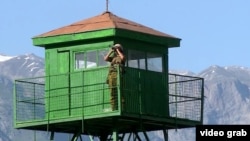
DUSHANBE -– Tajikistan's Foreign Ministry has denied claims that it is in talks with Russia to help guard its border with Afghanistan following an attack that killed five Chinese nationals in the area.
The claim of a stepped-up Russian military footprint stems from a December 2 report by Reuters citing unnamed Tajik security sources who said talks were under way through the Collective Security Treaty Organization (CSTO), a Moscow-led regional security bloc, to deploy Russian troops for joint patrols along the 1,344-kilometer border between the two countries.
Tajik Foreign Ministry spokesman Shohin Samadi told RFE/RL in a December 3 statement the claims were "fabricated."
"By publishing this news, Reuters is providing its readers with unverified information," Samadi said.
In a statement released afterward by the Tajik Foreign Ministry, it said the "situation on the state border remains stable and is under the full control of the competent authorities of the Republic of Tajikistan."
Following the Tajik government's denial, a Reuters spokesperson told RFE/RL on December 3 that the story "has been withdrawn following a post-publication review showing insufficient evidence."
Clashes along the volatile Tajik-Afghan border are not uncommon, but the remote area was thrust into the headlines on November 27 when an attack launched from Afghanistan killed five Chinese workers and wounded five others who were working for a joint Chinese-Tajik gold mining company.
The attack, which Tajik authorities said involved firearms and a drone equipped with an explosive device to strike a facility housing mine workers, has left Tajik President Emomali Rahmon under pressure with the safety of Chinese nationals under threat in the country of around 11 million people.
Beijing advised its citizens, many of whom work in mining and other business activities across the country, to immediately leave the border area on December 1.
Since 2010, China has emerged as the Tajikistan's largest trade partner, foreign investor, and lender, with Beijing owning more than half of Dushanbe's foreign debt. China has taken pole position in the country's economy, building new roads and investing in sectors such as telecommunications, agriculture, and mining.
Trading Accusations
Dushanbe and Kabul have accused each other of harboring armed groups since the Taliban seized power in Afghanistan in 2021. Tajikistan was the only neighboring country to publicly oppose the Taliban's return to power, calling the militant group a threat to regional stability.
The Taliban government last week blamed an unnamed group that it said was trying to create instability and stated it would cooperate with Tajik authorities around the incident.

Following the attack on Chinese workers, officials from both countries' foreign ministries spoke over the phone.
Rahmon also convened the heads of the country's security agencies on December 1 to discuss the situation along Tajikistan's mountainous border with Afghanistan.
Reuters said in its now withdrawn report that talks were held then about deploying Russian troops for joint patrols with Tajik guards under the auspices of the CSTO but that a final decision was yet to be made.
Moscow already maintains a military presence in the country outside the capital, Dushanbe.
Russian troops previously guarded the Tajik border with Afghanistan, although Dushanbe has independently patrolled the area since 2005.
Tajikistan has also allowed Beijing to jointly operate some border outposts near the Central Asian country's 477-kilometer border with China.
The CSTO did not respond to RFE/RL's request for comment.