




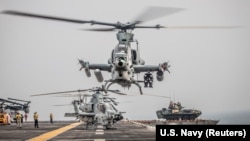
Iran continues to attack oil infrastructure in the Gulf region amid reports that President Donald Trump is weighing the deployment of US troops to bolster operations in the Middle East.
On March 20, Tehran's forces carried out a new round of drone strikes on the region's energy facilities, hitting an oil refinery in Kuwait.
The attack followed a flurry of incidents across the region after Iran vowed to retaliate for an earlier Israeli attack on its major South Pars gas field.
While no casualties were reported, the official Kuwait News Agency said that several refinery units were shut down after the attack caused fires at some of them.
Separately, Iran fired a volley of missiles toward Israel, Saudi Arabia, and the United Arab Emirates, which reportedly intercepted at least four ballistic missiles and 26 drones.
As countries across the Middle East are entering Norouz, the Persian New Year, the war is about to enter its fourth week.
A written Norouz statement attributed to Ayatollah Mojtaba Khamenei, Iran's new supreme leader, declared the new year the "year of the resistance economy in the spirit of national unity and security."
Iran has dealt its enemies a "dizzying blow," said the statement, which was read out on state TV on March 20. It added that "due to the particular unity that has been created between you, our compatriots -- despite all the differences in religious, intellectual, cultural, and political origins -- the enemy has been defeated."
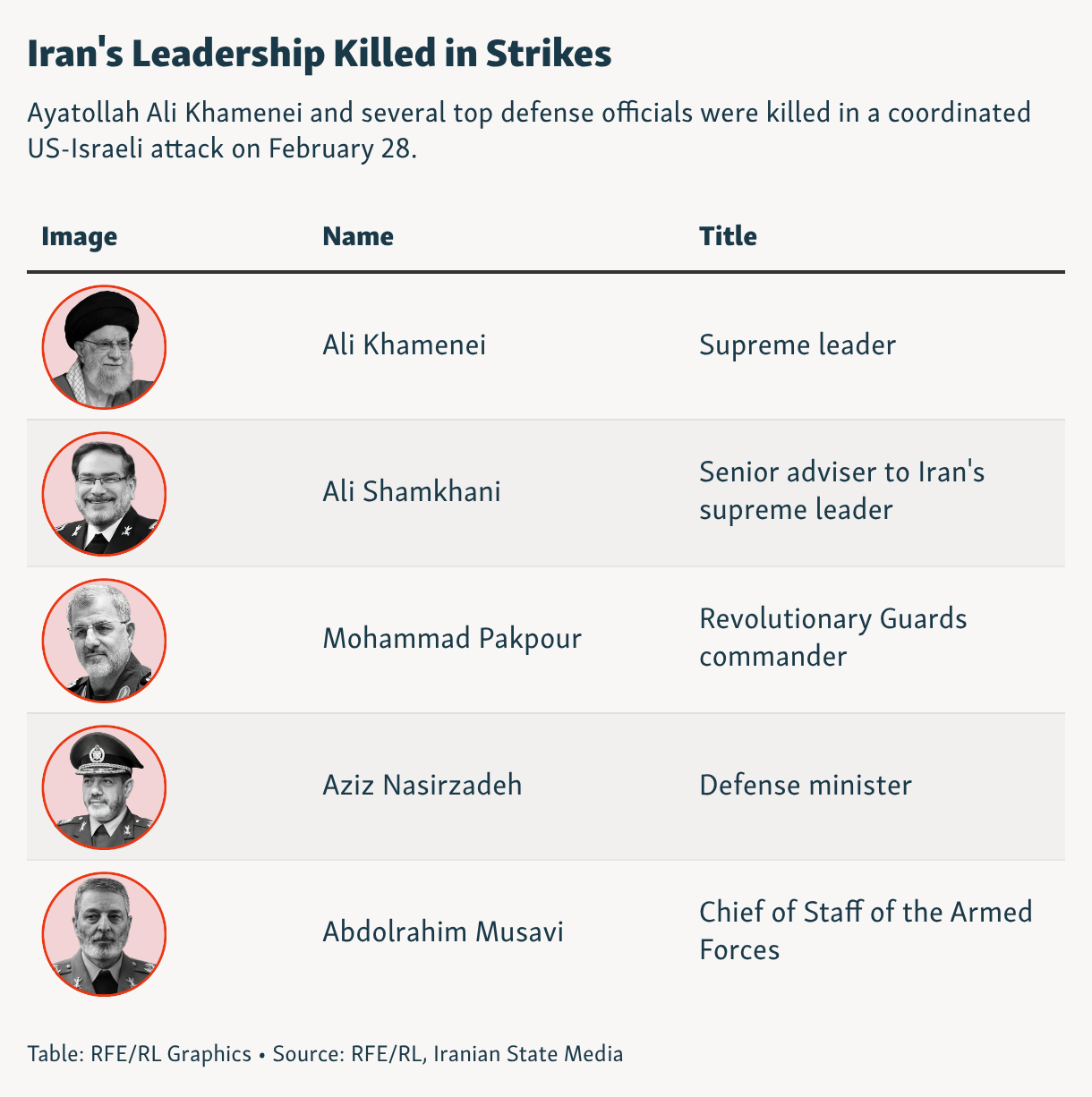
Mojtaba Khamenei has not appeared in public or issued a video or audio statement since his father, Ali Khamenei, was killed in a wave of US-Israeli air strikes at the start of the war on February 28. The longtime former supreme leader is one of numerous top Iranian political, military, and security figures who have been killed.
“Their leaders are all gone," Trump said at a White House event on March 20. He added, "We want to talk to them and there’s nobody to talk to. We have nobody to talk to -- and, you know what, we like it that way.”
Later in the day, Trump said that "from a military standpoint," Iran is "finished" and that "we can have dialogue, but I don’t want to do a cease-fire. You know, you don’t do a cease-fire when you’re literally obliterating the other side.”
US officials have said Mojtaba Khamenei is injured, and Trump earlier this week questioned whether he remained alive.
Adding to the impact of the effective closure of the Strait of Hormuz, a crucial corridor for oil shipments from the Persian Gulf to global markets, attacks on energy facilities across the region mark the most significant recent development in the conflict, spiking oil and gas prices and disrupting global supplies.
Britain on March 20 gave the US the green light to use its bases to strike Iranian missile sites that are launching attacks on ships in the strait.
Ministers meeting to discuss the war and Iran's blockage of the waterway "confirmed that the agreement for the US to use UK bases in the collective self-defense of the region includes US defensive operations to degrade the missile sites and capabilities being used to attack ships in the Strait of Hormuz," the British government said in a statement.
Britain and other Western nations have voiced concern about being drawn into the war. Prime Minister Keir Starmer initially rejected a US request to use UK bases for strikes on Iran, saying he needed to be sure that any military action was legal.
Later on March 20, Trump told reporters, "It's been a very late response from the UK."
Opening the Strait of Hormuz would be a "simple military maneuver" and "relatively safe, but you need a lot of help in the sense that you need ships," he said, adding that "it would be nice" if nations "including China" would get involved.
Is US Sending More Troops?
Multiple US news outlets, citing sources, are reporting that Trump is considering sending thousands of additional US ground troops to the Middle East, a move seen as giving the United States additional options in the war against Iran.
The reports came as Trump himself on March 19 denied he was about to deploy more troops to the region, although appearing to keep the door open: "I'm not putting troops anywhere. If I were, I certainly wouldn't tell you. But I'm not putting troops. We will do whatever is necessary."
A White House official, speaking on condition of anonymity, told Reuters there was no decision made on the matter, as Trump was keeping "all options at his disposal."
"The president is focused on achieving all of the defined objectives of Operation Epic Fury: destroy Iran's ballistic missile capacity, annihilate their navy, ensure their terrorist proxies cannot destabilize the region, and guarantee that Iran can never possess a nuclear weapon."

The Pentagon declined to comment.
Reuters, citing four sources, including two US officials, said additional troops would give Trump more options, including the means to safeguard passage for oil tankers through the Strait of Hormuz.
Such an operation would be carried out mainly by air and naval forces, the sources said, but it would also require deploying US troops to Iran's shoreline.
The US administration has also considered the possibility of deploying ground forces to Iran's Kharg Island, the hub for 90 percent of Iran's oil exports, Reuters reported, citing three people familiar with the matter and three US officials.
One of the officials said such an operation would be quite risky, given that Iran has the ability to strike the island with missiles and drones.
Nikita Smagin, an expert on Iranian foreign and domestic policies, told Current Time that, despite widespread speculation, a ground operation in the Iran conflict seemed unlikely for now.
"Of course, a ground operation seems like a natural next step to many in the current situation if you truly want to bring about a change in power," he said on March 20. "However, it's clear that this is a very complex scenario and, for now, it’s probably not worth pursuing."
"Even with limited capabilities, Iran is still capable of causing serious destruction and can quite effectively block the Strait of Hormuz," Smagin added.
Accelerated Deployment
Newsmax, meanwhile, reported that the US military has already accelerated the deployment of thousands of Marines and sailors to potentially help reinforce its forces fighting against Iran.
Citing three officials speaking on condition of anonymity, the agency reported that the Boxer Amphibious Ready Group and the 11th Marine Expeditionary Unit were deploying ahead of schedule from the West Coast of the United States.
Newsmax reported there are 2,500 Marines in the deployment, bringing the total to about 4,000 service members aboard three amphibious vessels. They house F-35 fighter jets, missiles, and amphibious vehicles capable of launching from ships for a land assault.
The administration has discussed the possibility of deploying US forces to secure Iran's stocks of highly enriched uranium, one of the people familiar with the matter told Reuters.
Politico also reported that the Pentagon is considering sending more troops to the Middle East.
Citing two people familiar with the talks, it reported that the size and scope of additional deployments are still evolving.
Major Risks Involved
Sending ground forces would carry significant risk, both politically and on the ground.
A Reuters/Ipsos poll that closed on March 19 found that 65 percent of Americans believe Trump will order troops into a large-scale ground war in Iran, with just 7 percent expressing support for the idea.
Even without ground forces involved in the fighting, 13 US troops have been killed so far in the war, with about 200 injured, the US military said, although many of the injuries have been minor.
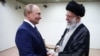
Democrats in Congress would be certain to oppose the idea of deploying additional ground troops to the war theater, and even many in Trump's Republican Party have expressed opposition to further "boots on the ground."

