




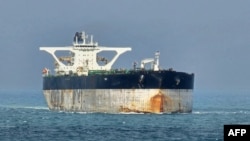
The US seizure of a Russian-flagged oil tanker in the North Atlantic dramatically raises the stakes in Washington's naval blockade of Venezuela, blowing apart an apparent Kremlin strategy to reflag its shadow fleet ships to offer them protection and stoking wider tensions with Moscow.
Some 21 flagless vessels have adopted Russia's flag since the United States seized a shadow fleet tanker called the Skipper in the Caribbean on December 10, according to data from Windward, a maritime intelligence company.
That was followed by US President Donald Trump's announcement of a blockade of sanctioned oil tankers entering and leaving Venezuela and led to US seizures of other vessels.
Normally a flagged ship can only be boarded with the permission of the flag-granting nation, while a flagless vessel enjoys no such legal protection. But despite Moscow's warnings to back off, US Coast Guard helicopters descended on the Marinera, recently renamed from Bella 1, and took control of it.
Russia's Flag Was No Help
"This individual action threatens to undermine the security and sanctuary that registering or re-registering in Russia might otherwise create," John Burgess, senior fellow at the Center for International Law and Governance at Tufts University, told RFE/RL on January 7.
The Marinera had only adopted the Russian flag on December 30 following an earlier US boarding attempt as it approached Venezuelan waters. Burgess said this made the Marinera's status "ambiguous," meaning its newly adopted Russian flag, which the crew even daubed on the ship's hull, was no help.
"It was a legal boarding with some questions associated with it. Ships are not supposed to change flags for convenience. There's supposed to be a substantive reason," he said.
Washington appeared to take a similar view.
"The vessel was deemed stateless after flying a false flag," White House Press Secretary Karoline Leavitt told reporters, dismissing protests from Russian lawmakers that the seizure was "a violation of maritime law" or even "piracy."
Estimates put the size of the shadow fleets used by Russia, Iran, and Venezuela to evade international sanctions at around 1,000 vessels. Their numbers have swelled in recent years as the three nations have sought to maintain oil sales that are vital to their state budgets.
The ships are often old, in poor condition, and lacking insurance. Hundreds of them have been blacklisted by the United States, the European Union, and others -- severely restricting their ability to function but not stopping it entirely.
'A Template' For 'More Seizures'
Shipping industry analysts have already said US actions against flagless ships, as well as recent Ukrainian drone strikes on sanctioned vessels in the Black Sea, have marked a new era of tougher actions against the shadow fleet.
The seizing of the Marinera takes it up a notch further.
"US regulators are watching. More seizures are likely," said Michelle Bockmann, senior maritime intelligence analyst at Windward, said during a webinar on January 7.
Bockmann added the move on the Marinera offered "a template" to Baltic Sea nations that have grappled with "the threat that the dark fleet poses to maritime safety, maritime security, and the environment, especially those that are falsely flagged. The US has shown that it is possible to interdict and to seize and to deal with tankers."

It was also notable that, in the case of the Marinera, the United States did not act alone. Britain's Defense Ministry said the country's air force had provided extra surveillance and navy refueling in support of the US operation.
Diplomatic Fallout
Defense Secretary John Healey said US forces had been allowed to use their bases in the UK for the mission, adding it was justified under international law because the Marinera was part of "a Russian-Iranian axis of sanctions evasion which is fueling terrorism, conflict, and misery from the Middle East to Ukraine."
The statement not only offers a different legal case. It also draws attention to the complex geopolitical backdrop to the seizure of the vessel.
Washington has spent months in negotiations with Russia, Ukraine, and European nations over an end to the war in Ukraine. The latest drafts include security guarantees to Kyiv that were already unacceptable to Moscow.
These events represent a further blow to Moscow's prestige following the US raid that ended with the detention of a key Kremlin ally, the now ousted Venezuelan leader Nicolas Maduro.
The fallout will continue.
It was not immediately clear how many Russian crew were on board the Marinera. Russia's Foreign Ministry has demanded the United States ensure "humane and proper treatment of Russian citizens aboard the Marinera," calling for their rights and interests to be observed. It added that the United States must not hamper their earliest return to Russia.
Washington, however, has raised the prospect that the seafarers will face trial in the United States -- a further source of tension in the days to come.

