




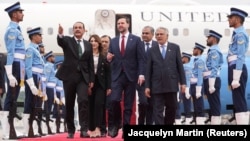
WASHINGTON -- US Vice President JD Vance has stepped into the most consequential diplomatic challenge of his tenure, arriving in Islamabad to lead high-stakes negotiations with Iran.
These talks may ultimately determine whether a fragile, two-week cease-fire holds, or the region collapses back into renewed conflict.
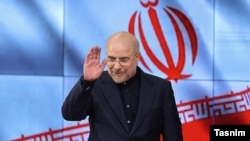
The American delegation includes special envoys Steve Witkoff and Jared Kushner, as well as officials from the National Security Council, State Department, and Pentagon. They face an Iranian team led by Foreign Minister Abbas Araqchi and parliament speaker Mohammad Baqer Qalibaf.

Back in Washington, President Donald Trump has struck a dual tone of optimism and deterrence.
Speaking to reporters on April 10, Trump noted he expects progress that could "open up the Gulf with or without" a formal deal, while simultaneously warning that he would not allow Iran to effectively toll or control the Strait of Hormuz.
Yet, as negotiations are set to begin on April 11, the path to a lasting settlement remains deeply uncertain--shaped by competing pressures, regional conflict dynamics, and fundamental disagreements over the requirements for peace.
Negotiations Born of Pressure, Not Trust
For Ryan Bohl, senior Middle East and North Africa analyst at RANE risk intelligence company, the seriousness of the talks is not in doubt, but their outcome is far from guaranteed.
"The talks are serious," Bohl told RFE/RL on April 10, pointing to a diminished US appetite for prolonged conflict and Iran's urgent need for a pathway toward reconstruction and internal stability.
"But there remains uncertainty as to how much either side is willing to compromise."
In Bohl's assessment, both Washington and Tehran are negotiating under pressure, though the leverage is asymmetrical. Iran believes it holds a strategic advantage through its influence over the Strait of Hormuz and its higher tolerance for short-term strain.

"Iran's political will, in the near term, is not as weak as America's," Bohl said. "They seem to think they can leverage this to gain concessions."
That leverage is psychological as much as it is material. Bohl suggests Tehran is finding opportunity in Washington's inconsistent messaging.
"Tehran likely sees Washington's somewhat erratic communications as a sign of weakness and urgency," he said, adding that this emboldens them to push for concessions such as the unfreezing of assets for reconstruction.
At the same time, Trump's political calculus complicates the US position. Determined not to appear to be conceding to Tehran, the president may limit the flexibility required for a breakthrough, despite domestic vulnerabilities that Bohl suggests could weaken Washington's hand.
Hormuz: Strategic Asset Or Escalatory Trap?
This tension is most visible in the Strait of Hormuz, the vital artery for global energy that Iran has partially restricted.
Dan Arbell, a veteran of the Israeli Foreign Service and scholar-in-residence at American University, describes the situation as precarious.
"The closure of the Strait of Hormuz is still very much in place," Arbell told RFE/RL. While a "trickling passage" of ships continues, Iran has linked full restoration of transit to Israeli operations in Lebanon. "That is certainly undermining the current effort," Arbell added.
Bohl views Iran's posture as a calculated gamble.
"Iran has demonstrated it effectively controls Hormuz for now," he said. "But Trump may still believe he needs to use force to reopen it if Iran uses it as a bargaining chip for too long."
The result is a volatile equilibrium: a strategic chokehold that provides Tehran leverage but risks triggering the very military response it seeks to avoid.
The Lebanon Front: A Potential Deal-Breaker
Complicating the diplomacy is the conflict between Israel and Hezbollah, which has been designated a terrorist organization by the United States and Israel. Iran insists this front cannot be separated from a broader cease-fire.
Bohl underscores that Tehran views the group as essential to deterring future Israeli military campaigns: "Iran cannot let Hezbollah be picked off by the Israelis."
Arbell points to the ongoing violence as a primary obstacle. "Israel is bombing targets across Lebanon...while Hezbollah continues firing rockets into northern Israel," he said.
These developments pose a direct challenge to the Islamabad track.
Parallel efforts are under way to address this. The US State Department is expected to host ambassador-level talks between Israel and Lebanon on April 14 in Washington. However, Arbell warns that expectations should remain modest.
"We have to be realistic," Arbell said. "There will not be change overnight. This is a process." He said that while Israel's priority is the disarmament of Hezbollah, the militant group is unlikely to disarm without a broader regional shift.
US and Israel: Aligned, But Not Identical
A key point of friction lies in whether Israel's campaign in Lebanon should be tied to the US-Iran negotiations. Prime Minister Benjamin Netanyahu has sought to preserve freedom of action against Hezbollah, but that position is shifting under American pressure.

"Israel was advocating not to tie the two," Arbell said. "But in recent days, it's clear the US is expecting Israel to deescalate...to avoid undermining the larger effort."
Arbell clarified that this is a "difference of approach" rather than a rupture in the alliance. While the US is focused on reopening the Strait of Hormuz and stabilizing global markets, Israel remains focused on degrading Hezbollah's capabilities.
He suggested a firmer US message to Netanyahu could emerge over the weekend, urging restraint to give diplomacy a chance.
Limits of Diplomacy And Need for Realism
The core of the negotiations remains anchored in long-standing US demands: curbs on Iran's nuclear program, limits on missile development, and an end to support for regional proxies like Hamas and the Houthis in Yemen.
Arbell cautions that the US cannot expect Iran to "change overnight" or surrender. He argues for a pragmatic approach: "The US needs to bring ideas that can be implemented and accepted. Otherwise, this will not happen."

Both analysts see a convergence of interests in pausing the conflict. Arbell noted that Iran needs "breathing space" to recover from the devastation of recent attacks.
Bohl, however, sees a risk of stalemate. "One realistic off-ramp is mutual exhaustion," he said. But he also warned of a less stable possibility: If Washington exhausts its political will before Tehran, Iran could retain informal control over the Strait of Hormuz, maintaining the ability to disrupt it again in the future.
Why Islamabad Holds the Key
While multiple diplomatic tracks exist, both experts agree that the Islamabad talks carry the most immediate weight.
"I think the Pakistan talks are more important," Arbell concluded. "What happens between the US and Iran has a greater impact on the overall situation." Unlike the complex Israel-Lebanon track, these negotiations could produce outcomes implemented within days.
For Vice President Vance, the moment is defining. Success could stabilize a volatile region and mark a major diplomatic achievement for the administration. Failure risks entrenching a cycle of conflict marked by recurring violence and persistent threats to the global economy.
As talks begin, the question is no longer whether both sides want an off-ramp, but whether they can agree on one before the balance between leverage and escalation collapses.

