


Accessibility links

Breaking News

The Week In Russia: A Storm Of Setbacks And A Call For Constitutional Change

The Russian space program hit a snag on October 11 when a manned Soyuz rocket launch had to be aborted shortly after liftoff.

Editor's Note: To receive Steve Gutterman's Week In Russia each week via e-mail, subscribe by clicking here.

Russian President Vladimir Putin has faced something close to a perfect storm in the past several days, with setbacks on many fronts, ranging from politics and opinion polls to space, soccer, religion regional tension, and more. Meanwhile, a senior judge thinks he has a solution to some of the woes putting pressure on Putin early in his six-year term: "pinpoint" changes in the constitution.

Here are some of the key developments in Russia over the past week, and some of the takeaways going forward.

Поехали!

Here we go.

Five months after Vladimir Putin was sworn in for another stint as president, speculation that his new term would bring steps that could keep him in power after it's over seems to have been spot on.

In an article in the official government newspaper Rossiiskaya Gazeta on October 10, Constitutional Court Chairman Valery Zorkin pointed to "shortcomings" in the post-Soviet constitution that Russia adopted 25 years ago -- but nothing, he wrote, that cannot be fixed with a few "pinpoint" changes.

Sounds simple -- unless you recall what happened when the Russian authorities talked about warplanes conducting "pinpoint strikes" against Chechen rebels in 1999, when Putin was prime minister and soon to be president. The result was something closer to pure devastation.
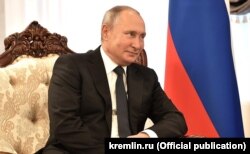
Russian President Vladimir Putin (file photo)

It makes sense for Zorkin to suggest that a major change is not in the cards, though, because Putin may not want to take the most direct path toward staying on as president: abolishing the constitutional limit of two straight Kremlin terms.

While an extension of the Russian presidential term to six years instead of four has added to Putin's time in power since he first got the job in 2000, he has so far been careful to abide by the limit of two straight terms – taking a four-year break in 2008-12 and serving as prime minister again.

Zorkin seemed to say as much when he set up his argument for adjustments by citing what he claimed, without citing evidence, was a spate of "calls for cardinal constitutional reforms."

But his suggestions leave plenty of room for smaller changes that could give Putin ways to maintain ultimate power, or at least a leading role, without actually being president.

'Social Tension'

For one thing, Zorkin said that the current system of checks and balances lacks balance, giving more weight to the executive branch, and that the delimitation of powers between president and cabinet could be clearer.

In addition, he suggested that a two-party system might be more effective than what Russia has now, even pointing to the United States as a positive example: perhaps unexpected props from a judge who in the same article puts the bulk of the blame for "social tension" in today's Russia on Western sanctions – along with "three decades of reforms," a timeframe that goes back to the eras of the last Soviet leader, Milkhail Gorbachev, and Putin's predecessor, Boris Yeltsin.
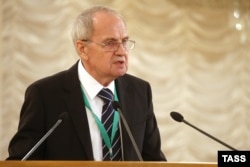
Russian Constitutional Court chairman Valery Zorkin (file photo)

One way to translate that: If Putin has to change the constitution, it's not his fault -- it's the fault of his predecessors, who did not have the best interests of the Russian people in mind, and of the West, which is bent on undermining the former Cold War foe.

Zorkin is not the first Russian to talk about a two-party system in recent months. And with United Russia suffering problems at the polls amid public dismay over an imminent hike in the retirement age, it could make sense for Putin to broaden his support base and curb his reliance on the ruling party.

Party Of One

But the Kremlin has tried to put a two-party system in place at least twice before – and failed. Failed so fully, in fact, that United Russia is often likened to the Communist Party of the Soviet Union.

Zorkin's suggestions were not all about the mechanics and details of the balance of power: He also hinted that the constitution could be changed to enshrine a state ideology -- a system that would combine economic and political competition with what he called the sense of "collectivism that is intrinsic to the Russian people."

To fit the "mentality of the Russian people," he said, the country needs a legal concept that "synthesizes the ideas of individual freedom and social solidarity."

Those words are likely to ring alarm bells among Russians who believe that the rights of individuals should know no borders, and spark concerns that the country's leaders could use claims about a special Russian soul -- and the need for some kind of "third way" for Russia to thrive -- to limit the freedoms of individuals, minorities, or opponents of the Kremlin.

It's not clear whether Zorkin's article presages any sharp turns in the short-term, if ever.

After a constitutional crisis culminated in the bloodshed of October 1993, Yeltsin's constitution was approved in a controversial referendum that December 12 and entered into force on December 25 -- two years after Gorbachev resigned, sealing the Soviet Union's demise. The anniversary might provide Putin with a setting in which to make changes with less of a jolt.

Click image to open gallery

Blood On The Streets: Russia's Constitutional Crisis, 30 Years Later
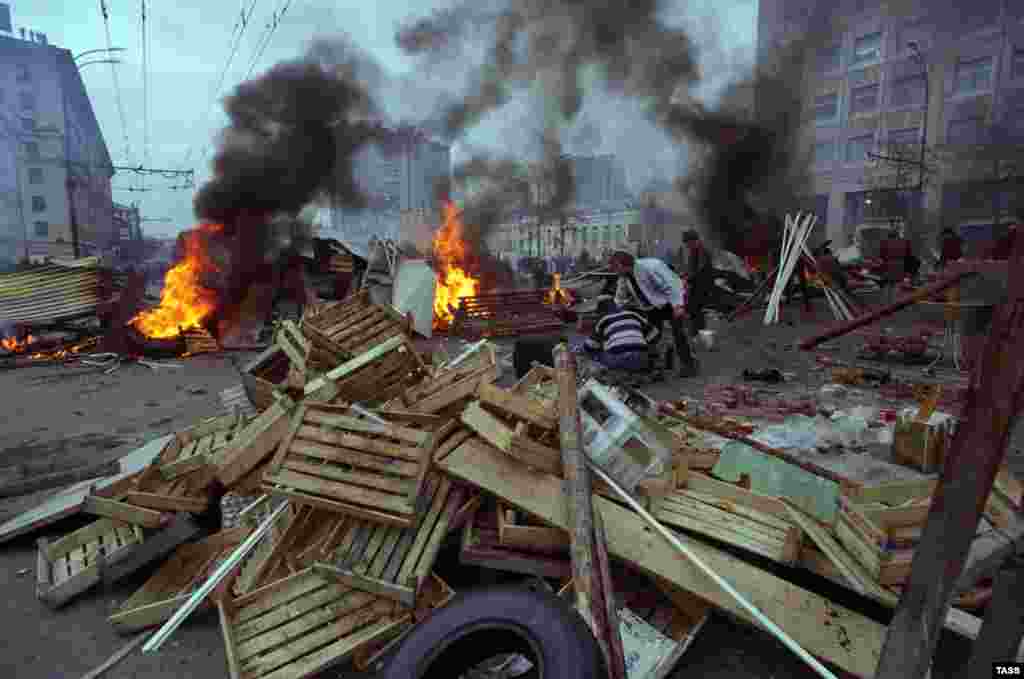
After a prolonged conflict between Russia's Congress of People's Deputies and President Boris Yeltsin, Yeltsin dissolved the legislature on September 21, 1993. Deputies refused to leave the parliament building and their supporters set up barricades in the streets.
1/15 After a prolonged conflict between Russia's Congress of People's Deputies and President Boris Yeltsin, Yeltsin dissolved the legislature on September 21, 1993. Deputies refused to leave the parliament building and their supporters set up barricades in the streets.
Thirty years ago, Russia faced a constitutional crisis that marked a key turning point in Russia's post-Soviet development.
Parliament responded to Yeltsin's decree by impeaching him and declaring Vice President Aleksandr Rutskoi president, setting the stage for a showdown.
2/15 Parliament responded to Yeltsin's decree by impeaching him and declaring Vice President Aleksandr Rutskoi president, setting the stage for a showdown.
Thirty years ago, Russia faced a constitutional crisis that marked a key turning point in Russia's post-Soviet development.
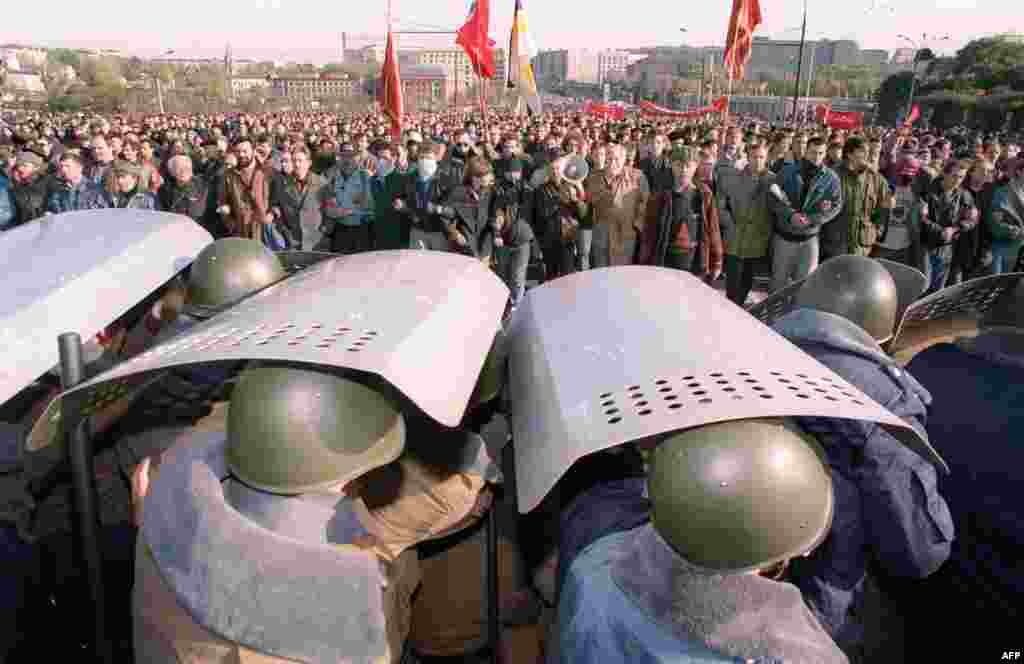
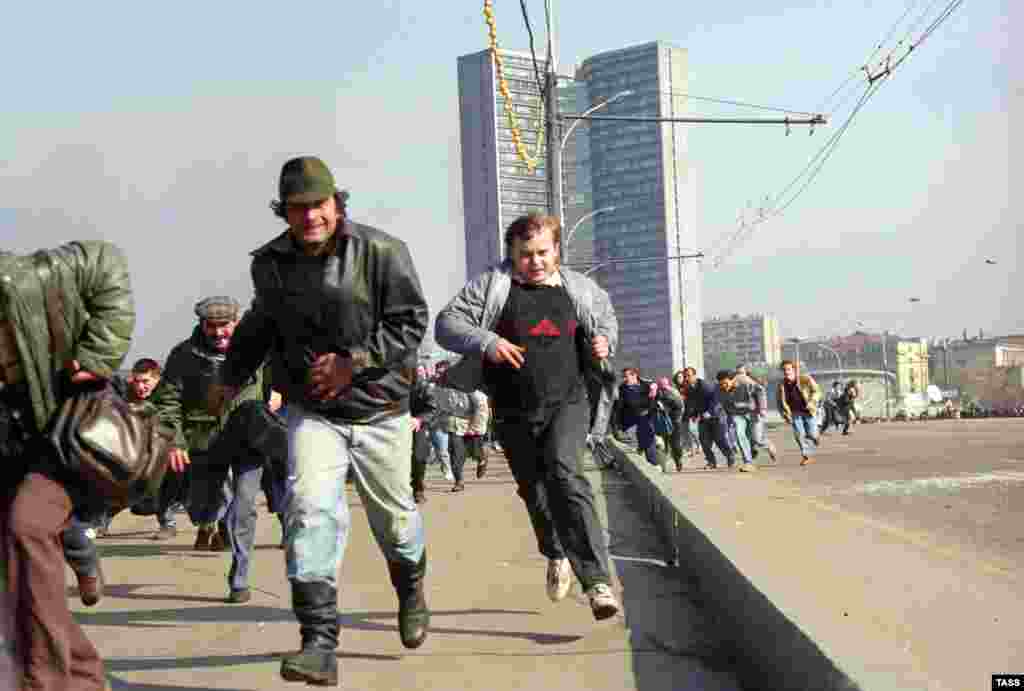
On October 3, thousands of pro-parliament demonstrators -- mostly communist supporters and nationalists -- clashed with riot police.
3/15 On October 3, thousands of pro-parliament demonstrators -- mostly communist supporters and nationalists -- clashed with riot police.
Thirty years ago, Russia faced a constitutional crisis that marked a key turning point in Russia's post-Soviet development.
The Russian Orthodox Church attempted to mediate a compromise between the legislature and the executive branch without success.
4/15 The Russian Orthodox Church attempted to mediate a compromise between the legislature and the executive branch without success.
Thirty years ago, Russia faced a constitutional crisis that marked a key turning point in Russia's post-Soviet development.
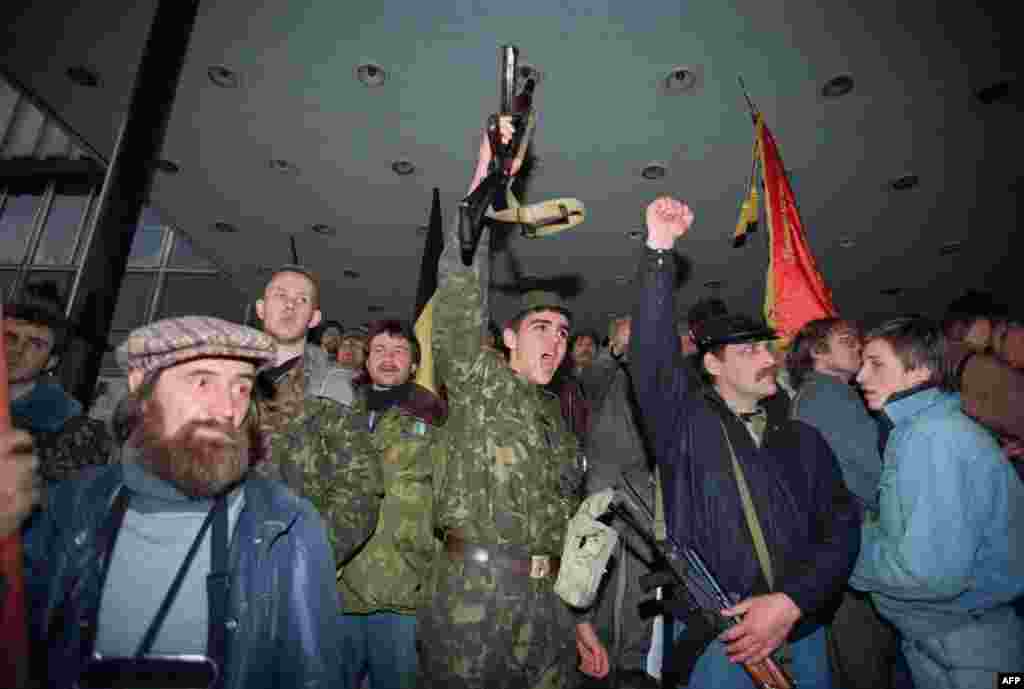
Yeltsin's Interior Ministry estimated that around 600 heavily armed men had taken up the defense of the parliament building by the night of October 3. On October 3, pro-parliament demonstrators broke through police lines surrounding the parliament building. Yeltsin declared a state of emergency in Moscow.
5/15 Yeltsin's Interior Ministry estimated that around 600 heavily armed men had taken up the defense of the parliament building by the night of October 3. On October 3, pro-parliament demonstrators broke through police lines surrounding the parliament building. Yeltsin declared a state of emergency in Moscow.
Thirty years ago, Russia faced a constitutional crisis that marked a key turning point in Russia's post-Soviet development.
Supporters of the parliament took control of the Moscow municipal government building and attempted to storm the Ostankino broadcast center on the night of October 3.
6/15 Supporters of the parliament took control of the Moscow municipal government building and attempted to storm the Ostankino broadcast center on the night of October 3.
Thirty years ago, Russia faced a constitutional crisis that marked a key turning point in Russia's post-Soviet development.
Anti-Yeltsin protesters breaking windows at Moscow's Ostankino broadcast center on the night of October 3.
7/15 Anti-Yeltsin protesters breaking windows at Moscow's Ostankino broadcast center on the night of October 3.
Thirty years ago, Russia faced a constitutional crisis that marked a key turning point in Russia's post-Soviet development.
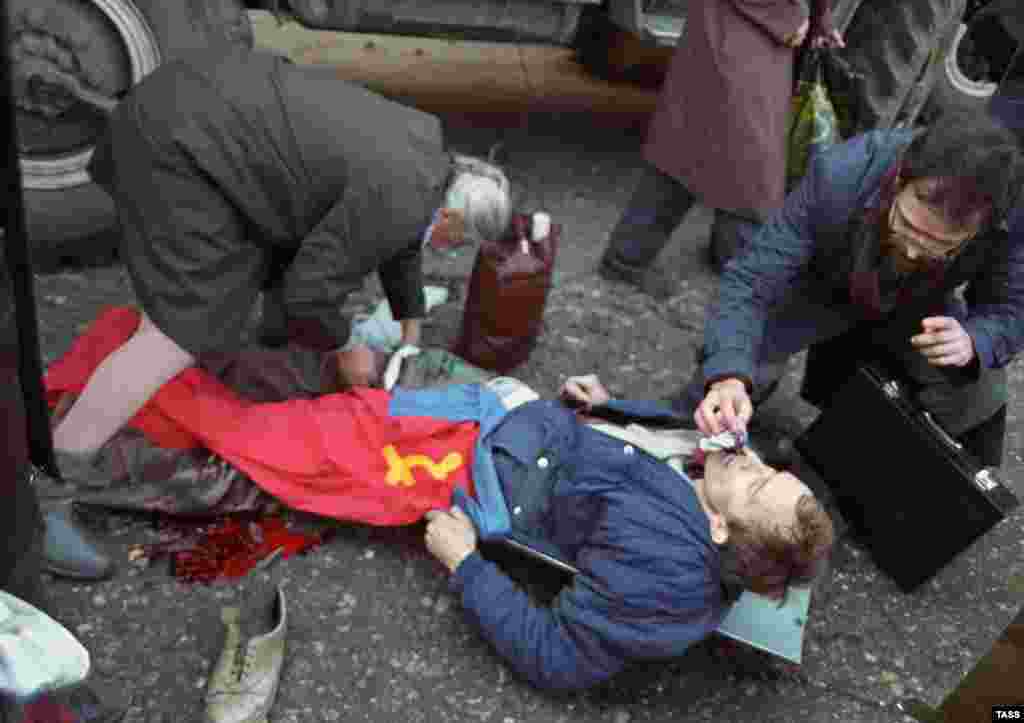
Dozens of people were killed in the fighting on October 3. First Deputy Prime Minister Yegor Gaidar appeared on television and called for Yeltsin's supporters to demonstrate.
8/15 Dozens of people were killed in the fighting on October 3. First Deputy Prime Minister Yegor Gaidar appeared on television and called for Yeltsin's supporters to demonstrate.
Thirty years ago, Russia faced a constitutional crisis that marked a key turning point in Russia's post-Soviet development.
Around 8 a.m. on October 4, tanks opened fire on the upper floors of the parliament building, preparing the way for an assault by elite counterterrorism units.
9/15 Around 8 a.m. on October 4, tanks opened fire on the upper floors of the parliament building, preparing the way for an assault by elite counterterrorism units.
Thirty years ago, Russia faced a constitutional crisis that marked a key turning point in Russia's post-Soviet development.
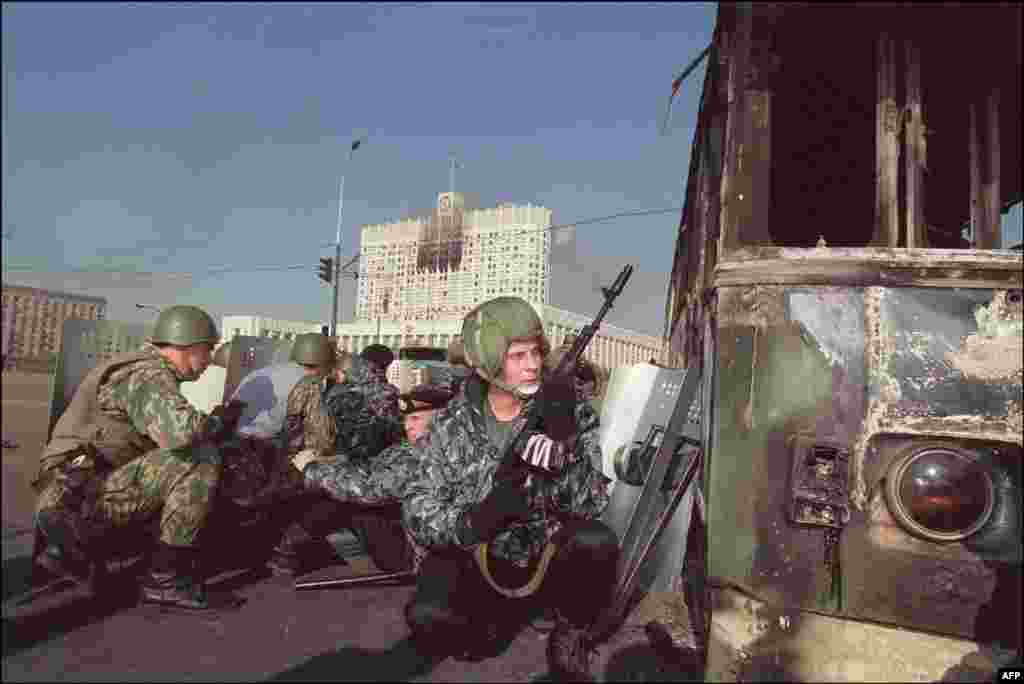
Russian special forces taking cover on the morning of October 4 shortly before assaulting the parliament building.
10/15 Russian special forces taking cover on the morning of October 4 shortly before assaulting the parliament building.
Thirty years ago, Russia faced a constitutional crisis that marked a key turning point in Russia's post-Soviet development.
By midday, troops had entered the parliament building and had begun clearing it floor by floor. Order was slowly restored in the streets, although occasional sniper fire continued throughout the day.
11/15 By midday, troops had entered the parliament building and had begun clearing it floor by floor. Order was slowly restored in the streets, although occasional sniper fire continued throughout the day.
Thirty years ago, Russia faced a constitutional crisis that marked a key turning point in Russia's post-Soviet development.
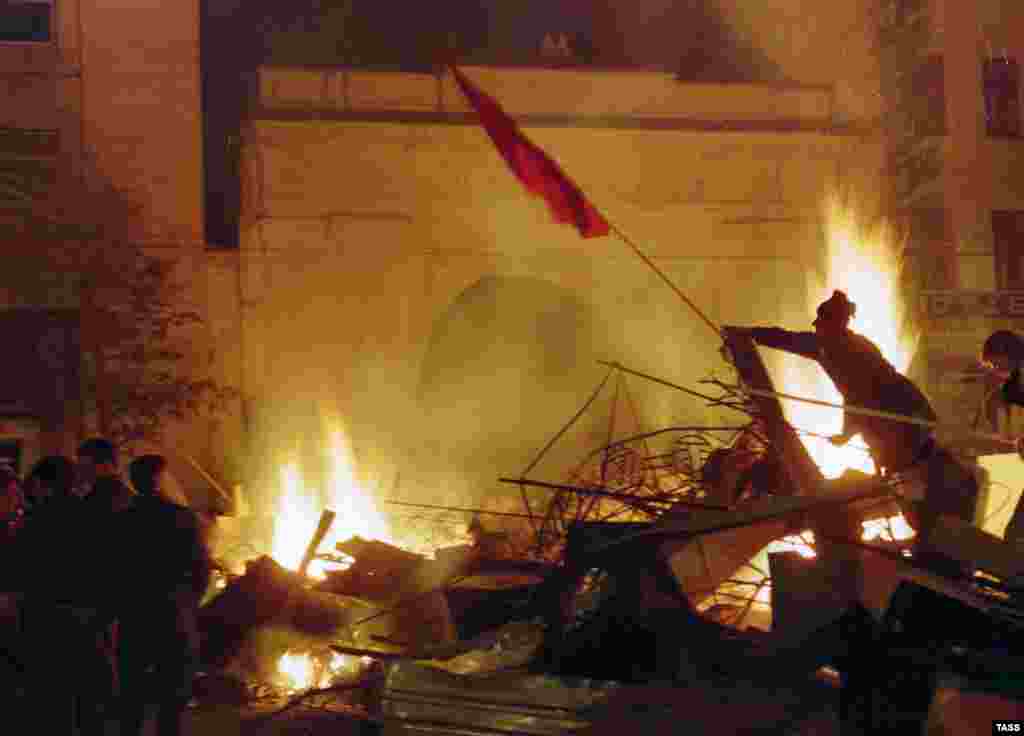
The Moscow municipal government building burned on October 4 as pro-Yeltsin military forces retook control.
12/15 The Moscow municipal government building burned on October 4 as pro-Yeltsin military forces retook control.
Thirty years ago, Russia faced a constitutional crisis that marked a key turning point in Russia's post-Soviet development.
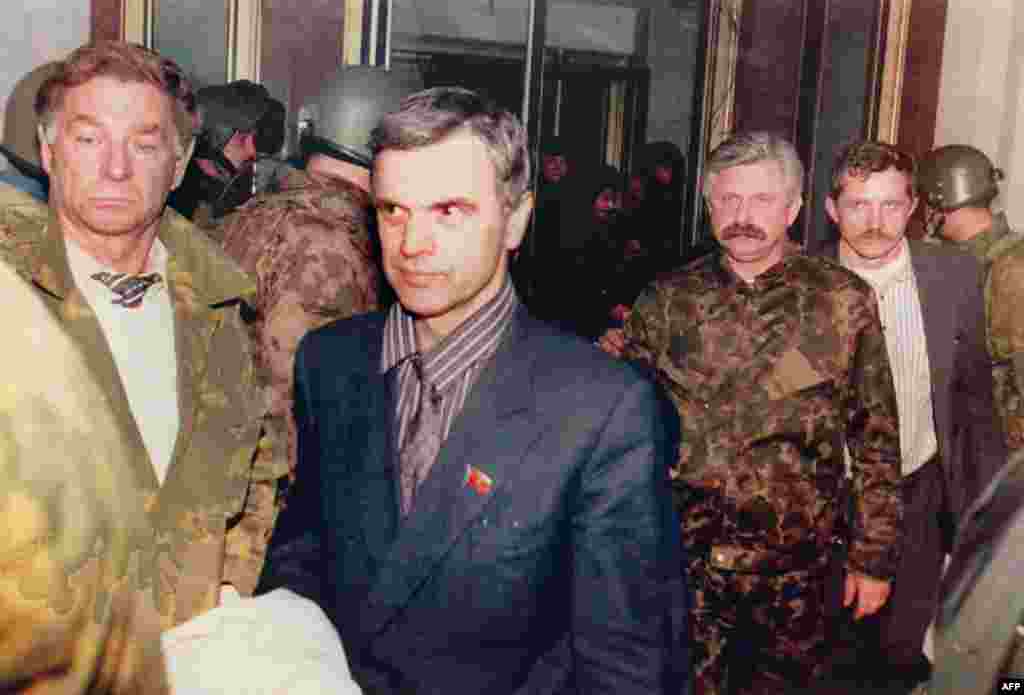
Former parliament chairman Ruslan Khasbulatov (second from left) and former Vice President Aleksandr Rutskoi (third from right) being escorted from the parliament building on October 4. 
13/15 Former parliament chairman Ruslan Khasbulatov (second from left) and former Vice President Aleksandr Rutskoi (third from right) being escorted from the parliament building on October 4. 
Thirty years ago, Russia faced a constitutional crisis that marked a key turning point in Russia's post-Soviet development.
The Russian government says that nearly 200 people were killed and some 500 wounded during the 10-day standoff. Communist and other nongovernmental sources put the death toll at more than 1,000. It was the worst violence in Moscow since the 1917 Bolshevik coup.
14/15 The Russian government says that nearly 200 people were killed and some 500 wounded during the 10-day standoff. Communist and other nongovernmental sources put the death toll at more than 1,000. It was the worst violence in Moscow since the 1917 Bolshevik coup.
Thirty years ago, Russia faced a constitutional crisis that marked a key turning point in Russia's post-Soviet development.
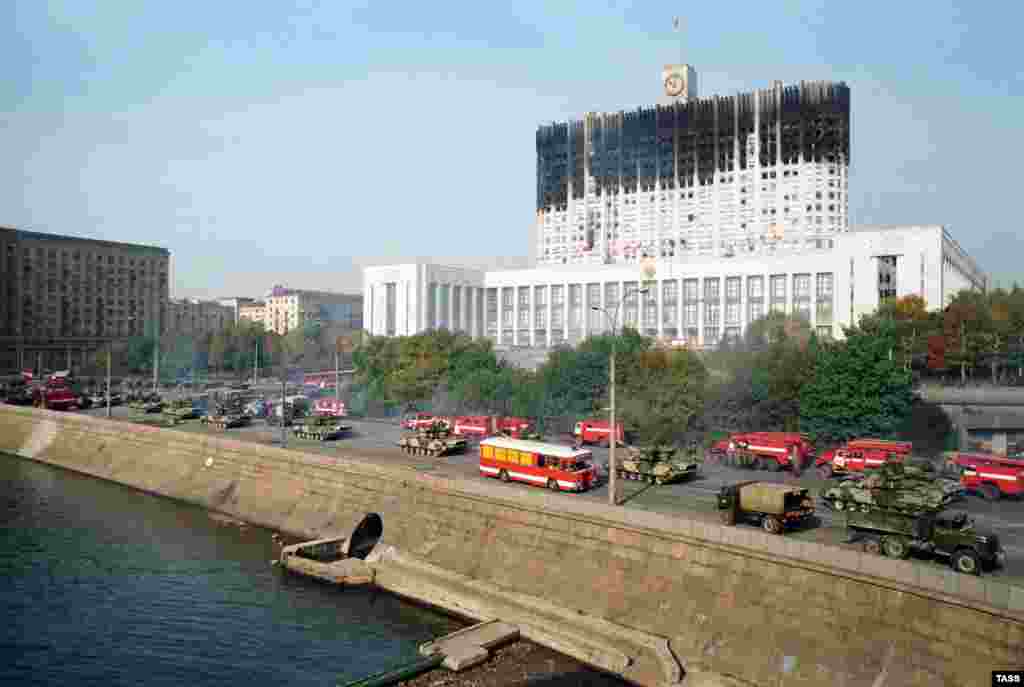
Following the 1993 violence, the parliament building underwent extensive renovation and today it is the seat of the Russian government. Yeltsin pushed through a new constitution in December 1993, giving the presidency sweeping powers that have been increased over the last three decades.
15/15 Following the 1993 violence, the parliament building underwent extensive renovation and today it is the seat of the Russian government. Yeltsin pushed through a new constitution in December 1993, giving the presidency sweeping powers that have been increased over the last three decades.
Thirty years ago, Russia faced a constitutional crisis that marked a key turning point in Russia's post-Soviet development.
Previous slide
Next slide

But Putin may think he has plenty of time to choose how – or whether – he wants to maintain power after 2024, when his current term ends.

Or he may not.

While analysts have predicted Putin's post-2024 plans might not start taking shape until a few years into this term, Zorkin's article – and a grim report on the public mood from a think tank founded by former Finance Minister Aleksei Kudrin -- come amid a series of setbacks for a leader who sometimes seems to be coated in Teflon.

His ratings are down sharply amid anger over the pension reform, he's been scrambling to shore up power in the regions after a series of electoral defeats for United Russia, and a closed-door deal to redraw the border between Chechnya and Ingushetia has led to persistent protests – an unsettling reminder of deep-seated disputes that lie just beneath the surface of a huge and diverse country.
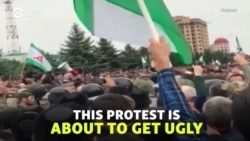
Gunfire And Protests After Chechnya-Ingushetia Deal
please wait

No media source currently available

0:00 0:01:53 0:00

Ballistic Descent

And in another blow, a U.S. astronaut and a Russian cosmonaut had to come hurtling back to Earth in a "ballistic descent" after the first failed launch of a manned Soyuz craft in 35 years. They survived unhurt, but Russia's already struggling space program suffered a hit that could leave a lasting bruise.

"Russian space shame," read one headline after the emergency on October 11.

Hours later, the leader of the Orthodox Christian world took a big step toward granting the Ukrainian church independence, a historic move that will curb the influence of the Moscow patriarch and Russia itself.
And then there's football. Months after Putin scored a big PR victory by successfully staging the World Cup, Russian soccer showed its darker side when two prominent players acted more like hooligans or worse, getting jailed and charged with battery after allegedly beating an ethnic Korean official from their country's own government.

Kokorin & Mamayev Vs. Chepiga & Mishkin

While the Kremlin was clearly not pleased, Putin could perhaps take solace in the thought that Aleksandr Kokorin and Pavel Mamayev may have crowded two other names -- Anatoly Chepiga and Aleksandr Mishkin -- out of headlines at home and abroad.
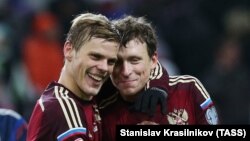
Russian soccer players Aleksandr Kokorin (left) and Pavel Mamayev (file photo)

According to cybersleuthing group Bellingcat, Chepiga and Mishkin are the real identities of the two men Britain believes poisoned former spy Sergei Skripal and his daughter, Yulia, with a Soviet-designed nerve agent in the English city of Salisbury in March.

As a backdrop to the more recent setbacks, the military intelligence agency known as the GRU has faced ridicule over what seem to be slip-ups that have undermined Russia's denial of involvement in the Salisbury poisoning – which Britain says led to the death of one woman – and other malign activities beyond its borders.

But there's been a bit of a backlash against the portrayals of Russian agents as a bumbling bunch of Keystone Cops, with analysts warning that the West shouldn't let down its guard.

One thing to remember, they point out, is that Putin's push to restore Moscow's global clout is largely about being there – whether it is Syria, Salisbury, or some other place -- and being noticed.

  • 16x9 Image

    Steve Gutterman

    Steve Gutterman is the editor of the Russia/Ukraine/Belarus Desk in RFE/RL's Central Newsroom in Prague and the author of The Week In Russia newsletter. He lived and worked in Russia and the former Soviet Union for nearly 20 years between 1989 and 2014, including postings in Moscow with the AP and Reuters. He has also reported from Afghanistan and Pakistan as well as other parts of Asia, Europe, and the United States.

This item is part of
XS
SM
MD
LG