



Censored Fish, Tinfoil Mannequins: How The Taliban Redacts Life In Afghanistan
- By Amos Chapple
New photos from Afghanistan show a Taliban law banning images of people and animals is now being enforced across most of the country, resulting in seafood censored from menus, blacked-out museum displays, and covered mannequins.
1
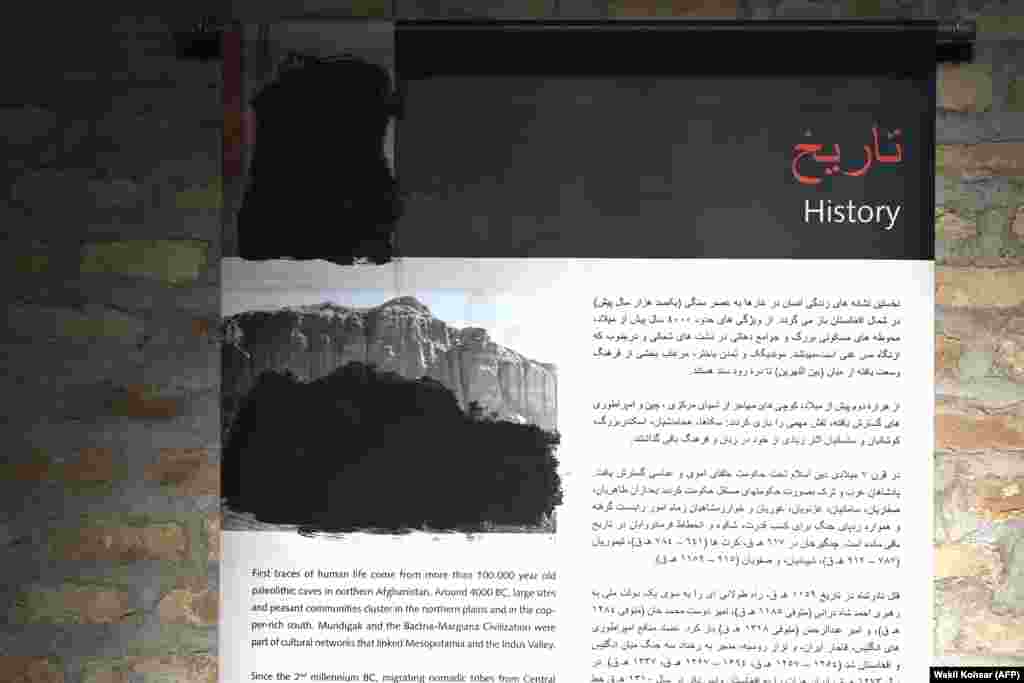
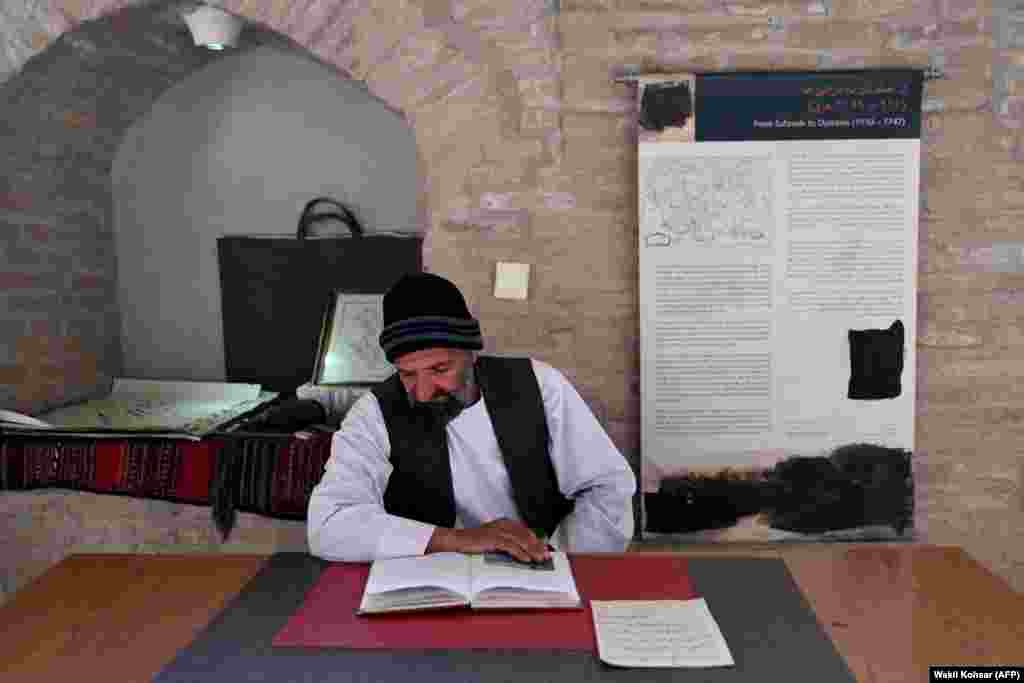
A photo taken on January 7 in a museum in the western Afghan city of Herat shows a display that depicted the Buddhas of Bamiyan. The historic photo has been censored with black paint.
A “morality law” banning photographs and video of “animate beings” was first approved by Taliban leadership in August 2024 but the impact of the ban has been felt only gradually, and it has not been enforced in every Afghan region.
A “morality law” banning photographs and video of “animate beings” was first approved by Taliban leadership in August 2024 but the impact of the ban has been felt only gradually, and it has not been enforced in every Afghan region.
2
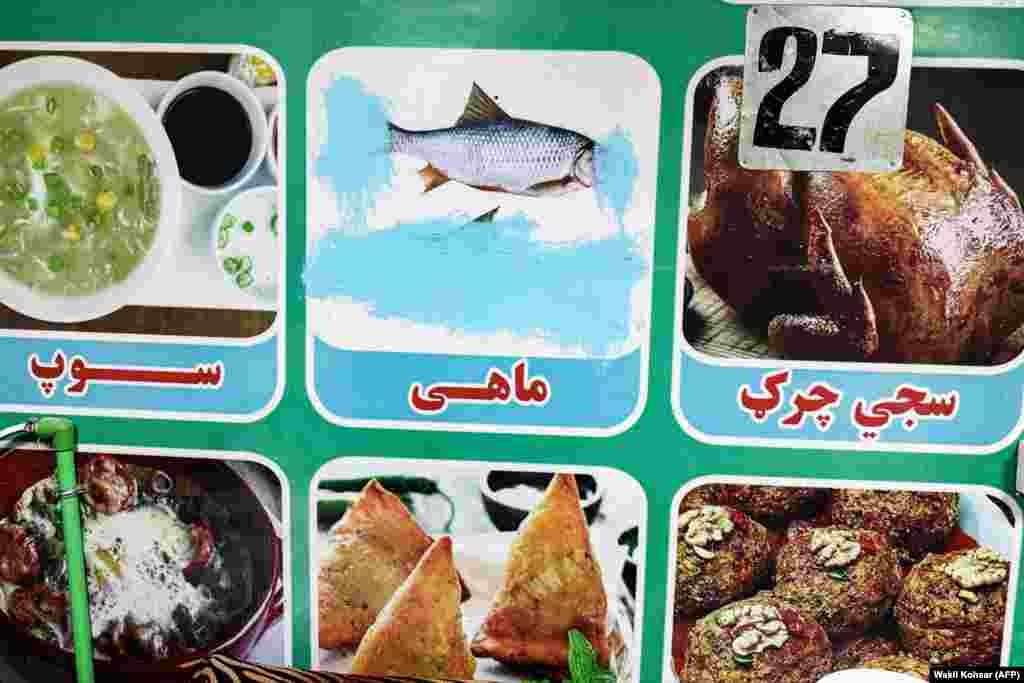
A food menu in the southern Helmand Province showing what an AFP photographer describes as “censored” fish.
On January 8, the Afghanistan Journalists Center announced the Taliban had begun enforcing the ban in the central Uruzgan Province, making it the 24th of Afghanistan’s 34 provinces where a law forbidding images of living things is currently in force.
On January 8, the Afghanistan Journalists Center announced the Taliban had begun enforcing the ban in the central Uruzgan Province, making it the 24th of Afghanistan’s 34 provinces where a law forbidding images of living things is currently in force.
3
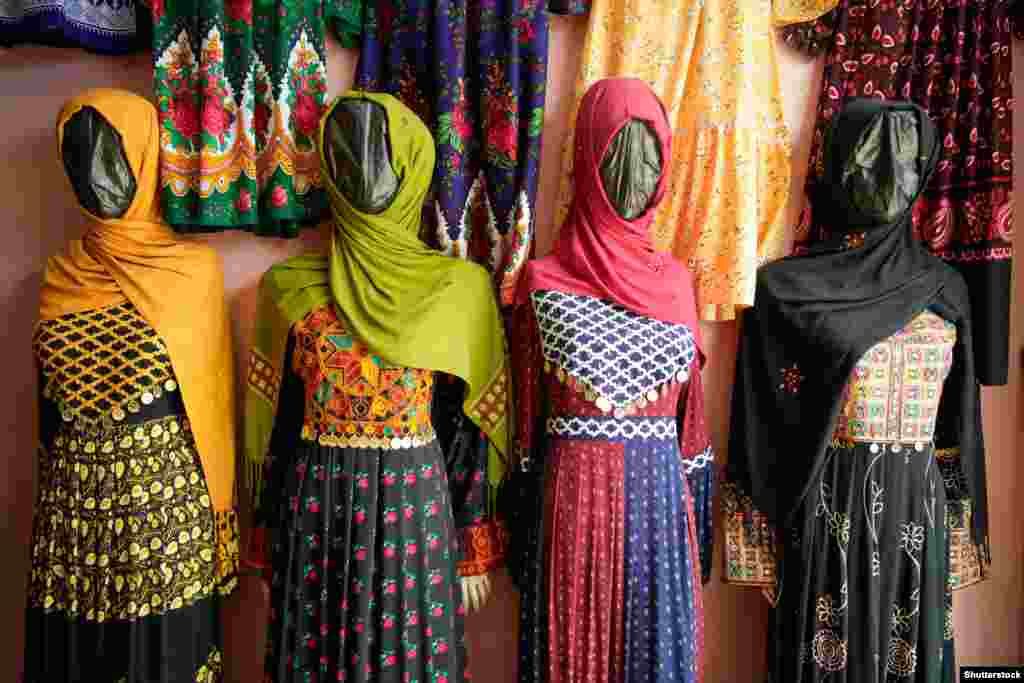
Mannequins with their faces covered at a market in the Bamiyan Province.
Media networks based in the affected regions have been forced to rely on audio-only broadcasts or display images of buildings and landscapes. At least 20 television stations are reported to have shut down in the wake of the ban.
Media networks based in the affected regions have been forced to rely on audio-only broadcasts or display images of buildings and landscapes. At least 20 television stations are reported to have shut down in the wake of the ban.
4
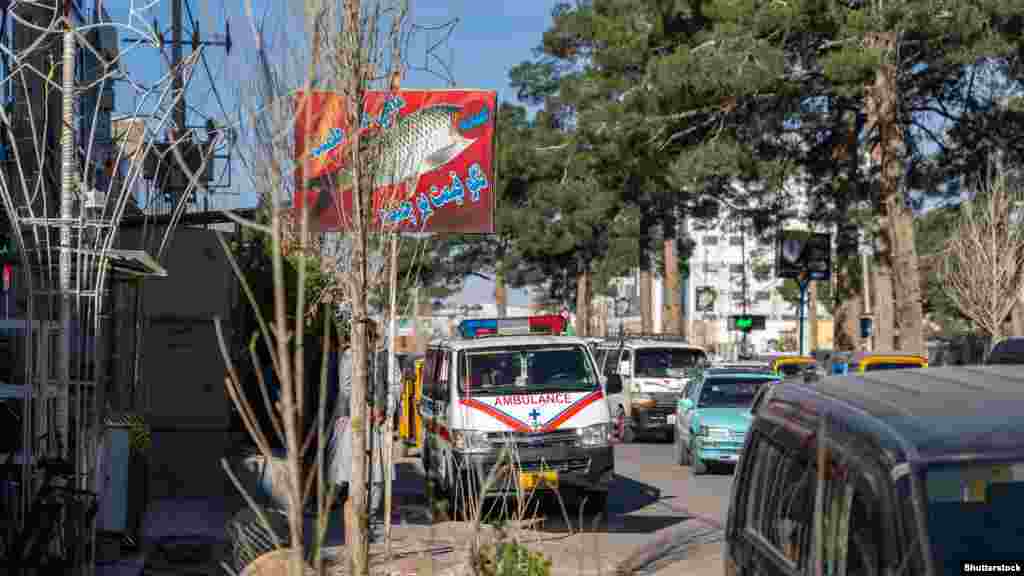
A sign advertising fish for sale in Helmand. The animal’s eye is covered with the word “wholesale.”
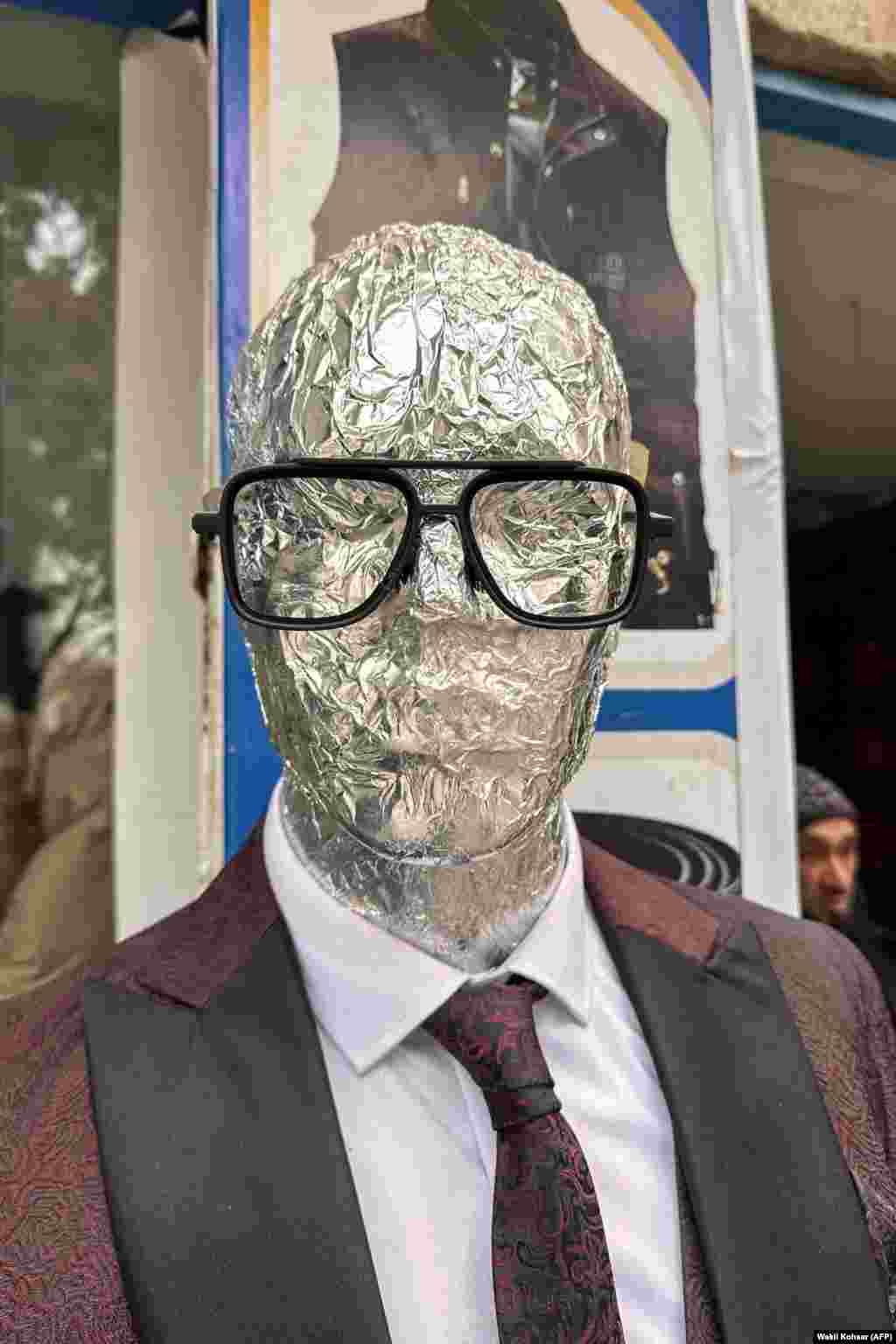
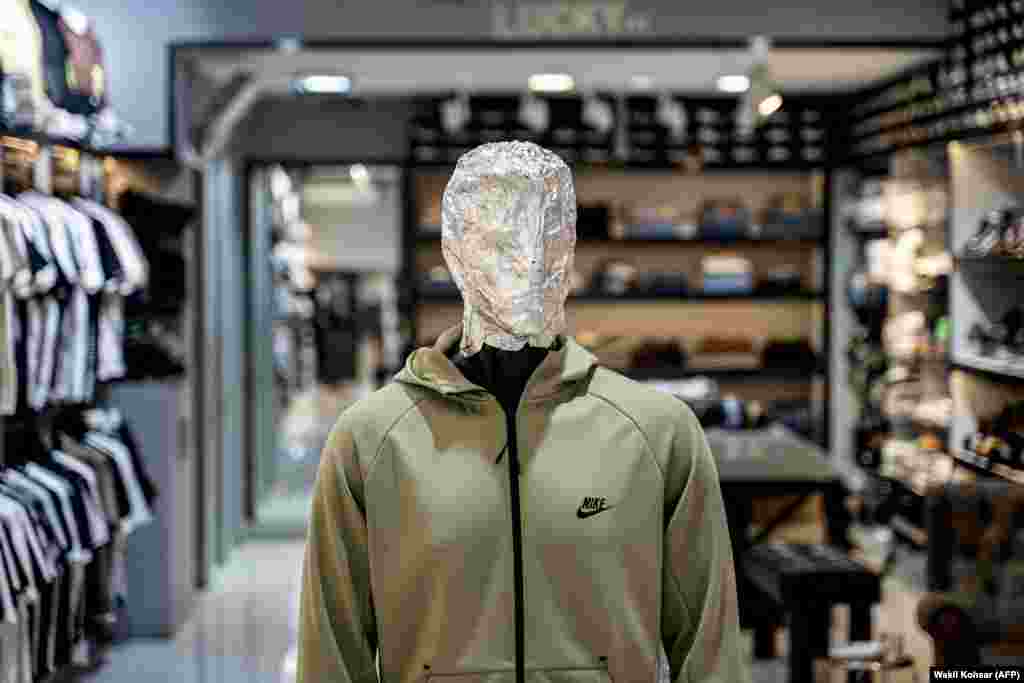
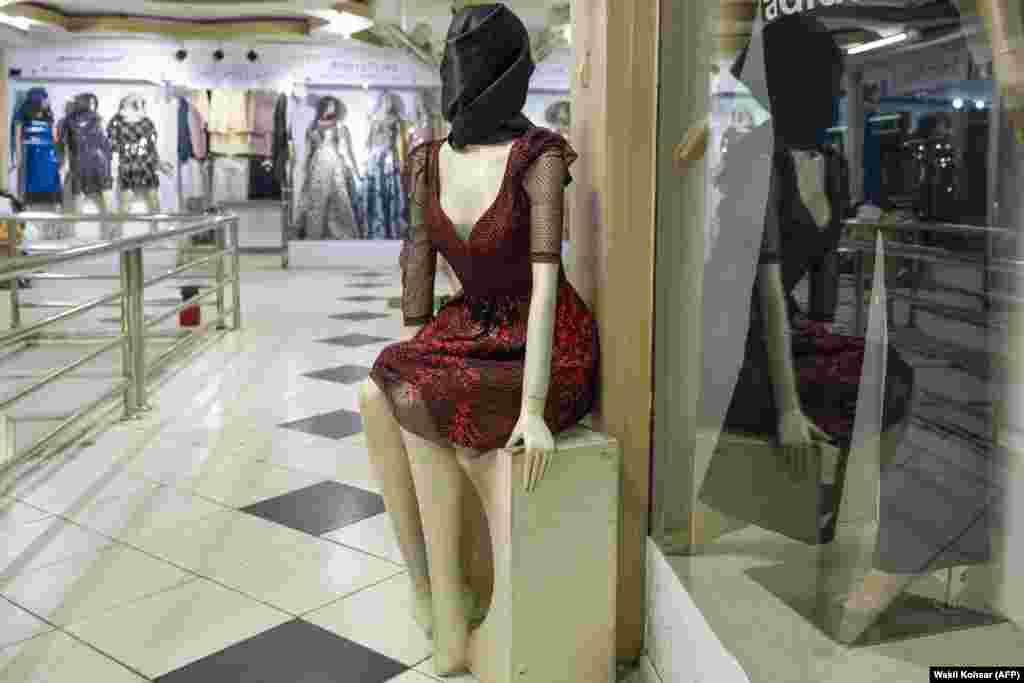
A man who runs a company that gives tour guides around Kabul told RFE/RL that dolls in toy shops have also been covered up in some areas. He said when clothing stores responded to the ban by covering the faces of their mannequins, all the foreign tourists took photographs of the eerie shopfront dummies.
A man who runs a company that gives tour guides around Kabul told RFE/RL that dolls in toy shops have also been covered up in some areas. He said when clothing stores responded to the ban by covering the faces of their mannequins, all the foreign tourists took photographs of the eerie shopfront dummies.
5
A mannequin wrapped in tinfoil outside a menswear store in Kabul on December 29, 2025.
The tour guide, who RFE/RL is not identifying for safety reasons, believes the ban is a result of a fringe interpretation of Islamic rulings coupled with the Taliban’s isolation from Afghanistan’s urban culture through decades of insurgency. "Because they were not in the city, their minds are more conservative," he says.
The tour guide, who RFE/RL is not identifying for safety reasons, believes the ban is a result of a fringe interpretation of Islamic rulings coupled with the Taliban’s isolation from Afghanistan’s urban culture through decades of insurgency. "Because they were not in the city, their minds are more conservative," he says.
![A poster displaying the names and anonymous avatars of Afghan Medical University students in the Kunduz Province in May 2025.“[The Taliban] spent 20 years in the deserts or in the mountains,” the tourism worker said. “Of course, [when] you're coming from the desert or from the mountains after 20 years to the city and seeing buildings of 15 floors or [Western-style] toilets or all this stuff, you get surprised.”](https://gdb.rferl.org/17dce76a-2e4c-4dc2-430e-08de3c91433d_w1024_q10_s.jpg)
6
A poster displaying the names and anonymous avatars of Afghan Medical University students in the Kunduz Province in May 2025.
“[The Taliban] spent 20 years in the deserts or in the mountains,” the tourism worker said. “Of course, [when] you're coming from the desert or from the mountains after 20 years to the city and seeing buildings of 15 floors or [Western-style] toilets or all this stuff, you get surprised.”
“[The Taliban] spent 20 years in the deserts or in the mountains,” the tourism worker said. “Of course, [when] you're coming from the desert or from the mountains after 20 years to the city and seeing buildings of 15 floors or [Western-style] toilets or all this stuff, you get surprised.”
7
A museum worker reads a book in front of censored photographs of living things displayed at the Citadel of Alexander in Herat on January 7.
The Koran does not forbid images of living things, but some hadiths -- ancient texts believed to document the actions, characteristics, and customs of the Prophet Muhammad -- indicate the founder of Islam opposed the representation of living things.
The Koran does not forbid images of living things, but some hadiths -- ancient texts believed to document the actions, characteristics, and customs of the Prophet Muhammad -- indicate the founder of Islam opposed the representation of living things.
8
A mannequin in a clothing store with its face covered by foil.
One hadith states: “Those who try to make the like of Allah's creations will receive the severest punishment on the Day of Resurrection.”
One hadith states: “Those who try to make the like of Allah's creations will receive the severest punishment on the Day of Resurrection.”
9
A veiled mannequin in Kabul.
Some critics have accused the Taliban of using the image ban as a way to limit images that capture the harshness of life under Taliban rule.
Some critics have accused the Taliban of using the image ban as a way to limit images that capture the harshness of life under Taliban rule.
![A burqa-clad woman photographed in the Balkh Province in October 2025."[The ban] effectively conceals the daily events, the oppression, torture, and the numerous political, legal, and human rights violations by the Taliban in Afghanistan from the eyes of the world," Rahraw Omarzad, the director of the Center for Contemporary Arts Afghanistan in Exile, told a journalist in 2024.](https://gdb.rferl.org/622154af-1aaf-4057-4311-08de3c91433d_w1024_q10_s.jpg)
10
A burqa-clad woman photographed in the Balkh Province in October 2025.
"[The ban] effectively conceals the daily events, the oppression, torture, and the numerous political, legal, and human rights violations by the Taliban in Afghanistan from the eyes of the world," Rahraw Omarzad, the director of the Center for Contemporary Arts Afghanistan in Exile, told a journalist in 2024.
"[The ban] effectively conceals the daily events, the oppression, torture, and the numerous political, legal, and human rights violations by the Taliban in Afghanistan from the eyes of the world," Rahraw Omarzad, the director of the Center for Contemporary Arts Afghanistan in Exile, told a journalist in 2024.


