


Bulgaria Says It Found Drone Remains Likely 'Connected' To War In Ukraine
Bulgaria’s Defense Ministry said in a statement on September 18 that it had sent a special unit to inspect the suspected drone wreckage and an object resembling an explosive that was attached to it.
SOFIA -- Bulgaria’s Defense Ministry said on September 18 that drone wreckage was found on Bulgaria’s Black Sea coast and that a special military unit has been sent to the site to investigate and to dispose of ammunition that was attached to the debris.
While the origin of the wreckage has yet to be confirmed, Defense Minister Todor Tagarev said that “it can be assumed that [the drone] is connected to the war that Russia started against Ukraine” and highlights the proximity of Bulgaria to the war.
Tagarev did not give details on where the drone came from and how it reached Bulgarian territory, saying that he had only preliminary information.
This is the first time Bulgaria, a NATO member, has reported finding remains of a drone on its territory. Earlier in September, neighboring Romania reported three occasions in which elements of suspected drones were identified on its territory following Russian drone attacks on Ukrainian ports just across the border.
“We know that Russia is bombing Ukrainian ports, which are only a few hundred meters from the territory of Romania. There are cases of fallen remains of drones and other ammunitions on Romanian territory. We have no reason to think that this war will bypass us. Yes, there are risks for Bulgaria,” Tagarev said.
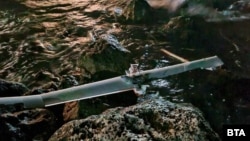
The debris was found on the Black Sea coast of the tourist resort of Tyulenovo, situated less than 30 kilometers south of the Romanian border and across the Black Sea from Crimea. The Defense Ministry published two photos appearing to show debris on rocks in the sea and ammunition attached to it.
The first reports about the suspected drone wreckage appeared late on September 17 when a Facebook user named Radoslav Rusev posted photos of it and reported that he had called the emergency services.
Local police said that a report about the suspected drone debris was received at 10 p.m. local time on September 17 and that the area around the wreckage was quickly cordoned off.
Bulgaria’s Defense Ministry said in a statement on September 18 that it had sent a special unit to inspect the suspected drone wreckage and an object resembling an explosive that was attached to it. Later, the ministry said that the object was an 82 mm mortar ammunition and that it was destroyed in a controlled explosion.
Earlier in September, Romania, also a member of NATO, reported three occasions in which elements of suspected drones were identified on its territory following Russian drone attacks on Ukrainian ports.
Romanian authorities condemned the cases as an “unacceptable breach of Romania's airspace,” while NATO said it had no information that they were caused by a deliberate Russian attack.
Claims And Counterclaims After 'Russian Drone' Impacts NATO Member Romania
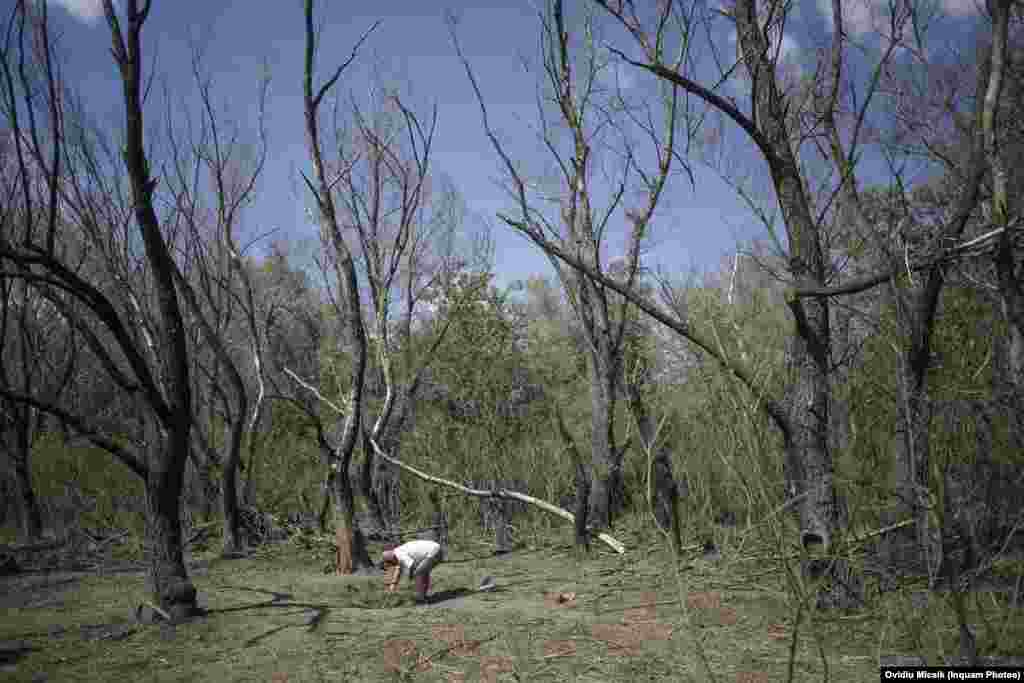
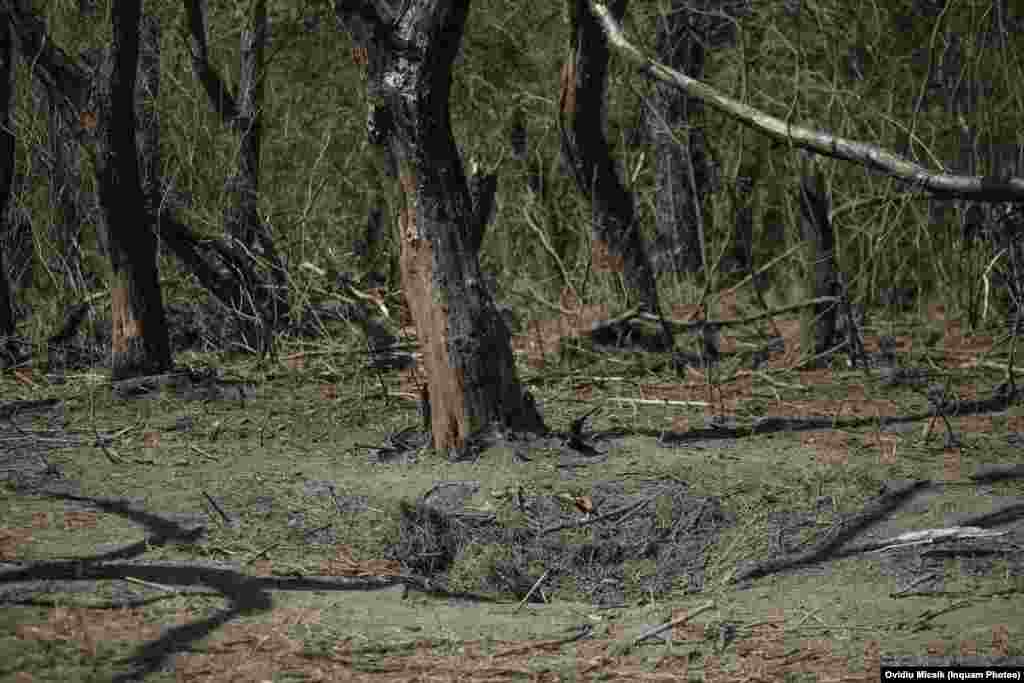
1/9A man investigates a crater in the middle of a charred patch of trees near the border with Ukraine in Romania’s Tulcea County on September 7.
A fire-blackened patch of trees is at the center of a furor in Romania after Kyiv claimed a Russian suicide drone exploded inside NATO territory.
2/9Charred tree trunks near the apparent explosion crater.
On September 4, Kyiv claimed that Russian kamikaze drones had struck the territory of Romania during an attack on Izmayil, a port city on Ukraine’s Danube delta, early that morning. The claims sparked a sequence of assertions and denials that have rocked Romania's government.
A fire-blackened patch of trees is at the center of a furor in Romania after Kyiv claimed a Russian suicide drone exploded inside NATO territory.
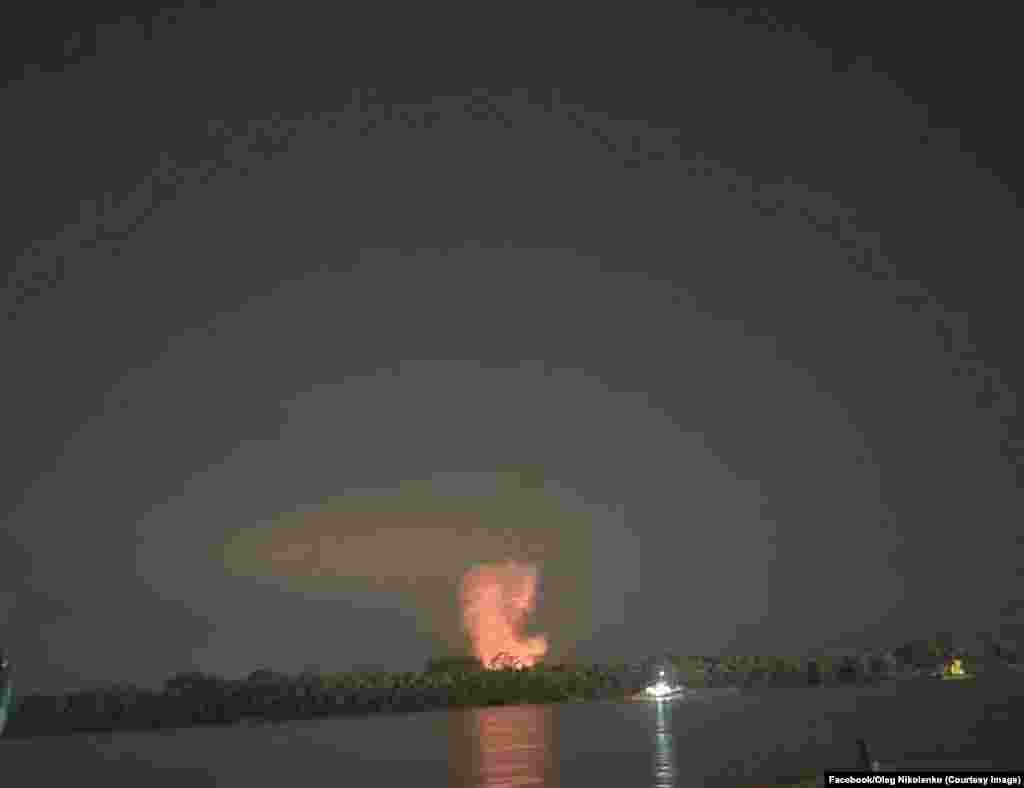
3/9An image purporting to show an explosion on Romanian territory during the drone attacks on Ukrainian port facilities. The video was reportedly taken from the Ukrainian side of the Danube River.
Following the Ukrainian claim, unclear video emerged purporting to show at least one explosion occurring on Romanian territory.
A fire-blackened patch of trees is at the center of a furor in Romania after Kyiv claimed a Russian suicide drone exploded inside NATO territory.
4/9Romanian President Klaus Iohannis speaks with a NATO commander at a base in Cincu, central Romania, on September 5.
Iohannis told reporters while visiting the NATO military base, “I can tell you that no part of any drone or any other part of any other device landed in Romania. We have total control over our territory," adding, “I checked absolutely everything and I can reassure the population."
A fire-blackened patch of trees is at the center of a furor in Romania after Kyiv claimed a Russian suicide drone exploded inside NATO territory.
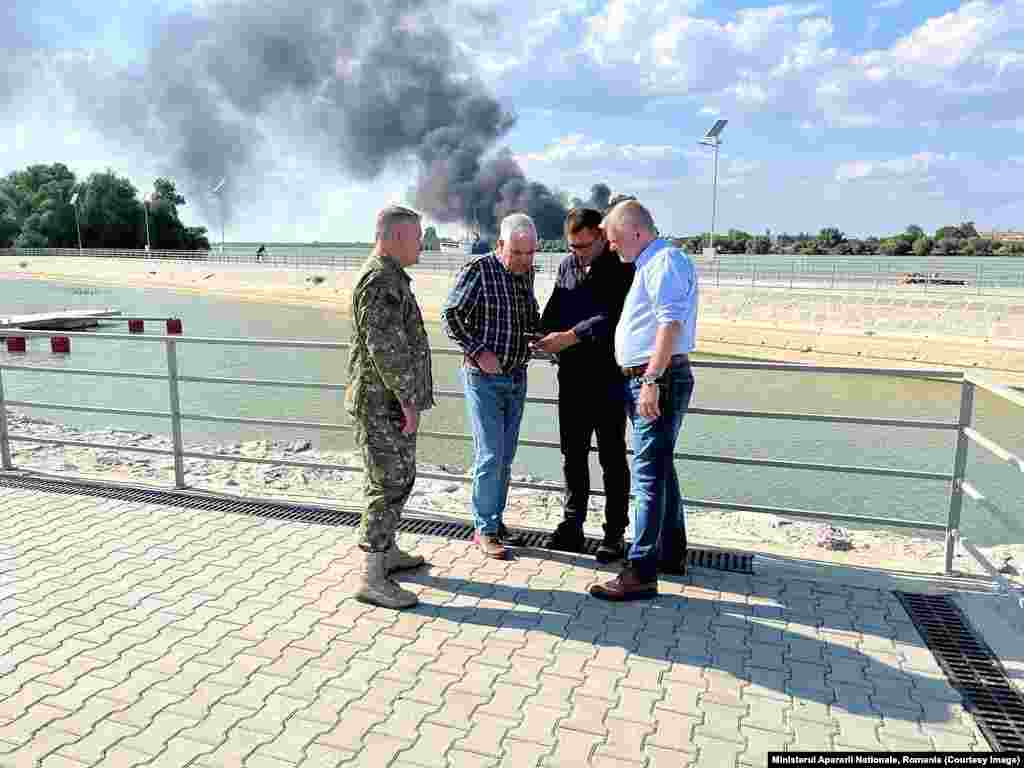
5/9Smoke rises from Ukrainian territory as Romania’s Defense Minister Angel Tilvar (in plaid shirt) consults with other men in an image released by the ministry on September 6.
In a September 6 Facebook post, Romania’s Defense Ministry appeared to contradict the assertions of the president, announcing it had discovered “elements that resemble drone remains” on Romanian territory just across the border from Ukraine's Izmayil, which it vowed to investigate.
A fire-blackened patch of trees is at the center of a furor in Romania after Kyiv claimed a Russian suicide drone exploded inside NATO territory.
6/9A file photo of a port in Izmayil, Ukraine. Romanian territory can be seen at left, across the Danube River, the natural boundary between the two countries.
On September 7, the Romanian Defense Ministry released a statement condemning the Russian attack on the Ukrainian port, then declared the kamikaze drone strikes on Ukraine “did not pose any direct military threats against our national territory.”
A fire-blackened patch of trees is at the center of a furor in Romania after Kyiv claimed a Russian suicide drone exploded inside NATO territory.
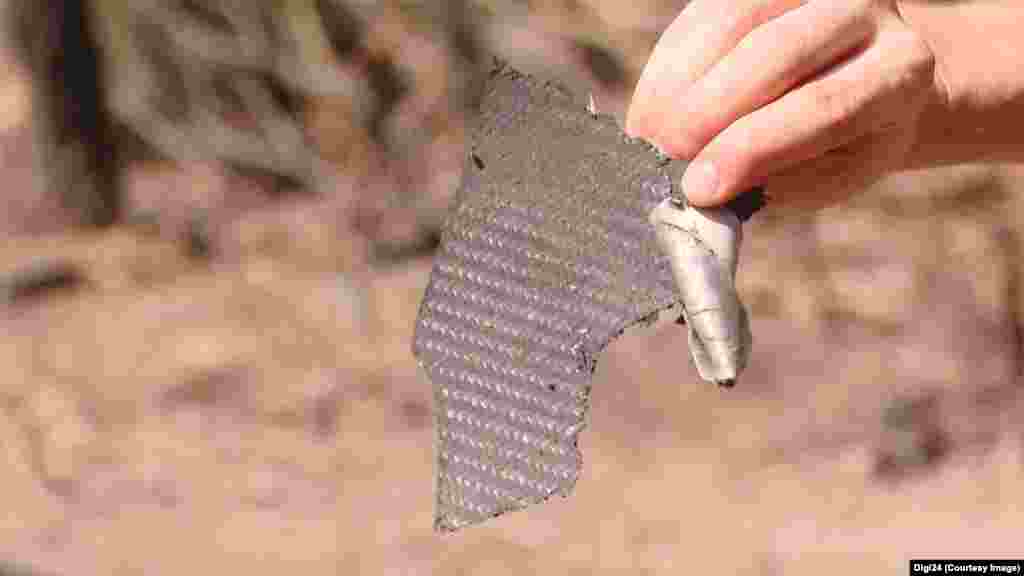
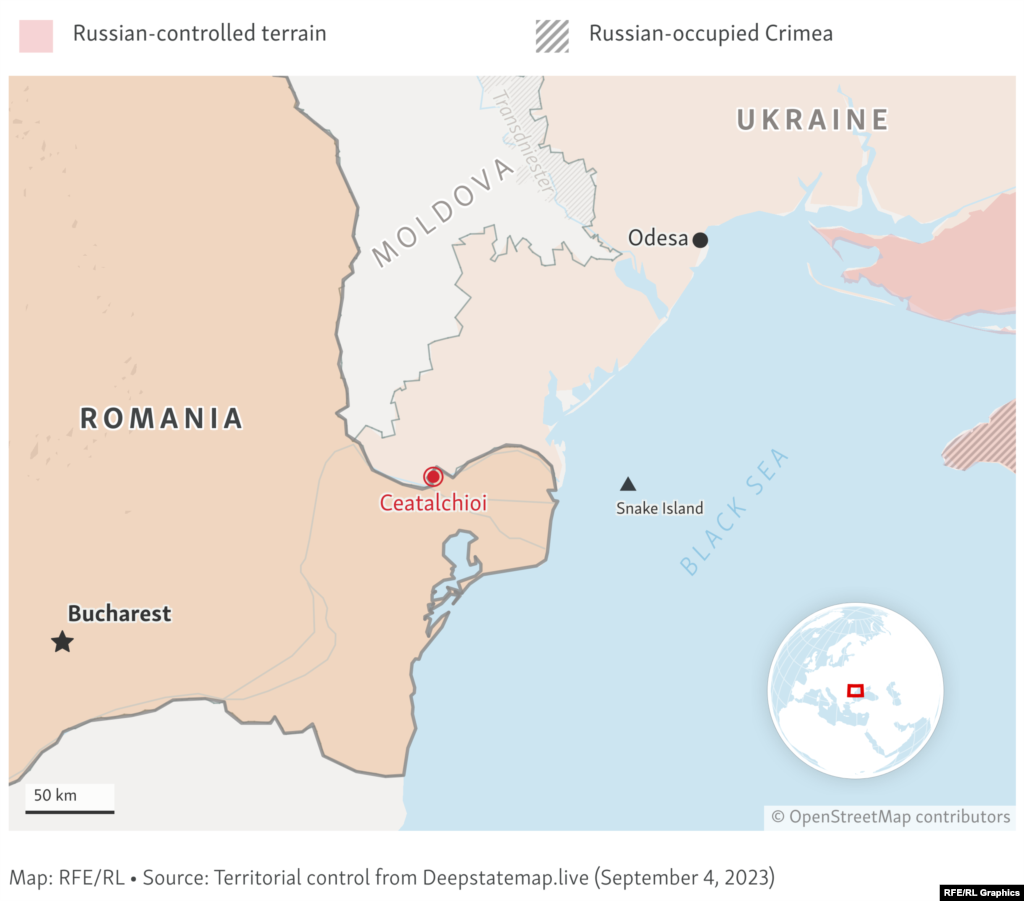
7/9Also on September 7, Romanian journalists discovered the site of an apparent explosion near the village of Ceatalchioi and filmed pieces of possible fiberglass found in the area. Shahed kamikaze drones are made with fiberglass skin.
A fire-blackened patch of trees is at the center of a furor in Romania after Kyiv claimed a Russian suicide drone exploded inside NATO territory.
8/9A map showing Ceatalchioi, on the border with Ukraine.
Romania’s military have since said there is no evidence of an explosion at the site and that the trees photographed at the site were damaged by a fire "that could have been caused by fuel leaking from fragments of a drone."
A fire-blackened patch of trees is at the center of a furor in Romania after Kyiv claimed a Russian suicide drone exploded inside NATO territory.
9/9A charred tree trunk at the site of the purported explosion.
On September 7, NATO Secretary-General Jens Stoltenberg addressed the apparent drone impacting NATO territory, saying, “We don't have any information indicating an intentional attack by Russia, and we are awaiting the outcome of the ongoing investigation."
In November 2022, Kyiv accused Moscow of launching a missile that killed two people in NATO member Poland. It was later revealedthe missile was probably Ukrainian.
A fire-blackened patch of trees is at the center of a furor in Romania after Kyiv claimed a Russian suicide drone exploded inside NATO territory.
Previous slide
Next slide
The last such case was reported last week, when Romania’s Defense Ministry said that fragments that could have come from a drone were found near the towns of Nufarul and Victoria in Tulcea County -- an area of the Danube that forms a natural border between Romania and Ukraine.
The report followed a Russian drone attack on Ukrainian port infrastructure in Izmayil in the Odesa region.
The Bulgarian village of Tyulenovo is situated about 200 kilometers south of Izmayil.
Russia has stepped up attacks on Ukraine's grain-export infrastructure amid talks about the resumption of the Black Sea grain deal, which would allow unhindered exports of grain from Ukrainian ports. Russia quit the deal in July, a year after it was brokered by the United Nations and Turkey.

RFE/RL’s Bulgarian Service relaunched in 2019 after a 15-year absence, providing independent news and original analysis to help strengthen a media landscape weakened by the monopolization of ownership and corruption.