


Accessibility links

Breaking News

Leading Strategist Questions Russian Forces' Ability To 'Act Like A Western Army'

Ukrainian soldiers examine missiles abandoned by Russian troops in the village of Berezivka on April 21. Russia has suffered "significant" losses in men and equipment in the eight weeks of war.

The Ukraine conflict has punctured Western perceptions of a mighty Russian Army since President Vladimir Putin seized Crimea eight years ago, and the Russian leader's refusal to let his invading army "reset and reform" is "good news for Ukraine and good news for the West," according to a former U.S. naval commander who heads a prominent strategic think tank.

But James Foggo III, a retired U.S. Navy admiral who heads the Virginia-based Center for Maritime Strategy, also said the "ugly" conflict has underscored a "trust gap" between the warring sides and he can't easily envisage Putin and Ukrainian President Volodymyr Zelenskiy sitting down to peace negotiations.

"I don't know how Ukraine gets out of this other than to defeat Russia, and that's a wild card that's up in the air right now," he told RFE/RL's Georgian Service in a recent interview. "You know, if the Russians continue to be beaten, then eventually, public opinion will catch up with Vladimir Putin."

James Foggo
James Foggo

Foggo offered a damning assessment of Russian military performance so far across all four axes of its initial full-scale attack on Ukraine, adding that "they ran out of fuel, they ran out of food, didn't have sustainment of ammunition, and they got hit pretty hard, particularly in the battle [for] Kyiv."

Putin launched the war on February 24 against Ukraine and its government, which Moscow has overtly and covertly opposed since unrest ousted a pro-Russian presidential administration in 2014, citing a need to "demilitarize" and subdue its much smaller post-Soviet neighbor.

"They're kind of stuck on fighting the last war, World War II," dominated by tank movements across Europe, Foggo said of what he's seen from the Russian war planners. "Can they figure out in a very short period of time how to act like a Western army, and inculcate leadership in noncommissioned officers which don't exist, using weapons systems that are not exactly state of the art?" he asked. "Certainly not before May 9."

Putin has suggested publicly that it is crucial to achieve military aims in Ukraine by the May 9 holiday marking the anniversary of the victory over Nazi Germany in 1945.

Russia's massive invading force has taken major swaths of eastern and southern Ukraine but also suffered "significant" casualties, in the words of Kremlin spokesman Dmitry Peskov, and been beaten back in offensives targeting Kyiv and other places. Russia's navy has so far lost two warships, including its Black Sea Fleet flagship, the Moskva.

Foggo cites long-running Russian failures including a reliance on conscripts instead of a professional cadre of soldiers, underestimation of logistics as the "sixth domain of warfare," and misperceptions in Moscow that Russians can "operate in the Black Sea with impunity."

"I think the Russian Navy and the Russian naval infantry understand that they might get ashore, but they won't get very far inland," Foggo said.

Putin has recently replaced the top commander of what Moscow officially deems a "special military operation" in Ukraine, appointing Chechnya and Syrian campaign veteran army General Aleksandr Dvornikov to lead a new strategy to consolidate gains in eastern Ukraine.

Foggo said Dvornikov's "got a huge task ahead of him, but I believe he also knows that if he doesn't succeed, it's his head on the line because Putin is ruthless not only with his adversaries, but also with his own people and his own generals."

He said Dvornikov's first move was likely to be replacing Russian casualties in the first eight weeks of battle -- estimated by NATO to include at least 7,000 deaths in the first month, although Ukrainian estimates are higher. (Russia has classified its casualty figures in an effort to better control domestic fallout from the conflict.)

Foggo said the Russian casualties so far had "reduced their ability to fight" and Dvornikov was probably in a "recruitment and training cycle" at the moment. He predicted that Dvornikov "is in no hurry."

"He'll fill the gaps and seams in those units [and] he'll fix his armor -- the Russians have taken huge losses," Foggo said.

Putin was said to have pivoted away from storming Ukrainian troops holed up at the Azovstal metalworks in the encircled strategic city of Mariupol, on the Sea of Azov, with an April 21 order for troops to seal it off so "not even a fly" could pass through the city. The order, during a televised meeting with Defense Minister Sergei Shoigu, was said to have been issued in an effort to protect the lives of Russian soldiers.

"If they take Mariupol, then with the other territory they've taken, they have built this coveted land bridge that they want down to the Black Sea -- a bridge across the Sea of Azov to connect Crimea with Mother Russia," said Foggo, speaking days before news of the Mariupol pivot.

He said the Russian side could then essentially consolidate its gains and control a corridor to reach the Black Sea without taking Odesa, a defiant and dug-in seaport of more than 1 million people before the current conflict.

But Foggo likened any campaign to take the capital, Kyiv, to famously painful military campaigns in Aleppo, Syria, or Fallujah, in Iraq.

"If you're fighting in an urban environment, in high-rise buildings with snipers around the corner at every corner, and every Ukrainian having an AK-47 or a Molotov cocktail on his balcony to drop on your tank, it's a losing proposition," he said. "So if the Russians make that decision, I think it's a bad decision. And they're going to take another licking just like they did the last time they tried to move on Kyiv."

U.S. President Joe Biden on April 21 announced a new $800 million package of military and security assistance for Ukraine, the second such allocation in the past five weeks. Foggo said the U.S. supply so far of hardware, including Stinger surface-to-air missiles and Javelin anti-tank missiles, had seemingly been "very effective," adding that Ukrainian troops had "proven their ability to use them."

In Photos: The American Weaponry And Hardware Being Sent To Ukraine
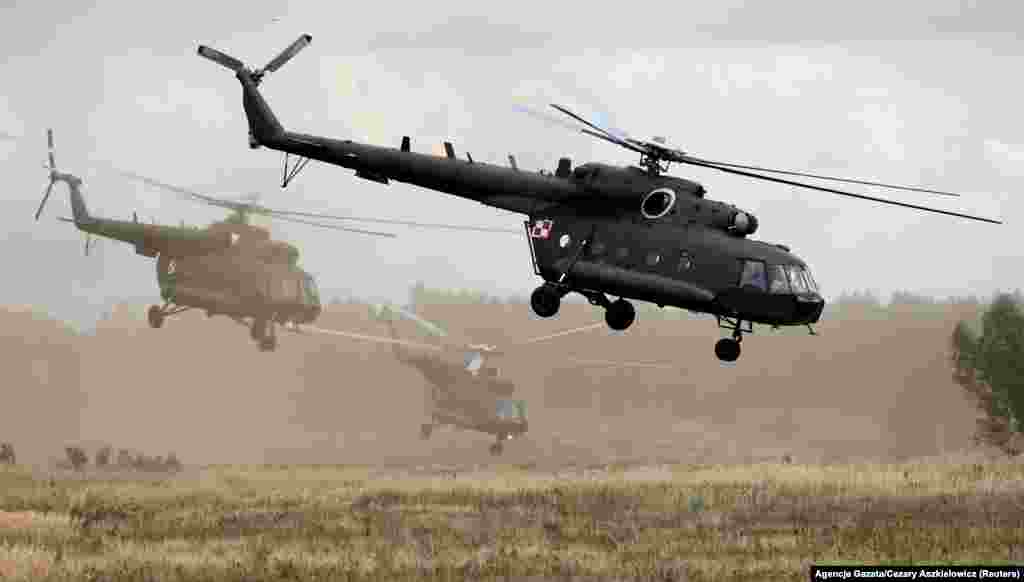
<strong>Eleven Mi-17 helicopters</strong><br />
&nbsp;<br />
These Soviet-designed choppers are used mostly for transport and can carry up to 24 troops or four tons of cargo, but some variants are fitted with machine guns and/or guided missiles.
1/11 Eleven Mi-17 helicopters
 
These Soviet-designed choppers are used mostly for transport and can carry up to 24 troops or four tons of cargo, but some variants are fitted with machine guns and/or guided missiles.
This is the equipment promised to Ukraine as part of an $800 million military-aid package that was announced by the White House on April 13.
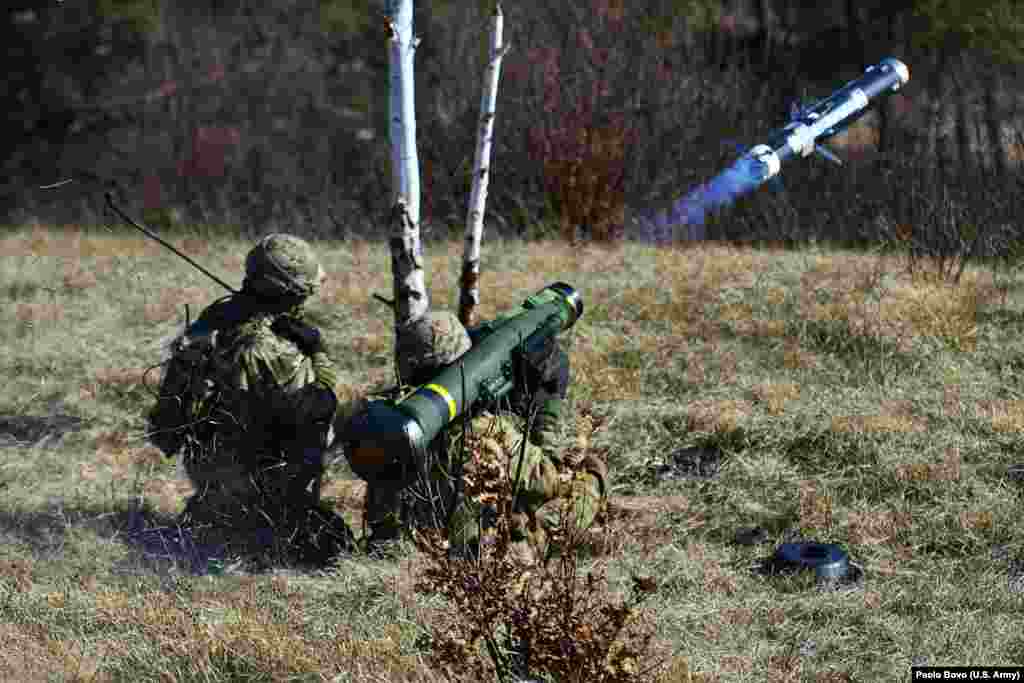
<strong>Five hundred Javelin missiles and &ldquo;thousands of other anti-armor systems&rdquo;</strong><br />
&nbsp;<br />
&nbsp;U.S.-made Javelin missiles have already seen widespread use against Russian armor in the Ukraine conflict. The weapon allows for &ldquo;fire and forget&rdquo; attacks from up to 2.6 kilometers away. In these attacks, the missile guides itself to the selected target, meaning fighters can launch, then immediately seek cover. One launcher and missile costs $178,000 according to the Pentagon&rsquo;s 2021 budget.
2/11 Five hundred Javelin missiles and “thousands of other anti-armor systems”
 
 U.S.-made Javelin missiles have already seen widespread use against Russian armor in the Ukraine conflict. The weapon allows for “fire and forget” attacks from up to 2.6 kilometers away. In these attacks, the missile guides itself to the selected target, meaning fighters can launch, then immediately seek cover. One launcher and missile costs $178,000 according to the Pentagon’s 2021 budget.
This is the equipment promised to Ukraine as part of an $800 million military-aid package that was announced by the White House on April 13.
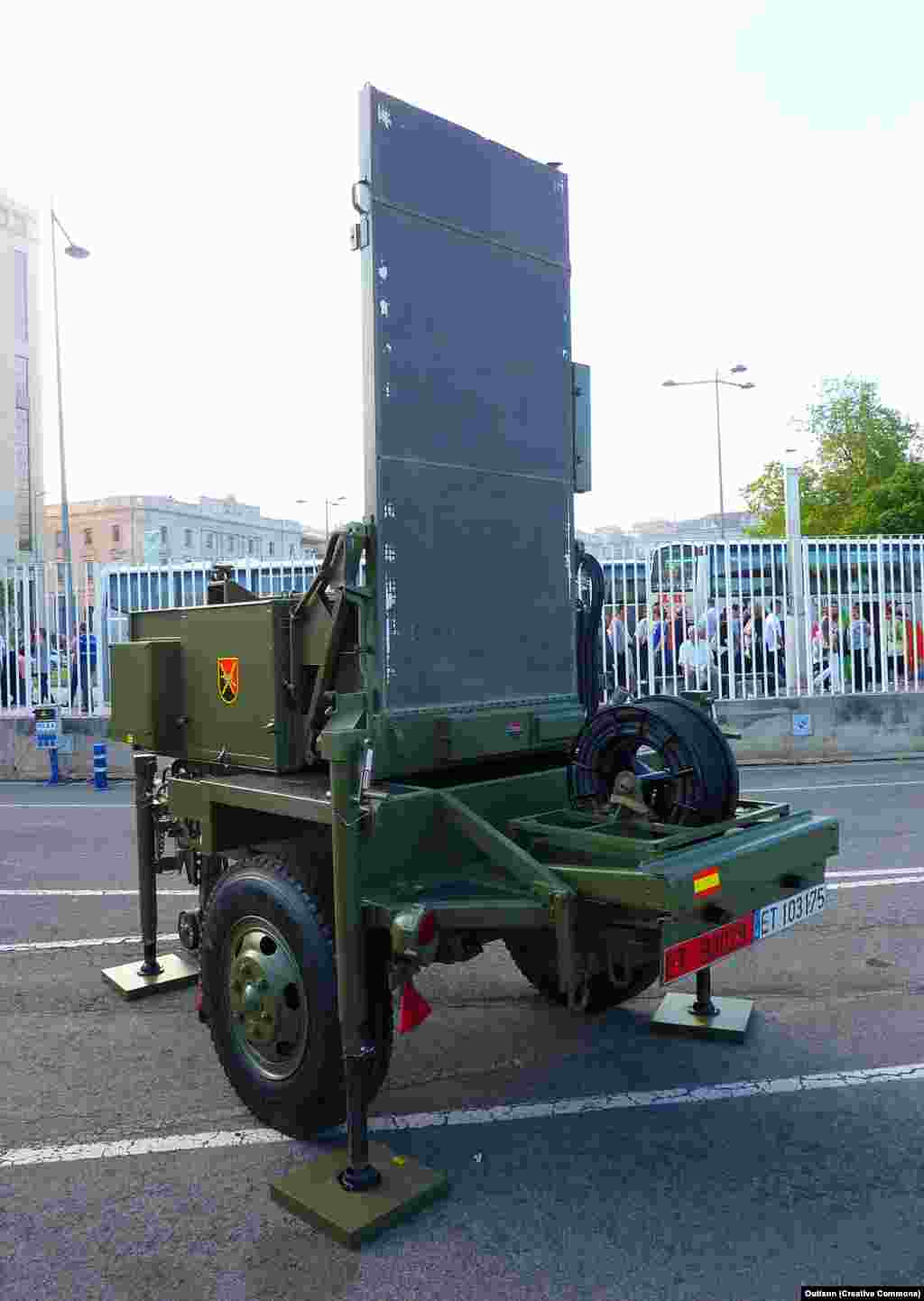
<strong>Ten AN/TPQ-36 counterartillery radars</strong><br />
&nbsp;<br />
This &ldquo;weapon-locating radar&rdquo; is used to spot incoming artillery and tracks a shell&rsquo;s trajectory to calculate where the enemy projectile was fired from.<br />
&nbsp;
3/11 Ten AN/TPQ-36 counterartillery radars
 
This “weapon-locating radar” is used to spot incoming artillery and tracks a shell’s trajectory to calculate where the enemy projectile was fired from.
 
This is the equipment promised to Ukraine as part of an $800 million military-aid package that was announced by the White House on April 13.
<strong>Two hundred M113 armored personnel carriers</strong><br />
&nbsp;<br />
These tracked vehicles saw widespread combat use in the Vietnam War but are now used by the United States mainly as support vehicles such as battlefield ambulances. The M113 can carry up to 15 passengers and uses lightweight aluminum armor, which protects only against small arms and shrapnel fragments.&nbsp;<br />
&nbsp;
4/11 Two hundred M113 armored personnel carriers
 
These tracked vehicles saw widespread combat use in the Vietnam War but are now used by the United States mainly as support vehicles such as battlefield ambulances. The M113 can carry up to 15 passengers and uses lightweight aluminum armor, which protects only against small arms and shrapnel fragments. 
 
This is the equipment promised to Ukraine as part of an $800 million military-aid package that was announced by the White House on April 13.
<strong>Unspecified amount of C-4 explosives and &ldquo;demolition equipment for obstacle clearing&rdquo;<br />
&nbsp;</strong><br />
This plastic explosive can be molded like Play-Doh and has the explosive power to cut through steel such as railway lines. Ukrainian fighters <strong><a href="https://twitter.com/clashreport/status/1505216306286678017">have been filmed using explosives</a></strong> to destroy a railway bridge near the Russian border.<br />
&nbsp;
5/11 Unspecified amount of C-4 explosives and “demolition equipment for obstacle clearing”
 

This plastic explosive can be molded like Play-Doh and has the explosive power to cut through steel such as railway lines. Ukrainian fighters have been filmed using explosives to destroy a railway bridge near the Russian border.
 
This is the equipment promised to Ukraine as part of an $800 million military-aid package that was announced by the White House on April 13.
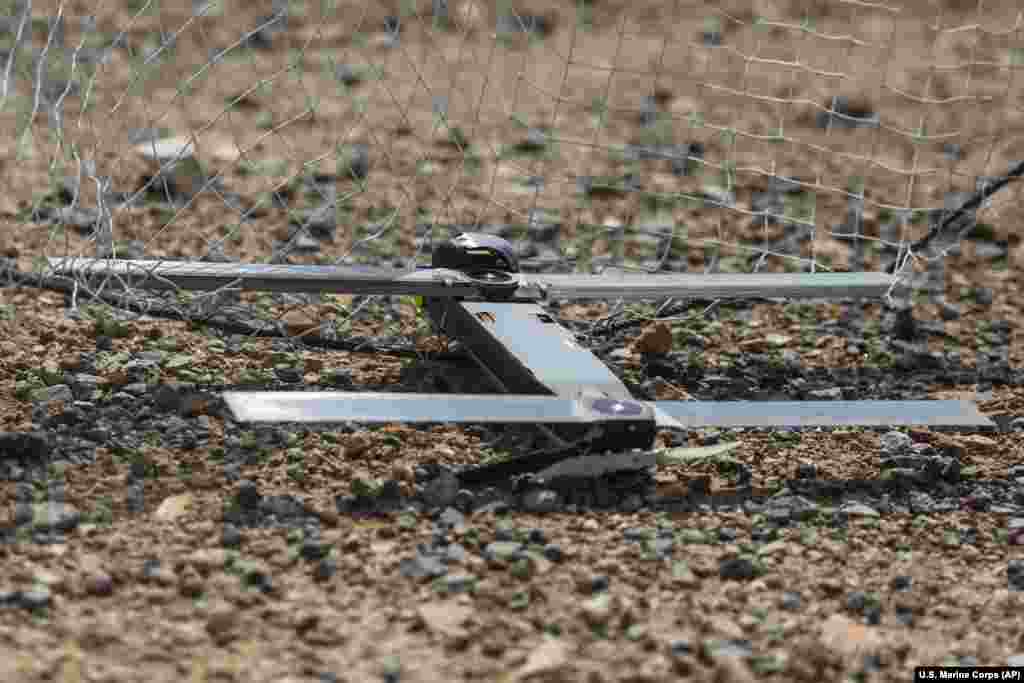
<strong>Three hundred Switchblade tactical unmanned aerial systems<br />
&nbsp;</strong><br />
These &ldquo;suicide drones&rdquo; weigh just 2.5 kilograms and can be quickly deployed from a mortar-like tube that pops them into the air. Switchblades use a live video feed to locate targets and are fitted with a grenade-sized warhead capable of killing enemy fighters and damaging nonarmored vehicles. The system is much faster and cheaper than calling in air support, with each drone costing an estimated $6,000. A larger version of the Switchblade is designed to destroy armored vehicles.<br />
&nbsp;<br />
&nbsp;
6/11 Three hundred Switchblade tactical unmanned aerial systems
 

These “suicide drones” weigh just 2.5 kilograms and can be quickly deployed from a mortar-like tube that pops them into the air. Switchblades use a live video feed to locate targets and are fitted with a grenade-sized warhead capable of killing enemy fighters and damaging nonarmored vehicles. The system is much faster and cheaper than calling in air support, with each drone costing an estimated $6,000. A larger version of the Switchblade is designed to destroy armored vehicles.
 
 
This is the equipment promised to Ukraine as part of an $800 million military-aid package that was announced by the White House on April 13.
<strong>Unspecified number of M18A1 Claymore antipersonnel mines<br />
&nbsp;</strong><br />
These directional mines are filled with 700 pea-sized steel balls backed by a wall of explosive. When detonated, the steel pellets spray outwards faster than most rifle bullets.<br />
&nbsp;
7/11 Unspecified number of M18A1 Claymore antipersonnel mines
 

These directional mines are filled with 700 pea-sized steel balls backed by a wall of explosive. When detonated, the steel pellets spray outwards faster than most rifle bullets.
 
This is the equipment promised to Ukraine as part of an $800 million military-aid package that was announced by the White House on April 13.
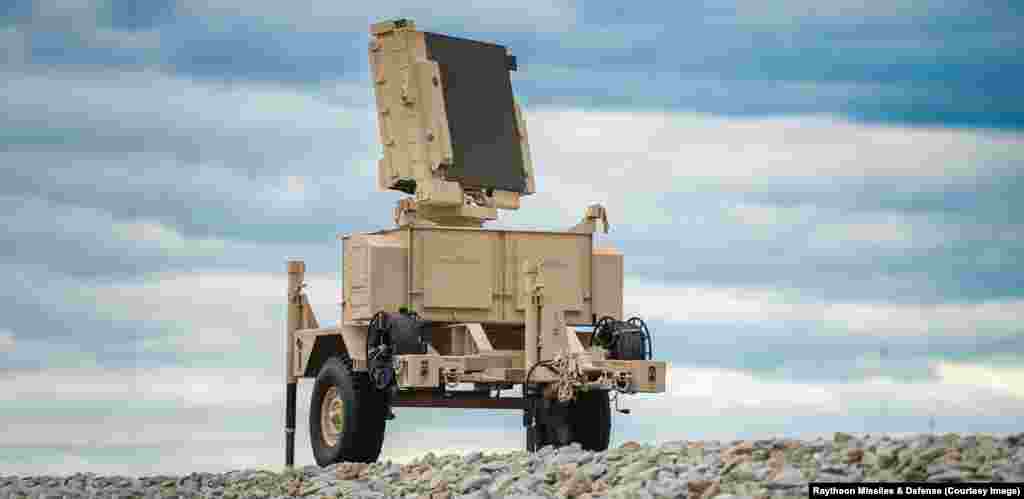
<strong>Two AN/MPQ-64 Sentinel air surveillance radars</strong><br />
&nbsp;<br />
This radar system is designed to spot incoming aircraft, drones, and cruise missiles from up to 40 kilometers away.<br />
&nbsp;<br />
&nbsp;
8/11 Two AN/MPQ-64 Sentinel air surveillance radars
 
This radar system is designed to spot incoming aircraft, drones, and cruise missiles from up to 40 kilometers away.
 
 
This is the equipment promised to Ukraine as part of an $800 million military-aid package that was announced by the White House on April 13.
<strong>One hundred armored high mobility multipurpose wheeled vehicles<br />
&nbsp;</strong><br />
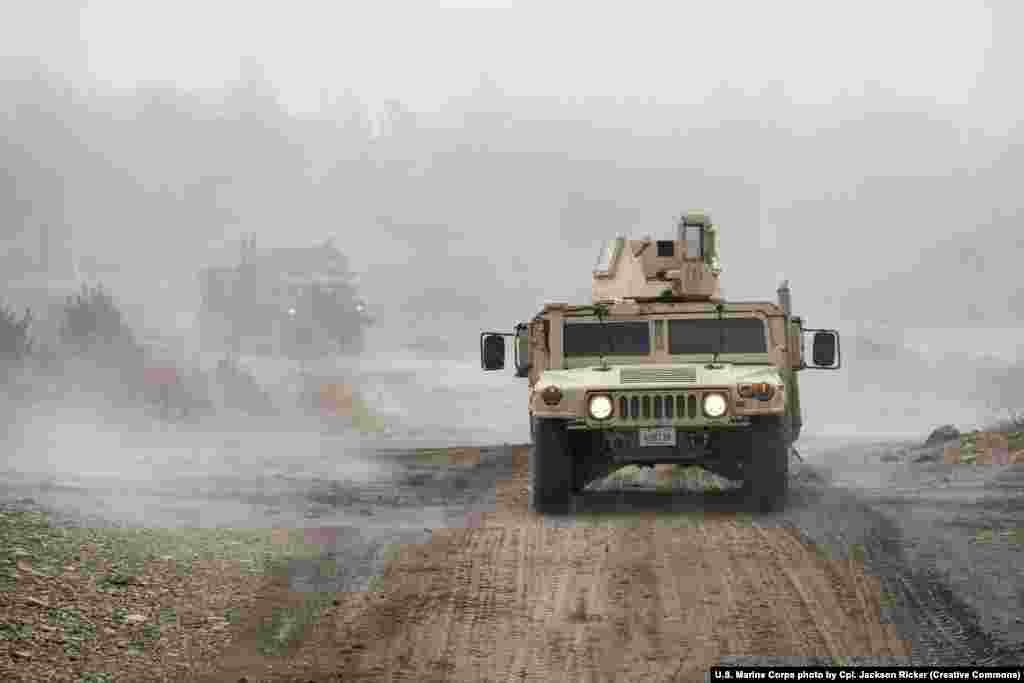
The Humvee has become synonymous with the U.S. military. The low-slung vehicles are capable of being fitted with weaponry, including heavy machine guns or anti-tank missiles.
9/11 One hundred armored high mobility multipurpose wheeled vehicles
 

The Humvee has become synonymous with the U.S. military. The low-slung vehicles are capable of being fitted with weaponry, including heavy machine guns or anti-tank missiles.
This is the equipment promised to Ukraine as part of an $800 million military-aid package that was announced by the White House on April 13.
<strong>Eighteen 155-millimeter howitzers and 40,000 artillery rounds<br />
&nbsp;</strong><br />
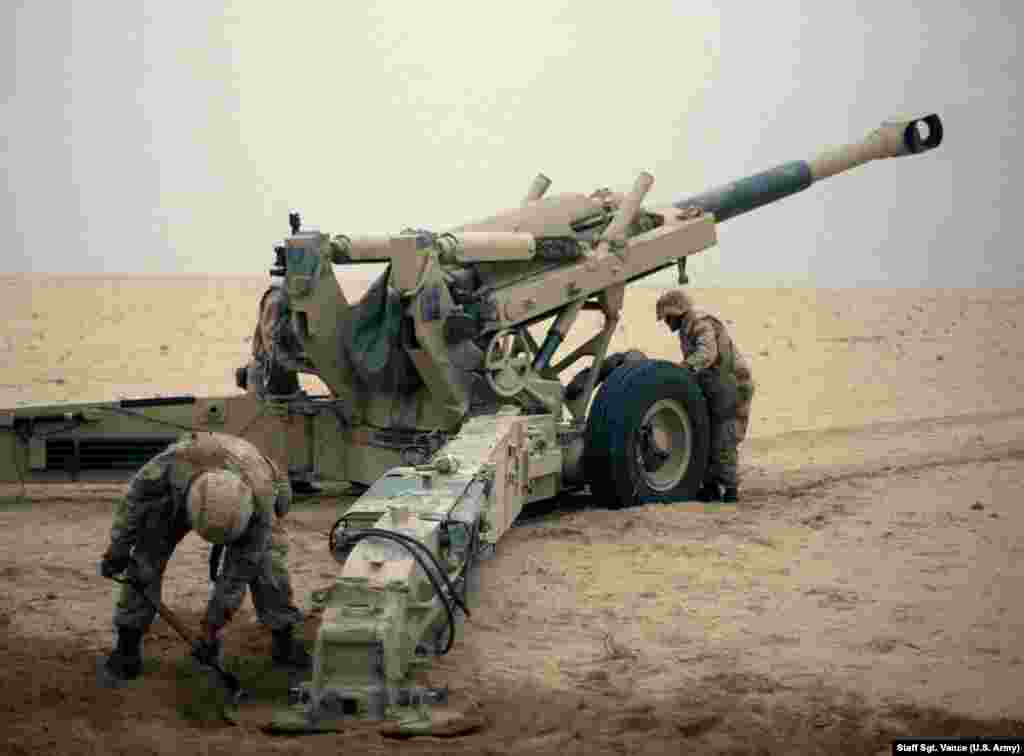
It&rsquo;s unclear which 155-millimeter howitzers from the U.S. arsenal will be supplied to Ukraine. The M198 model seen in this image first entered service in the U.S. military in the 1970s but suffered from <strong><a href="http://www.military-today.com/artillery/m198.htm">several design flaws</a></strong> and has now been largely replaced by a newer version. The M198 howitzer has a range of more than 20 kilometers.
10/11 Eighteen 155-millimeter howitzers and 40,000 artillery rounds
 

It’s unclear which 155-millimeter howitzers from the U.S. arsenal will be supplied to Ukraine. The M198 model seen in this image first entered service in the U.S. military in the 1970s but suffered from several design flaws and has now been largely replaced by a newer version. The M198 howitzer has a range of more than 20 kilometers.
This is the equipment promised to Ukraine as part of an $800 million military-aid package that was announced by the White House on April 13.
<strong>Unspecified number of chemical, biological, radiological, and nuclear protective suits<br />
&nbsp;</strong><br />
Such equipment would be vital in the aftermath of a nuclear or chemical weapons attack.&nbsp;<br />
&nbsp;<br />
The Pentagon has also pledged to supply Ukraine with medical equipment, body armor and helmets, optical devices, laser rangefinders, and unspecified models of &ldquo;unmanned coastal defense vessels.&rdquo;<br />
&nbsp;<br />
&nbsp;<br />
&nbsp;<br />
&nbsp;
11/11 Unspecified number of chemical, biological, radiological, and nuclear protective suits
 

Such equipment would be vital in the aftermath of a nuclear or chemical weapons attack. 
 
The Pentagon has also pledged to supply Ukraine with medical equipment, body armor and helmets, optical devices, laser rangefinders, and unspecified models of “unmanned coastal defense vessels.”


This is the equipment promised to Ukraine as part of an $800 million military-aid package that was announced by the White House on April 13.
Previous slide
Next slide

He also praised Western allies' provision of Soviet-era equipment that Ukraine's troops already know how to operate, and cautioned against the practical obstacles to effective use by Ukrainians of some "high-end weapons systems that they have not been trained on."

"Ukraine does not have the luxury of that training and garrison and certification before going to war," he said, "they're in war right now."

"Western powers, NATO, and the United States, have done a good job of flowing a lot of equipment [to Ukraine]. It may not be everything that the Ukrainians want, but they are proving effective on the battlefield," Foggo said. "The question is, how much longer can they last? They've got to be tired. The Russians are tired, too, but what the Ukrainians have going for them is leadership from the top down."

Written by Andy Heil based on an interview by RFE/RL's Georgian Service contributor Vazha Tavberidze
  • 16x9 Image

    Vazha Tavberidze

    Vazha Tavberidze is a staff writer with RFE/RL's Georgian Service. As a journalist and political analyst, he has covered issues of international security, post-Soviet conflicts, and Georgia's Euro-Atlantic aspirations. His writing has been published in various Georgian and international media outlets, including The Times, The Spectator, The Daily Beast, and IWPR.

This item is part of
XS
SM
MD
LG