



Middle East
- By Ray Furlong
After A Week Of War, Israel Sees Progress But Long Road Ahead

TEL AVIV -- Hidden away on a small street in a central district of town, the ruins of war come as something of a surprise. On nearby streets, hipsters fill outdoor cafes, Lime scooters clutter the sidewalks, and children play in parks. But turn a corner and you'll see blackened walls, smashed windows, and rubble-strewn cars.
This is almost the only site in Tel Aviv that bears the scars of war, following an Iranian strike on the first night of the conflict. As such, it bears witness to the destructive power of Tehran's ballistic missiles. But the lack of other such sites underlines Israel's ability to shoot them down.
It's an aspect of the war so far that is having a profound impact on how Israel approaches what comes next.
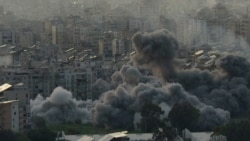

"The Israeli point of view is that, well, things are going back to normal here, more or less. We just have a few sirens a day. I mean, we are used to it. We can tolerate it," former lawmaker Ksenia Svetlova told RFE/RL.
The implication? For Israel, the long game is an easy choice.
"The Iranians right now are running low on ballistic missiles and specifically on launchers, but they still have drones. The drones cannot hurt Israel much. We know how to intercept them," said Svetlova, now executive director of an NGO called ROPES -- the Regional Organization for Peace, Economics, and Security.

There is indeed an air of routine rather than alarm as people here make their way down to underground shelters whenever alerts sound on their phone apps.
Israel's capacity to intercept incoming drones and missiles is measurable by the civilian casualty toll, with 12 fatalities after a week of conflict. Meanwhile, Israeli and US forces have decapitated the Iranian leadership and appear to have massively downgraded Tehran's military capabilities.
"We are striking the enemy, its leadership, its oppressive regime, and different targets," Israeli Prime Minister Benjamin Netanyahu said on March 6, while visiting Beersheba, where some 20 people were injured in an Iranian strike earlier in the week.
The bullish tone in his remarks on the progress of the war matched the iconography of resolve that lines the streets here: Israeli and US flags can be seen everywhere, as can billboards depicting a Roaring Lion -- this country's military codename for the operation called Epic Fury by Washington.
Netanyahu has long called for regime change in Iran, as well as the destruction of its nuclear and missile programs. He has said the aim of this operation is "to crush the regime of terror completely."
Opinion polls show Israelis overwhelmingly support the war. Longstanding Netanyahu critics do, too.
Veteran opposition politician Avigdor Liberman told RFE/RL the war was going "very well" but that the "final result" was the key issue. This, he said, had to be "to topple this regime."

Liberman, who has served as ministers of defense, foreign affairs, and finance in various governments over the years, said he was confident this could be achieved but did not explain how.
The "worst case" would be Iran descending into "chaos" he said.
"It's really a huge question because what we saw in Libya, Iraq, Syria, it's real turmoil. But from all alternatives...the worst alternative is if [the clerical authorities] will continue to rule Iran," he said.
But reserve Major General Yaakov Amidror, a former national-security adviser for Netanyahu who clashed with him over policy on the West Bank, suggested the talk of regime change may not be serious.
"The goal of the war is a very strong agreement" between Israel and the United States, he told an event held by the Jerusalem Institute for Strategy and Security (JSIS) this week.
"First, to eliminate totally any ability which is connected either to the missiles or to the nuclear project. Any guy who was there, any building which was connected, any place which was connected, any capability which is needed, everything should be totally destroyed…. I think that both sides understand regime change is something that cannot be guaranteed," he said.

Given this, he added, the main aim was simply to cause as much damage as possible.
"What should be ensured by the operation, by the war, is that any regime, this one or another one, will be very, very weak," Amidror said.
The Israeli government has also not explained in detail how regime change could be achieved. There has been speculation in recent days about Iraqi Kurdish militias crossing the border and sparking an uprising.
Svetlova, who as a Knesset legislator was closely engaged in relations with Kurdish groups, said they would be "skeptical" of the idea, at least in the short term.
Which brings us back to the long game. On March 6, US President Donald Trump gave a timeframe of four to six weeks to achieve Iran's "unconditional surrender."
The Israeli government hopes "that the war will, first of all, last long enough" to sufficiently degrade Iran's defense and security capabilities, Svetlova said.
"In the end of the day, there will be maybe a beginning of civil war in Iran, between the various minority militias, the Basij [militia] forces, the IRGC (Islamic Revolutionary Guards Corps)of course, the Iranian protests will resume, and then the regime will have to fight on many fronts rather than just one.... I think that's the hope."
More News
- By Daud Khattak
Testing Times For Mecca Alliance Partners As Iran-Aligned Houthis Mount Attacks

Saudi Arabian allies Pakistan and Turkey are facing a major test just two months after signing a joint defense agreement as the rise of Iran-aligned Houthi rebels in Yemen test the deal, which says "any armed attack against any one of the three states shall be regarded as an attack against them all."
As fighting between the Houthis and Saudi-backed government forces rages in Yemen, experts believe that any active military interference by Pakistan or Turkey -- the other two partners in the Mecca Joint Defense Agreement -- in support of Saudi Arabia, may heighten regional tensions amid the US-Iran conflict.
"(The Islamic republic) can still support the Houthis but if Turkey and Pakistan enter (the war), the situation would become complicated," Frankfurt-based Middle East analyst Ali Sadrzadeh told RFE/RL's Radio Farda.
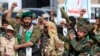
The three sides held an emergency meeting in the Saudi capital, Riyadh, on October 5, the day Saudi-backed Yemeni government forces announced that they had secured effective control of the Bab el-Mandeb Strait, a claim denied by the Houthis.
Last month, the Houthi rebels captured the Red Sea port city of Mocha and other areas around the strait, a key route for Saudi oil exports to Asia that has gained in importance with the disruption of shipments through the Strait of Hormuz because of the Iran war.
The Houthis have also warned that Saudi airspace "will be the theatre of operations of our armed forces."
The renewed fighting has displaced some 184,000 people and threatened shipping through the vital chokepoint linking the Red Sea and the Gulf of Aden.
In an apparent reference to recent Houthi strikes on the Saudi cities of Mecca and Medina, two of Islam's most sacred locations, Saudi Defense Minister Prince Khalid bin Sultan said in a social media post that the alliance meeting "reaffirmed the solidarity and unity of our countries in confronting the heinous attacks against the Kingdom and the holy sites."
He added that the three sides agreed to activate collective deterrence measures within the framework of the alliance in response to the attacks and "all those responsible for them."
A Festering Conflict
The conflict between Saudi Arabia and the Houthis has festered for years.
Saudi Arabia launched a military intervention in Yemen in March 2015, after Houthi rebels seized the capital, Sanaa, and forced the internationally recognized government to flee the country. The conflict is widely viewed as part of the broader Saudi-Iranian rivalry, with the two countries backing opposing sides. Major fighting subsided after a UN-brokered truce in 2022, but the conflict was never fully resolved and has escalated again this year.
Alarm bells rang when the Houthis last month stepped up attacks against Saudi targets, including a key oil pipeline, and advanced toward the Bab el-Mandeb Strait.
A joint statement released after the emergency October 5 meeting stated that it was meant to address the "security developments and threats facing the Kingdom of Saudi Arabia."

Experts believe the joint statement of the Mecca alliance, affirming the provision of "agreed military forces and capabilities" and their "rapid deployment in the Kingdom" is a clear declaration of support for Saudi Arabia in the face of increasing attacks from the Houthis.
But they say such support also risks triggering another confrontation in the region.
Sadrzadeh said that, although there are an estimated 30,000-40,000 Pakistani troops based in Saudi Arabia, he does not think the nuclear-armed country would agree to send forces to Yemen because Pakistan "wants to maintain its relationship with the Islamic republic."
Just a day ahead of the emergency meeting, Iran Foreign Ministry spokesman Esmaeil Baqaei warned that any "new intervention" in (Yemen) would further complicate the situation.
In a reference to Pakistan's reported deployment of troops in Saudi Arabia to fight the Houthis in Yemen, Baqaei said that "we hope that it is not true and really is just a rumor," adding that "any new intervention in developments related to Yemen would only make the situation more complicated."
Rabia Akhtar, a professor of international relations at the University of Lahore, believes that Pakistani forces taking part in strikes against the Houthis could lead to a confrontation with Iran.
"Tehran could see that as Pakistan joining a campaign against its regional interests, even if Islamabad insists that its involvement is limited to supporting Saudi Arabia," she told RFE/RL.
Walking A Tightrope
Nuclear-armed Pakistan shares a roughly 900-kilometer-long border with Iran along its southwestern frontier. Unlike its often-fraught relations with India and Afghanistan, its other two neighbors to the east and west, ties between Islamabad and Tehran are mostly stable.
Akhtar said that Saudi Arabia is an important partner for Pakistan, but Iran is a neighbor and Islamabad "will have to live with the consequences of its decisions long after this particular episode ends."

Pakistan has been walking a tightrope by not taking sides since the United States and Israel launched air strikes on Iran on February 28.
Despite maintaining traditionally close relations with Saudi Arabia and several other oil-rich Gulf countries, Pakistan has restricted itself mostly to statements of condemnation in the face of Iran's drone and missile attacks on its Arab neighbors over the past few months.
Islamabad has also presented itself as a mediator and hosted the first-ever face-to-face talks between Iranian and US officials since 1980 in April.
While experts see the October 5 emergency meeting of the Mecca alliance as a fresh escalation amid the regional hostilities, Khalid Sultan of the National University of Modern Languages believes that it should not automatically be interpreted as a precursor to a broader ground war in Yemen.
"The (Mecca) agreement's significance lies not simply in military cooperation, but in the emergence of a collective regional deterrence mechanism," he told RFE/RL, adding that the success of the Mecca Joint Defense Agreement will ultimately be measured not by how quickly it enters a war, but by how effectively it prevents one.
"For Pakistan, in particular, the policy challenge will be to honor its defense commitment to Saudi Arabia while avoiding an open-ended military entanglement in Yemen."
Akhtar said any Pakistani participation in attacks on Houthis could undermine its role as a mediator with Tehran.
"A clearly limited role in defending Saudi territory could remain compatible with mediation," she said. "Joining an offensive campaign in Yemen would make that position much harder to sustain."
- By Kian Sharifi
Iran's Hormuz Leverage Is Fading, But It Isn't Gone
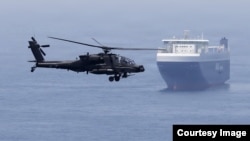
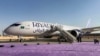
The flow of crude from the Persian Gulf has recovered to near-prewar levels, but the latest data shows that much of the oil is reaching markets through routes and shipping arrangements that did not exist before the war, raising the question as to whether Iran is losing its leverage in the Strait of Hormuz.
At least 16.5 million barrels per day of crude left the region between September 1 and 28, matching the prewar average when Iran is excluded, according to commodity analytics firm Kpler.
But while crude levels have risen, the refinery bottleneck that has caused a global spike in diesel prices persists. European Union figures published on October 1 showed diesel pump prices at record levels. Prices have also surged in the United States despite the recovery in oil exports.

The route, meanwhile, has changed dramatically.
Before the war, 83 percent of the region's crude crossed the Strait of Hormuz. In September, 40 percent bypassed the strait, with oil instead moving through pipelines and other routes via Saudi Arabia and the United Arab Emirates. About 60 percent, or 9.9 million barrels per day, physically crossed Hormuz.
Kpler said more than 70 percent of the crude that crossed the strait in August -- the most recent month available -- changed tankers offshore in the Gulf of Oman, highlighting how far the current system is from normal commercial shipping.
For Iran, the recovery is a sign that its ability to disrupt the waterway has been significantly degraded.
Mohammad Ghaedi, a lecturer at George Washington University, told RFE/RL's Radio Farda that the current level of traffic was already too much for Tehran and "unacceptable" to authorities there.
But the figures do not mean Iran has simply lost control of Hormuz. Tehran never formally controlled the strait in the first place. Its leverage has instead rested on its ability to make the passage dangerous, forcing shipping companies to weigh the risks and costs of entering the Gulf.
That ability appears to have weakened as US forces provide protection for commercial shipping and companies develop ways to move oil while limiting their exposure to the strait.
Ellen R. Wald, author and energy markets analyst, told RFE/RL that Iran's "ability and/or will to attack ships in the Gulf is declining," allowing vessels to transit under US military cover.
But she cautioned that the recovery in flows should not be mistaken for a return to normalcy.
Some shipping companies are accepting significant risks to effectively ferry oil through the strait to larger tankers waiting outside the Gulf. Others are operating without insurance or under unusually difficult conditions.
"This is not a return to normal," Wald said. "These are significant risks and come with high costs."
And that is why oil prices aren't dropping much despite oil flows increasing.
War Premium
The rebound in crude flows has reduced some of the immediate pressure on global supplies, but Wald does not expect oil prices to return to prewar levels yet. The continued threat to vessels, elevated insurance costs, and dependence on US military protection mean that a "war premium" remains embedded in the price of oil.
The latest Kpler figures also show why the recovery in exports should not be confused with the restoration of the old Gulf oil-trading system.
Before the war, almost all of the region's crude exports depended on Hormuz. Now, pipelines, Red Sea routes, and offshore ship-to-ship transfers are helping producers circumvent the chokepoint. Kpler said the region's export system has effectively been rebuilt around the disruption.
The more oil that moves without being stopped, the weaker Tehran's ability to use Hormuz as a coercive tool becomes. But the extraordinary measures required to keep that oil moving also demonstrate that the strait remains a source of leverage.
Ghaedi said he does not believe Iran is likely to attack regional energy infrastructure, despite commentary from Tehran it could escalate by targeting oil facilities. He argued that reports portraying Iran as having lost control of Hormuz could themselves risk provoking such a response.
For now, however, the evidence points to a gradual erosion rather than a complete disappearance of Iranian leverage. And as long as ships still require military protection, unusual routing and costly workarounds to move that oil, Hormuz remains a vulnerability for Washington, even if Iran is no longer able to exercise the same degree of pressure over it that it did at the height of the war.
- By Frud Bezhan
Will Iran 'Flex Its Muscles' In Iraq After US Military Pullout?
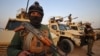
The departure of US forces from Iraq will embolden Iran, experts say, warning that Tehran could seek to exploit a potential security vacuum to expand its influence in the smaller neighboring country.
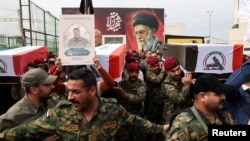
Iran is already a key political and economic player in Iraq, where it backs powerful Shi'ite militias, some of which operate within the state security apparatus but have considerable autonomy.
The Islamic republic cast the end of the two-decade US military presence on September 30 as a major victory in its goal of driving American forces from the Middle East.
"Iran views any US weakness as a chance to push and be more aggressive, so I would expect to see the Iranians attempt to take advantage of the new status quo by flexing their muscles in Iraq," said Colin Clarke, executive director of the Soufan Center, a New York-based think tank.
Experts also warn the US pullout could provide an opening for the resurgence of the Islamic State (IS) extremist group, which has been significantly weakened but remains active in Iraq.
Iran To Tighten Grip
Iran labeled the US exit from Iraq as a triumph for its so-called axis of resistance, Tehran's loose network of proxies and militant groups against archfoes Israel and the United States.
The Islamic Revolutionary Guards Corps, the elite branch of Iran's armed forces, said the pullout was a "massive achievement" for the axis and marked the end of "America's heavy and disgraceful defeat" in Iraq, in a statement issued on October 1.
US President Donald Trump hailed the withdrawal as a "victory" for Washington and Baghdad, adding it was "time for America to go home!"
The timing of the US pullout, which came amid the ongoing US war with Iran, has raised eyebrows, with experts saying it could send the wrong message to Tehran.
"Tehran will treat it as evidence that Washington is shedding a commitment under fire and as an opening to tighten its own grip in Iraq," said Farzin Nadimi, an Iran defense expert at the Washington Institute, adding Iran will see the pullout as "proof that pressure works."
When the United States and Israel launched an air campaign in Iran in late February, Tehran's proxy forces in Iraq joined the fray, carrying out attacks against US diplomatic and military facilities.
Iran itself has carried out waves of missile and drones strikes in Iraq's semi-autonomous Kurdish region in the north, where Iranian Kurdish opposition groups operate camps and offices.
Opening For Iran's Proxies?
The so-called Islamic Resistance in Iraq, an umbrella organization of Shi'ite, Iran-backed armed groups, has been buoyed by the US withdrawal, which it portrayed as a victory that was forced by its attacks.
Some of the Iran-backed groups that form the Islamic Resistance in Iraq are also part of the Popular Mobilization Forces (PMF), an umbrella organization of mostly pro-Iranian militias that has been a part of the Iraqi Army since 2016.
Part of Iran's axis of resistance, some Iran-aligned groups have refused to disarm and hand their weapons to the state. Baghdad was forced to extend the original September 30 deadline for disarmament to June 2027.
Kataib Hizballah, one of the most powerful pro-Iranian militias in Iraq and a US-designated terrorist group, issued a threat to the Baghdad government on the eve of the US pullout.
"A government that doesn't work for the good of its people will be brought down by all possible means," a statement said.
Experts say groups like Kataib Hizballah will see the US withdrawal as a green light to expand their freedom of maneuver and presence in parts of the country where their militias operate.
That includes Iraqi Kurdistan, which borders northwestern Iran and was home to a US air base that closed on September 30.
"With US troops and air defenses gone, these groups have more room to pressure the Kurdish Regional Government, deepen their role in Iraqi security institutions, and use Iraqi territory for attacks on US partners," said Nadimi of the Washington Institute.
"The withdrawal of US air and missile defense assets from [Iraqi Kurdistan] is particularly seen as troubling. The United States can still strike from outside Iraq, but the on-the-ground constraint is gone," he added.
The Pentagon has said the United States will keep providing training and intelligence to Iraqi government forces.
Opening For IS Extremists?
Many Iraqis have welcomed the departure of US forces, although some are concerned over the readiness of government forces to protect the Middle Eastern country of some 48 million people.
The United States invaded Iraq in 2003 and toppled dictator Saddam Hussein, triggering years of war and sectarian strife from which the country is still recovering.
After withdrawing in 2011, the United States sent troops back to Iraq in 2014 to help fight IS extremists who had seized large swaths of the country and neighboring Syria.
Iraq's security forces have developed greater operational capabilities but lack air power and continue to reply on external support. Experts say the US pullout is likely to lead to more insecurity in Iraq, a situation that extremist groups are likely to try and capitalize on.
"IS will see this as an opportunity, and it remains uncertain whether and to what extent Iraqi security forces will be able to continue to keep the group on the ropes," said Clarke of the Soufan Center.
"It is hard to look at the present and not be reminded of the US withdrawal in 2011, which sowed the seeds for the rise of IS in the first place."
- By Kian Sharifi
What Houthi Gains In Yemen Mean For The Iran War
Iran’s hold on the Strait of Hormuz gave it significant leverage over a much more powerful United States for months. But that grip is loosening, even if global energy markets have yet to reflect it.
Now another global transport chokepoint is emerging as a potential front in the conflict, hundreds of kilometers away, on the other side of the Arabian Peninsula.
The Iran-aligned Houthis' capture of the Red Sea port city of Mocha and their reported advance toward the Bab al-Mandab Strait have suddenly given Yemen a new significance in the wider war.
The timing is particularly consequential for Saudi Arabia.
With shipping through Hormuz disrupted, Riyadh has increasingly relied on routes through the Red Sea to move its oil to global markets. Saudi seaborne crude exports through Bab al-Mandab were reportedly eight times higher between March and mid-July than during the same period last year.
A Houthi presence close to the strait therefore offers the group a potentially powerful means of threatening Saudi interests and gives Iran another source of leverage over regional energy flows and global shipping.
This, in addition to Houthi strikes this week on Saudi energy infrastructure, “has contributed to a further increase in oil prices, which has been Tehran’s aim all along,” said Hamidreza Azizi, a senior Iran analyst at the Belgium-based International Crisis Group.
“One can therefore expect these developments to further embolden Tehran to stick to its demands and adopt an even more defiant posture vis-a-vis the United States,” he told RFE/RL.
The Houthi resurgence also underscores the limits of the US campaign against the group. Despite weeks of intensive American air strikes targeting Houthi leadership, weapons, and military infrastructure last year, the group has retained the capacity to mount a major ground offensive and threaten key maritime routes.
But that does not necessarily mean Tehran ordered the Houthi offensive.
An Iranian Ally, Not A Proxy
The Houthis are closely aligned with Iran and have received extensive Iranian weapons, training, intelligence, and technical assistance. Iranian personnel have also reportedly helped guide Houthi military operations. But portraying the group as simply an Iranian proxy risks missing what makes the current situation so complicated.
“I have always seen the Houthis’ relationship with Iran as a strategic partnership, and that is even more the case now than before,” Azizi said.
The Houthi movement has its own leadership, interests, ideology, and calculations. It emerged from Yemen's own political and sectarian conflicts long before the current confrontation between Iran and the United States. The group has repeatedly demonstrated that it is capable of making decisions independently of Tehran, even when those decisions ultimately serve Iranian strategic interests.

Despite Iranian patronage over the years, the Houthis “have their own local and, increasingly, regional ambitions, and they see themselves as a regional power in their own right,” according to Azizi.
The Houthi movement’s rise in stature comes as Lebanese Hezbollah, a once-powerful Iranian partner, has suffered significant setbacks as Israel continues to dismantle its infrastructure in southern Lebanon.
“In this context, the Houthi advances could boost morale among supporters of the Islamic republic inside Iran as well as across its regional network,” Azizi argued. “They could also help offset the broader weakening of Iran’s network of influence in the region.”
The Houthis Advance, Iran Gains
Iran does not necessarily need to control the Houthis for the group to function as a powerful source of Iranian leverage. If the Houthis consolidate their gains along Yemen's western coast, Tehran could benefit from pressure on Bab al-Mandab without having to directly close another international waterway.

For the Houthis, meanwhile, the war offers its own opportunities.
The collapse of the Yemeni government's defensive line around Mocha gives the group a chance to expand its territorial and military position on the Red Sea coast while strengthening its regional standing. Any threat to shipping can simultaneously serve Houthi objectives in Yemen and Iran's broader confrontation with Washington and its regional partners.
“The fact is that, at the current moment, both sides see a benefit in coordination and simultaneous escalation,” Azizi said.
He added that the Houthi advances spare Iran from having to directly engage Saudi Arabia, while Houthi disruption of shipping through Bab al-Mandab and attacks on Saudi energy facilities “would not have had the same impact they have now if the Strait of Hormuz had not already been under pressure from Iran.”
It also presents Saudi Arabia and the United States with a difficult choice.
A major military response could push Yemen from a parallel conflict into an active theater of the Iran war, potentially provoking further Houthi attacks against Saudi territory and infrastructure. But allowing the Houthis to consolidate their position risks leaving a movement hostile to Riyadh in a stronger position near one of the world's key maritime chokepoints.
The dilemma is particularly acute because the United States is already trying to manage a conflict whose economic consequences extend well beyond the Middle East. Disruptions to oil supplies and shipping have pushed up energy and transportation costs, threatening to fuel inflation and further strain an already fragile global economy.
The significance of developments in Yemen, therefore, is not simply that the Houthis have captured another strategic city. It is that the war may be creating a second maritime pressure point at a moment when the first, the Strait of Hormuz, has become central to the global economy.
- By Ray Furlong
From Al-Qaeda To Lone Wolves And AI: How Terrorism Has Changed Since 9/11
Farhad N. was just a few months old when hijacked airliners were deliberately piloted into the twin towers of the World Trade Center in New York on September 11, 2001, part of attacks on the United States that killed thousands of people.
Twenty-five years later, he was sentenced to life imprisonment for plowing a Mini Cooper car into a crowd of people in Munich, killing two people and injuring dozens.
The 25-year-old Afghan's story underlines how the world has been shaped since 9/11, with both the terror threat and counterterrorism operations continually in flux.


The 9/11 attacks were plotted by Al-Qaeda, a group led by Saudi millionaire Osama bin-Laden and sheltered by the Taliban authorities in Kabul who were subsequently driven from power.
After this, Farhad N. – whose surname is abbreviated in line with German privacy rules -- began to grow up in a country where US-led international forces fought for 20 years to keep the Taliban at bay.
Later, he was among hundreds of thousands of Afghans who left their country to seek peace and prosperity in Europe -- only to become radicalized by online propaganda posted by imams in his native country.
He had no affiliation or links to any specific group and appeared to have acted entirely on his own initiative.
"In the old days, we would call these lone actors or lone wolves. This is the future," a former US diplomat with decades of experience in counterterrorism told RFE/RL.
"Nobody needs to be a part of a group…They can be inspired by a group, they can be inspired by multiple groups," the ex-diplomat, who did not wish to be named, said, adding that advances in Artificial Intelligence were exacerbating an "inflection point" in the development of terror threats.
RFE/RL spoke to multiple experts about how technological means that did not exist 25 years ago, including drones, AI, and social media -- are creating a completely new and more dangerous environment.
"We're beginning to see a lot more online presence. We're beginning to see a lot more use of influencers…in addition to the standardized actors that we have become used to in the terrorist scene, we also have lone actors, those who are influenced," retired US General Joseph Votel told RFE/RL.

Votel led a parachute assault by US troops on Taliban positions in Kandahar in October 2001, just weeks after the 9/11 attacks on New York and Washington. He went on to play a key role in what was dubbed the War on Terror, serving also in Iraq and commanding operations against Islamic State (IS) militants.
"These terrorist organizations have survived. They've continued to adapt as much as they can...they've become more sophisticated," he said. "The environment is much more complex now for security experts."
'Legacy Terrorists'
With Al-Qaeda, the post 9/11 story has been one of franchises -- groups such as Al-Shabaab in Somalia and Jama'at al Islam al Muslimin (JNIM) in the Sahel region of west Africa, which affiliated with Al-Qaeda by linking their own local goals with its ambition to mount further global attacks.
This diffused structure enabled the Al-Qaeda brand to survive after US military forces pounded its leadership and deprived it of safe havens in Afghanistan in the months after 9/11.
The new US Counterterrorism Strategy , released in May, puts Al-Qaeda and "it's most aggressive subgroup, Al-Qaeda in the Arabian Peninsula (AQAP)," top of its list of what it calls "legacy Islamist terrorists."
Iran's Ties With Al-Qaeda And 'Criminal Proxies'
The US Counterterrorism Strategy lists Al-Qaeda as a major threat while describing Iran as "the world's No. 1 state sponsor of terror." Tehran's backing for groups designated as terrorist organizations by Washington, including Hezbollah and Hamas, is well-documented.
Iran also has longstanding ties with Al-Qaeda. Multiple UN reports say the group's de facto leader, Saif Al-Adel, has been living in Tehran, although a recent report said the regional conflict since February 28 may have jeopardized his security.
Experts say pragmatism underpins the unlikely relationship between Shi'a-led Iran and the Sunni militant group. Retired US General Joseph Votel said Tehran sees Al-Qaeda as useful because its activities "exact a price on the US." Al-Adel's sanctuary may also give Tehran leverage over him.
Iran has likewise backed Hamas, another Sunni group designated a terrorist organization by Washington, and supported its October 7, 2023, attack on Israel in which some 1,200 people were killed and 250 taken hostage.
Iran has also been accused of using proxies farther afield. A 2025 report by the Combating Terrorism Center at West Point highlighted Tehran's growing use of "criminal proxies to conduct attacks in order to maintain plausible deniability."
A UN report last month described AQAP as "the vanguard" of the global Al-Qaeda movement.
In recent years, studies have shown how Al-Qaeda branches coordinate financing and training. For example, UN monitors last year noted a single $50-million ransom payment to JNIM that it shared with AQIM (Al-Qaeda in the Islamic Maghreb), AQAP in Yemen, and "Al-Qaeda senior leadership in South Asia."
They're also stepping up online messaging.
"Al-Qaeda in Yemen's propaganda skyrocketed after the withdrawal from Afghanistan up until today. They published more than I've published in the past couple of years," Sara Harmouch, a terrorism expert and fellow at the Frontier Security Institute and at the Program on Extremism at George Washington University, told RFE/RL.
"Al Qaeda in Yemen, as recently as a couple of months ago…had come out with statements and videos inciting lone wolf attacks, asking individuals who are in the West to conduct attacks on the US homeland, into Europe," she said.
Flying Blind?
In this rapidly changing environment, there's another issue: loss of counterterrorism capacity.
"We're flying blind. In the last year and a half…we've lost people and we've lost money," the former diplomat said, adding that the current geopolitical environment has exacerbated the challenge.
"Right now, we're kind of in the eye of the storm between the aftermath of October 7 [the 2023 Hamas-led attack on Israel] and the ongoing Iran war," he went on. "We've lost a lot of good people that had on-the-ground experience, institutional knowledge."
During a September 2 George Washington University webinar, similar concerns were raised by other leading counterterrorism experts.
Tom Sanderson from the Center for Strategic and International Studies noted a "reduction in focus on terrorism, the budgets, the personnel," while Bruce Hoffman from the Council on Foreign Relations spoke of a staff "exodus" from the State Department's counterterrorism bureau, which was restructured last year.
From Ruins To Remembrance: Then And Now Images Of September 11 Sites
Then
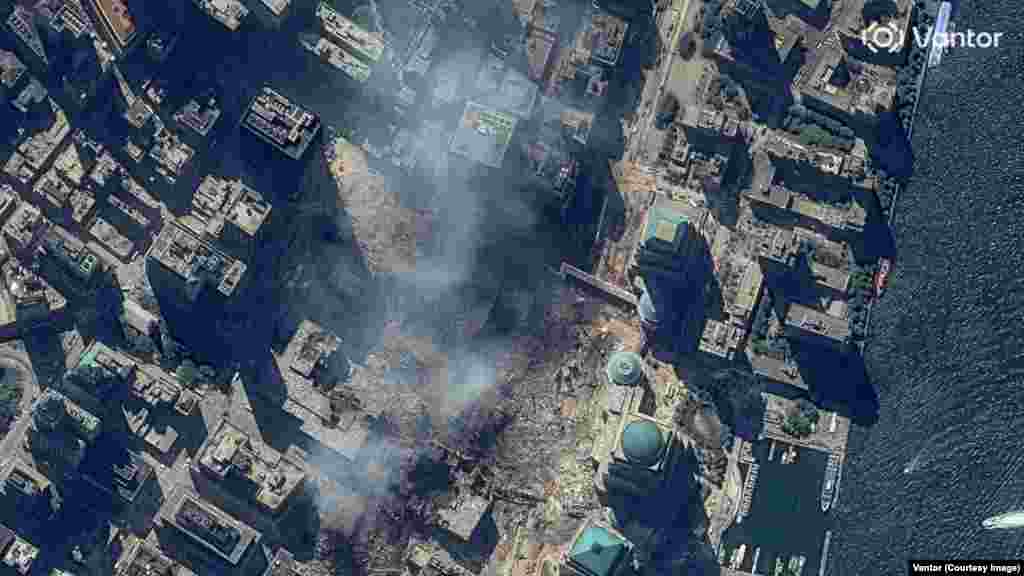
Now

Then
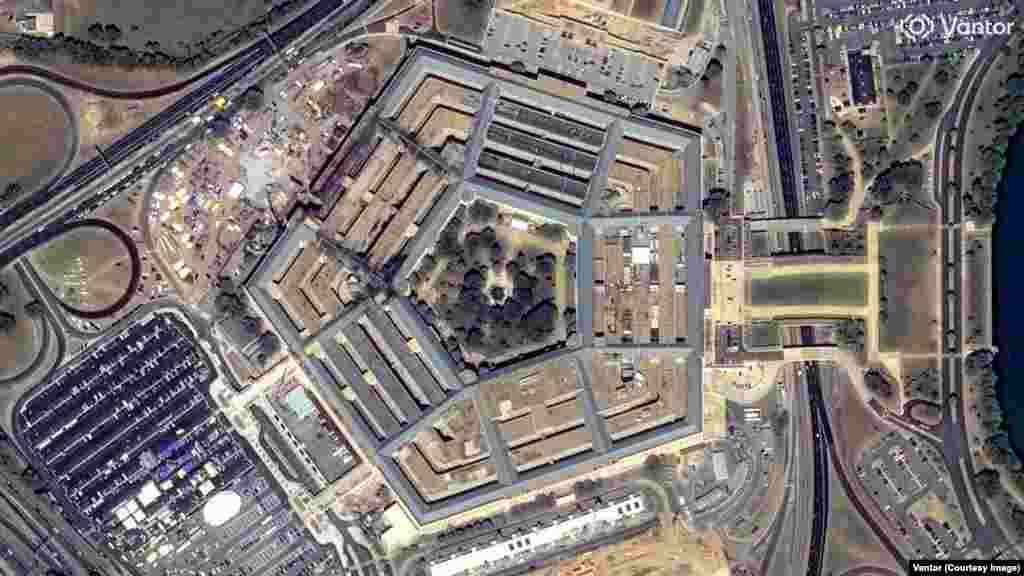
Now
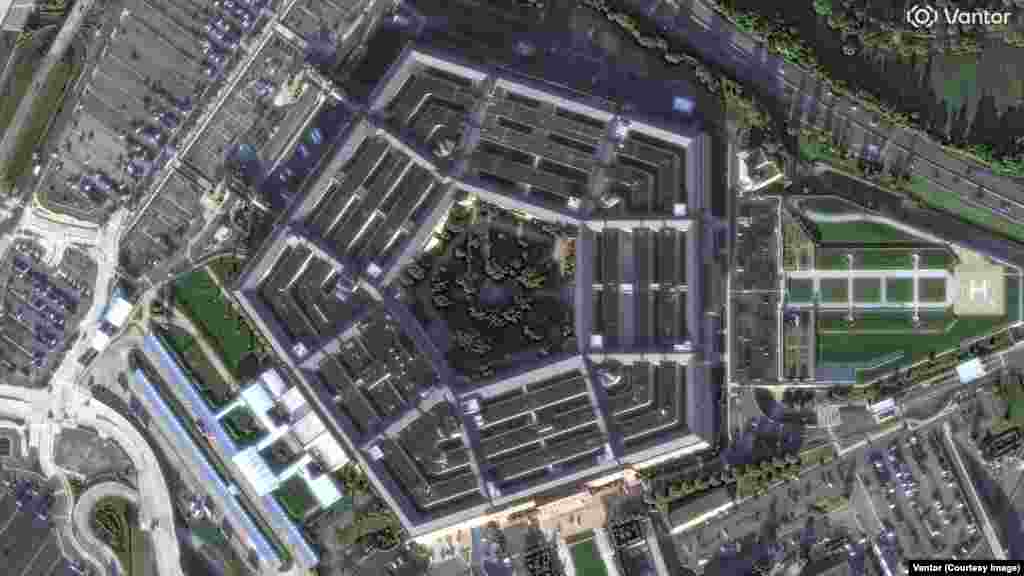
Then
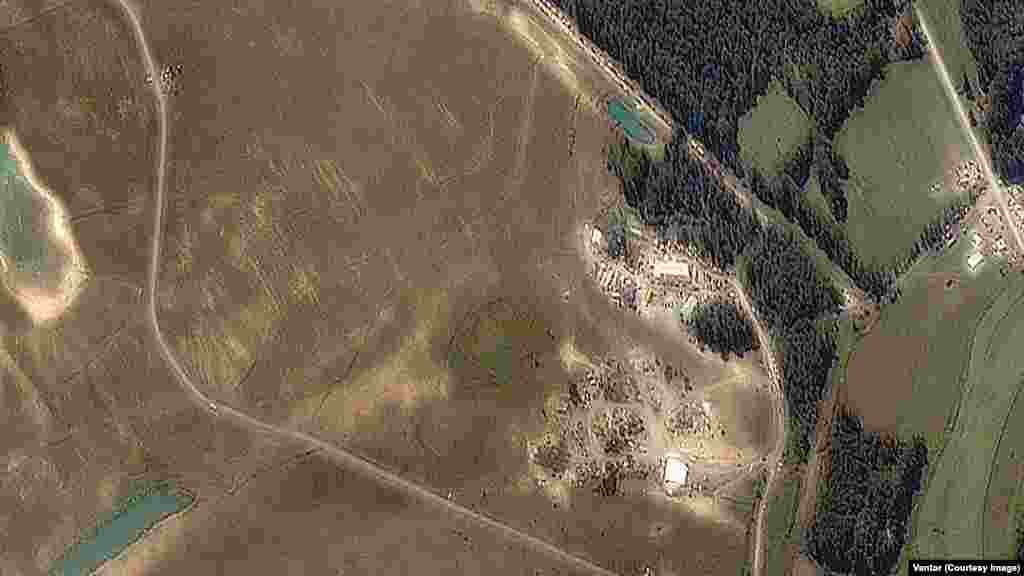
Now
Then

Now

There was no immediate comment from the White House or the State Department on the issues raised in this article. Funding for counterterrorism began decreasing after a review in 2018 and these reductions have gained pace since 2025.
The US Counterterrorism Strategy says "our nation has not been well served by its Intelligence Community, which has been mired in old ways of looking at threats."
Jonathan Schroden, chief research officer at CNA, another Washington-based think-tank, told RFE/RL that there's been a key policy change in recent years.
"Our goals have shifted away from the total defeat of these groups and towards the effective management of the threat that they pose…keeping that away from the US homeland," he said.
"I think the structure that the US has in place now has been largely effective at doing that over the last five to seven years," he added.
- By Kian Sharifi
'Infiltration' Bill Exposes Iran's Internal Divisions Over Wartime Security Crackdown

Iran's parliament is trying to turn fears of foreign infiltration into law. But as lawmakers work through the legislation, the debate is exposing an increasingly awkward question for the Islamic republic: How far should the state go in policing Iranians' contact with the outside world?
At the center of that debate is Parliament Speaker Mohammad Baqer Qalibaf, who, at least publicly, is doing a balancing act. He has defended the need for tougher measures against foreign infiltration while warning that the current draft of the legislation goes too far.
"No patriot opposes countering foreign infiltration," Qalibaf said during a recent parliamentary session. But, he added, lawmakers needed to ensure that people's "rights, their lives, and their trade" were not affected.

He said security agencies may need to be able to vet Iranians' contacts with foreigners but that they cannot demand permission at every stage.
"They say they want to be certain, to have permission sought from them at every stage," the conservative speaker said. "That's not possible, because then we'd have to lock the country down."
That balancing act gets to the heart of a bill that was conceived as a wartime response to genuine security failures. The two recent wars exposed how deeply Israeli intelligence had penetrated Iran and prompted calls for tougher measures to identify and prevent foreign influence.
But what began as a security response has evolved into a much broader fight over the boundaries of the Islamic republic's security state.
The bill, formally called the Plan To Counter The Infiltration Of Intelligence Services And Foreign Governments Or Institutions but commonly referred to as the "infiltration bill," would require Iranians to obtain prior approval from the Intelligence Ministry and the Islamic Revolutionary Guards Corps (IRGC) Intelligence Organization before engaging in a sweeping range of activities.
Those activities include publishing books or articles, academic cooperation, interviews with foreign media deemed "hostile," and participation in scientific conferences or arts festivals. The bill also includes provisions criminalizing interviews, discussions, and other communication with media deemed hostile, as well as sending photographs, videos, audio, or other material to foreign media, with violations punishable by prison terms of up to two years.
Parliament approved the bill's general framework in mid-August by a lopsided 183-4 vote. The draft has since expanded from 19 to 33 articles as it has moved through the National Security and Foreign Policy Committee.
Only its first two articles have so far cleared the floor, while the remaining provisions remain subject to revision. Even if parliament approves them, the bill will still require Guardian Council approval before it can become law.
The political resistance, however, has already begun.
Qalibaf has sent two of the bill's most consequential provisions -- Articles 7 and 8, which deal with the disclosure process and penalties for exceeding the scope of a permit -- back to the committee because of ambiguities.
Qalibaf has insisted that parliament must address the security agencies' concerns, saying their "needs" would be met "within reasonable bounds." But he has rejected the idea that the Intelligence Ministry and IRGC Intelligence Organization should effectively have the power to approve Iranians' foreign contacts at every turn.
He has also dismissed suggestions that the bill should be shelved at the government's request.
When First Vice President Mohammad Reza Aref claimed Qalibaf had privately promised to stop the legislation, an MP repeated the allegation on the parliamentary floor. Qalibaf rejected it, stressing that parliament is not "a branch of the government."
The result is a political fault line that does not fit neatly into Iran's usual hardliner-versus-reformist divide.
Some lawmakers have been far more openly hostile to the bill. Mohammad Mehdi Shahriari, a member of the National Security and Foreign Policy Committee, called it "completely at odds with national interests."


He said it had been drafted too hastily by inexperienced lawmakers rather than the state's own security establishment and suggested Qalibaf's presiding board was itself now "strongly opposed" to the legislation.
The government of President Masud Pezeshkian has also publicly opposed the bill.
Hossein Afshin, the vice president for science, technology, and the knowledge-based economy, warned the current draft could isolate Iran's academic and research community and lead to "scientific stagnation." He pointed to the risks of an accelerated brain drain and additional obstacles for Iranian scientists working or studying abroad.
Conservative commentator Mohammad Mohajeri, editor of Khabar Online, made much the same point more sarcastically, writing on X that just as the government was trying to persuade Iranians living abroad to return home, parliament was giving elites, scholars, and students fresh reasons to leave.
The controversy has also attracted international criticism.
On September 3, the UN Independent International Fact-Finding Mission on Iran called for the bill to be withdrawn, warning it could further restrict fundamental freedoms and isolate Iranians from the international community. UN Special Rapporteur on Iran Mai Sato separately warned that Iranian intelligence agencies should not become "the gatekeepers of Iranian people's contact with the world."
For Iran's political establishment, however, the more immediate problem may be closer to home.
Few in the system appear willing to dispute that foreign infiltration is a genuine security threat. The argument is increasingly over what should follow from that threat and where the state should draw the line.
US-Iranian Kamran Hekmati Released From Tehran Prison But Can't Leave Country

An Iranian-American citizen, Kamran Hekmati, has been released from Tehran's notorious Evin Prison, sources told RFE/RL's Radio Farda, but he is unable to leave the country due to a travel ban.
The release has not yet been officially confirmed by Iranian authorities but was welcomed by US authorities on September 8.
“We welcome Mr. Hekmati’s release from detention and continue to call on the Iranian regime to lift the exit ban so that he may return home," the State Department told Radio Farda.
Hekmati, who was designated as a wrongfully detained person by US Secretary of State Marco Rubio in March, is believed to have been released on September 5.
The 71-year-old traveled to Iran to visit relatives on his Iranian passport in May 2025 and was detained by the authorities two months later. Tehran's Revolutionary Court subsequently sentenced him to four years in prison for having traveled to Israel for a religious ceremony over a decade earlier. Holders of Iranian passports are barred from traveling to Israel.
His sentence was later reduced to two years after a change in the law governing such travel.
Hekmati's family has repeatedly raised concerns over his health, saying he suffers from aggressive bladder cancer and has been denied access to proper specialized treatment in detention.
The case is one of several involving Iranian-American dual nationals caught up in Iran's use of arbitrary detention as diplomatic leverage against the West, a practice critics have called "hostage diplomacy."
Dena Karari, another Iranian-American, was briefly detained in Shiraz in 2024 and released on bail but was barred from leaving Iran for about 19 months. She faced accusations including "collaboration with a hostile government" and espionage but was eventually allowed to leave the country in July this year. Shortly after her departure, a Zahedan court convicted her in absentia and sentenced her to five years in prison.
Reza Valizadeh, a former Radio Farda correspondent, remains imprisoned at Evin.
"The regime should immediately release Reza Valizadeh and all Americans unjustly detained in Iran,” the State Department said.
In a recorded phone call from inside the prison this past June, he appealed to the US government to secure medical assistance for himself and other detained Americans, saying four US citizens held at Evin were suffering from various illnesses without access to real medical care.
Valizadeh resigned from RFE/RL in November 2022, returned to Iran in March 2024 to see his family, and was arrested that September. He was convicted of "collaborating with the hostile American government" and sentenced to 10 years in prison, along with a ban on residing in Tehran and neighboring provinces, a travel ban, and a two-year prohibition on joining political parties or groups. His appeal was rejected.
- By RFE/RL
Trump Says He Called Off Impending Attack On Iran, Insists Deal Is Close
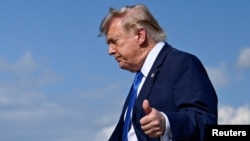
US President Donald Trump said he has decided to "hold off" on any new attacks on Iran, saying "the perimeters" of a deal have been agreed to with Tehran and adding that Israel was joining him in the commitment.
"The U.S.A. is locked and loaded and ready to go against the Islamic Republic of Iran, at levels of Military Terror, Strength, and Power not seen since World War II. Despite this, we have just been asked by Iran, and other Middle Eastern Countries, to hold off any attack in that the perimeters of a deal has been agreed to," Trump posted on Truth Social late on August 1.
"This would include the Immediate, Complete, and Total OPENING OF THE HORMUZ STRAIT, and an end to Iran's nuclear threat."
"Based on this request, I have agreed, for the future benefit of the WORLD and, likewise, the survival of a successful and prosperous Iran, to cancel the attack, subject to being able to rapidly make a DEAL," he wrote, adding that Israel joins him in this "commitment."
However, according to Iranian media, military sources in Iran denied Trump's claim that Tehran had asked Washington to refrain from launching new attacks.
Iran’s Mehr News Agency on August 2 quoted the unnamed sources as saying Trump's statement was "simply a new lie" and an attempt to "blackmail the rulers of the Persian Gulf and pressure them with threats."
The sources claimed that Iranian forces were at the highest level of readiness and prepared for any eventuality.
Trump has often threatened major attacks on Iran only to call them off, claiming an agreement between Washington and Tehran was imminent. Until now, a lasting peace agreement has been elusive, with tit-for-tat strikes by both sides resuming.
Although Trump initially said the elimination of Tehran's nuclear threat was the major aim of the US-Israeli war with Iran, which began on February 28, in recent weeks he has focused on the free flow of traffic through the important Strait of Hormuz.
More than 20 percent of the world's oil and gas supplies moved through the strait prewar, but Iran has at times effectively shut down the waterway, including with attacks on ships it said had not received proper approval from Tehran. Iran has also threatened to impose fees or tolls on ships in the strait.
The United States and other countries have insisted the strait is an international waterway and is not under the control of any nation.
Washington and Tehran signed a 60-day memorandum of understanding (MOU) on June 17 aimed at ending hostilities and reopening the strait. However, disputes over the meaning of the terms in the agreement have led to fresh attacks by both sides.

Trump told Axios on July 23 that he was seriously considering "a massive attack" on Iran. But he later backed down from the threat, saying on July 27 that a new round of diplomacy with Iran could produce a breakthrough, although he has always kept open the possibility of further strikes.
Israel, which is conducting a separate war with Hezbollah militants in Lebanon, has often resisted peace deals suggested by the US administration, saying it would continue its attacks as long as necessary.
Iran-backed Hezbollah, a militant group and political party that controls much of southern Lebanon, is considered a terrorist organization by the US, while the European Union has blacklisted its armed wing but not its political branch.
Biggest Clue In US-Iran Conflict Is 'The Dog That Hasn't Barked,' Says War College's Jacob Stoil
WASHINGTON -- A renewed exchange of military strikes and threats between the United States and Iran has raised fresh fears of a wider Middle East war. But Jacob Stoil, a research professor of Middle East security studies at the US Army War College, argues the more important story may be what has not happened.
In an interview with RFE/RL, Stoil explains why the latest escalation still appears to be calibrated, how Iran is using missiles, drones, maritime pressure, and information warfare to gain leverage, and the indicators that could signal whether the crisis is moving toward a broader regional conflict or renewed negotiations.
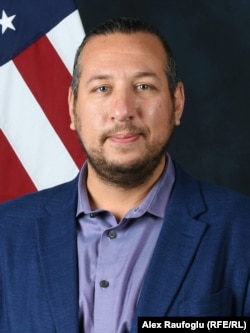
The views expressed in this interview are strictly those of Jacob Stoil and do not reflect the official policy or position of the US Army, the Department of Defense, or the US government.
RFE/RL: We've seen another round of heavy US strikes, Iranian retaliation, threats against American interests, and growing instability across the region. Yet in your recent research you argue that sometimes the biggest clue in a conflict is what doesn't happen. Looking at today's events, what is the "dog that hasn't barked" yet?
Jacob Stoil: The latest round of US strikes was in retaliation for an Iranian surprise attack against US facilities despite a renewed cease-fire. This is important because what we saw was an Iranian surprise attack followed by a limited US retaliation.
The US does not appear to have expanded the campaign toward bringing down the regime, and for its part Iran didn't initially strike every US allied and partner country in the region as it has in the past. Iran launched a limited strike against the US, and the US retaliated in a limited way.
Both could have used a lot more force, and both could have had a much more expansive target list. The other thing that, as I wrote in my article, is missing in the current round of escalation is any direct Iranian attacks on Israel.
RFE/RL: On the surface, this looks like rapid escalation. But from a military perspective, are Washington and Tehran still deliberately staying below the threshold of an all-out regional war? If so, what indicators tell you both sides are exercising restraint rather than preparing for a much broader conflict?
Stoil: Both Iran and the US have the capability to strike harder and to strike a wider variety of targets than they're hitting currently.
Iran has shown in the past that it can simultaneously hit targets in multiple countries around the region and reach as far as Israel, all while working with its proxies and allies such as the Houthis, Hezbollah, and even Hamas to escalate. It can greatly expand the scope of this conflict, and right now it isn't doing so. That is an indicator that, at this juncture, it is not interested in expanding the conflict.
In a similar manner, the US has a significant amount of military power that it has not yet brought to bear against Iran, and even in its latest retaliatory strikes it is not employing that full capability. That is another indicator that it is not currently expanding the conflict.
RFE/RL: Iran continues to respond through missiles, drones, and regional partners rather than direct conventional warfare. Does that reflect military weakness, or is it the strategy Tehran believes gives it the greatest leverage?
Stoil: For years, Iran has preferred the development of its missile force, its drone force, its irregular forces, and its proxy forces over its conventional military.
While its conventional military is large, its ground maneuver force and its air force are relatively weak, and they were further weakened by US and Israeli strikes earlier this year and last year. Its conventional navy was all but destroyed.
So Iran doesn't have the capability to effectively expand the war through ground maneuver in the way we've seen Russia do in Ukraine, or in a way that would really benefit it. Instead, it's playing to its strengths. Its strengths are in the information domain -- in creating false and misleading narratives and propaganda. Iran's strengths also lie in missiles, drones, and its ability to attack civilians and economic targets throughout the region.
RFE/RL: One of your latest studies focuses on Iran's strategy in the Strait of Hormuz. How do today's military operations fit into Tehran's broader effort to turn maritime pressure into political leverage at the negotiating table?
Stoil: Iran's strategy is to turn its ability to close the Strait of Hormuz and inflict economic pain on countries around the world into leverage at the negotiating table. The strikes Iran has carried out lately are an attempt to regularize the status quo.
Right now, Iran attacks its neighbors. Iran attacks other countries in the region. Iran has closed the Strait of Hormuz, and ships generally need Iranian tolerance if not permission to transit the strait.
Iran wants this to become the status quo. It continues to launch attacks against its neighbors, US forces, and shipping in the Strait of Hormuz to make its conduct in the conflict part of the normal day-to-day reality of the Middle East.
RFE/RL: Both sides claim military success while avoiding decisive escalation. Has information warfare become almost as important as battlefield operations themselves?
Stoil: For Iran, information warfare and the use of misinformation and disinformation are central to its strategy. Its goal is not to defeat US forces militarily. It knows it really can't do that. Its goal is to raise the political and economic costs of maintaining the conflict higher than the US is willing to pay.
That means attacking the will of the US and American partners while also undermining US public support for continuing the conflict.
Together with its closure of the Strait of Hormuz and its attacks against its neighbors using missiles and drones, the most effective tool in Iran's arsenal is information warfare.
RFE/RL: Finally, what should military analysts be watching over the coming days and weeks -- not the headlines but the indicators that would reveal whether the region is moving toward renewed negotiations or toward a broader regional conflict?
Stoil: It is important to understand that violence and negotiations are not opposite sides of the coin. Within a conflict, violence is also a form of language.
Iran and the US are using violence as part of a negotiation to establish tolerances. Iran is trying to make it acceptable that it can strike its neighbors with impunity, and every time the US retaliates, the US is sending a message about where the red line lies. Iran, in turn, is trying to push that red line.
So violence can itself be a language. When it comes to this conflict, negotiations are happening through violence, through information, and through other diverse channels.
Iran Has Tested The Gulf. Now Washington Must Rethink Its Security Role, Says Former Trump NSC Official Allison Minor
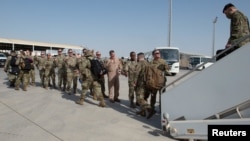
WASHINGTON -- Iran's latest missile attacks on US forces and bases in the region have exposed growing strains in the decades-old US-Gulf security partnership, according to Allison Minor, director of the Atlantic Council's Project for Middle East Integration and former director for Arabian Peninsula affairs at the White House National Security Council during US President Donald Trump's first term.
In a recent Atlantic Council analysis co-authored with Alina Romanowski, a former US ambassador to Kuwait and Iraq, Minor argued that Washington and its Persian Gulf partners should move away from a US security guarantee and toward regional integration, shared capabilities, and stronger partnerships.
RFE/RL spoke with Minor about why she believes the traditional US security model in the Gulf is no longer sustainable and what should replace it.
RFE/RL: Iran has carried out attacks targeting US forces and bases in the region. What does this moment reveal about the vulnerabilities of the current US security posture in the region?
Allison Minor: This latest round of strikes just underscores the really tough situation that the US has found itself in, with an escalatory spiral that has proven extremely hard to get out of. The Iranian regime is making it clear they will end this conflict on their own terms, and that they're not afraid of continued confrontation with the US.
Getting back to some sort of de-escalation, a cease-fire, and a new agreement on the Strait of Hormuz is going to be extremely difficult in these circumstances.
RFE/RL: Your Atlantic Council article argues that this is a turning point for the US-Gulf security partnership. Why do these latest attacks make a reset necessary now?
Minor: The tensions in US-Gulf security partnerships go back years. There's been this overriding sense that the idea of a US security guarantee -- this idea of the Carter Doctrine (then-President Jimmy Carter's 1980 pledge to use US military force to defend vital American interests in the Persian Gulf) that has been in place for decades and really was the overriding assumption in the region following the Gulf War -- has been fading.
I've argued that the US needs to really embrace this idea...of transitioning from a guarantor to an integrator."
It's been clear to Gulf partners that the US is not interested in living up to that commitment or capable of living up to that commitment, and many in Washington are questioning whether that is the right approach.
The Iran war has only exposed the tensions in this assumption of a US security guarantee in the Gulf, and Gulf partners were frustrated with Washington. They were not consulted before the outbreak of this war that really put them on the front lines and saw them face really unprecedented assaults.
RFE/RL: For decades, large US military bases have been the foundation of American power in the Persian Gulf. If the traditional security model is no longer sufficient, what should replace it?
Allison Minor: We should start with the question of what the US role should be. In a recent piece, I've argued the US needs to really embrace this idea, which has been talked about for years, of transitioning from a guarantor to an integrator.
The idea here is the US is not supposed to independently guarantee the security of Gulf countries. It can be a partner. It can work with those Gulf countries to help them come up with defenses against external threats and work collaboratively with them to help address broader regional instability.
But it should not be the US going in independently and leading a campaign as it did with the Iran war, and certainly not without the consultation of key partners in the region, again, as was the case during the Iran war.
If you start with a conversation about what that new US security role in the region looks like, the answer of what US basing should look like will follow more naturally.
RFE/RL: Should the US then move away from being the region's primary security guarantor and toward being more of a partner that helps Gulf states build their own capabilities? Is that your position?
Allison Minor: Exactly. Gulf states realize now they cannot rely on the US to guarantee their security. That was quite clear. The US has proven incapable of addressing the Iranian threats to the Gulf either via military action or via negotiations, so the idea of the US as the security guarantor in the Gulf -- that idea is already gone.
RFE/RL: How can Washington reassure Gulf partners while avoiding deeper military entanglement in a conflict that could continue to expand?
Allison Minor: There's the immediate challenge of how the US can reassure Gulf partners as the Iran conflict continues to rage on.
That needs to be dealt with first. The US needs to get back to a more sustainable cease-fire agreement with Iran, and one that addresses the challenge in the Strait of Hormuz and Iran's attempts to control the strait, which essentially gives them a noose around the neck of Gulf economies. That needs to be dealt with first.
The first step is ending the Iran war, and then it's having this conversation with partners about where are the opportunities, how can we rebuild some sort of consensus policy on dealing with regional threats."
RFE/RL: US officials and others have highlighted the need for stronger regional capabilities. You also served during Trump's first term at the National Security Council. Is this an entirely new idea? Should the priority be integrated missile defense, intelligence sharing, cyber resilience, maritime security, or something else?
Minor: It's definitely not a new idea. The idea of the US pivoting from a guarantor to an integrator in the Gulf has been talked about certainly during the first Trump administration, but even before that.
Again, it is formally addressed in the 2023 CENTCOM operation plan. So it's not a question of embracing the idea; it's a question of actually operationalizing it and changing the way the US operates in the region.
RFE/RL: We have also seen Saudi Arabia and the United Arab Emirates increasingly seek greater strategic independence. What role should those Gulf powers play in leading regional security moving forward?
Minor: They do need to play a larger role. We need to be clear that there are very significant divisions between Gulf countries, and especially right now, we're seeing this rift between Saudi Arabia and the UAE as both seek to vie for varying levels of regional leadership.
It's not the time for a fully unified Gulf security architecture, but that's why the US role is so valuable.

RFE/RL: Beyond military cooperation, what diplomatic or political changes are needed to create a more durable, Iran-proof security architecture in the Gulf?
Minor: Until we end the Iran war, all of this is going to be very difficult. It's an extremely difficult environment. All actors, whether it's in Europe or in the Gulf, are hesitant to get entangled in the US-led campaign in Iran.
The first step is ending the Iran war, and then it's having this conversation with partners about where are the opportunities, how can we rebuild some sort of consensus policy on dealing with regional threats, how can we rebuild a consensus policy with our partners on that critical regional issue?
RFE/RL: What would success look like if the US and its allies succeed in creating a new security posture and architecture in the region? How would we know that this reset in US-Gulf security relations is actually working three to five years from now?
Minor: That's a great question. The early indicators would be a lowering of tensions between Washington and Gulf capitals because there's this shared understanding of what that relationship should look like, and a sense that we're both living up to those commitments.
In the longer term, the primary purpose of these kinds of security partnerships is deterrence.
It is providing the level of peace and stability because potential foes, competitors, nonstate actors believe that that security architecture is so strong.
If we can actually build a stronger integrated Gulf security architecture that is supported by the US, that is supported by other trusted partners in Europe and beyond, that is seen as sufficiently robust, sufficiently resilient, sufficiently diversified, [then] actors -- whether it be a future Iranian regime or nonstate actors like the Houthis -- feel that this security architecture is strong enough that they don't even want to go up against it.
This interview has been edited for length and clarity.
- By Daud Khattak
How The Iran War Is Changing Security Dynamics In The Middle East
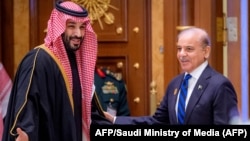
The prolonged US-Iran war has prompted many Persian Gulf nations to reassess their defense needs. For Pakistan, which has acted as a mediator in negotiations between Tehran and Washington, the conflict has created an opportunity to stabilize its fragile economy and improve its diplomatic outreach.
But the emerging partnerships between Islamabad and Middle East capitals are also reshaping the region's security dynamics, pushing the militarily weaker Gulf states closer to larger and better-armed neighbors -- Pakistan and India.
"The newly emerging security arrangements in the region are more like overlapping partnerships rather than fixed blocs," Alex Vatanka, senior fellow at the Washington-based Middle East Institute, told RFE/RL while referring to Saudi-Pakistan, UAE-India, and China-Pakistan relations.
These arrangements give "states more room to maneuver, but also make regional crises more complex and harder to manage," he added.
Kuwait, like other Gulf states, came under repeated Iranian missile and drone attacks before ratifying the agreement, causing damage to infrastructure and casualties. The country hosts at least three US military bases with an estimated 13,000 personnel.
With that target on its territory, Kuwait became the second Gulf state to ratify a defense agreement with Pakistan that provides for military training, personnel exchanges, and intelligence sharing. Although signed in June 2023, the agreement only received final approval from the Kuwaiti cabinet last week, Kuwait's official Gazette Al-Kuwait Al-Youm announced on July 26.
Kuwait's neighbor, Saudi Arabia, signed a Strategic Mutual Defense Agreement with Pakistan last year that includes a clause along the lines of NATO's Article 5 that states "any aggression against either country shall be considered an aggression against both."

Meanwhile, Pakistani officials say a draft of a separate defense arrangement between Turkey, Pakistan, and Saudi Arabia has already been prepared and is awaiting a final consensus from the three sides.
On top of that, leaders of the "regional four," or R4 -- Pakistan, Saudi Arabia, Egypt and Turkey -- have been discussing closer security cooperation since the 12-day US-Israel-Iran conflict in June 2025.
'Center Of Gravity'
Analysts say the urgency among rich Gulf states to seek defense agreements with Pakistan and forge alliances has been driven by the vulnerabilities of their defenses in the face of Iranian missile and drone strikes, despite being allies of the world's most powerful country, the United States.
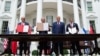
Mushahid Hussain Sayed, a former Pakistani senator and an Islamabad-based defense analyst, said there has been a rethinking among Middle Eastern countries as "approximately 16 [US] bases could not save them from the Iranian missile and drone strikes."
Sayed said Pakistan had become the "center of gravity" because it acts as a bridge between Tehran and Washington regarding peace and has an outreach with China.
Vatanka said Pakistan combines military capability with strategic flexibility.
"It maintains ties with Saudi Arabia, Iran, China, and the US without fully joining any one camp, making it a useful security partner in a more multipolar region."
As Pakistan expands its outreach in the Middle East, its much larger neighbor, India, has already forged strong ties with Israel and the United Arab Emirates, which was once counted among Pakistan's closest allies.
Apparently unhappy over Pakistan's expanding defense ties with Saudi Arabia and the country's mediatory role in the Iran-US conflict, in April, Abu Dhabi asked Pakistan to repay a $3.5 billion loan immediately.
For decades, nuclear-armed Pakistan has remained dependent on loans and financial support from the rich Gulf countries, including Saudi Arabia, the UAE, and Qatar. Pakistan's fragile economy mostly remained dependent on aid from the United States, especially during the Afghan war from 2001 to 2021, as well as loans from the International Monetary Fund.
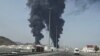
"For Pakistan, the driving factors are its fragile economy and the persistent risk of isolation by its much larger South Asian neighbor, India. For the Gulf states, the motivation lies in strengthening their defense capabilities through indigenous military development and technological advancement which have drawn them closer together," said Feroz H. Khan, a retired brigadier of the Pakistani Army and research professor at the Naval Postgraduate School in California.
Khan told RFE/RL that Gulf countries have lost faith in the previous security architecture under the US umbrella because they were attacked both by Iran and Israel.
"They are now more interested in an indigenous security apparatus instead of relying on outside forces," Khan said.
Nuclear-armed Pakistan and India have fought several wars since their independence from the British in 1947. Being much larger in size, population, economy, and defense capabilities, India has traditionally been considered the regional power in South Asia.
"As part of its Strategic Relevance, Pakistan has carved out a role for itself in the Middle East by presenting itself as the eastern fortress of the Muslim world," said Khan. "Rather than trying to compete with a much larger India in South Asia, Pakistan has successfully leveraged the US-Iran conflict to position itself as a Middle Eastern power."
Could The US-Iran Battle For Hormuz Be A Win For Russia And China?
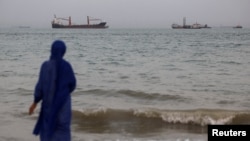
MANILA -- For years, policymakers in Washington have viewed Asia primarily through the lens of Taiwan, the South China Sea, and China's military rise. Russia's full-scale invasion of Ukraine has only reinforced that perspective, cementing Europe and East Asia as the principal arenas of geopolitical competition.
But security experts in Southeast Asia increasingly argue that another crisis thousands of kilometers away in the Middle East may ultimately reshape the regional balance of power far more profoundly than either Ukraine or Taiwan.
The strategic importance of the Strait of Hormuz, through which roughly a fifth of the world's oil passes, has become impossible for governments across Southeast Asia to ignore.
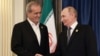
As tensions involving Iran threaten one of the world's most important energy chokepoints, analysts say the consequences are already altering regional calculations about security, diplomacy, and alliances.
"We're already seeing ASEAN (the Association of Southeast Asian Nations) moving toward Russia, not in security but in energy reliance," Lester Joseph Buitizon, a Manila-based threat intelligence analyst with Aldebaran Threat Consultants whose work focuses on international security and politics in the Middle East and North Africa (MENA), told RFE/RL.
Military operations between the United States and Iran in recent days have renewed attention on the Strait of Hormuz.
Iran is claiming control of the strategic transit route, while the United States says it has been launching air strikes aimed at targets in southern Iran "to further degrade Iranian military capabilities used to attack commercial shipping in the Strait of Hormuz."
Despite a significant US military presence, shipping companies remain reluctant to transit the strait, highlighting a reality that extends beyond naval power: The greatest challenge may be restoring confidence among commercial operators.
Oil transit in the Strait of Hormuz is of critical importance to Southeast Asia because it remains deeply dependent on Middle Eastern energy.
The Philippines, for example, imports more than 90 percent of its oil from the Middle East, making disruptions in flow an immediate economic and political concern rather than a distant foreign policy issue.
Although Manila remains one of Washington's closest treaty allies and public opinion continues to favor the United States over China, the Marcos administration has sought to increase Russian crude access and expanded discussions over long-term energy cooperation.

For Buitizon, the message is simple. If even America's closest regional ally is forced to engage Moscow to safeguard energy supplies, countries with more neutral foreign policies such as Indonesia and Malaysia are likely to do so even more readily.
"If Russia successfully reorients its economy eastward," he argues, "Western sanctions become structurally less effective."
While Russia may gain economically, China may see diplomatic gains amid the same situation.
There was a time, according to Vincent Kyle Parada, a defense research analyst with the Philippine Navy's Office of Naval Strategic Studies and Strategy Management, when ASEAN could successfully hedge East and West: China provided economic growth, while the United States guaranteed regional security.
Today, Parada said, that distinction is becoming increasingly blurred. He pointed to the Iran crisis as evidence that economic security and national security have become inseparable.
"The overlap between economics and security has become much greater than it was 10 or 20 years ago," Parada told RFE/RL.
He added that recent US policy decisions including reductions in regional development assistance, trade tensions, and intervention in Iran have weakened Washington's foothold across Southeast Asia while creating opportunities for China to expand its economic influence.
"China doesn't really need to do anything but wait," he said.
In Iran's South, A Renewed War Means No Power, No Fuel, And Boats Lost
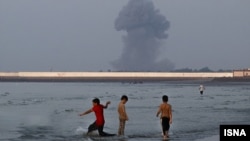
Some blame Tehran. Others blame Washington. But pretty much everyone on Iran's southern coast can agree on one thing: The renewal of air strikes between the United States and Iran is hitting hard, bringing a summer without electricity, fuel, or a way to make a living.
Across the shores of Khuzestan and Bushehr on the Persian Gulf, and along the Makran coast in Hormozgan on the Sea of Oman, life has long been tied to the water.
But recent US strikes -- which Washington says were sparked by Iranian attacks on commercial ships in and around the Strait of Hormuz -- on ports, vessels, and fishing boats have upended the livelihoods of fishermen, sailors, and anyone dependent on maritime trade.
"So many boats have sunk, gone under the missiles," a resident of the south said in a video shared on social media. "So many boats burned… Forget the money -- think how many lives were lost."
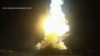
Iranian authorities say the bombings have killed around 50 people, including civilians, since the US started targeting southern Iran in late June. The attacks have become daily over the past nine days.
The United States says its primary objective is the systematic degradation of Iran's maritime and anti-access capabilities around the Strait of Hormuz, a vital global energy transit corridor that Iran has effectively blocked in response to the war. Washington says the strikes are aimed at military targets used to threaten shipping through the strait.
Residents say the impact extends deep into daily life.
Strikes on power plants and transmission substations along the coast have knocked out cooling systems in a region where July heat often breaks 40 degrees Celsius. In the port city of Bandar Abbas, one resident described sitting in a parked car with his family because their home was without electricity.
"We have no power. At night when we want to sleep, it's the sound of war, of bombs... What did we do to deserve this -- sitting in a car with the whole family at noon instead of sleeping at home? In 41-degree heat, without power, you just boil."

In the oil-rich Khuzestan Province, residents describe rolling blackouts layered onto an already brutal heat wave.
"They're cutting power in this heat," one person said of Abadan, Khorramshahr, and the wider province. "It's unbearable."
Meanwhile, damaged roads and bridges have compounded the crisis, choking off routes in and out of coastal cities, with drivers taking to social media to urge people not to attempt to travel by road.
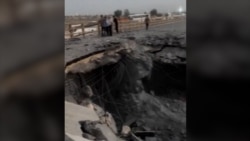

Long fuel lines have become part of the daily routine, and blackouts have cut into communication networks as well, leaving families anxious for hours, unable to check on relatives in affected areas.
While US strikes have been scattered around the country, the main focus has been on Iran's southern coastline where thousands of vessels have been stranded in the Persian Gulf by the war.
Both sides have pointed fingers at the other for the breakdown of a memorandum of understanding, signed last month, that had halted the fighting to allow for a 60-day period of peace talks to resolve the conflict that broke out on February 28.
The situation has become so severe that tens of thousands of Iranians last week signed an online petition urging the country's hard-line leaders to visit the south and experience conditions firsthand rather than making decisions from afar that put ordinary lives at risk.
"This action can lead to empathy, more effective support, and more realistic decision-making at the national level," the petition says.
Others, frustrated by the return of war, said Washington also bears responsibility for the renewed fighting. One man described what he called a campaign "that won't let us sleep."
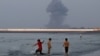
The conflict has also taken a heavy toll on tourism -- historic sites in Khuzestan and on Qeshm Island have avoided direct damage, but coastal areas have been folded into security zones, emptying guesthouses and idling tour guides ahead of what was meant to be the region's peak autumn and winter season.
In Qeshm and Sirik, burned wooden boats have taken with them not just fishermen's livelihoods but a fading piece of the south's maritime heritage.
But amid the damage, residents describe a current of solidarity -- Iranians elsewhere opening their homes to those displaced from hard-hit areas.
It is that connection, as much as any hope for an end to the war itself, that people along the Persian Gulf say is keeping them going.
"The first thing we have to check is whether we're alive, whether our neighbor is alive, whether we still have friends and family around," one female resident of the south said.
- By RFE/RL
Middle East Countries On High Alert As US Continues Strikes On Iran
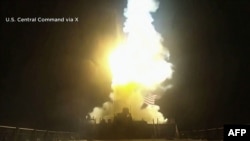
Air raid sirens blared in Bahrain and other Gulf states as the struggle for control of the Strait of Hormuz continued after US forces conducted a ninth day of air strikes on targets around Iran.
Tensions increased over the weekend in the Gulf after the deaths of three US soldiers -- and possibly a fourth -- were announced.
US Central Command (CENTCOM) said the latest wave of strikes was aimed at degrading Iran's ability to threaten vessels transiting the strait, a strategic waterway that usually sees about one-fifth of the world's oil and gas transit.
President Donald Trump said the attacks also honored US service members killed in recent days.
"We hit them very hard again tonight," Trump told reporters aboard Air Force One, adding the strikes were carried out "in honor of" what he said were "probably three great patriots."
A day earlier, CENTCOM disclosed the first combat losses in the Iran war since March, saying two service members had been killed and another was missing during defensive operations in Jordan.
In its latest statement, the military said that "after a thorough search, US military personnel found unidentified remains at the location earlier today [in Jordan]. An examination process to verify the remains is ongoing," raising the possibility that the remains were of the missing service member.
That statement did not specify where in Jordan the attack occurred. Identification of the victims was not provided pending notification of family members.
The main site of US operations on the territory of the Middle East ally is the Muwaffaq Salti Air Base, about 80 kilometers outside Amman. US forces also have operations at the Prince Hassan Air Base and at other military facilities in Jordan.
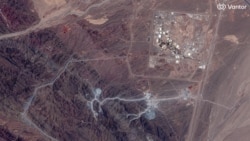
The Wall Street Journal and others, citing sources, reported that the strike occurred at the Muwaffaq Salti base, which US forces have used to launch air strikes against Iran.
Iran's Islamic Revolutionary Guards Corps (IRGC) said on July 20 that it had targeted US aircraft at Jordan's Aqaba airport with ballistic missiles. It also claimed it struck out at US military assets and equipment at Kuwait's Al-Adiri camp and Ali Al Salem Air Base, and in Syria.
Bahrain's Interior Ministry also said air raid sirens were activated on its territory. The island kingdom hosts the US Fifth Fleet and has been targeted by Iranian strikes in recent days.
US forces remain operating in Iraq for training and anti-terror purposes, although numbers are down significantly from the 170,000 at the height of the Iraq war. US and Iraqi officials have said the US troops are scheduled to fully depart in September.
The newly reported deaths bring the total of known fatalities among US military personnel since the start of the US-Israeli strikes on Iran on February 28 to 17, with all but one listed as combat deaths. The total does not include the missing service member in Jordan.
Iran, meanwhile, has said that 50 people were killed in recent attacks on the country, with more than 500 injured. The report could not be independently verified.
Despite the outbreak of fighting after a temporary truce was reached last month to give time for talks on a full peace settlement, Iranian Foreign Ministry spokesman Esmaeil Baghaei told a news conference on July 20 that diplomatic "exchanges" have continued between Washington and Tehran.
"We have been informed by mediators, we have received messages -- without going into details -- but the main point is that the diplomatic apparatus has been active in recent days and ideas have been conveyed to us by certain mediators," he said.
With reporting by RFE/RL's Radio Farda, AFP, and Reuters
- By RFE/RL
2 US Service Members Killed, 1 Missing In Jordan As Iran Steps Up Attacks, Threats
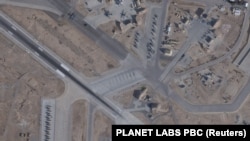
The US military suffered its first combat fatalities since March in the Iran war, with the Pentagon saying two service members were killed and another was missing during defensive operations in Jordan, as hostilities ramped up in the region and further endangered a fragile cease-fire.
"On July 17, two US service members in Jordan were killed in action as US Central Command...and partner forces defended against Iranian ballistic missile and drone attacks. Additionally, one service member is currently missing in action," CENTCOM said on X on July 18.
Four others service members were injured and evacuated to Jordanian hospitals, CENTCOM added. Two of them have been discharged from the hospital, while several others were evaluated for minor injuries and returned to duty, it added.
The statement did not specify where in Jordan the attack occurred. Identification of the victims was not provided pending notification of family members.
The main site of US operations on the territory of the Middle East ally is the Muwaffaq Salti Air Base, about 80 kilometers outside Amman. US forces also have operations at the Prince Hassan Air Base and at other military facilities in Jordan.
The Wall Street Journal, citing sources, reported that the strike occurred at the Muwaffaq Salti base, which US forces have used to launch air strikes against Iran.
US President Donald Trump told the NewsNation network that the deaths were "very sad. It's a very sad thing."
"We hate to see it happen. It’s in service to our country," he said in a brief interview.
US defense chief Pete Hegseth wrote on X: "Godspeed, heroes. Their sacrifice only stiffens our resolve."
First Combat Fatalities Since Renewed Hostilities
The deaths would bring the total of known fatalities among US service members since the start of the US-Israeli strikes on Iran on February 28 to 16, with all but one listed as combat deaths.
Six service members were killed on March 1 when a drone hit a command center in Kuwait.
On March 8, a US soldier was killed during an attack on the Prince Sultan Air Base in Saudi Arabia.
On March 12, six members of a refueling aircraft were killed when their plane crashed in western Iraq.
A Navy pilot was also killed in what was described as a noncombat incident when a helicopter crashed in the Arabian Sea in early July.
Iran Says MOU 'Suspended'
The latest deaths come as Iranian officials said an interim agreement -- the memorandum of understanding (MOU) between Washington and Tehran -- had been "suspended" following the recent wave of US strikes on Iran.
"Unfortunately, the Americans have violated their obligations under the Islamabad declaration of intent through their aggressive measures," Deputy Foreign Minister Kazem Gharibabadi said in a televised interview, adding Tehran was suspending implementation of its commitments.
Foreign Ministry spokesman Esmail Baqaei made similar remarks, saying the MOU had "effectively been suspended."
Iran has responded to the US strikes by launching missiles and drones at US Gulf Arab allies, including Kuwait, Bahrain, and Saudi Arabia, along with its attacks on Jordan.
Iranian Major General Mohsen Rezaei threatened that Tehran was ready to resume "full-scale offensive operations" if US strikes against were to continue for another two or three days.
The MOU was intended to give the sides 60 days to sign a permanent end to the war, but hostilities -- although not full-out war -- have been reignited over Iran's military actions in the Strait of Hormuz.
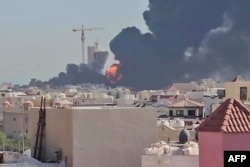
A key clause of the MOU was a US demand to open the strait, through which much of the world's oil and gas supplies transited prewar but which Iran had effectively blocked.
Traffic has moved erratically through the waterway, although it is virtually shut again after recent strikes by Iran on vessels it said had not received permission to transit, prompting the latest wave of US strikes on Iranian coastal sites and bridges, tunnels, and railway stations in the south of the country.
Washington has said Tehran's attempt to control the strait is a violation of the MOU. CENTCOM and the White House have said the purpose of the attacks was to degrade Tehran's ability to strike ships in the strait.
Written Supreme Leader Statement
Meanwhile, a statement attributed to Iranian Supreme Leader Mojtaba Khamenei on July 18 blasted the United States for what it said were repeated violations of the MOU.
"Now that the American enemy seeks to incite war and bear its most serious consequences, it should know that the dear Iranian nation and the axis of resistance have unforgettable lessons to offer it," said the statement, read by state TV late on July 18.
Khamenei has not been seen in public since February 28, when his father -- the previous supreme leader -- was killed in US-Israeli air strikes.
The 56-year-old Khamenei was reportedly severely injured in the attack, raising questions about his health and his ability to carry out his duties as supreme leader.
There have been no known audio or video recordings of Khamenei since February 28. He was not seen throughout six days of ceremonies and rallies during funeral services for his father in early July.
Experts said his absence from the funeral services inflicted a further blow to Khamenei's legitimacy and intensified questions about who runs the Middle Eastern country of some 90 million people.
According to the authorities, he did not attend his father's funeral because of security concerns.