




After A Week Of War, Israel Sees Progress But Long Road Ahead
TEL AVIV -- Hidden away on a small street in a central district of town, the ruins of war come as something of a surprise. On nearby streets, hipsters fill outdoor cafes, Lime scooters clutter the sidewalks, and children play in parks. But turn a corner and you'll see blackened walls, smashed windows, and rubble-strewn cars.
This is almost the only site in Tel Aviv that bears the scars of war, following an Iranian strike on the first night of the conflict. As such, it bears witness to the destructive power of Tehran's ballistic missiles. But the lack of other such sites underlines Israel's ability to shoot them down.
It's an aspect of the war so far that is having a profound impact on how Israel approaches what comes next.
For the full report from Tel Aviv by RFE/RL Senior International Correspondent Ray Furlong, click here.

Israel Accuses Iran Of Using Cluster Bombs
The Israeli military announced that Iran has used cluster munitions several times since the start of the war.
Israeli Army spokesman Nadav Shoshani said in a press conference on March 6 that Iran has used this type of munitions "several times" and that if these attacks target civilians, they could be considered a "war crime."
Videos released by AFP show a series of fiery projectiles landing over central Israel on the evening of March 5; the Israeli military says the images are from cluster bombs.
Cluster munitions explode in the air, scattering large numbers of small bombs. Some of these bombs also fail to function and can cause casualties, especially among children, long after they have been dropped.
Neither Iran nor Israel is party to the 2008 Convention on the Prohibition of Cluster Munitions, which prohibits the use, production, transfer and stockpiling of these weapons.
Both countries have been accused of using cluster munitions in the past. Amnesty International said Iran used cluster munitions at least three times during the 12-day war with Israel in June 2025.
Israel Bombs Tehran With 80 Fighter Jets
The Israeli Army announced that it continued its bombardment of Tehran, using 80 fighter jets on the morning of March 7.
In a statement released the night before the strikes, the Israeli Army announced its targets as "Iranian military sites, missile launch pads, and other targets in Tehran and central Iran."
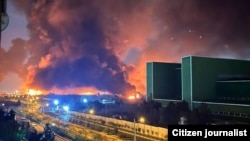
Earlier, news had come from Iran that heavy air strikes were carried out on near the town of Ekbatan and Mehrabad Airport in Tehran, and that the municipality of District 16 in Naziabad was also targeted by an air strike.
We are now closing the live blog for the day. We'll be back tomorrow at 9 a.m. Central European time to cover the latest events across the Middle East.
US Officials Confirm Russia Providing Targeting Intelligence To Iran
US officials on March 6 told RFE/RL that Russia is providing Iran with targeting information to attack US troops and military assets in the Middle East, confirming a Washington Post report that suggested Moscow is playing a substantial if indirect part in the widening regional conflict.
The alleged cooperation comes at a very delicate time for US-Russian relations, with the nuclear-armed rivals at odds over Moscow's invasion of Ukraine and Washington's efforts to end that war running up against the Kremlin's refusal, so far, to make concessions on territory and other issues.
Read the full article by Alex Raufoglu here.
The United States struck more than 3,000 targets during the first week of the Iran war, the US Central Command said on March 6.
Israeli Air Defense Dominance Shapes War Strategy
- By Ray Furlong
TEL AVIV -- A lone ruin in the center of the city bears witness to the power of Iranian ballistic missiles. But the lack of other such sites underlines Israel's ability to shoot them down.

Ukraine Offers Its Expertise In Countering Iranian Drones
Ukraine is ready to share its battlefield experience in countering Iranian-made Shahed drones, as Washington and its partners confront similar threats in the Middle East, Ukraine's Embassy in the United States says.
"Ukraine knows how to defend against Shahed drone attacks because our cities have faced them almost every night. When our partners are in need, we always ready to help," Ukrainian Ambassador Olha Stefanishyna told RFE/RL on March 6.
"It's not about statements, we propose concrete, practical assistance, our experience, and solutions. This will help to protect human lives," she said.
Stefanishyna's comments come a day after President Volodymyr Zelenskyy said that Kyiv had received a request from the United States for "specific support" and ordered officials to provide the necessary means and expertise to assist air defense in the Gulf.
Throughout the week, Zelenskyy also discussed potential Ukrainian assistance in countering Iranian strikes with the leaders of the United Arab Emirates, Qatar, Jordan, Bahrain, and Kuwait.
As Tehran has long been an ally of Moscow, supplying it with military equipment and technology and fueling the Kremlin's war effort, Russia often launches around a hundred Shahed‑type drones at Ukraine at a time.
In response to the attacks, Ukraine developed cost-effective interception technologies. The country's interceptor drones offer an efficient way to stop large waves of drones that would otherwise require far more expensive missile systems.
Kyiv says it is able to intercept about 90 percent of Shahed drones launched toward its territory and estimates that Russia's military has used at least 57,000 such drones against its civilian and energy infrastructure.
As Ukraine continues to stress the need for coordinated international efforts and stronger cooperation in air defense to better protect civilians, the wars in the Middle East and in Ukraine show that the threat posed by Tehran's continued use and spread of Shahed drones is global, not regional.
White House Says US Looking At Potential Candidates To Lead Iran
White House press secretary Karoline Leavitt says the United States is looking at potential candidates to lead Iran after President Donald Trump pushed Tehran to cease its resistance.
"I know there are a number of people that our intelligence agencies and the United States government are looking at, but I won't go any further than that," Leavitt told reporters at the White House on March 6, as the conflict was about to enter its second week.

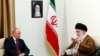
The comments came after Trump said the US wants to be involved in choosing Iran's next leader following the death of Supreme Leader Ayatollah Ali Khamenei, who was killed in an Israeli airstrike on February 28. Trump ruled out Khamenei's son Mojtaba Khamenei -- a hardliner who has been considered a favorite to succeed his father -- as a successor.
As Washington has been pushing Iranian leaders to renounce Tehran's development of nuclear and ballistic missile programs, Trump suggested that the only acceptable outcome would be "UNCONDITIONAL SURRENDER" and "the selection of a GREAT & ACCEPTABLE leader(s)."
"What the President means is that when he, as Commander in Chief of the US Armed Forces, determines that Iran no longer poses a threat to the United States of America, and the goals of Operation Epic Fury has been fully realized, then Iran will essentially be in a place of unconditional surrender, whether they say it themselves or not," Leavitt said.
Germany's Merz Warns Against 'Syrian Scenario' And 'Proxy Wars' In Iran
German Chancellor Friedrich Merz says that a lasting conflict in Iran could have "uncontrollable" consequences for the Middle East and Europe.
"A prolonged continuation of this war would not be in our interest," Merz said at a craftsmanship exhibition in Munich on March 6.
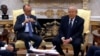
"The same applies to the possible collapse of the Iranian state or proxy conflicts fought on Iranian soil," he added, warning of the possibility of increased migration from Iran if a "Syrian scenario" occurs there. Years of conflict in Syria have forced millions to flee to Europe, many of them to Germany.
Merz spoke after a trip to Washington, where he met US President Donald Trump on March 3 and sought to ensure that Ukraine's defense against the Russia is not pushed aside by the war in the Middle East.
"The Iranian people have the right to decide their own destiny.... Iran must not become a theatre for proxy wars, and the Iranian state as such must remain functional," Merz said, while adding that Iran's nuclear and ballistic missile programs "must be verifiably terminated."