





Iran says it's prepared for both talks or war with the United States after President Donald Trump said he is considering "very strong options" against Tehran amid reports of hundreds, and possibly thousands, of deaths in a reportedly brutal crackdown on antigovernment protesters.
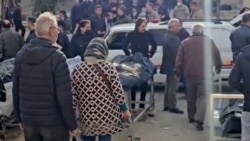
Trump told reporters aboard Air Force One late on January 11 that the US military was studying options in Iran in efforts to support protesters amid unconfirmed reports that more than 500 people have been killed -- some rights groups say the death toll may be several times higher -- in a crackdown on demonstrations over the past 15 days.
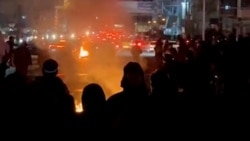
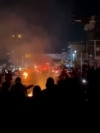

The uprising, one of the biggest challenges to clerical rule since the 1979 Islamic Revolution, was sparked by spiraling inflation and a freefall of the currency, but has since turned into a broader protest against the country's authorities.

"The military is looking at it, and we're looking at some very strong options," he told reporters, adding that he was in contact with Iranian opposition leaders, also without discussing specifics.
Early on January 12, Iran's foreign minister, Abbas Araghchi, said his country is ready for both negotiations and war after repeated threats from Trump and other US officials.
"The Islamic republic of Iran is not seeking war but is fully prepared for war," he told a conference of foreign ambassadors in Tehran broadcast by state television.
"We are also ready for negotiations but these negotiations should be fair, with equal rights and based on mutual respect."
It wasn't immediately clear what Iran might seek to negotiate. The two countries in the past have had indirect talks regarding Tehran's contentious nuclear program.
The United States and other Western nations have condemned the government's crackdown on protesters and previously placed sanctions on Tehran for what they say is an attempt to develop nuclear weapons, which Iran denies.
Trump’s comments came after US media reported that the US leader had been briefed on options to respond to the harsh security crackdown on protests in Iran.
His remarks appear to confirm the reports by Axios, The New York Times, and the Wall Street Journal, among others, that stated he was considering several options for supporting the protests in Iran.
The Journal reported that specific options would be presented to the president on January 13.
Possible next steps could include military strikes, deploying secretive cyberweapons against the Iranian military, and placing more sanctions on Iran's government, WSJ added.
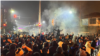
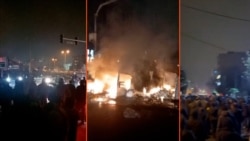
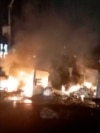
The developments came as rights groups and government media reported protests, arrests, and violence in dozens of towns and cities in Iran on January 11, with demonstrations entering a third week in the face of mounting pressure from security forces.
The potential for violence appeared to increase after the government called on its supporters to participate in nationwide rallies on January 12 to condemn what it called the "terrorist actions by the United States and Israel."


The Human Rights News Agency (HRANA) -- an organization of Iranian activists based in the United States -- said on January 11 that 544 people had been killed in the protests over the past 15 days.
HRANA said at least 10,061 people have been arrested and that demonstrations were reported in 585 locations across 186 towns and cities in all 31 provinces.
The numbers could not be independently verified as information was difficult to attain amid an almost total shutdown of the Internet in the country. Phones services have also been restricted.
Rights groups say that Iran’s digital blackout is part of an effort to mask state violence during the security crackdown.
Trump on January 11 said he plans to speak with billionaire Elon Musk about restoring the Internet in Iran. Musk's SpaceX provides Starlink satellite Internet service, which has been used in areas of conflict before, including Ukraine.
In the past week, Trump has issued a series of stern warnings, saying the United States was “watching the situation very carefully” and insisting authorities refrain from killing protesters.
“Iran is in big trouble. It looks to me that the people are taking over certain cities that nobody thought were really possible just a few weeks ago,” Trump told a White House meeting on January 9.
Trump's comments were met with explicit support from former Iranian crown prince and opposition figure Reza Pahlavi.
“President Trump, as the leader of the free world, has closely observed your indescribable bravery and has declared that he is ready to help you,” Pahlavi said in a video address released on January 11.
“The world today stands with your national revolution and admires your courage,” he added.
UN, EU Condemn Iranian Crackdown
The UN, EU, and Western governments have also expressed their support for the Iranian protest movement.
UN chief Antonio Guterres on January 11 said he was "shocked" by reports of violence against protesters and called on the government to exhibit restraint and "refrain from unnecessary or disproportionate use of force."
EU foreign policy chief Kaja Kallas said she is ready to propose new sanctions on Tehran in response to the crackdown on protesters.
"The EU already has sweeping sanctions in place on Iran -- on those responsible for human rights abuses, nuclear proliferation activities, and Tehran's support for Russia's war in Ukraine," Kallas said in an interview with the German newspaper Die Welt.
'War Scenes' In Tehran
A man who witnessed a crackdown on protests in eastern Tehran told RFE/RL’s Radio Farda late on January 10 that the repression of demonstrations has escalated sharply, describing the situation in the city as resembling “war scenes.”
The man, who asked not to be named for safety reasons, said the continuous sound of pellet-gun fire has been heard across the Iranian capital in recent nights, while drones have been flying constantly over neighborhoods to monitor streets and alleyways.

Iranian President Masud Pezeshkian has blamed the unrest on foreign-linked “terrorists,” accusing the United States and Israel of seeking to “sow chaos and disorder” in the country.
In fiery rhetoric during a meeting of the Supreme Council of the Judiciary on Janury 12, the country's judiciary chief, Gholam Hossein Mohseni-Ejei, said the government must "avenge the blood that has been shed," a reference to security officers reportedly killed during the clashes.
He added that he had instructed the chief prosecutor and others to "accelerate the trial and punishment" of those he considered the "main elements" of the protests.

