





Mr. Nobody Against Putin, a documentary about wartime propaganda in a Russian provincial school, won the Academy Award for best documentary (feature), drawing international attention to the role of state messaging in Russia's education system since the start of the war in Ukraine.
Directed by David Borenstein and teacher Pavel Talankin, who later fled the country, the film follows Talankin in his job at a school in the poor mining town of Karabash in the Ural Mountains.
Backed by two years of footage shot by Talankin, the film shows how the Russian government indoctrinates students with pro-war messages.
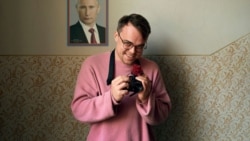
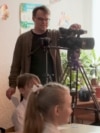

At the request of Russia's Education Ministry, Talankin, 35, helped film pro-war propaganda efforts at elementary school No. 1 in Karabash, a small industrial town of about 10,000 people in Russia's Chelyabinsk region known for copper production.
Given his pro-government mission, ministry officials failed to suspect the footage may end up in a documentary about Russia's "patriotic education" campaign for schoolchildren after Russia launched its full-scale invasion of Ukraine in February 2022.
Talankin also documents his own persecution and eventual exile in the film, called a "touching, intimate chronicle" by The Hollywood Reporter.
"Mr. Nobody Against Putin is about how you lose your country, and what we saw when working with this footage is that you lose it through countless small, little acts of complicity," director Borenstein said on stage alongside Talankin, who also spoke to the audience but in Russian.
"There are countries where instead of falling stars, bombs fall from the sky and drones fly. In the name of our future, in the name of all our children, let us stop all wars. Now," Talankin said.
'It's Unreal'
Talankin, also known as Pasha, fled Russia in the summer of 2024 with the hard drives containing what would become the documentary feature.
Talankin met Borenstein online and filmed for two years while Borenstein directed remotely from Europe.
Russian film critic Maria Bezruk told Current Time on March 16 that "the very fact that this topic has finally attracted global attention is already very significant."
"The fact that this film was awarded is extremely important for all of us anti-war Russians," Bezruk stressed. "Once you've made up your mind, you're not even afraid of being alone. When life inside that cage becomes so unbearable, you don't care if there's anyone outside it. Your goal is to break free from that cage, and I'm glad Pavel [Talankin] managed to do it."
"In my opinion, this topic -- the issue of propaganda among children, of how the state begins to shape these fragile souls into soldiers of the regime -- could have been explored much more broadly," Bezruk added.
In an interview with Current Time a year ago, Talankin recalled how the first propaganda lesson unfolded after the invasion.
"The first lesson began very smoothly: 'Russia, Ukraine, Belarus -- we are such wonderful friends, so united. We have one language, the same fairy tales, we understand each other,'" he said.
"And then the teacher says: 'But Ukraine chose a slippery path. It chose Nazism.'"
At that moment, Talankin said he realized the historical significance of what he was recording.
"I understood that what was getting into my camera was Ordinary Fascism–2," he said, referring to the 1965 Soviet documentary by filmmaker Mikhail Romm about the rise of Nazism in Europe. "And this footage now belongs not only to the ministry."

Talankin said he was supposed to delete the recordings after submitting official reports.
"I was supposed to report and delete everything," he said. "But I didn't delete anything. So that in the future we could return to this problem and talk about it seriously."
The film premiered on January 25 at the Sundance Film Festival, where it received a special jury award. On March 12 it opened the One World documentary film festival in Prague.
Pro-government Russian media outlets have described the documentary as "anti-Russian." Local reports said security officials visited the Karabash school where Talankin worked after the film's release.
Talankin's mother, who worked as a librarian at the same school and occasionally substituted for teachers, was reportedly forced to resign.

Regional media reported that news of the film's premiere caused what they described as "the effect of an exploding bomb" in Karabash.
On pro-war social media channels, Talankin has been labeled a traitor.
Despite the backlash, Talankin has said he hopes the film will eventually be seen inside Russia.
He also recalled the tense moment when he departed Russia carrying the footage.
"At the airport it was very scary," he said. "I had tickets to Turkey there and back. And in my bag there were a lot of hard drives, a laptop, a camera."
Even so, he said, he left with hope, "with the feeling that the time will come when I return, and everything will be good -- maybe even better than before the war."
The film won a BAFTA award in London in February for best documentary.

