


WARSAW -- EU foreign policy chief Kaja Kallas says the bloc may be open to direct talks with Moscow on trying to help settle the war in Ukraine but Moscow will have to temper its "maximalist" demands to pave the way for negotiations.
Both the EU and individual European nations have failed to secure a seat at the negotiation table, with the United States locked in talks with Kyiv and Moscow for over a year.
And while the talks have resulted in exchange of prisoners and there are indications the two parties are inching closer to a settlement, few believe in an imminent breakthrough that likely would result in Ukraine de facto conceding several territories.
The prospect of a settlement over the heads of European countries has prompted several leaders, including French President Emmanuel Macron, to push for the need of a special European envoy to talk to Moscow. Names such as current Finnish President Alexander Stubb and his predecessor, Sauli Niinisto, have been floated for the role, according to European diplomats speaking to RFE/RL under the condition of anonymity.

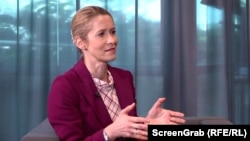
Speaking to RFE/RL in Warsaw in an interview on March 4, Kallas, the EU's top diplomat, said she is ready to be the EU's negotiator and is "ready to do it if that's necessary."
"But at the moment, it is not at the point where we are. The question is, what do we require?”
Kallas, who has been a vocal critic of Russia -- both as EU foreign policy chief and previously as Estonian prime minister -- has been on the Kremlin's "wanted list" since 2024.
She circulated a discussion paper to EU capitals in February with several demands to make of Moscow in any potential future negotiation, including a cap on the Russian Army to mirror a proposed cap on Ukraine's forces, a withdrawal of Russian troops and bases in other post-Soviet countries, and competitive elections in Russia.
And while some European diplomats have dismissed the demands as too extreme, Kallas said she will continue to push for them.
"It's clear that Russia's maximalist demands cannot be met with minimalist response," she said.
"Then I go back to the requests that we have on our side. You know, some have said that these are not realistic, but come on. I mean, the Russian demands are not realistic, either, if they are demanding the whole of Donbas that they haven't even been able to conquer militarily in 11 years."
Russia launched its current full-scale invasion in February 2022. But the battle began eight years earlier with Ukrainian government forces fighting Russian-backed separatists for control over much of the two heavily industrialized regions of Donetsk and Luhansk, also known as the Donbas.
Kallas said she also believes Russia has been weakened over the course of the war, a trend that will continue and make it ready to negotiate for real.
“What we see is Russia is not doing well. Their economy is not doing well, they had to increase taxes, they have big problems with recruitment of soldiers, so if we keep up this pressure then it comes also to a point where the aggressor might run out of money to fund this war. If you think about when Russia went to war in Afghanistan, they stopped when they were not able to sustain it anymore,” Kallas said.