





Moscow is building a new missile defense complex near a research institute linked to Russian President Vladimir Putin's daughter, in what appears to be the latest effort to bolster the capital's defenses against potential Ukrainian missile attacks.

RFE/RL's Russian Service has found that a concrete platform has been erected and Russia's S-400 air-defense systems have been deployed on the grounds of the headquarters of the Innopraktika Foundation, a $1.7 billion government-backed project headed by Putin's youngest daughter, Katerina Tikhonova.
Located on high ground in the city center, less than 10 kilometers from the Kremlin and about 300 meters from a building of Moscow State University, the new missile defense complex marks at least the fifth such facility in an emerging ring inside the Russian capital.
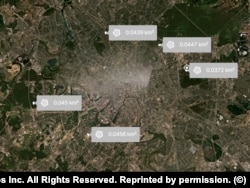
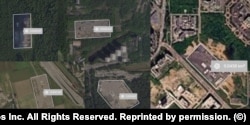
According to satellite imagery of the construction site, its shape and size exactly match those of other similar military installations in Moscow previously identified by RFE/RL earlier this month.
The Russian military has already been constructing similar defense infrastructure in Moscow using Pantsir-S1 missile systems to defend against Ukrainian drone attacks.
However, the newly built S-400 complexes, designed to intercept missiles, appear intended to counter Kyiv's developing ballistic capabilities.
On June 24, one of Ukraine's largest defense manufacturers, Fire Point, announced that it had developed two ballistic missiles, the first to be produced domestically in independent Ukraine.
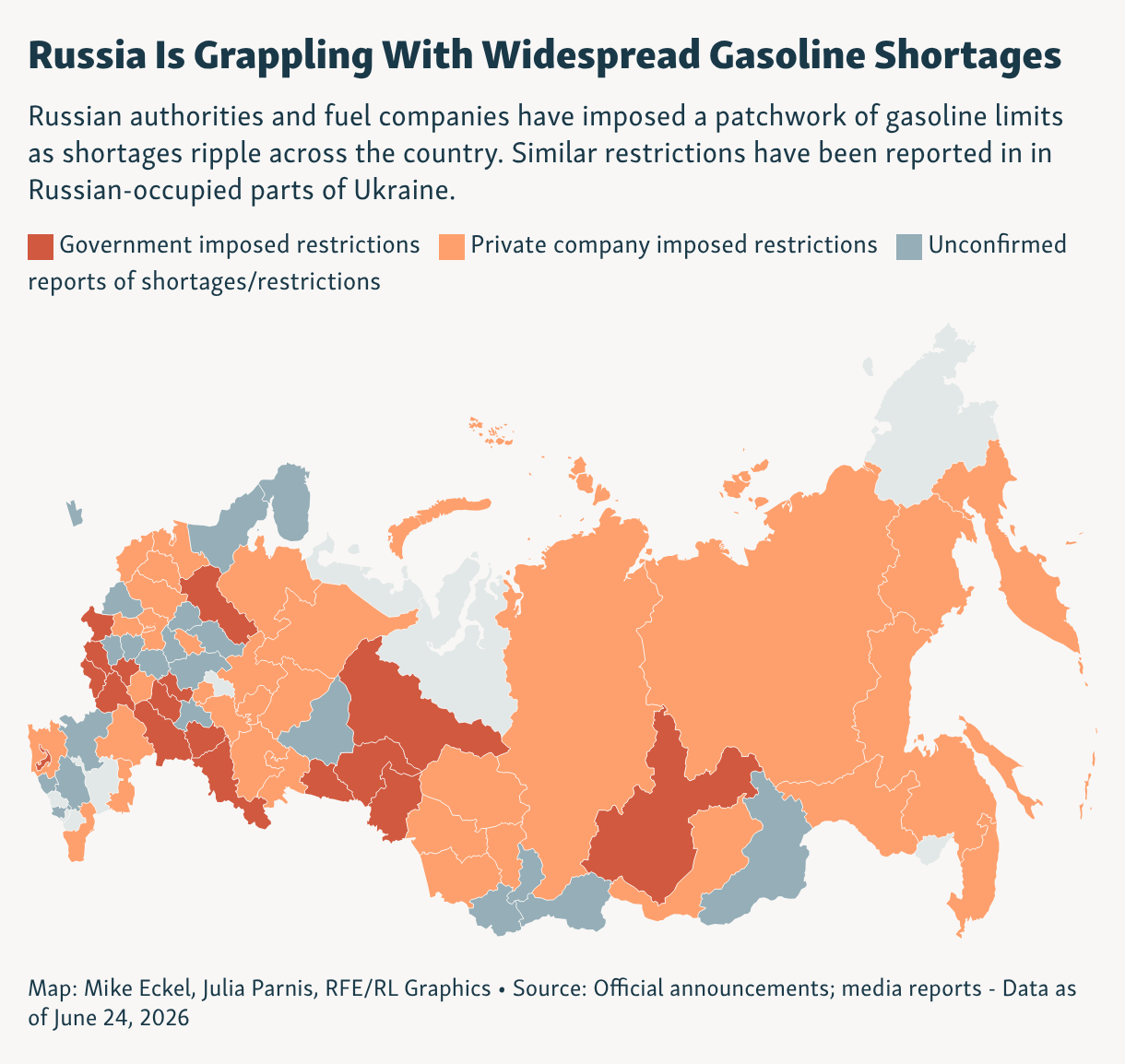
In recent months, Ukrainian military has intensified its long-range drone attacks inside Russia, leaving the country with its worst nationwide fuel shortages in years.
At least 17 regions have imposed mandatory restrictions on gasoline and diesel sales, while dozens of others have reported shortages or restrictions imposed by private fuel companies.
While the developments have fueled growing impatience among Russians more than four years into the war, the Kremlin has shown no sign of relenting on its hard-line demands to end the war.
In response, on June 25 Ukrainian President Volodymyr Zelenskyy said he had approved a 40-day military operation by the country's security service to "influence the aggressor state in order to push for an end to the war."

Separately, the construction of the new air-defense complex at Innopraktika marks yet another sign of the special attention given to facilities associated with Putin and his family.
Since the start of Russia's all-out war against Ukraine in 2022, more than 25 air-defense sites -- including an S-400 complex -- have been built in Valdai, a lakeside town whose forested setting Putin has favored over other state residences after launching the invasion.
The Russian president's purported partner, Alina Kabaeva, has reportedly been a frequent visitor to the compound with children alleged to be hers and Putin's.



