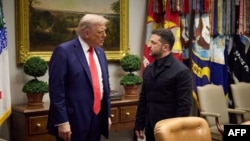
This file image shows Ukrainian President Volodymyr Zelensky (right) and US President Donald Trump (left) during their meeting at the White House in Washington on August 18.
Ukrainian President Volodymyr Zelenskyy will meet Donald Trump at the White House, after the US president suggested he could allow Kyiv to receive long-range Tomahawk missiles if Russia doesn’t end its war against Ukraine.
Speaking to reporters in Kyiv on October 13, Zelenskyy said he would meet Trump in Washington on October 17, where the two leaders are set to discuss air defense and Ukraine's "long-range capabilities."
Answering a question about Tomahawk missiles, a matter that was raised during the leaders' two phone calls over the weekend, Zelenskyy said it was too early to share details, adding that the issue was one to be discussed in person.
"I shared our vision with President Trump, but some things are not for phone calls, so we will meet," he added.
Here Is What Tomahawk Missiles Could Do For Ukraine
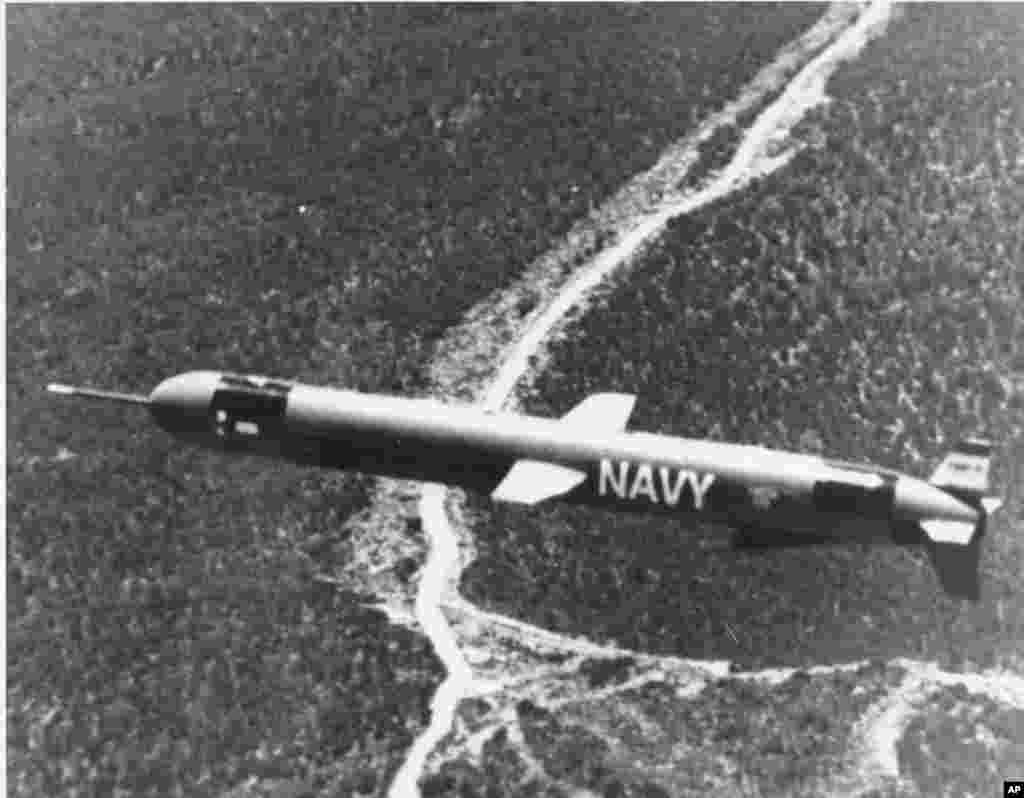
1/9An early iteration of the Tomahawk missile being tested over New Mexico in 1976.
The Tomahawk was developed in the 1970s amid Cold War tensions with the Soviet Union. The cruise missile is designed to fly long distances low enough to evade most radar while maintaining the speed of a passenger jet.
US President Donald Trump told reporters on October 6 that he had "sort of made a decision" about allowing Ukraine access to Tomahawk cruise missiles. If Washington does supply the advanced weapon, here is how it could change the battlefield dynamic between Moscow and Kyiv.
Show moreShow less
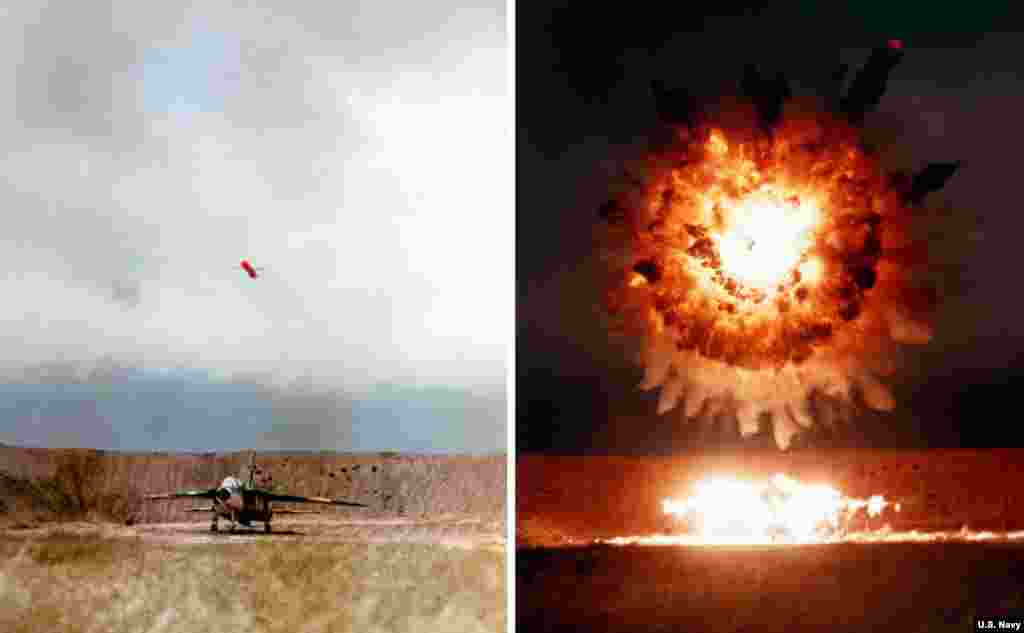
2/9Combination photos show a Tomahawk detonating above a jet during testing in 1986.
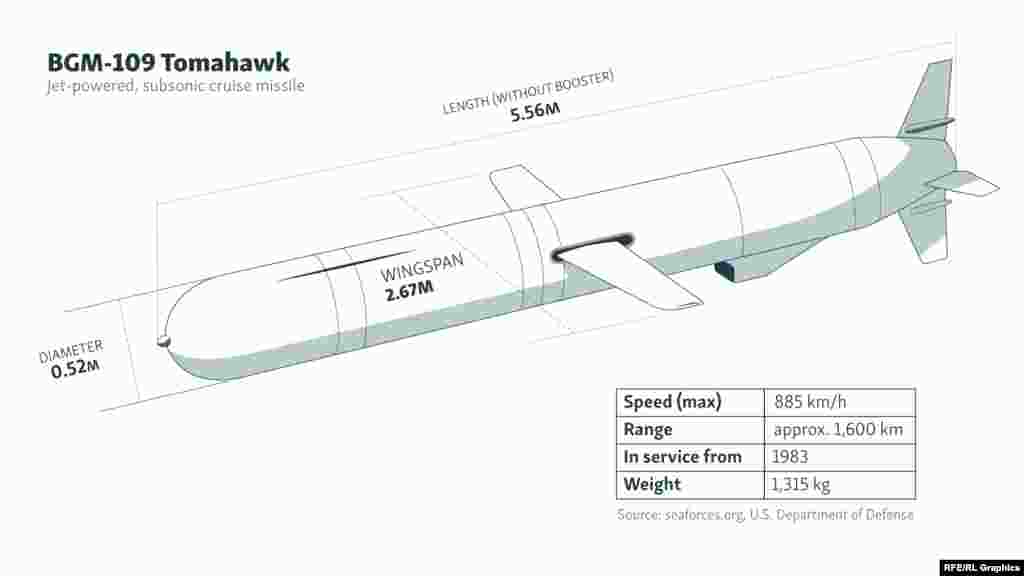
The 5.5-meter-long missile is fitted with a warhead weighing nearly half a ton and can fly around 1,600 kilometers.
US President Donald Trump told reporters on October 6 that he had "sort of made a decision" about allowing Ukraine access to Tomahawk cruise missiles. If Washington does supply the advanced weapon, here is how it could change the battlefield dynamic between Moscow and Kyiv.
Show moreShow less
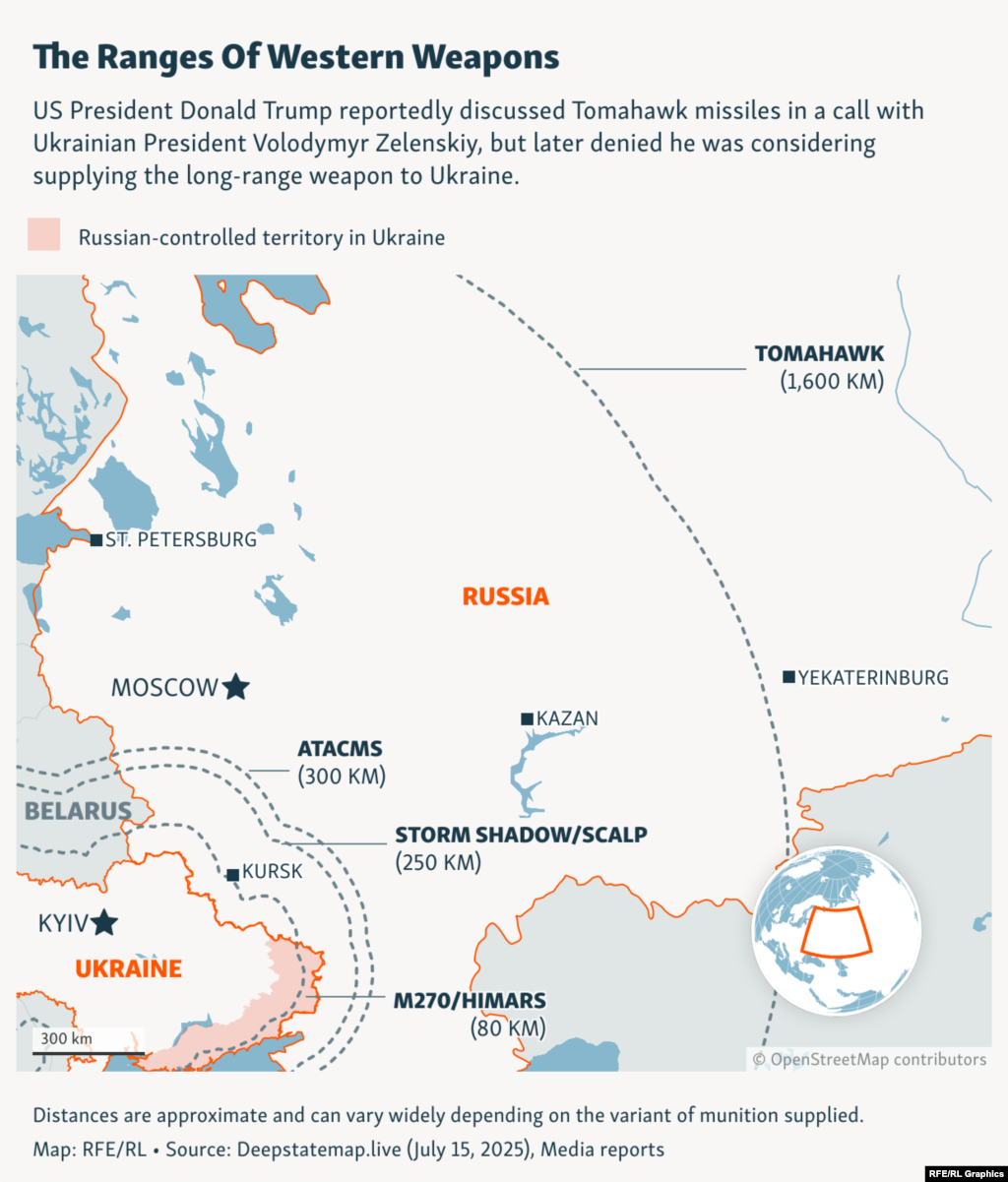
3/9The Tomahawk's combination of range, speed, and destructive power makes the weapon unlike anything currently fielded by Ukraine.
US President Donald Trump told reporters on October 6 that he had "sort of made a decision" about allowing Ukraine access to Tomahawk cruise missiles. If Washington does supply the advanced weapon, here is how it could change the battlefield dynamic between Moscow and Kyiv.
Show moreShow less
4/9Each missile is equipped with complex internal navigation systems, and costs around $2 million.
US President Donald Trump told reporters on October 6 that he had "sort of made a decision" about allowing Ukraine access to Tomahawk cruise missiles. If Washington does supply the advanced weapon, here is how it could change the battlefield dynamic between Moscow and Kyiv.
Show moreShow less
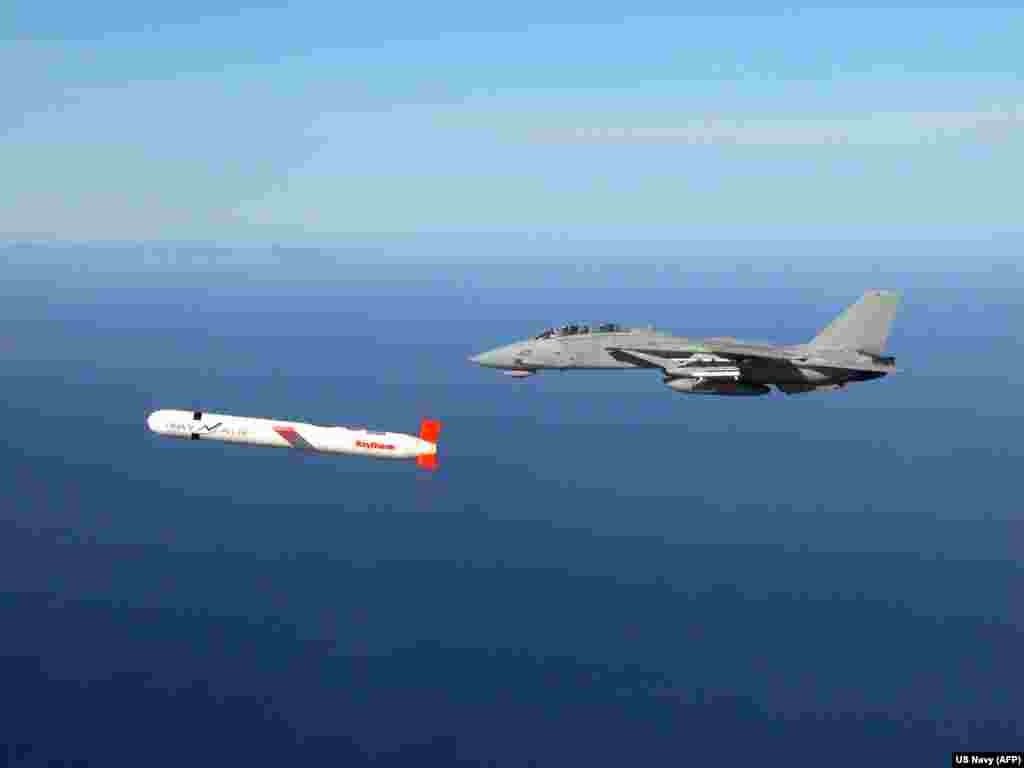
5/9A Tomahawk cruising alongside a US Navy F-14 above southern California in 2002.
Kyiv has repeatedly called for access to long-range US missiles. In 2024, Ukrainian President Volodymyr Zelenskyy hinted that Kyiv had requested Tomahawks. A White House official at the time reportedly called the request “totally unfeasible.”
US President Donald Trump told reporters on October 6 that he had "sort of made a decision" about allowing Ukraine access to Tomahawk cruise missiles. If Washington does supply the advanced weapon, here is how it could change the battlefield dynamic between Moscow and Kyiv.
Show moreShow less
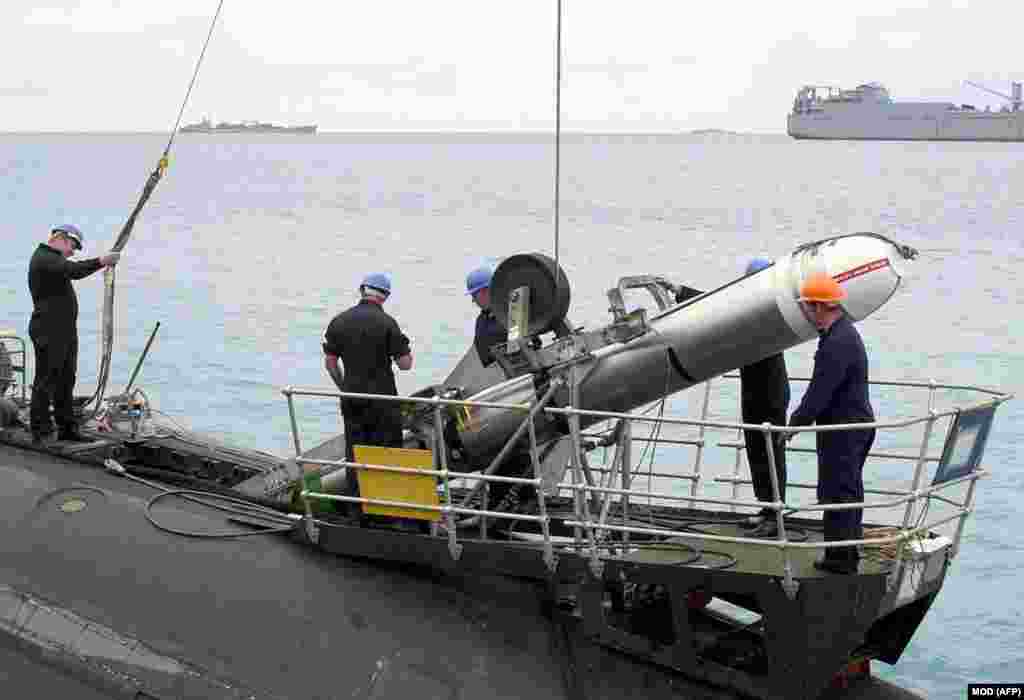
6/9British Navy personnel handle a Tomahawk missile at a naval base in the Indian Ocean in November 2001.
US President Donald Trump has voiced increasing frustration with Moscow over faltering peace negotiations. The potential supply of Tomahawks was reportedly revived recently amid the White House seeking to make the Kremlin “feel the pain” of the war it started.
US President Donald Trump told reporters on October 6 that he had "sort of made a decision" about allowing Ukraine access to Tomahawk cruise missiles. If Washington does supply the advanced weapon, here is how it could change the battlefield dynamic between Moscow and Kyiv.
Show moreShow less
7/9A submarine-launched Tomahawk hits a target on San Clemente Island, a US Navy training and weapons-testing site off the Southern California coast, during a test in November 1998.
During a phone call in early July, President Trumpreportedly asked Zelenskyy, “Volodymyr, can you hit Moscow? [...] Can you hit St. Petersburg too?” The Ukrainian president is reported to have replied: “Absolutely. We can if you give us the weapons.” On October 6, Trump indicated he was close to making a decision on allowing Kyiv access to Tomahawks but told reporters he would "ask some questions," about Ukraine's plans for the weapon, adding "I'm not looking to escalate that war."
US President Donald Trump told reporters on October 6 that he had "sort of made a decision" about allowing Ukraine access to Tomahawk cruise missiles. If Washington does supply the advanced weapon, here is how it could change the battlefield dynamic between Moscow and Kyiv.
Show moreShow less
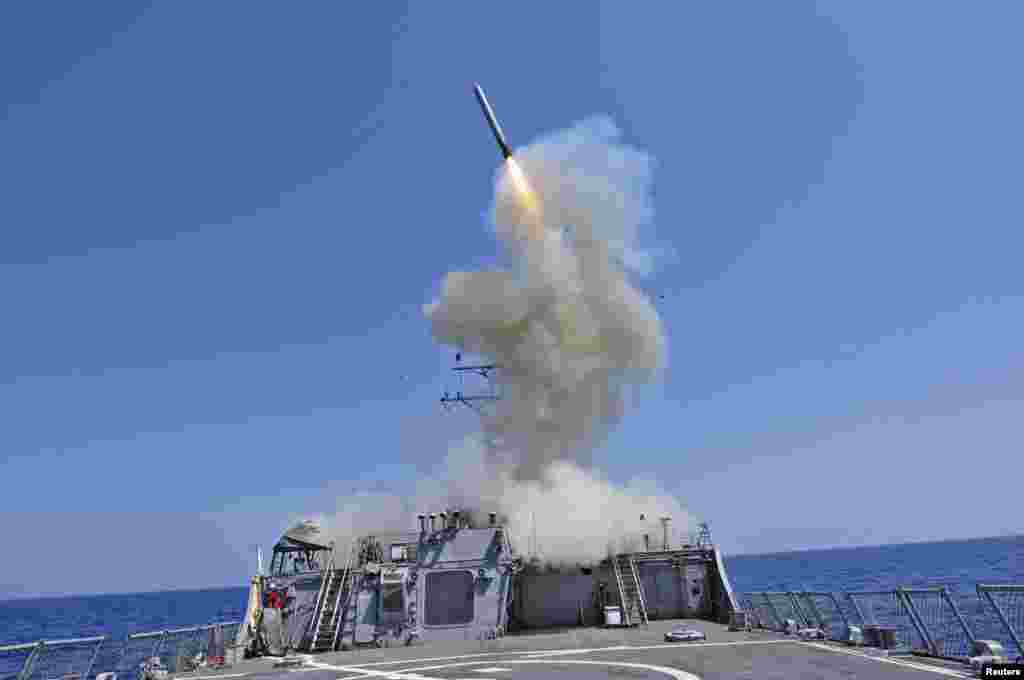
8/9A US Navy vessel launches a Tomahawk missile in the Mediterranean Sea in March 2011.
It is unclear how Ukraine would handle the weapon, which is usually launched from naval ships or submarines. Tomahawks can be launched from some aircraft but a Ukrainian official acknowledged to reporters that Tomahawks, “are not easy to use” without strategic bomber aircraft, which Kyiv does not possess.
US President Donald Trump told reporters on October 6 that he had "sort of made a decision" about allowing Ukraine access to Tomahawk cruise missiles. If Washington does supply the advanced weapon, here is how it could change the battlefield dynamic between Moscow and Kyiv.
Show moreShow less
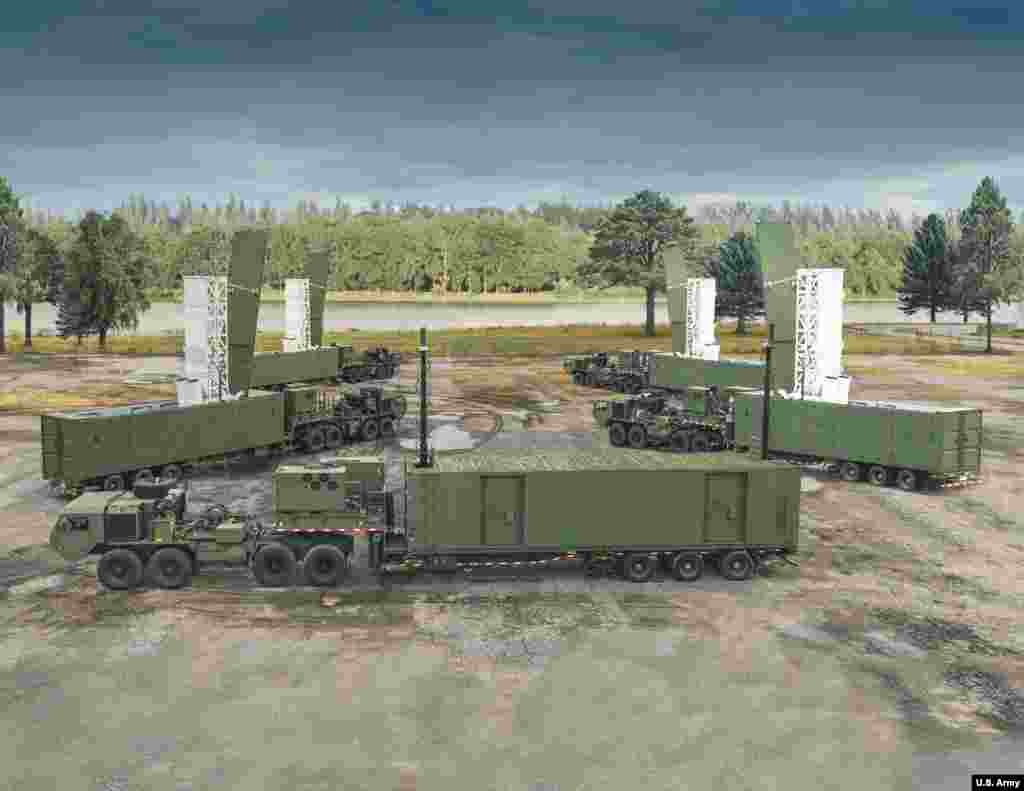
9/9US Typhon systems, which are capable of launching Tomahawk cruise missiles.
Newly developed ground-launchers exist for Tomahawks, but the technology is currently only fielded by the United States. Ground-launch systems for the cruise missile began to be developed after the collapse of the Intermediate-Range Nuclear Forces Treaty in 2019. The US-Russia agreement banned ground-launched missiles with ranges between 500 and 5,500 kilometers.
US President Donald Trump told reporters on October 6 that he had "sort of made a decision" about allowing Ukraine access to Tomahawk cruise missiles. If Washington does supply the advanced weapon, here is how it could change the battlefield dynamic between Moscow and Kyiv.
Show moreShow less
Previous slide
Next slide
The White House has not yet confirmed whether the meeting will take place. However, Trump confirmed that he discussed the missiles in a second call in two days with Zelenskyy on October 12.
“[Ukraine] would like to have Tomahawks. That's a step up," he told reporters aboard Air Force One en route to the Middle East for a Gaza peace conference.
"Yeah, I might tell [Putin] if the war is not settled, we may very well do it,” he said.
"We may not, but we may do it.… Do they want to have Tomahawks going in their direction? I don’t think so," Trump added.
Tomahawk missiles have a range of 2,500 kilometers, capable of hitting deep inside Russia, including the capital, Moscow.
Washington would not sell the missiles directly to Kyiv, but instead would offer them to NATO states, which could pay for and send them on to Ukraine, as part of an earlier announced program.
Russian President Vladimir Putin earlier warned that such deliveries would represent a “completely new stage of escalation” between Washington and Moscow.
Still, he claimed they would not pose a major threat to the country.
“Can Tomahawks harm us? They can. But we will shoot them down and improve our air defense system,” Putin said.
Zelenskyy said "signals" from Moscow indicated fear among the Russian leadership and that Tomahawks could strengthen Kyiv's position in peace talks.
Trump last week said he was waiting to hear what Ukraine would do with such long-range missiles before making a decision.
The Ukrainian president said his forces would only target military assets should it be supplied with Tomahawks and not strike civilian sites inside Russia.
"We've never attacked their civilians. This is the big difference between Ukraine and Russia," Zelenskyy said in an interview broadcast on Fox News.
"That's why, if we speak about long-range [missiles], we speak only about military goals."
With reporting by RFE/RL's Ukrainian Service and Reuters
RFE/RL journalists report the news in 24 languages in 18 countries where a free press is banned by the government or not fully established. We provide what many people cannot get locally: uncensored news, responsible discussion, and open debate.





![A submarine-launched Tomahawk hits a target on San Clemente Island, a US Navy training and weapons-testing site off the Southern California coast, during a test in November 1998.<br><br>During a phone call in early July, President Trump<strong> </strong><a href="https://www.ft.com/content/b66f03b5-e295-4f8c-92ba-516a527d588c" class="wsw__a" dir="ltr"><strong>reportedly asked</strong></a> Zelenskyy, “Volodymyr, can you hit Moscow? [...] Can you hit St. Petersburg too?” The Ukrainian president is reported to have replied: “Absolutely. We can if you give us the weapons.” On October 6, Trump indicated he was close to making a decision on allowing Kyiv access to Tomahawks but told reporters he would "ask some questions," about Ukraine's plans for the weapon, adding "I'm not looking to escalate that war."](https://gdb.rferl.org/a036e9d4-3ac5-4f2d-9386-08ddc37e21a1_w1024_q10_s.jpg)