





Iran has named hard-liner Mojtaba Khamenei to replace his father, the late Ayatollah Ali Khamenei, as supreme leader, likely putting him directly in the sights of the US and Israeli militaries.
Iran's Assembly of Experts, responsible for electing the new ruler, said on March 8 that it had "designated and introduced Ayatollah Seyyed Mojtaba Hosseini Khamenei as the third Supreme Leader of the sacred system of the Islamic Republic of Iran."
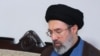
As supreme leader, Mojtaba Khamenei will have final say in all political and military matters and hold near-dictatorial powers.
The appointment also makes him a target for US and Israeli forces, who killed his father, Ayatollah Ali Khamenei, on February 28 as they launched a war against Iran that has spread throughout the region.
'An Unacceptable Choice'
The decision comes after US President Donald Trump earlier called Mojtaba Khamenei -- then seen as the favorite to succeed his father -- an "unacceptable choice" and a "lightweight" and insisted that anyone chosen by Tehran must be acceptable to Washington.
Trump told ABC News that “if he [the next supreme leader] doesn’t get approval from us, he’s not going to last long,” adding that there are “numerous people that could qualify” for the role.
"We don't have to go back every five years and do this again and again...[We seek] somebody that's going to be great for the people, great for the country," Trump said.
In an interview with the Times of Israel shortly after the Khamenei announcement, Trump declined to comment directly on the move, saying only, "We'll see what happens."
Hours before the announcement, the Israel Defense Forces (IDF) warned that “Israel will continue to follow any successor and anyone who seeks to appoint a successor” and that it would “not hesitate to target” any of the dozens of Assembly of Experts members participating in the meeting to choose the successor.
“Iran having a new leader would help them advance their war against us,” IDF spokesperson Nadav Shoshani said on March 8. “Iran not having a leader is something that makes it hard for them to operate the war machine against us.”
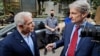
Yair Lapid, the leader of the opposition in Israel, told RFE/RL in an interview on March 8 that Israel reserves the right to strike any new supreme leader who takes power following the death of Ali Khamenei.
When asked ahead of the announcement whether Israel should attempt to kill the new leader, Lipid said, "Well, it depends on who is the leader."
"I hope they will find something very different from what they have there right now," he said of the Iranian leadership. "What we have there is a terror organization."
Shortly after the Khamenei announcement was made, Iran said it fired a volley of missiles toward Israel.
"Iran fires first wave of missiles under Ayatollah Seyyed Mojtaba Khamenei toward occupied territories," state broadcaster IRIB said on its Telegram channel. It also posted a photo of a projectile with the words: "At Your Command, Sayyid Mojtaba."
Defiant Assembly Of Experts
In announcing the decision, Iran's Assembly of Experts appeared defiant, saying it made the choice "despite the acute war situation and direct threats from enemies."
Mojtaba Khamenei was known to have close ties to Iran's Islamic Revolutionary Guard Corps (IRGC), which wields considerable military power in the country, separate from the regular armed forces.
The hard-line IRGC was quick to endorse the choice of the new leader, pledging "allegiance" to him, according to state media. The leaders of the armed forces also pledged to follow Khamenei as the new ruler.
Powerful national-security chief Ali Larijani, also considered a hard-liner, called for unity around the new supreme leader, saying the Assembly made the choice in spite of threats to target the electing body.

Strikes On Iran Continue
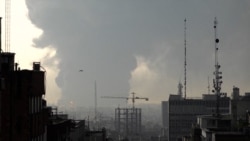
Meanwhile, the United States and Israel carried out new air strikes on strategic infrastructure in and around Tehran on March 8, including oil depots and refining facilities, as Israeli forces also expanded their operations beyond Iran.
Large fires were reported at several fuel storage sites in Tehran, sending heavy smoke over parts of the capital. Iranian officials confirmed that multiple oil facilities were damaged, although emergency teams managed to bring some fires under control.

Iran continued to strike back at several Gulf states that are hosting US military assets, despite an apology from President Masud Pezeshkian expressing sorry for earlier attacks on Washington's Arab allies.
Saudi Arabia, the United Arab Emirates, Qatar, Kuwait, and Bahrain, reported new attacks or interceptions of Iranian drones and missiles on March 7 and 8.
Air defense systems across the region were activated to intercept incoming projectiles, with multiple explosions reported as defenses engaged Iranian drones and missiles.
Trump: US 'Not Looking To The Kurds Going In'
In comments a day earlier, Trump said he does not want ethnic Kurds to launch an attack on the Iranian regime. The remarks came after conflicting reports as to whether Trump was encouraging a ground offensive by Iranian Kurdish exiles based in Iraq.
"We're not looking to the Kurds going in," he told reporters aboard Air Force One. "We're very friendly with the Kurds, as you know, but we don't want to make the war any more complex than it already is."
"I don't want to see the Kurds get hurt and killed. They're willing to go in, but I've told them I don't want them going in. The war's complicated enough without getting the Kurds involved," he said.
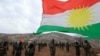
On March 5, Trump had told Reuters he would be "all for" an offensive by Iranian Kurdish fighters in support of the US-Israeli effort.

