


Besides the death toll, Ukrainian President Volodymyr Zelenskiy said in a video address that more than 300 people were also injured in less than 24 hours of fighting.
Ukrainian President Volodymyr Zelenskiy says 137 civilians and military personnel have been killed so far in the Russian invasion of his country.
He calls them “heroes” in a video address released early on February 25 in which he also says more than 300 people were injured in less than 24 hours of fighting.
“They’re killing people and turning peaceful cities into military targets. It’s foul and will never be forgiven,” Zelenskiy said.
The president said all border guards on Zmiinyi (Snake) Island in the Odesa region were killed. All of them will be posthumously awarded the title of Hero of Ukraine, he said.
Ukraine’s border guard service earlier in the day reported that the island was taken by Russian forces.
Zelenskiy said despite the losses the armed forces of Ukraine were “brilliantly defending the country against one of the most powerful nations in the world.”
Scenes From An Invasion: Russia Launches Long-Predicted Attack Against Ukraine
1/21A Ukrainian soldier crouches next to an anti-tank missile on the outskirts of Kharkiv.
Moscow’s long-feared attack on Ukraine began early on February 24, with missiles being fired at airports and military infrastructure in many cities after Russia President Vladimir Putin ordered a “special” operation to “demilitarize” its neighbor and rival.
Show moreShow less
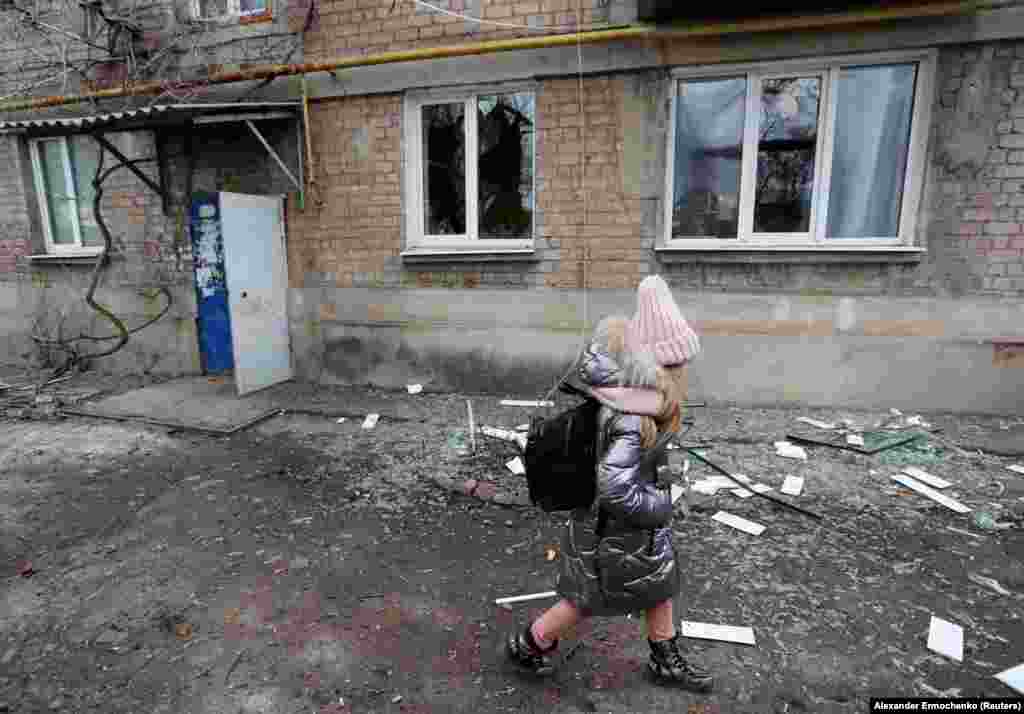
2/21A girl walks past an apartment building, which locals said was damaged by recent shelling, in the separatist-controlled town of Yasynuvata in the Donetsk region.
Moscow’s long-feared attack on Ukraine began early on February 24, with missiles being fired at airports and military infrastructure in many cities after Russia President Vladimir Putin ordered a “special” operation to “demilitarize” its neighbor and rival.
Show moreShow less
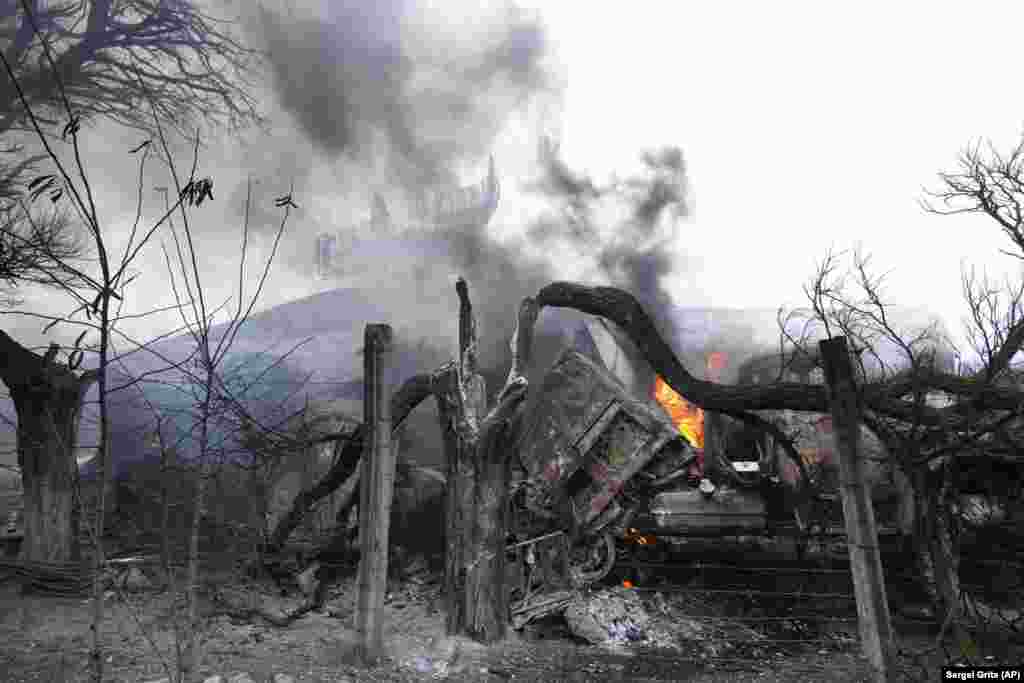
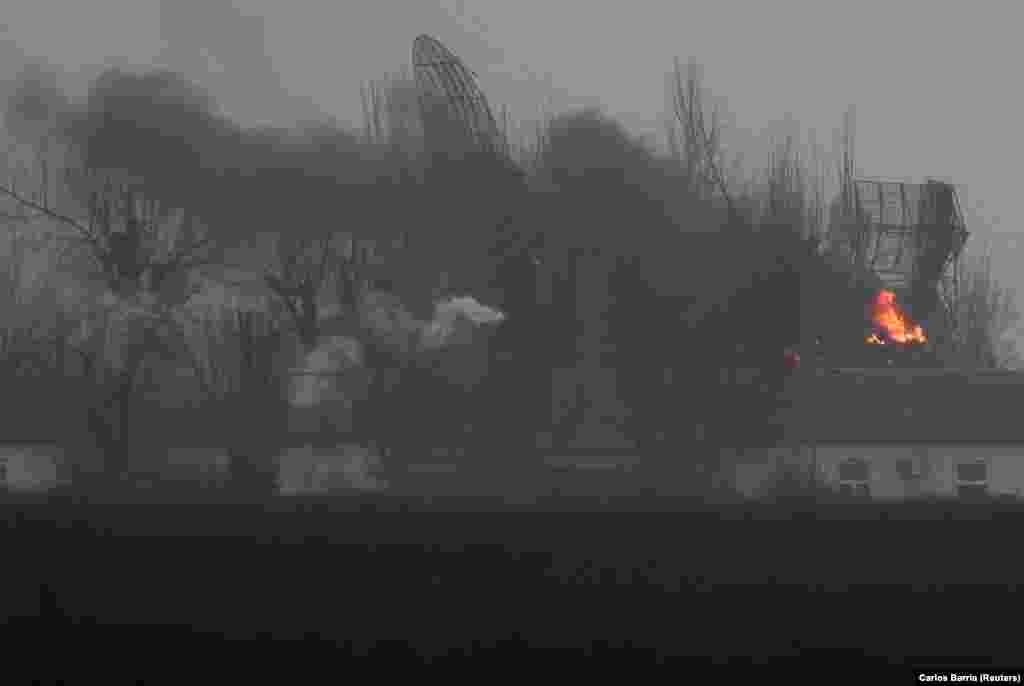
3/21Smoke rises from an air-defense base in the aftermath of an apparent Russian strike in Mariupol.
Moscow’s long-feared attack on Ukraine began early on February 24, with missiles being fired at airports and military infrastructure in many cities after Russia President Vladimir Putin ordered a “special” operation to “demilitarize” its neighbor and rival.
Show moreShow less
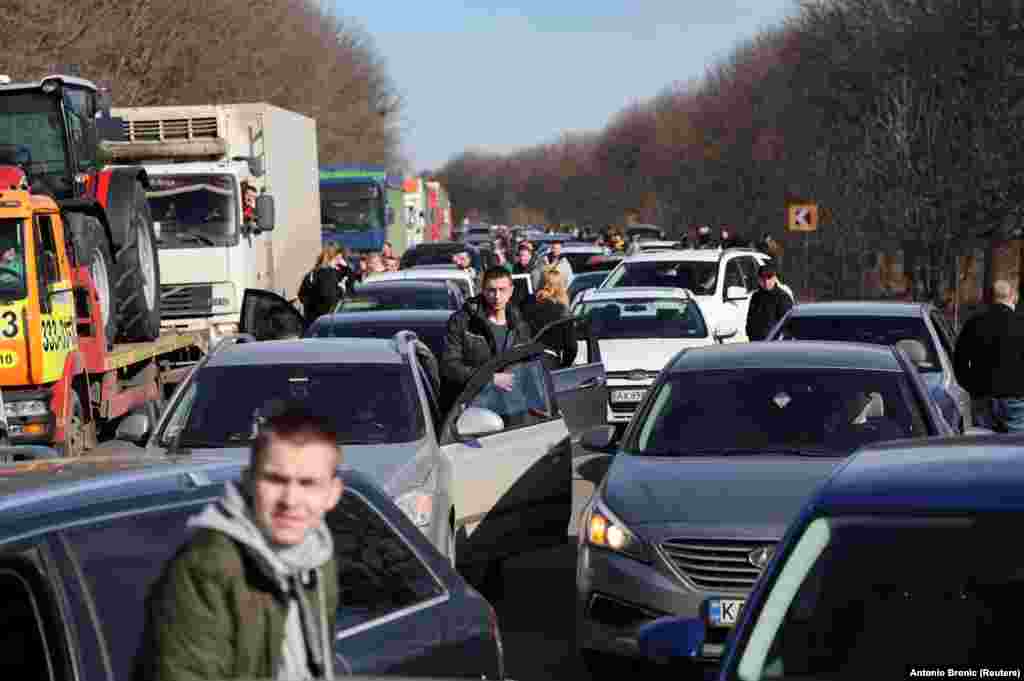
4/21People wait in a traffic jam as they leave the eastern Ukrainian city of Kharkiv.
Moscow’s long-feared attack on Ukraine began early on February 24, with missiles being fired at airports and military infrastructure in many cities after Russia President Vladimir Putin ordered a “special” operation to “demilitarize” its neighbor and rival.
Show moreShow less
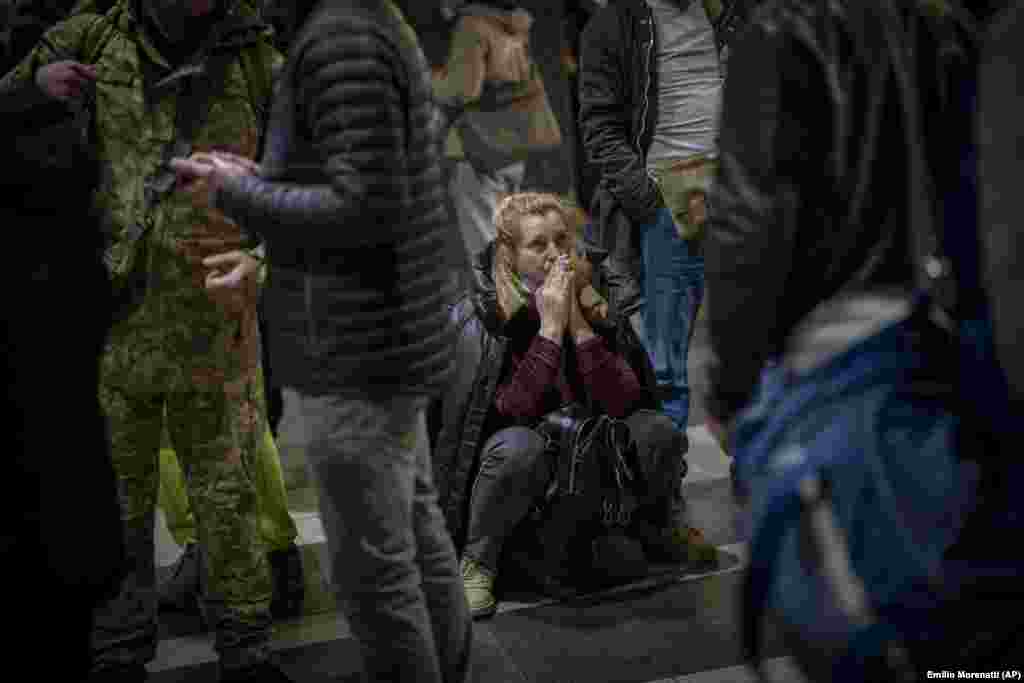
5/21A woman reacts as she waits for a train as she tries to leave Kyiv.
Moscow’s long-feared attack on Ukraine began early on February 24, with missiles being fired at airports and military infrastructure in many cities after Russia President Vladimir Putin ordered a “special” operation to “demilitarize” its neighbor and rival.
Show moreShow less
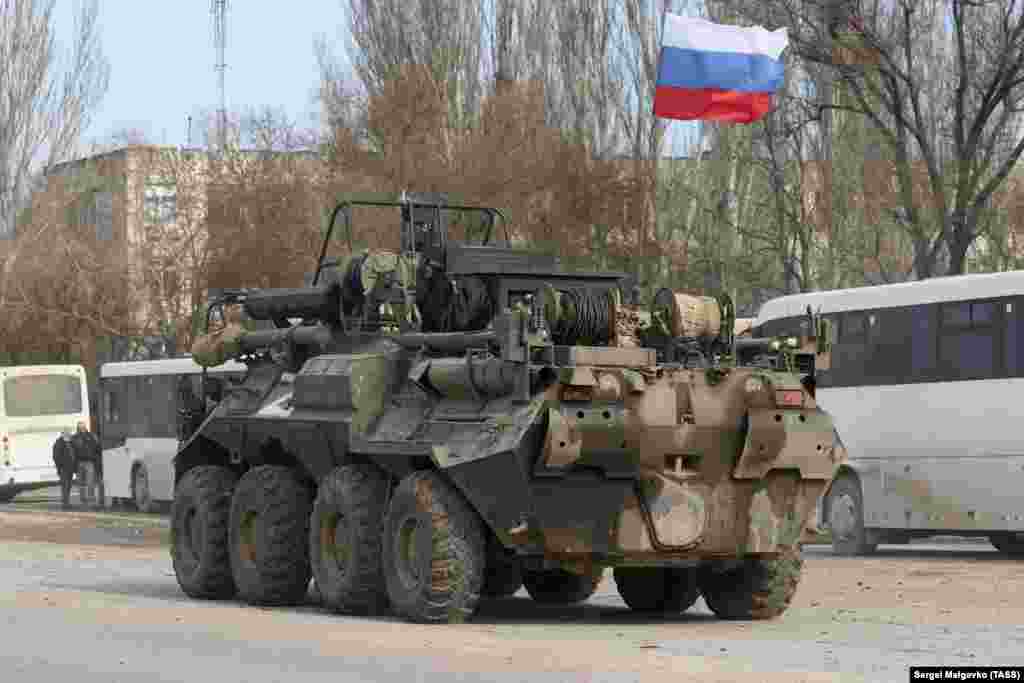
6/21A Russian armored vehicle moves across the town of Armyansk in northern Crimea on February 24.
Moscow’s long-feared attack on Ukraine began early on February 24, with missiles being fired at airports and military infrastructure in many cities after Russia President Vladimir Putin ordered a “special” operation to “demilitarize” its neighbor and rival.
Show moreShow less
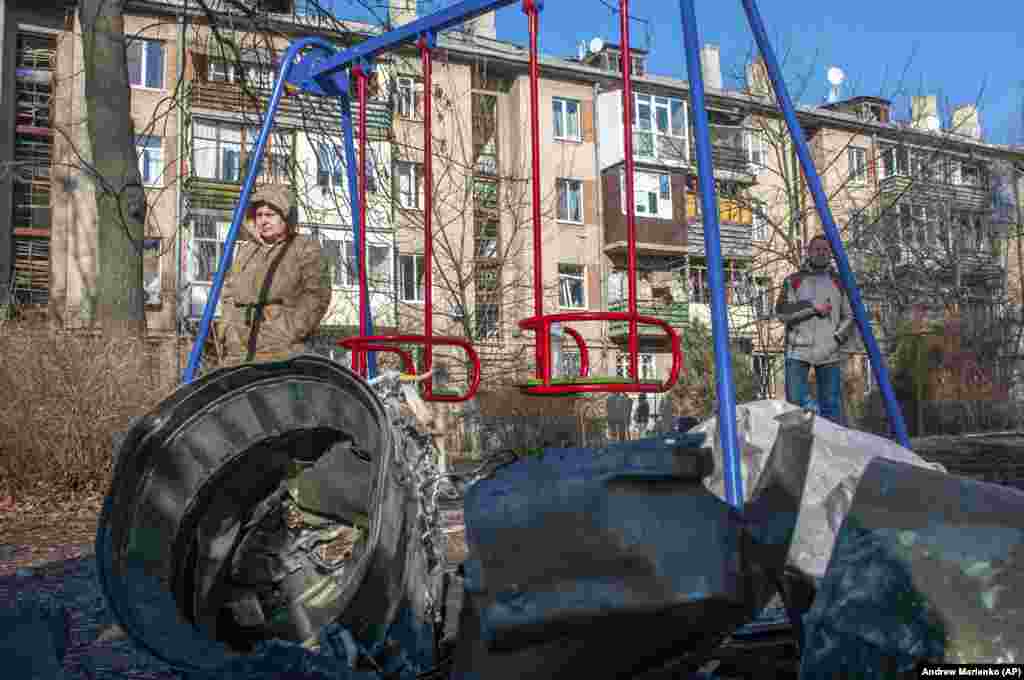
7/21A man and a woman stand next to fragments of military equipment on the street in the aftermath of an apparent Russian air strike in Kharkiv.
Moscow’s long-feared attack on Ukraine began early on February 24, with missiles being fired at airports and military infrastructure in many cities after Russia President Vladimir Putin ordered a “special” operation to “demilitarize” its neighbor and rival.
Show moreShow less
8/21Firefighters work to put out a fire after bombings in the eastern Ukrainian town of Chuhuiv.
Moscow’s long-feared attack on Ukraine began early on February 24, with missiles being fired at airports and military infrastructure in many cities after Russia President Vladimir Putin ordered a “special” operation to “demilitarize” its neighbor and rival.
Show moreShow less
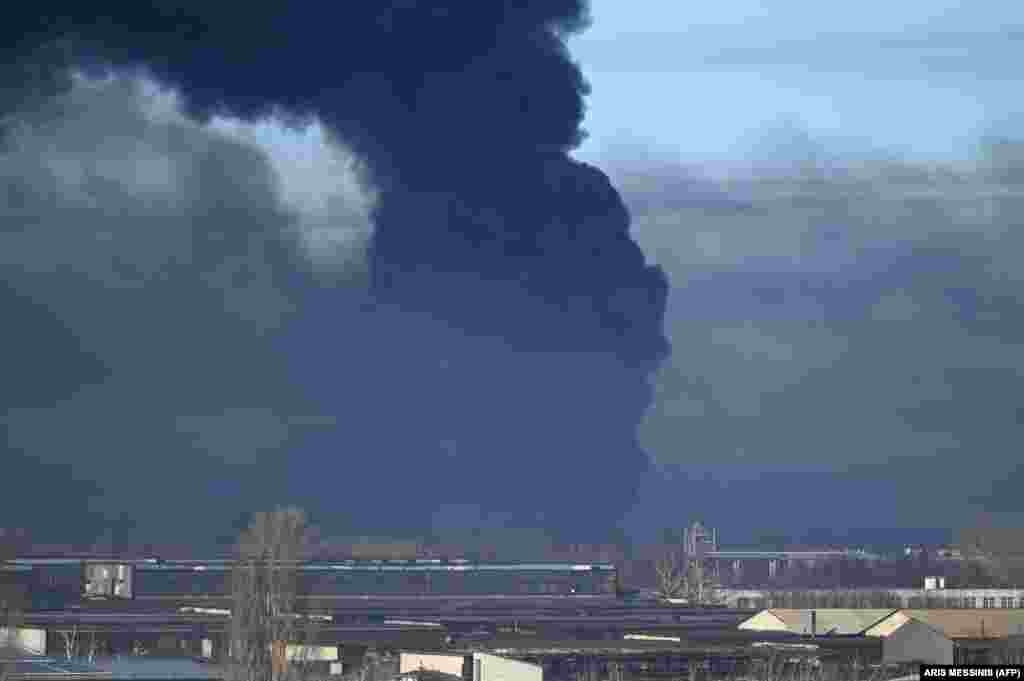
9/21Black smoke rises from a military airport in Chuhuiv near Kharkiv.
Moscow’s long-feared attack on Ukraine began early on February 24, with missiles being fired at airports and military infrastructure in many cities after Russia President Vladimir Putin ordered a “special” operation to “demilitarize” its neighbor and rival.
Show moreShow less
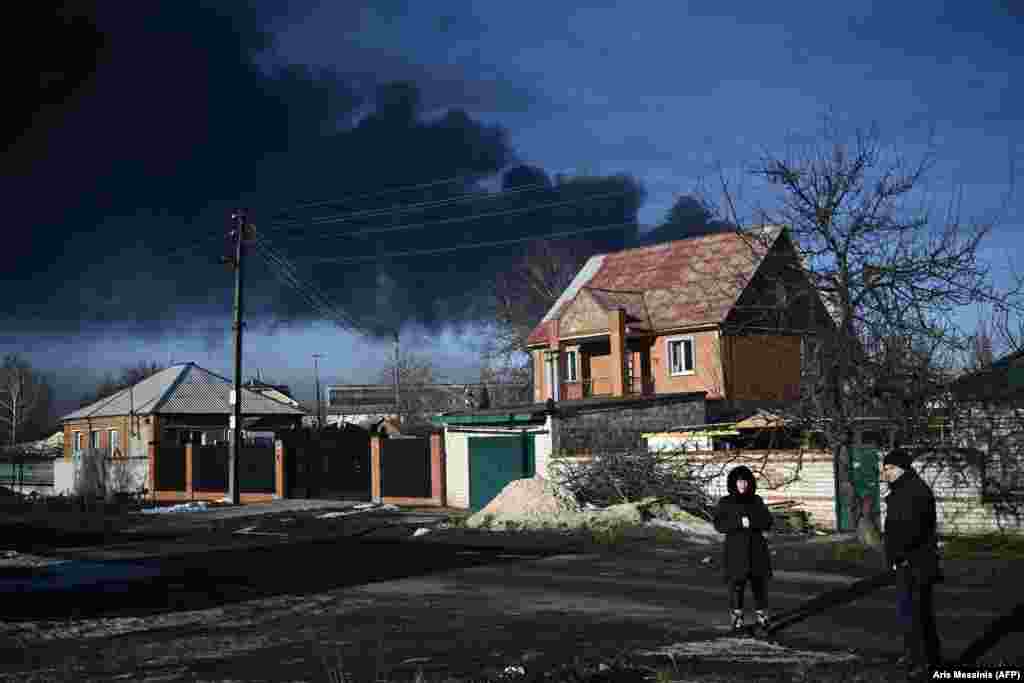
10/21Black smoke rises from a military airport in Chuhuiv near Kharkiv.
Moscow’s long-feared attack on Ukraine began early on February 24, with missiles being fired at airports and military infrastructure in many cities after Russia President Vladimir Putin ordered a “special” operation to “demilitarize” its neighbor and rival.
Show moreShow less
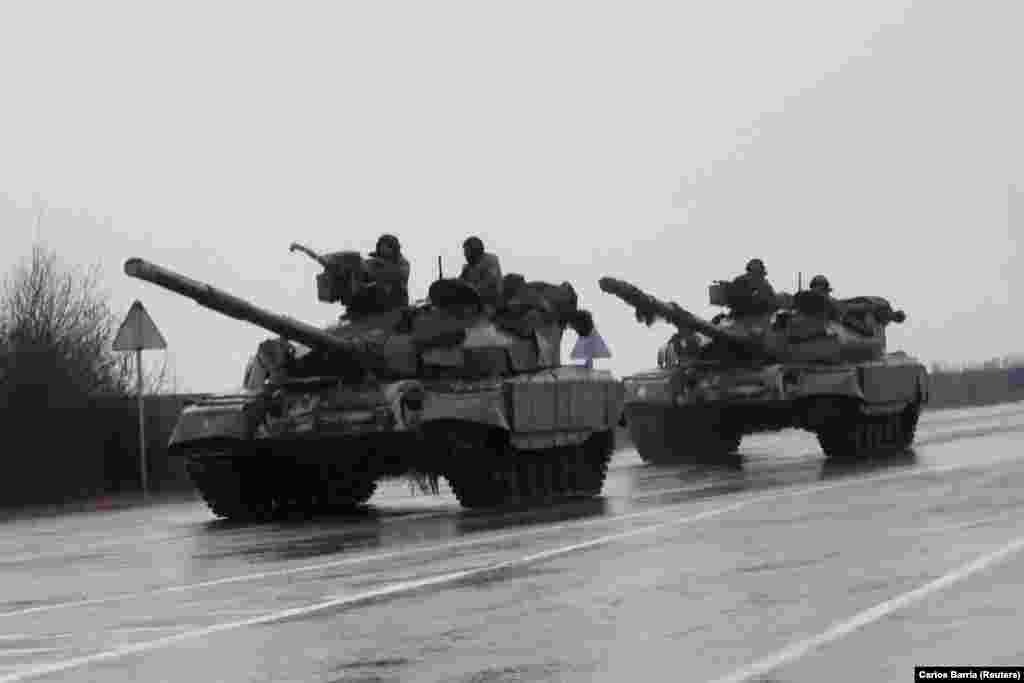
11/21Ukrainian tanks move into the eastern city of Mariupol.
Moscow’s long-feared attack on Ukraine began early on February 24, with missiles being fired at airports and military infrastructure in many cities after Russia President Vladimir Putin ordered a “special” operation to “demilitarize” its neighbor and rival.
Show moreShow less
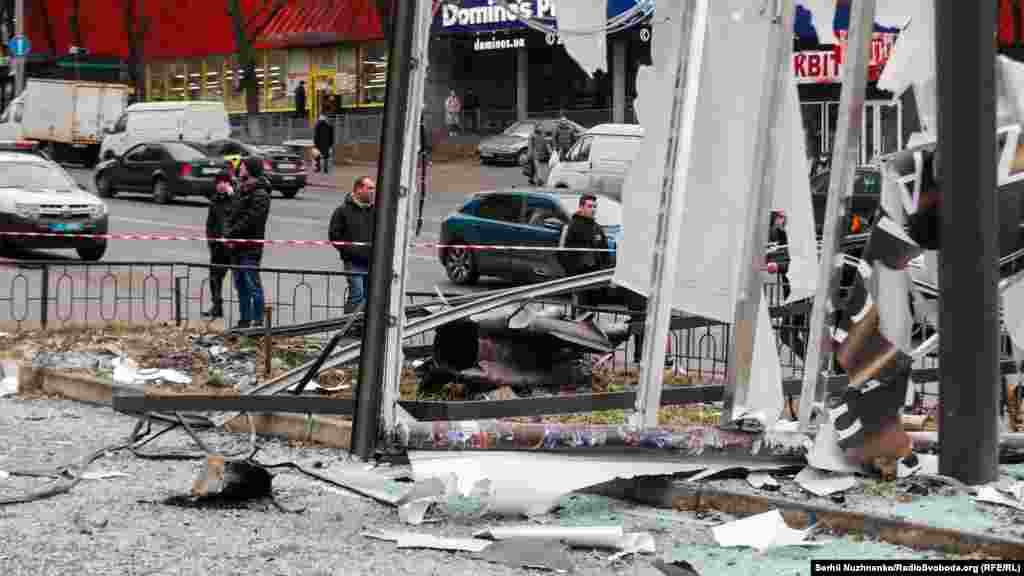
12/21Debris is seen in Kyiv after a missile landed in a street.
Moscow’s long-feared attack on Ukraine began early on February 24, with missiles being fired at airports and military infrastructure in many cities after Russia President Vladimir Putin ordered a “special” operation to “demilitarize” its neighbor and rival.
Show moreShow less
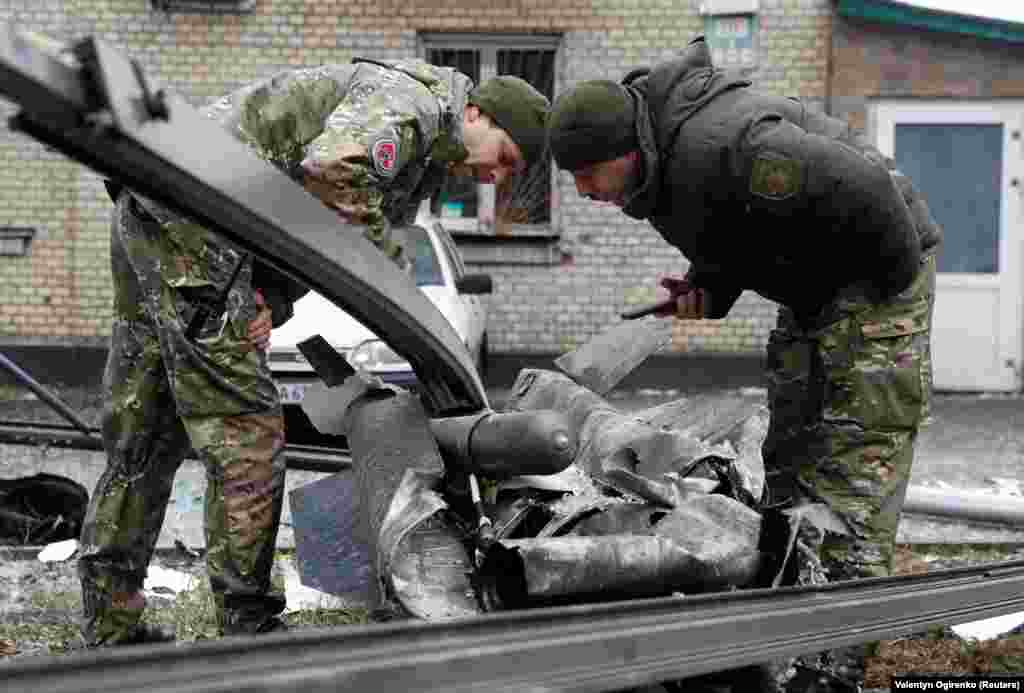
13/21Police officers inspect the remains of a missile that fell in a Kyiv street.
Moscow’s long-feared attack on Ukraine began early on February 24, with missiles being fired at airports and military infrastructure in many cities after Russia President Vladimir Putin ordered a “special” operation to “demilitarize” its neighbor and rival.
Show moreShow less
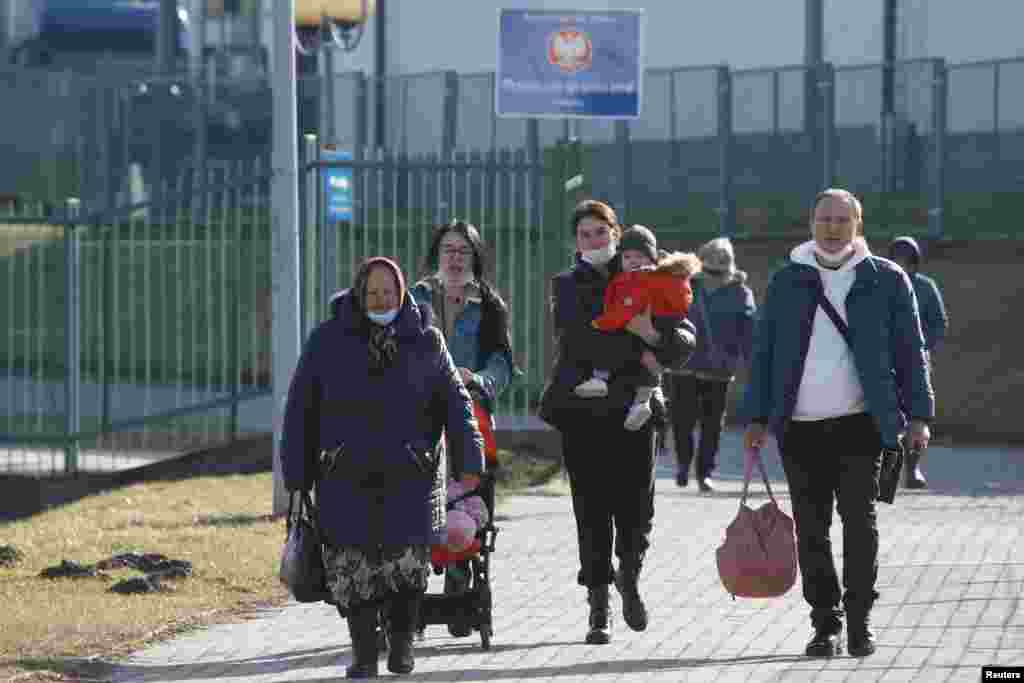
14/21People walk at the border crossing between Poland and Ukraine in Medyka, Poland, on February 24.
Moscow’s long-feared attack on Ukraine began early on February 24, with missiles being fired at airports and military infrastructure in many cities after Russia President Vladimir Putin ordered a “special” operation to “demilitarize” its neighbor and rival.
Show moreShow less
15/21Ukrainian soldiers are seen in a military vehicle in Mariupol.
Moscow’s long-feared attack on Ukraine began early on February 24, with missiles being fired at airports and military infrastructure in many cities after Russia President Vladimir Putin ordered a “special” operation to “demilitarize” its neighbor and rival.
Show moreShow less
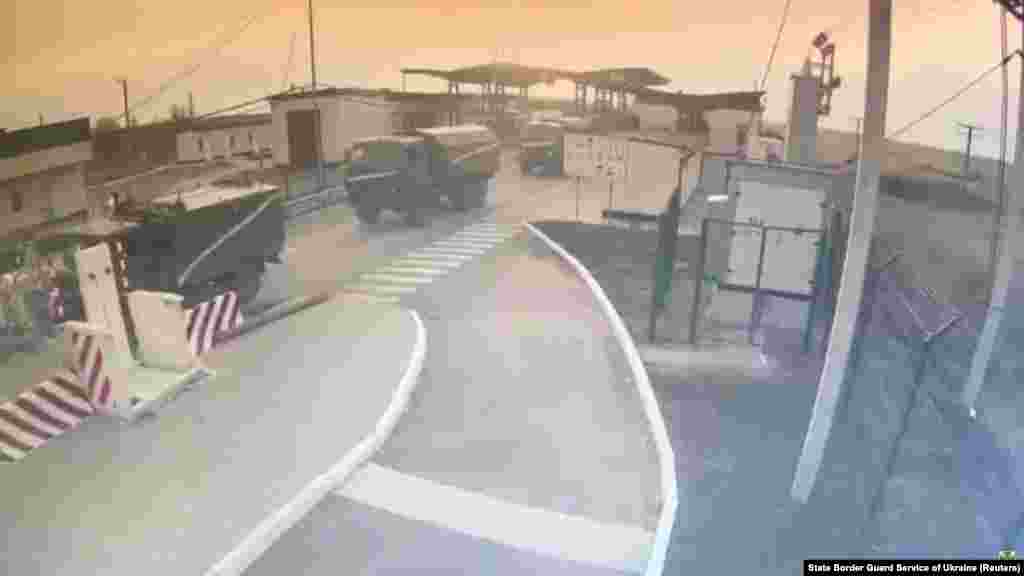
16/21A video screen grab shows military vehicles crossing into Ukraine's Kherson Oblast from Crimea through the Kalanchak border control point.
Moscow’s long-feared attack on Ukraine began early on February 24, with missiles being fired at airports and military infrastructure in many cities after Russia President Vladimir Putin ordered a “special” operation to “demilitarize” its neighbor and rival.
Show moreShow less
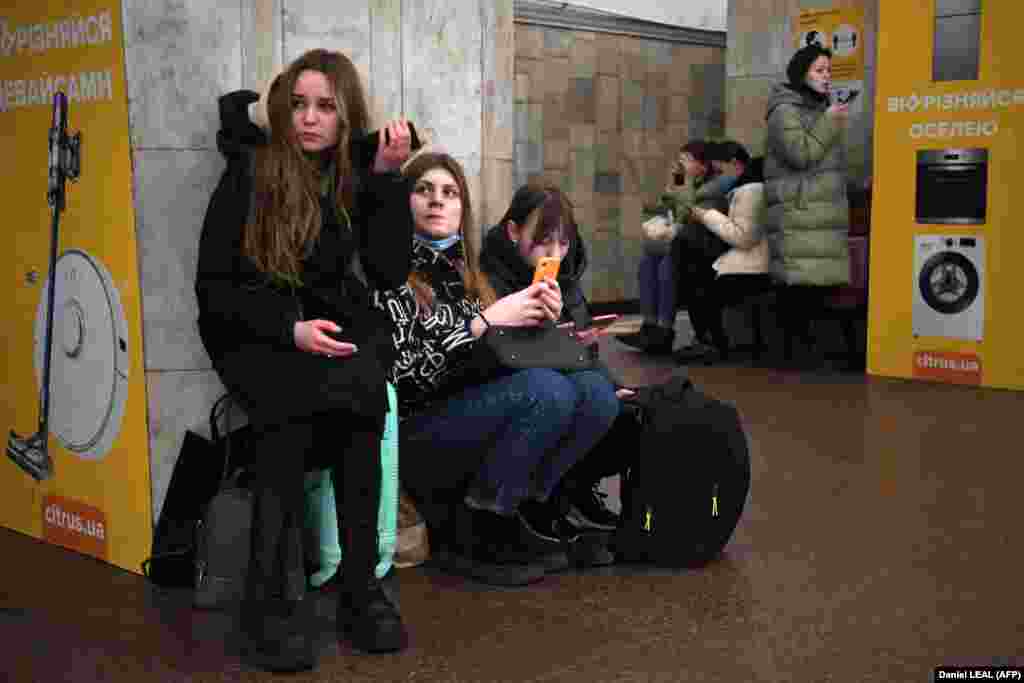
17/21Girls hold their mobile phones as they take refuge in a subway station in Kyiv. Air raid sirens rang out in downtown Kyiv as cities across Ukraine were hit with Russian missile strikes and artillery.
Moscow’s long-feared attack on Ukraine began early on February 24, with missiles being fired at airports and military infrastructure in many cities after Russia President Vladimir Putin ordered a “special” operation to “demilitarize” its neighbor and rival.
Show moreShow less
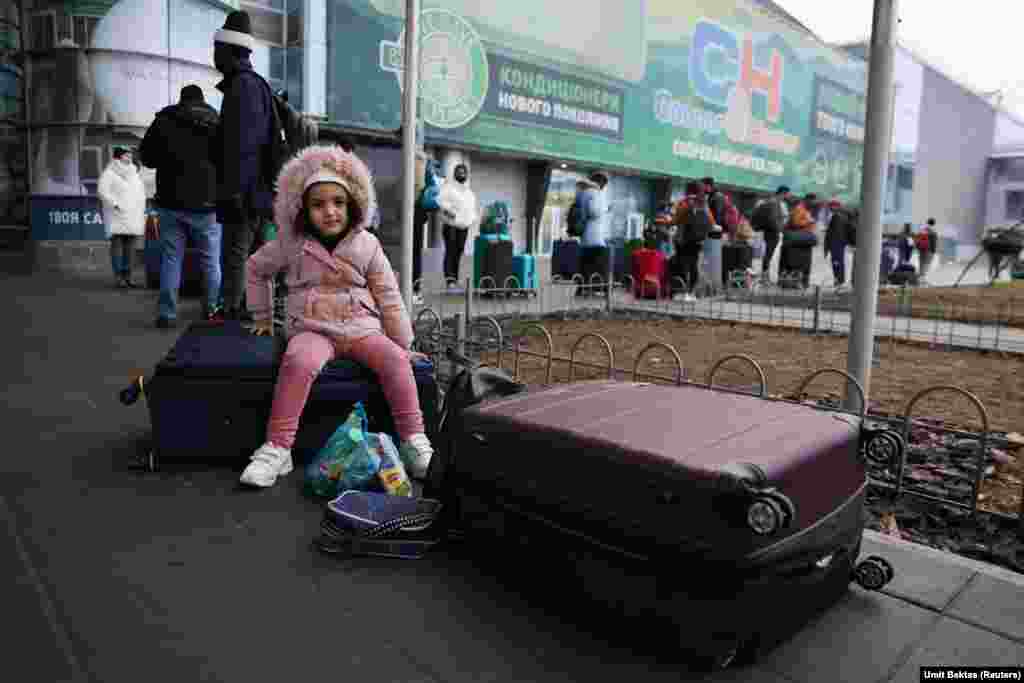
18/21People wait to return to the city at Kyiv's airport amid Russia's bombardment.
Moscow’s long-feared attack on Ukraine began early on February 24, with missiles being fired at airports and military infrastructure in many cities after Russia President Vladimir Putin ordered a “special” operation to “demilitarize” its neighbor and rival.
Show moreShow less
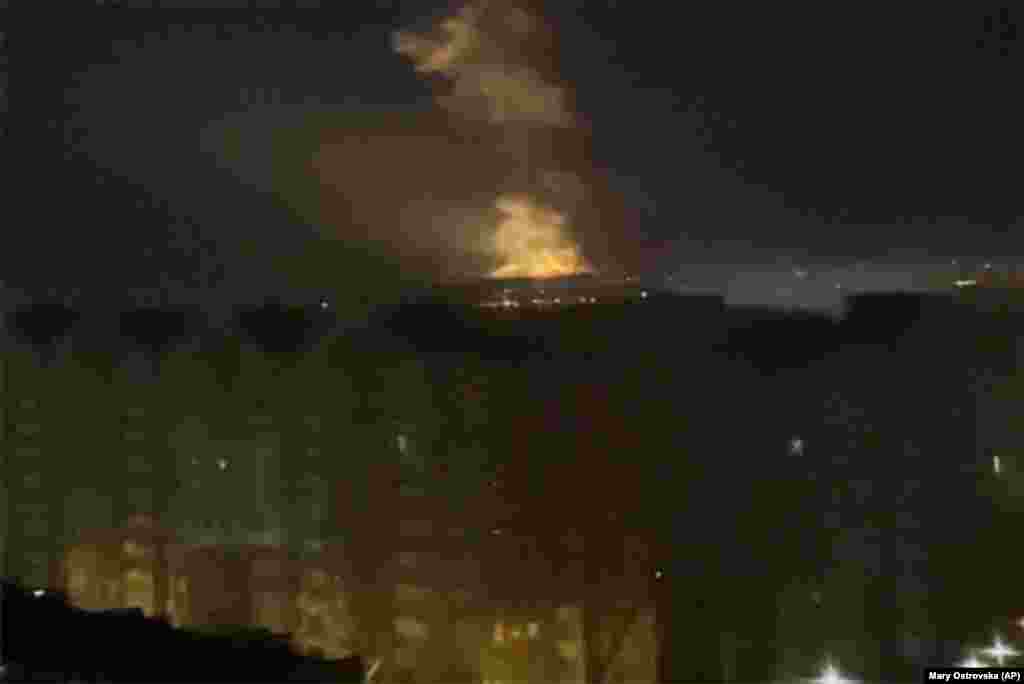
19/21Flames are seen from an area near the Dnieper River in Kyiv.
Moscow’s long-feared attack on Ukraine began early on February 24, with missiles being fired at airports and military infrastructure in many cities after Russia President Vladimir Putin ordered a “special” operation to “demilitarize” its neighbor and rival.
Show moreShow less
20/21Fire is seen at a military installation near the airport in Mariupol.
Moscow’s long-feared attack on Ukraine began early on February 24, with missiles being fired at airports and military infrastructure in many cities after Russia President Vladimir Putin ordered a “special” operation to “demilitarize” its neighbor and rival.
Show moreShow less
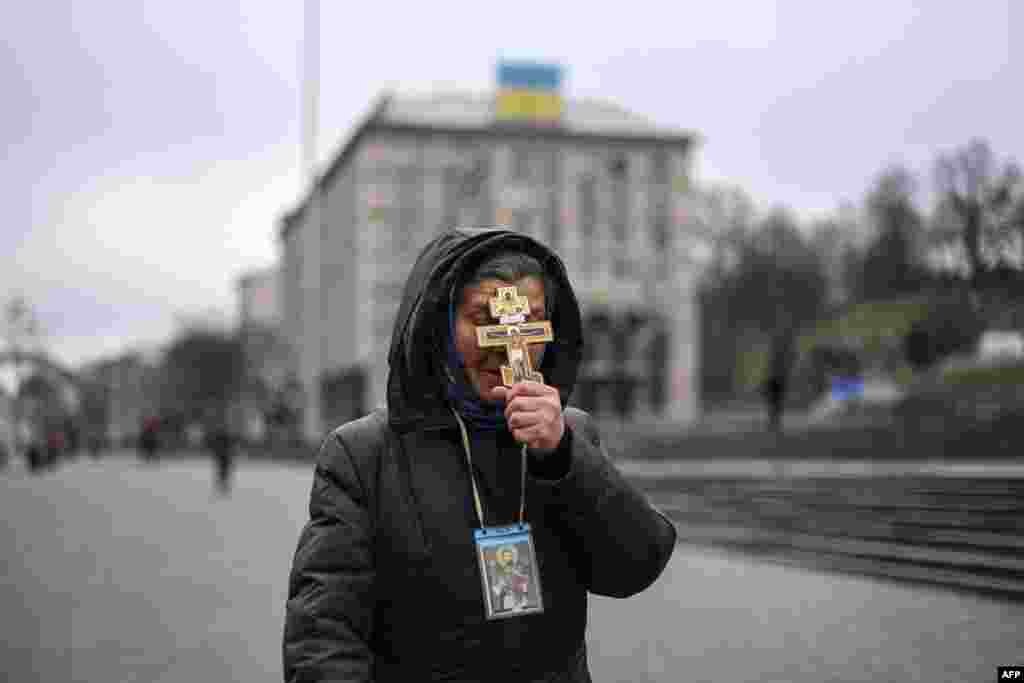
21/21A woman holds a cross as she prays on Independence Square in Kyiv on the morning of February 24,
Moscow’s long-feared attack on Ukraine began early on February 24, with missiles being fired at airports and military infrastructure in many cities after Russia President Vladimir Putin ordered a “special” operation to “demilitarize” its neighbor and rival.
Show moreShow less
Previous slide
Next slide
The president also lamented that his country had been "left alone" to fight Russia. "Who is ready to fight alongside us? I don't see anyone."
Earlier he signed a decree ordering a full military mobilization and barred men between the ages of 18 and 60 from leaving the country. A decree he issued late on February 24 said the mobilization would last 90 days.
He ordered military leaders to determine the number of those liable for service and reservists as well as the order of the call-up.
Russia began its invasion before dawn, unleashing airstrikes on cities and military bases and sending in troops and tanks from multiple directions. The deputy defense minister reported heavy Russian shelling in the eastern Donetsk region.
Ukrainian officials said their forces were battling Russians on multiple fronts and had lost control of the decommissioned Chernobyl nuclear power plant, scene of the world's worst nuclear disaster.
Heavy exchanges of fire were also taking place in the regions of Sumy and Kharkiv in the northeast and Kherson and Odesa, Ukraine's most important seaport, in the south.
The highway heading west out of Kyiv was jammed with traffic as residents fled expected attacks on the Ukrainian capital.
“Russia has embarked on a path of evil, but Ukraine is defending itself and won’t give up its freedom,” Ukrainian President Volodymyr Zelenskiy said on Twitter.
Ukraine requested an urgent debate at the UN Human Rights Council, the United Nations said.
The request is in response “to the extremely grave deterioration in the human rights situation in Ukraine as a result of Russia's hostilities on Ukrainian territory," Yevheniia Filipenko, Ukraine's ambassador to the UN in Geneva, said in a letter sent to the president's forum.
The Council president will meet and discuss the request with the 47-member body, a U.N. statement said. A simple majority is needed to hold an urgent debate during its main annual session opening on February 28.
In Washington, U.S. President Joe Biden announced new sanctions against Russia, saying Putin “chose this war” and that his country would bear the consequences of his action.
Zelenskiy urged the U.S. and West to impose even harsher sanctions and cut the Russians from the SWIFT system, a key financial network that connects thousands of banks around the world. Biden said the U.S. and its partners were withholding that move for now but could impose more sanctions later.
Zelenskiy, who earlier cut diplomatic ties with Moscow and declared martial law, described Russian forces advancing on a series fronts, including a “difficult situation” developing in Kharkiv, Ukraine’s second-largest city, and said Russian troops were slowly advancing from the north on the city of Chernihiv.
He appealed to global leaders, saying that “if you don’t help us now, if you fail to offer a powerful assistance to Ukraine, tomorrow the war will knock on your door.”

With reporting by AP, AFP, Reuters, CNN, dpa, and the BBC
RFE/RL journalists report the news in 24 languages in 18 countries where a free press is banned by the government or not fully established. We provide what many people cannot get locally: uncensored news, responsible discussion, and open debate.