


Accessibility links

Breaking News
Russia Invades Ukraine

Don't 'Rule Out The Unexpected': All Options Available To Moscow's Forces In Ukraine, Says Expert On Russian Military

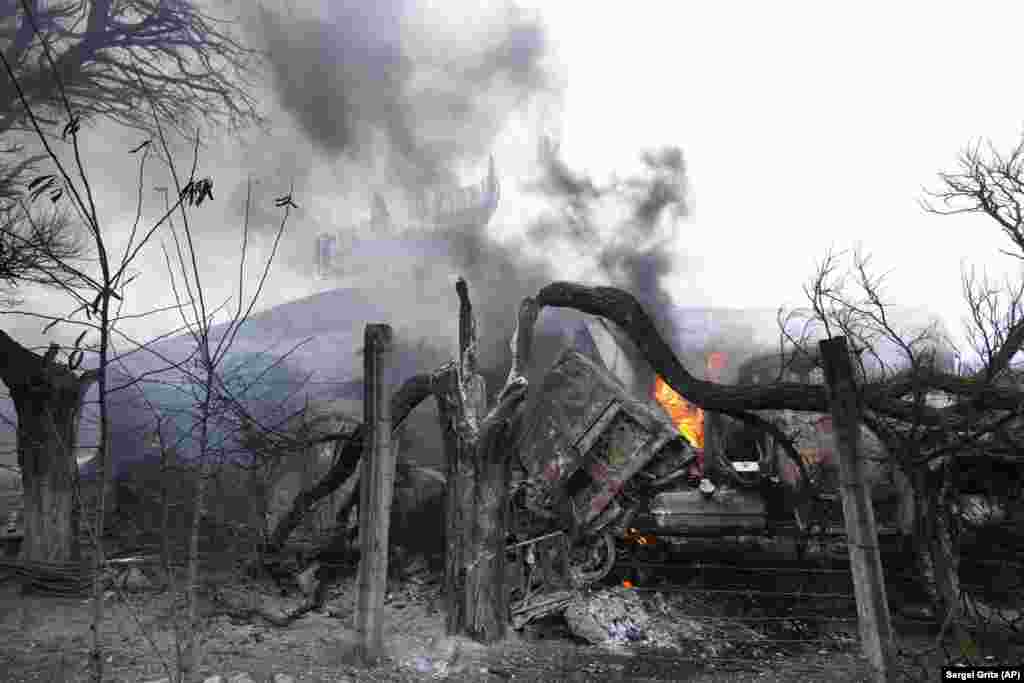
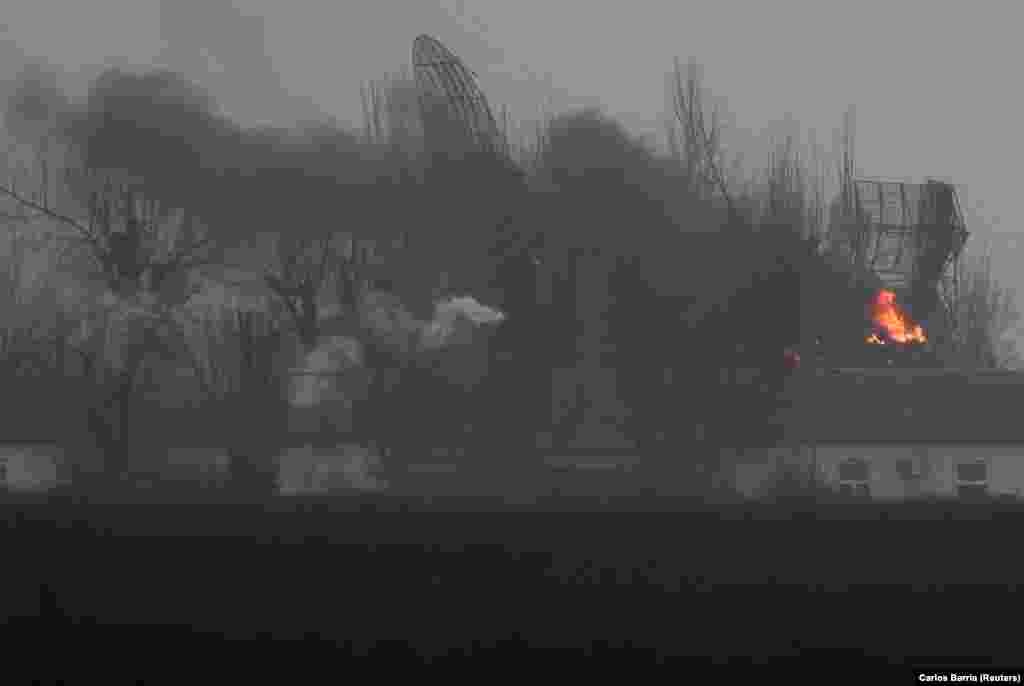
Smoke rises from an air-defense base in the aftermath of an apparent Russian strike on the Ukrainian city of Mariupol on February 24.

The Russian military has fired missiles on military targets and cities as part of a predawn invasion by land, air, and sea.

The Kremlin's attack came after a February 24 TV address by Russian President Vladimir Putin in which he demanded that Ukraine's military lay down its arms.

Since then, fighting has broken out across Ukraine, where Russian forces have entered from the north, south, and east. Fighting has also reached the outskirts of Kyiv, the capital, where scenes of firefights between troops and aerial attacks have taken place. Inside the city, warning sirens blared out as traffic jammed the streets as families fled and others sought shelter in subway stations.

Ukrainian President Volodymyr Zelenskiy said on February 24 that his country has suffered "serious losses” but that Ukraine “won't give up its freedom.”

As fighting across the country continues, RFE/RL spoke with Keir Giles, an expert on the Russian military at the London-based think tank Chatham House to get a better understanding of the fast-moving situation on the ground and what may lie ahead.

RFE/RL: So far, it seems that this is a campaign coming on multiple fronts and by land, air, and sea, and not only from the east as many would have predicted, but also from Belarus in the north and Crimea in the south. What does this first phase of the Russian invasion and the targets that Russia has chosen tell us about Moscow’s goals and what might we expect in the next phase?

Keir Giles: It's true that we've seen Russian troops moving in on Ukraine on three sides, but the overall shape of the campaign still hasn't become clear. We're still getting disjointed information from each of those fronts, both about what Russian forces are actually trying to do and also whether they're succeeding or whether resistance from Ukraine on a local level is actually preventing them.

It's only later that we'll see precisely what Russia's objectives are: whether they are aiming at a decapitation strike against Ukraine…looking to destroy the Ukrainian military’s capability in some kind of raid, or simply aiming for regime change in the maximum possible time frame. Now that may or may not come along with territorial control of Ukraine as well, but it will only become clearer as this campaign unfolds.

Scenes From An Invasion: Russia Launches Long-Predicted Attack Against Ukraine

A Ukrainian soldier crouches next to an anti-tank missile on the outskirts of Kharkiv. 
1/21 A Ukrainian soldier crouches next to an anti-tank missile on the outskirts of Kharkiv. 
Moscow’s long-feared attack on Ukraine began early on February 24, with missiles being fired at airports and military infrastructure in many cities after Russia President Vladimir Putin ordered a “special” operation to “demilitarize” its neighbor and rival.
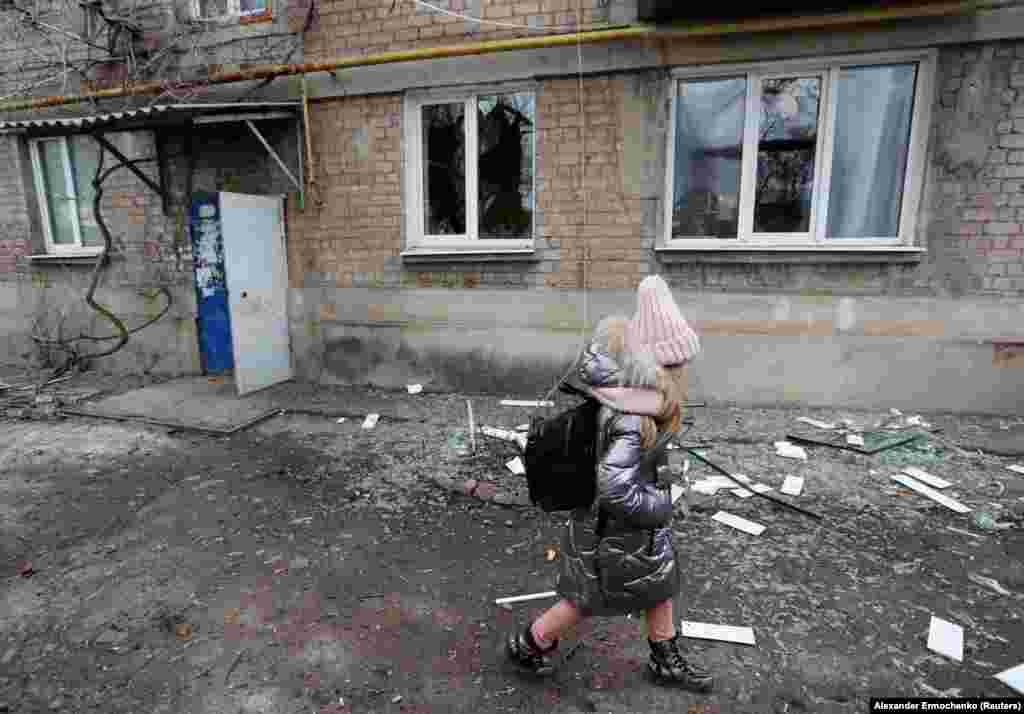
A girl walks past an apartment building, which locals said was damaged by recent shelling, in the separatist-controlled town of Yasynuvata in the Donetsk region.
2/21 A girl walks past an apartment building, which locals said was damaged by recent shelling, in the separatist-controlled town of Yasynuvata in the Donetsk region.
Moscow’s long-feared attack on Ukraine began early on February 24, with missiles being fired at airports and military infrastructure in many cities after Russia President Vladimir Putin ordered a “special” operation to “demilitarize” its neighbor and rival.
Smoke rises from an air-defense base in the aftermath of an apparent Russian strike in Mariupol.
3/21 Smoke rises from an air-defense base in the aftermath of an apparent Russian strike in Mariupol.
Moscow’s long-feared attack on Ukraine began early on February 24, with missiles being fired at airports and military infrastructure in many cities after Russia President Vladimir Putin ordered a “special” operation to “demilitarize” its neighbor and rival.
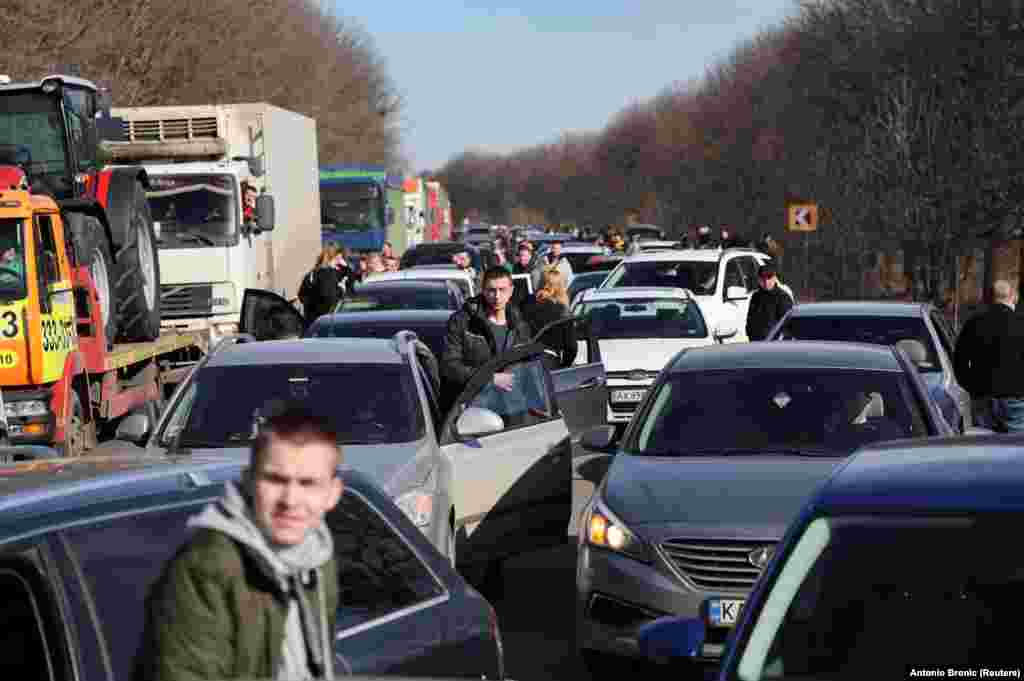
People wait in a traffic jam as they leave the eastern Ukrainian city of Kharkiv. 
4/21 People wait in a traffic jam as they leave the eastern Ukrainian city of Kharkiv. 
Moscow’s long-feared attack on Ukraine began early on February 24, with missiles being fired at airports and military infrastructure in many cities after Russia President Vladimir Putin ordered a “special” operation to “demilitarize” its neighbor and rival.
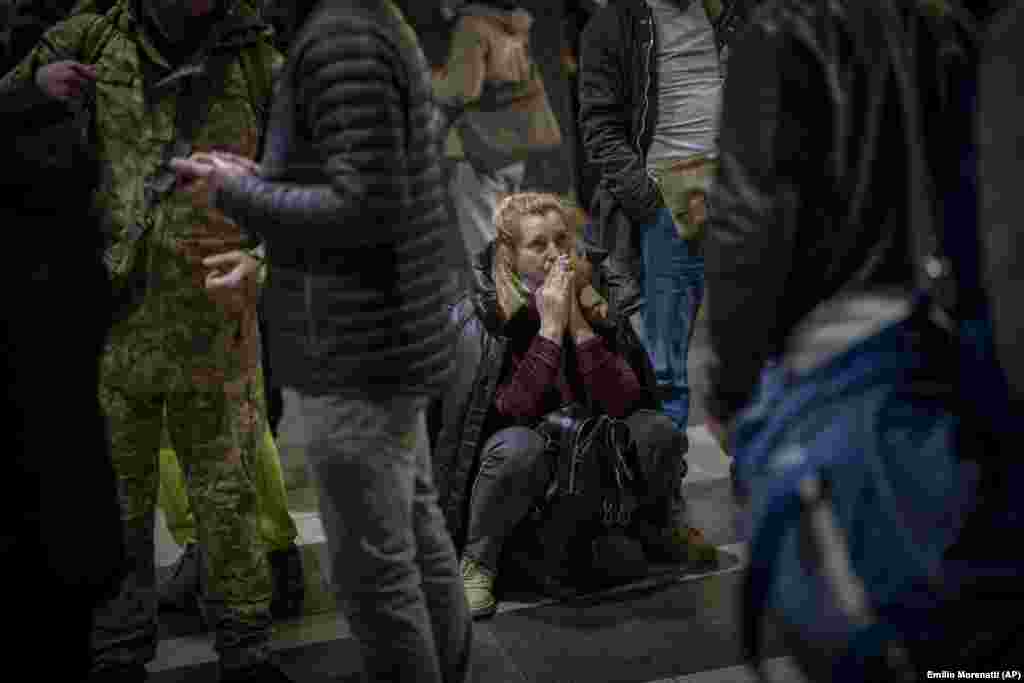
A woman reacts as she waits for a train as she tries to leave Kyiv. 
5/21 A woman reacts as she waits for a train as she tries to leave Kyiv. 
Moscow’s long-feared attack on Ukraine began early on February 24, with missiles being fired at airports and military infrastructure in many cities after Russia President Vladimir Putin ordered a “special” operation to “demilitarize” its neighbor and rival.
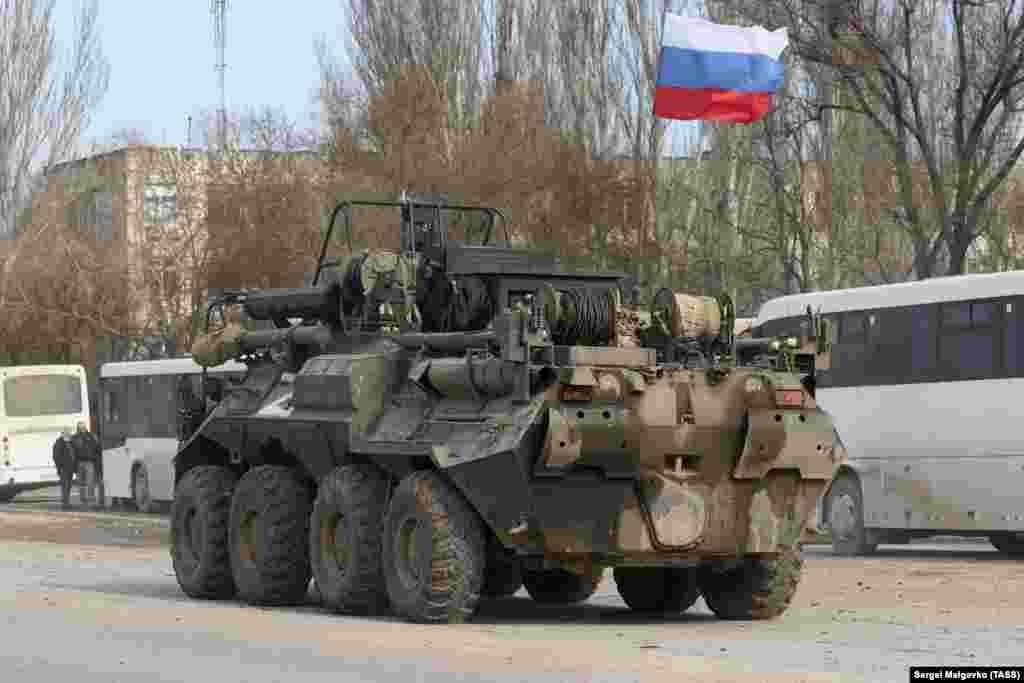
A Russian armored vehicle moves across the town of Armyansk in northern Crimea on February 24.
6/21 A Russian armored vehicle moves across the town of Armyansk in northern Crimea on February 24.
Moscow’s long-feared attack on Ukraine began early on February 24, with missiles being fired at airports and military infrastructure in many cities after Russia President Vladimir Putin ordered a “special” operation to “demilitarize” its neighbor and rival.
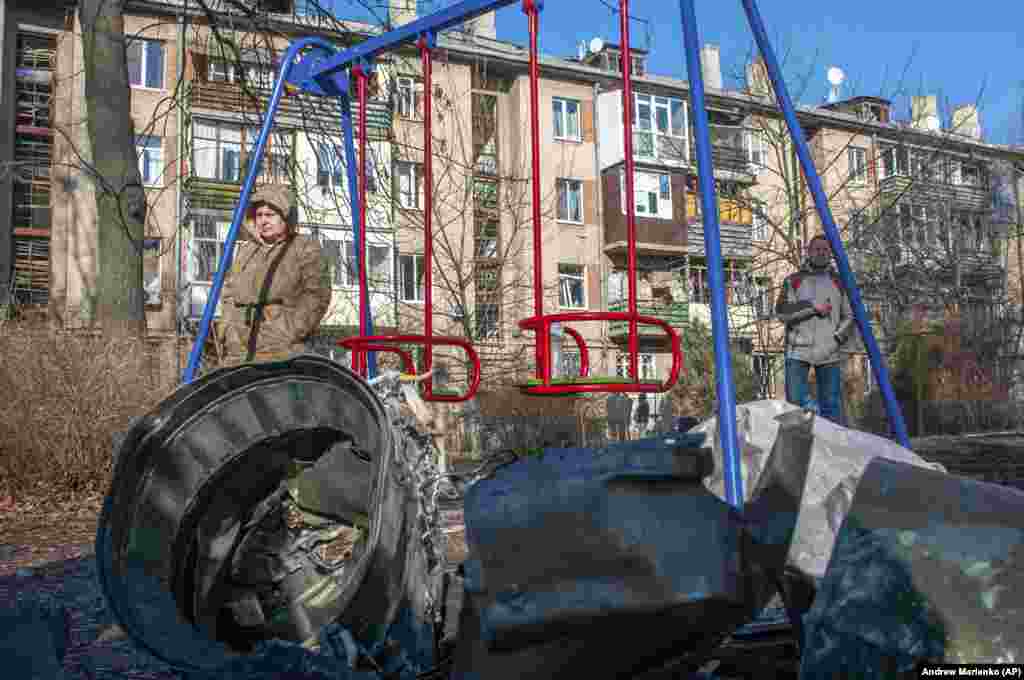
A man and a woman stand next to fragments of military equipment on the street in the aftermath of an apparent Russian air strike in Kharkiv.
7/21 A man and a woman stand next to fragments of military equipment on the street in the aftermath of an apparent Russian air strike in Kharkiv.
Moscow’s long-feared attack on Ukraine began early on February 24, with missiles being fired at airports and military infrastructure in many cities after Russia President Vladimir Putin ordered a “special” operation to “demilitarize” its neighbor and rival.
Firefighters work to put out a fire after bombings in the eastern Ukrainian town of Chuhuiv.
8/21 Firefighters work to put out a fire after bombings in the eastern Ukrainian town of Chuhuiv.
Moscow’s long-feared attack on Ukraine began early on February 24, with missiles being fired at airports and military infrastructure in many cities after Russia President Vladimir Putin ordered a “special” operation to “demilitarize” its neighbor and rival.
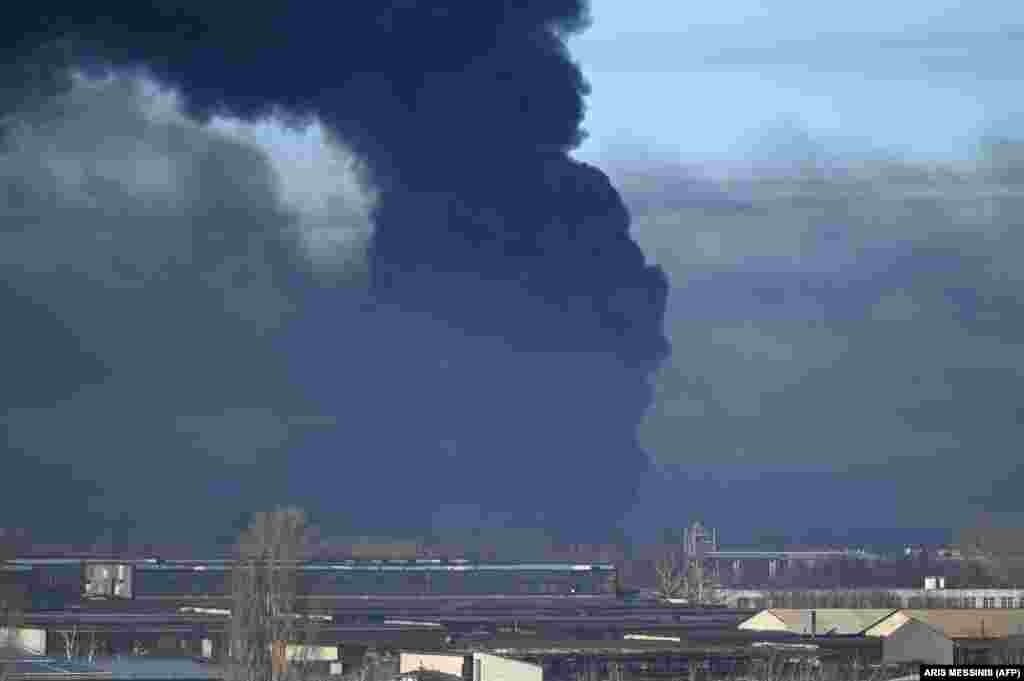
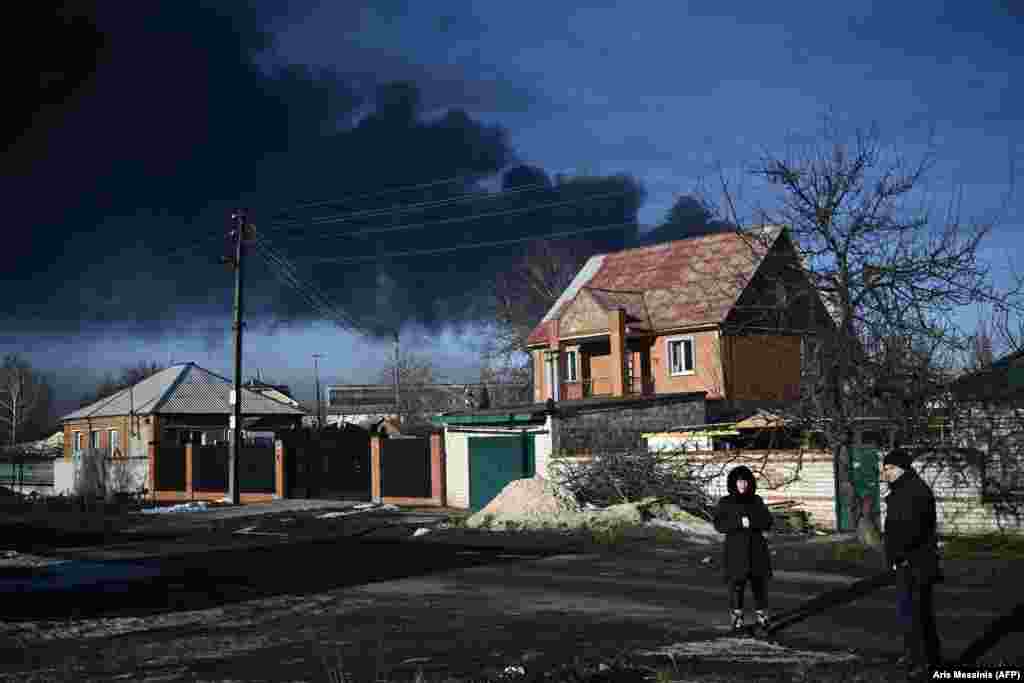
Black smoke rises from a military airport in Chuhuiv near Kharkiv.
9/21 Black smoke rises from a military airport in Chuhuiv near Kharkiv.
Moscow’s long-feared attack on Ukraine began early on February 24, with missiles being fired at airports and military infrastructure in many cities after Russia President Vladimir Putin ordered a “special” operation to “demilitarize” its neighbor and rival.
Black smoke rises from a military airport in Chuhuiv near Kharkiv.
10/21 Black smoke rises from a military airport in Chuhuiv near Kharkiv.
Moscow’s long-feared attack on Ukraine began early on February 24, with missiles being fired at airports and military infrastructure in many cities after Russia President Vladimir Putin ordered a “special” operation to “demilitarize” its neighbor and rival.
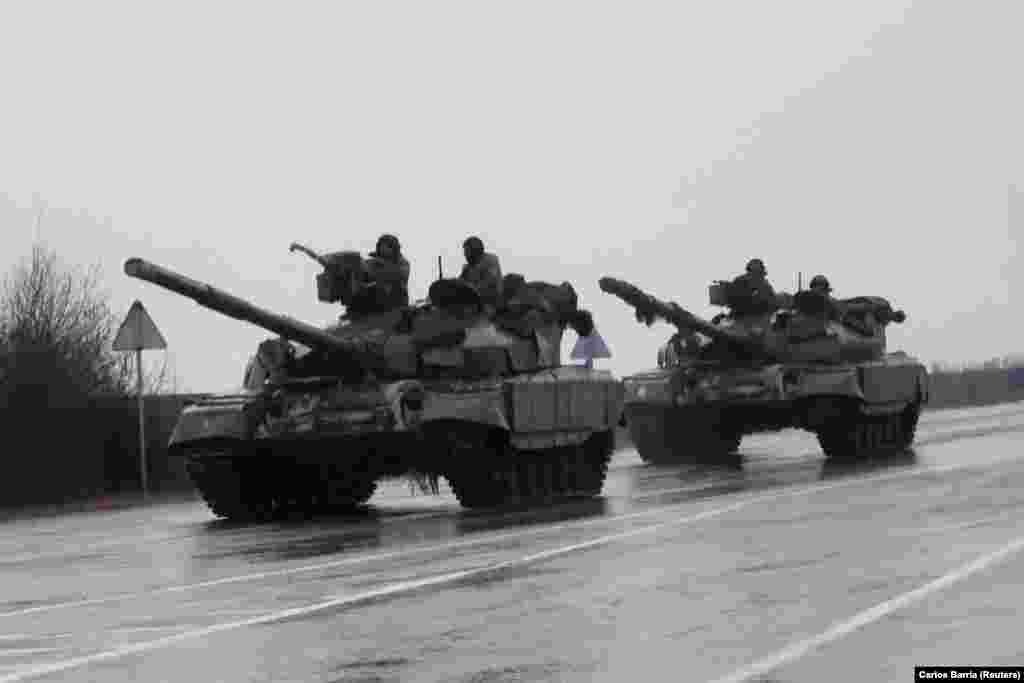
Ukrainian tanks move into the eastern city of Mariupol.
11/21 Ukrainian tanks move into the eastern city of Mariupol.
Moscow’s long-feared attack on Ukraine began early on February 24, with missiles being fired at airports and military infrastructure in many cities after Russia President Vladimir Putin ordered a “special” operation to “demilitarize” its neighbor and rival.
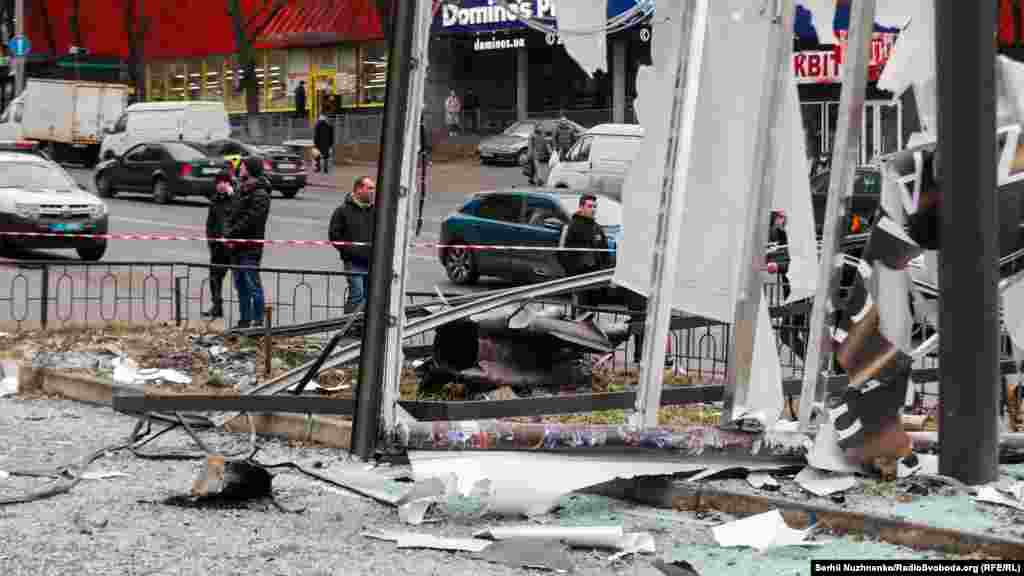
Debris is seen in Kyiv after a missile landed in a street.
12/21 Debris is seen in Kyiv after a missile landed in a street.
Moscow’s long-feared attack on Ukraine began early on February 24, with missiles being fired at airports and military infrastructure in many cities after Russia President Vladimir Putin ordered a “special” operation to “demilitarize” its neighbor and rival.
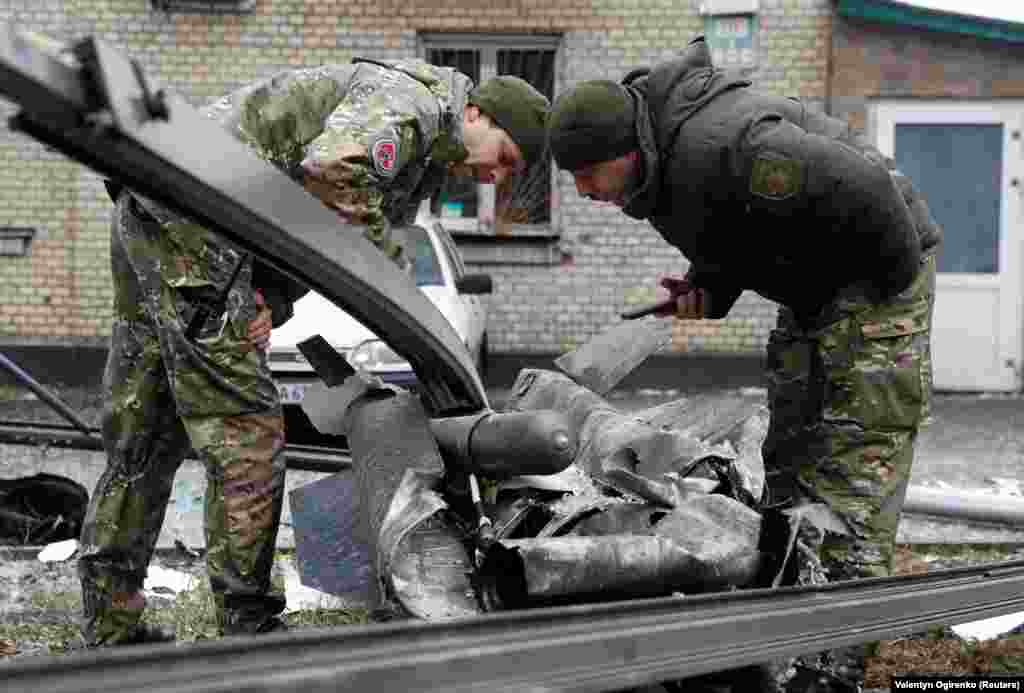
Police officers inspect the remains of a missile that fell in a Kyiv street.
13/21 Police officers inspect the remains of a missile that fell in a Kyiv street.
Moscow’s long-feared attack on Ukraine began early on February 24, with missiles being fired at airports and military infrastructure in many cities after Russia President Vladimir Putin ordered a “special” operation to “demilitarize” its neighbor and rival.
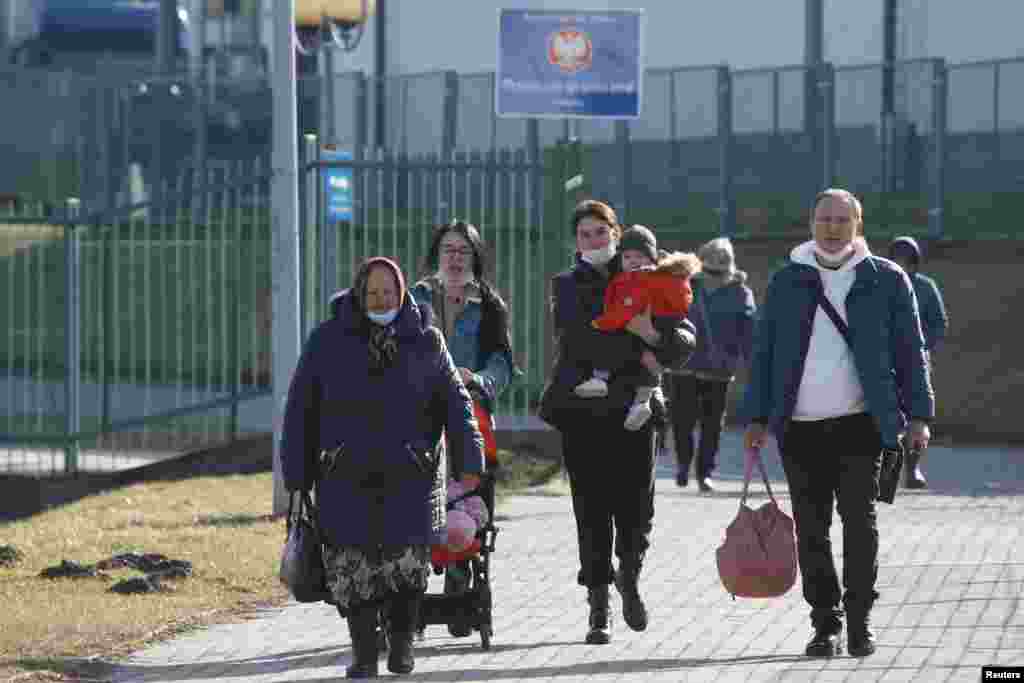
People walk at the border crossing between Poland and Ukraine in Medyka, Poland, on February 24.
14/21 People walk at the border crossing between Poland and Ukraine in Medyka, Poland, on February 24.
Moscow’s long-feared attack on Ukraine began early on February 24, with missiles being fired at airports and military infrastructure in many cities after Russia President Vladimir Putin ordered a “special” operation to “demilitarize” its neighbor and rival.
Ukrainian soldiers are seen in a military vehicle in Mariupol.
15/21 Ukrainian soldiers are seen in a military vehicle in Mariupol.
Moscow’s long-feared attack on Ukraine began early on February 24, with missiles being fired at airports and military infrastructure in many cities after Russia President Vladimir Putin ordered a “special” operation to “demilitarize” its neighbor and rival.
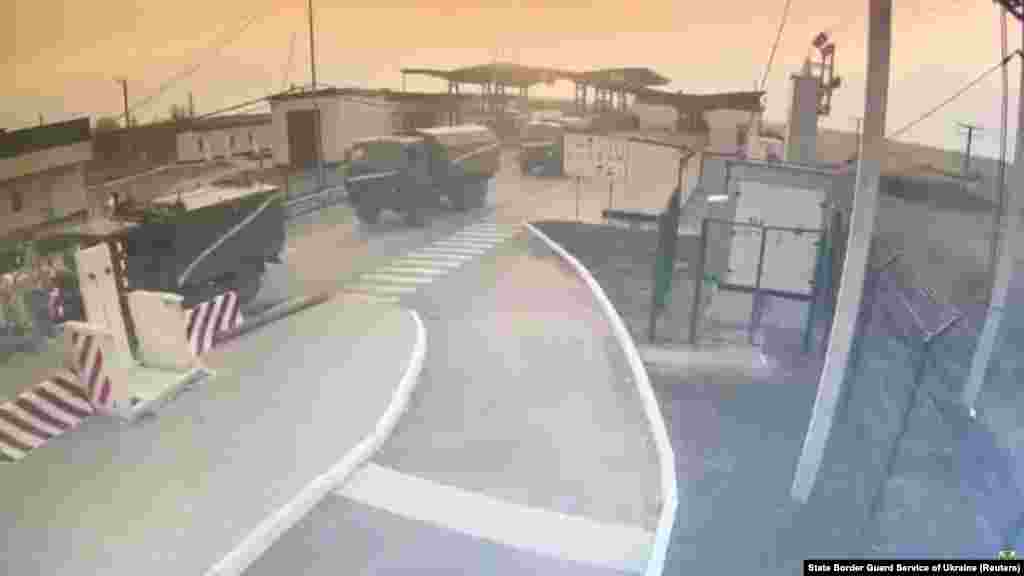
A video screen grab shows military vehicles crossing into Ukraine's Kherson Oblast from Crimea through the Kalanchak border control point.
16/21 A video screen grab shows military vehicles crossing into Ukraine's Kherson Oblast from Crimea through the Kalanchak border control point.
Moscow’s long-feared attack on Ukraine began early on February 24, with missiles being fired at airports and military infrastructure in many cities after Russia President Vladimir Putin ordered a “special” operation to “demilitarize” its neighbor and rival.
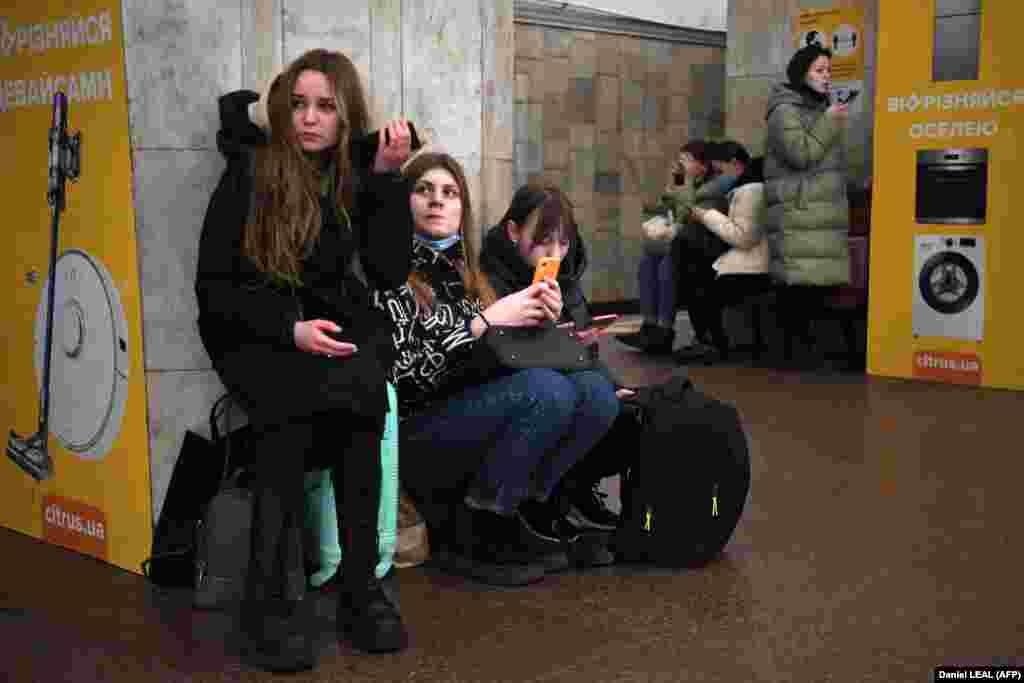
Girls hold their mobile phones as they take refuge in a subway station in Kyiv. Air raid sirens rang out in downtown Kyiv as cities across Ukraine were hit with Russian missile strikes and artillery.
17/21 Girls hold their mobile phones as they take refuge in a subway station in Kyiv. Air raid sirens rang out in downtown Kyiv as cities across Ukraine were hit with Russian missile strikes and artillery.
Moscow’s long-feared attack on Ukraine began early on February 24, with missiles being fired at airports and military infrastructure in many cities after Russia President Vladimir Putin ordered a “special” operation to “demilitarize” its neighbor and rival.
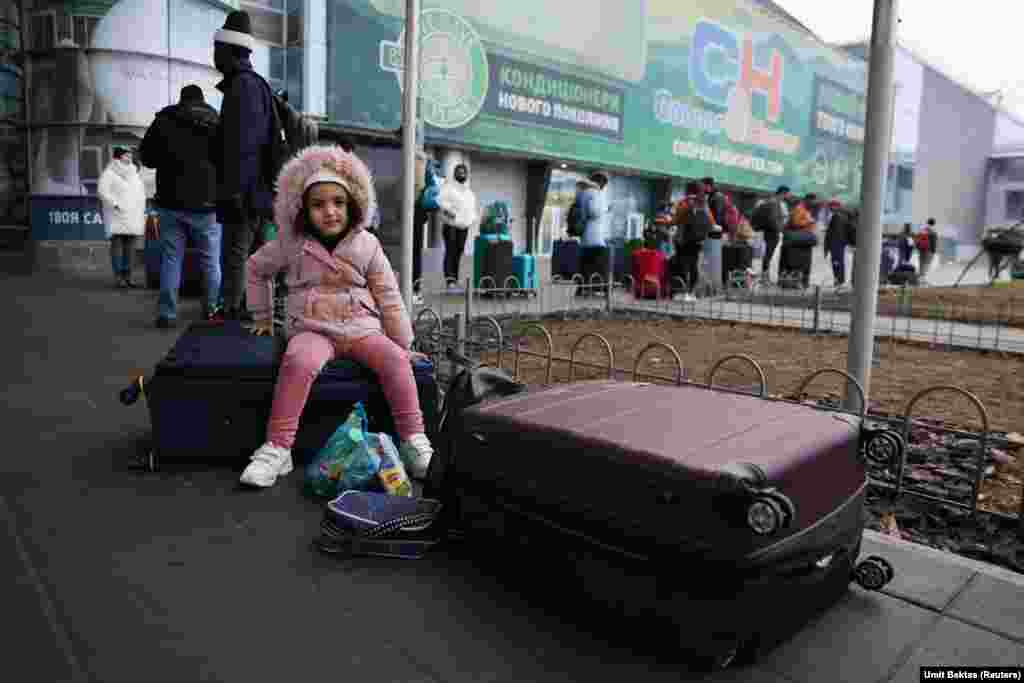
People wait to return to the city at Kyiv's airport amid Russia's bombardment.
18/21 People wait to return to the city at Kyiv's airport amid Russia's bombardment.
Moscow’s long-feared attack on Ukraine began early on February 24, with missiles being fired at airports and military infrastructure in many cities after Russia President Vladimir Putin ordered a “special” operation to “demilitarize” its neighbor and rival.
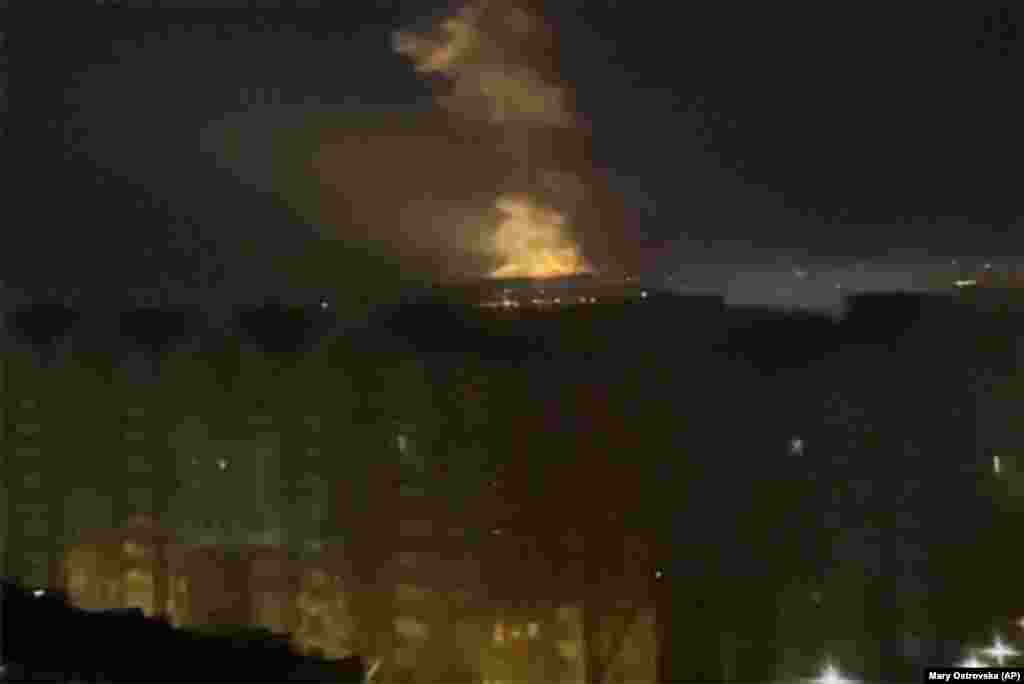
Flames are seen from an area near the Dnieper River in Kyiv.
19/21 Flames are seen from an area near the Dnieper River in Kyiv.
Moscow’s long-feared attack on Ukraine began early on February 24, with missiles being fired at airports and military infrastructure in many cities after Russia President Vladimir Putin ordered a “special” operation to “demilitarize” its neighbor and rival.
Fire is seen at a military installation near the airport in Mariupol.
20/21 Fire is seen at a military installation near the airport in Mariupol.
Moscow’s long-feared attack on Ukraine began early on February 24, with missiles being fired at airports and military infrastructure in many cities after Russia President Vladimir Putin ordered a “special” operation to “demilitarize” its neighbor and rival.
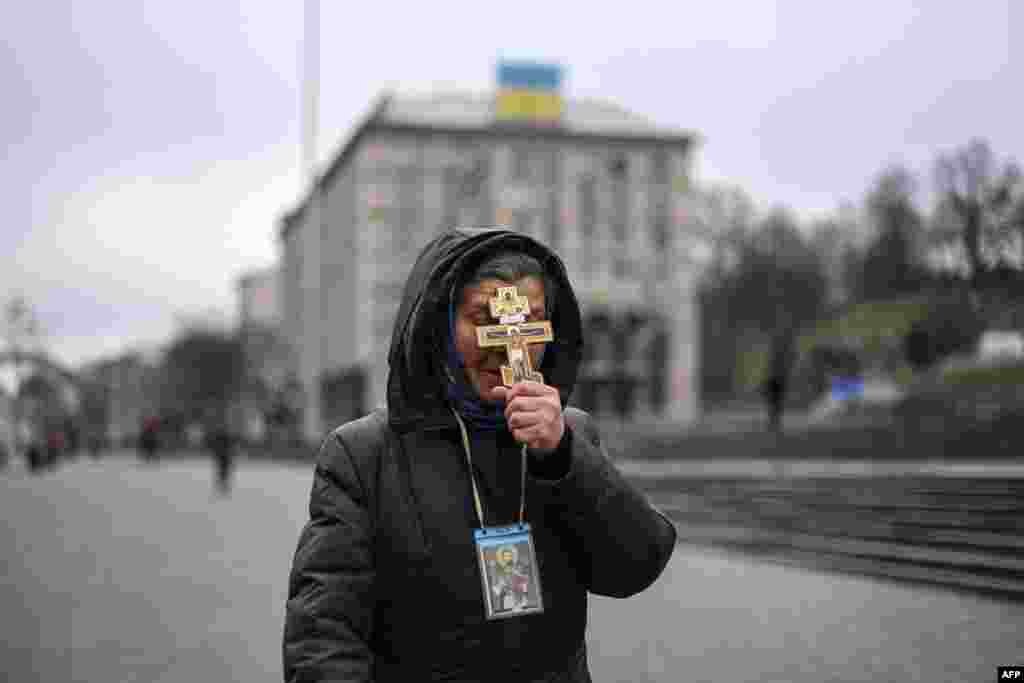
A woman holds a cross as she prays on Independence Square in Kyiv on the morning of February 24,
21/21 A woman holds a cross as she prays on Independence Square in Kyiv on the morning of February 24,
Moscow’s long-feared attack on Ukraine began early on February 24, with missiles being fired at airports and military infrastructure in many cities after Russia President Vladimir Putin ordered a “special” operation to “demilitarize” its neighbor and rival.
Previous slide
Next slide


RFE/RL: How prepared are the Ukrainian forces to fight against the Russian military? How long could they conceivably hold out?

Giles: It's anybody's guess how this campaign may go. There's no doubt of the will of the Ukrainian people to resist Russia and that is something that Russia may have catastrophically underestimated in its planning for this campaign.

But there are also clear capability gaps [between the Russian and Ukrainian armies.] It was always known that missile and air strikes at extremely long-range would be part of the Russian campaign and defending against those are a key deficiency that was already known in Ukraine's military forces.

RFE/RL: Many people expected a Russian push coming from the Donetsk and Luhansk regions that Moscow recently recognized as independent, but instead we’ve seen forces arrive from Belarus and Crimea as well. What is the likelihood of an attack from the southwest, [where Russian troops are stationed in Moldova’s breakaway Transdniester region]?

GILES: We shouldn't rule out the unexpected if Russia wants to develop this campaign further, [which means] that activation of troops in [Transdniester] is an option. But it's still too early to say just how well this campaign is going for Russia and whether Russia might need to reach for other options to achieve its objectives.​


RFE/RL: Kremlin spokesman Dmitry Peskov said today that Ukraine must be cleansed of Nazis, which is the baseless characterization that Moscow is using to refer to the Ukrainian government. Is it safe to say that the Kremlin’s goal is regime change in Ukraine and, if yes, is that achievable militarily?

Giles: There's no doubt that regime change in Kyiv would suit Russia, because [Moscow] could then have a more compliant government installed in Ukraine, regardless of the wishes of the Ukrainian people.

How Russia goes about that, however, with its disinformation campaigns and its claims of Nazism in Ukraine is just a matter for Russian internal consumption, and not something that is designed to be credible outside of Russia itself. The rest of the world knows that it's pretty unlikely for Ukraine's leader to be both a Nazi and Jewish.

RFE/RL: What about NATO and Ukraine’s western neighbors? What kind of military response can we expect from NATO as this unfolds and is there anything the alliance can do to deter the Russian advance?

Giles: It would have been possible for Ukraine's friends in the West to protect Ukraine, but they declared at a very early stage that they were not going to do this.

The United States and the United Kingdom both said that they would not provide direct military support to Kyiv and that, of course, gave Moscow the green light to move in. It's not as though this mistake hasn't been made before. In 2014, then U.S. President [Barack] Obama said that there was no military solution to the crisis that emerged when Moscow seized Crimea and started the fighting in eastern Ukraine. That also gave [the Kremlin] the green light to pursue its own military solution with the knowledge that it wouldn’t be interfered with.

RFE/RL: Ukraine’s defense minister and President [Volodymyr] Zelenskiy have said that anyone can enlist in the country’s Territorial Defense Forces as reservists and fight against Russian troops. Could we see a Ukrainian civilian resistance? And how could that affect Russia’s goals on the ground?

Giles: This appeal to Ukrainians to take up arms and resist the invader is brave. It's also potentially very dangerous, because if you have untrained individuals going up against the Russian Army with its weapons of mass destruction, with its weapons for inflicting mass casualties on the enemy, there's no telling how it may end.

And this also goes for the suggestions that a resistance movement [if Ukraine is] under Russian occupation should be armed, equipped, and assisted by the West.

If we look at Russia's history of dealing with resistance movements of that kind, including in Ukraine, Russia wins by employing medieval levels of savagery which are completely unknown in the rest of Europe in this century.

This interview has been edited and condensed for clarity.
  • 16x9 Image

    Reid Standish

    Reid Standish is RFE/RL's China Global Affairs correspondent based in Prague and author of the China In Eurasia briefing. He focuses on Chinese foreign policy in Eastern Europe and Central Asia and has reported extensively about China's Belt and Road Initiative and Beijing’s internment camps in Xinjiang. Prior to joining RFE/RL, Reid was an editor at Foreign Policy magazine and its Moscow correspondent. He has also written for The Atlantic and The Washington Post.

This item is part of
XS
SM
MD
LG