




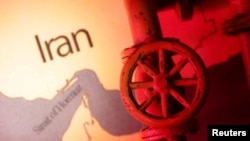
China has warned over an "uncontrollable situation" amid the escalating Strait of Hormuz crisis and urged all sides to halt military operations as the war involving Iran enters a critical phase and threatens global energy supplies.
On March 21, US President Donald Trump issued Tehran a 48-hour ultimatum to lift its partial closure of the Strait of Hormuz, a narrow Gulf passage that carries about 20 percent of global oil and gas supplies, or face potential strikes on its key energy infrastructure.
Chinese Foreign Ministry spokesman Lin Jian told reporters in Beijing on March 23 that the ongoing conflict and the situation around Hormuz has threatened global energy security as well as China's oil supplies and the "use of force will only lead to a vicious cycle."
"If the war expands further and the situation deteriorates again, the entire region could be plunged into an uncontrollable situation," Lin said, when commenting on President Trump's threats.
Beijing maintains ties with Iran, which has been targeted by US-Israeli strikes since late February, but has said it does not support Tehran's attacks on Gulf countries hosting US bases and has called for a cease-fire.
Trump, who had planned to visit Beijing this month but postponed the trip to focus on the war, has urged China and other nations to help restore access through the Strait of Hormuz.
China has not yet responded to that appeal, though it has tried to play a mediating role in the Middle East by dispatching its special envoy, Zhai Jun, on a regional tour to push for de-escalation.
Chinese officials have stepped up diplomatic engagement in recent weeks, holding talks with Iran and regional states to ensure at least partial oil and gas flows continue through Hormuz.
Even as broader shipping has all but ground to a halt in the Strait of Hormuz, some tankers, particularly those linked to China, have continued to transit the waterway under special arrangements, reflecting Beijing's leverage with Tehran.
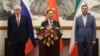
Despite its political support for Iran, Beijing has been hesitating to offer military backing to Tehran and has also criticized Iranian attacks on neighboring Gulf states.
Chinese Foreign Minister Wang Yi warned earlier this month that the conflict risks destabilizing the entire international system.
"The war should not have happen, and the use of force will only deepen hatred and conflict," Wang said.
China's cautious response reflects what analysts describe as a policy of "strategic neutrality" -- maintaining relations with all sides while avoiding entanglement in the fighting.
Beijing's Strategic Dilemma
China is the world's largest importer of crude oil and remains the biggest buyer of Iranian oil, much of it sold at discounted prices due to Western sanctions.
Analysts say Beijing may be better positioned than many countries to absorb short-term shocks. China holds large strategic oil reserves that could help cushion the immediate impact of supply disruptions.
However, economists warn that prolonged instability in the Gulf could threaten China's broader economic outlook.
Chinese trade data for January and February, before the war began, showed that the country's economic growth has been driven largely by exports and international trade, leaving it vulnerable to disruptions in global shipping routes.
Beijing maintains extensive economic ties not only with Iran but also with Saudi Arabia, the United Arab Emirates, and other Gulf states. In recent years, Chinese companies have invested billions of dollars in ports, energy facilities, and logistics hubs across the region.
The Middle East is a key corridor in China's Belt and Road Initiative, which connects Asia with Europe and Africa through a network of infrastructure projects and trade routes.

