


The Week In Russia: War Fears, A Year In Prison, And The Omicron Onslaught
Suspicions persist that Russia's proposals to the West are designed to fail, giving President Vladimir Putin a pretext -- at least in his own mind -- for a new offensive against Ukraine.
A flurry of diplomacy continued, as did a Russian military buildup near Ukraine’s borders, amid grim signs that Moscow’s discussions with the West over its demands for sweeping concessions that would roll back post-Cold War developments in Europe could soon be replaced by the use of force.
Meanwhile, Kremlin opponent Aleksei Navalny started his second year behind bars and the official daily number of new COVID-19 cases more than doubled in two weeks as omicron took hold -- stark reminders of the situation inside Russia while attention is focused on President Vladimir Putin’s designs on Ukraine.
Here are some of the key developments in Russia over the past week and some of the takeaways going forward.
'Absolute Nonstarters'
When Russia laid out its proposals last month for agreements with the United States and NATO that it said would address its security concerns, one big question immediately arose: Were Moscow’s most dramatic demands meant to be an opening gambit in a negotiations process -- or were they designed to fail, creating a pretext for the Kremlin to seek to get what it wants out of Kyiv and the West by launching a new offensive against Ukraine?
That question still stands.
But after a series of talks on January 9-13 involving Russia, the United States, NATO, and the Organization for Security and Cooperation in Europe, and a phone call between U.S. Secretary of State Antony Blinken and Russian Foreign Minister Sergei Lavrov on January 18, there were no indications that Moscow is prepared to step back from a demand that U.S. officials have made clear is unacceptable: a guarantee that Ukraine will never join NATO.
In Photos: New Images Capture Russia Massing Weaponry Around Ukraine
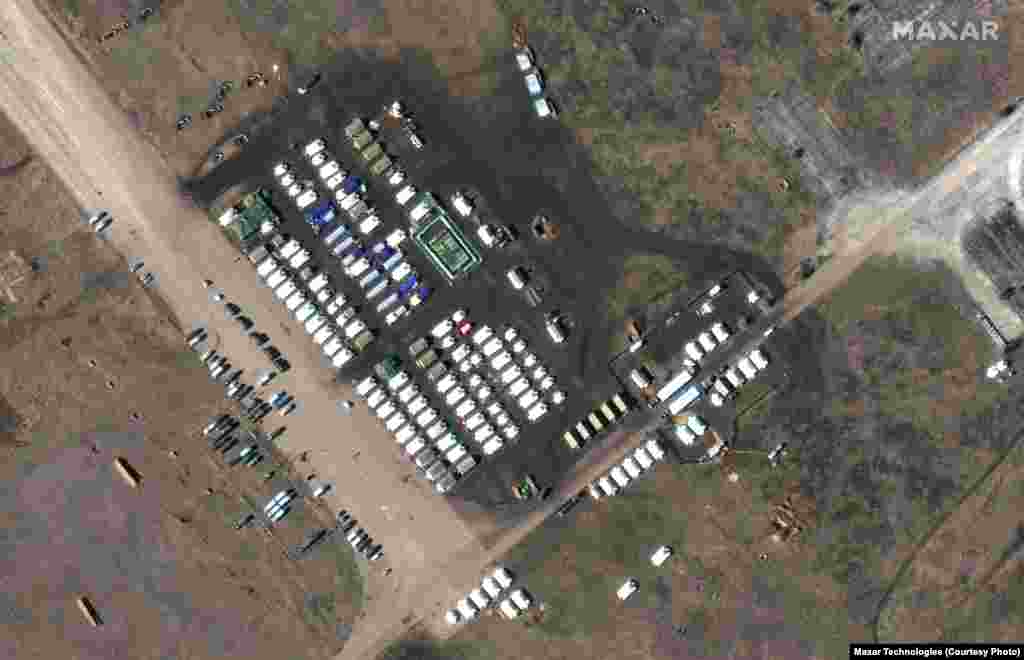
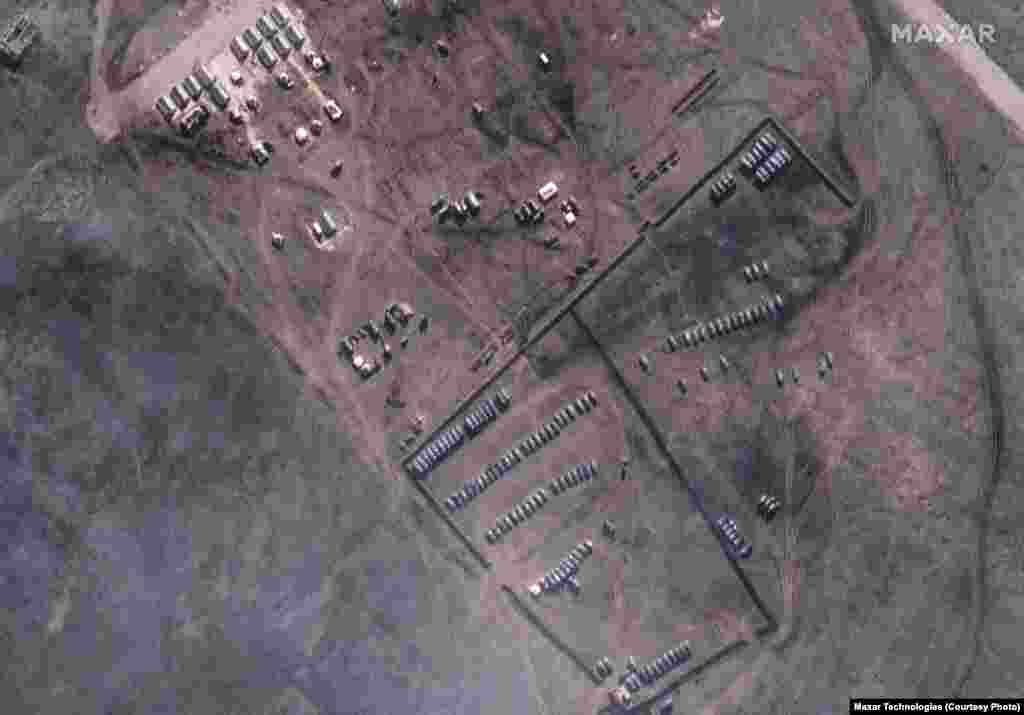
1/24In Crimea, a new deployment of troops and equipment is visible at the Oktyabrskoye airfield north of Simferopol on February 10.
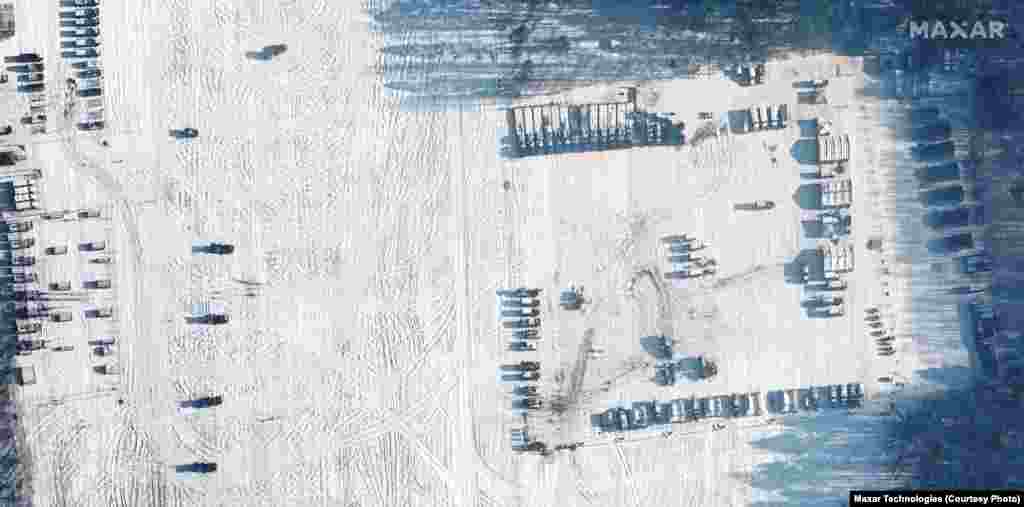
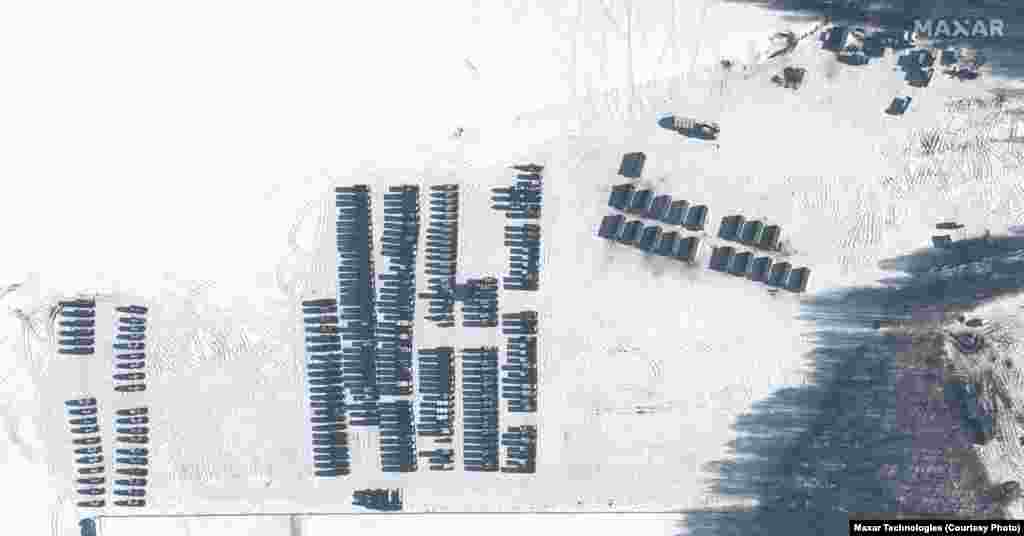
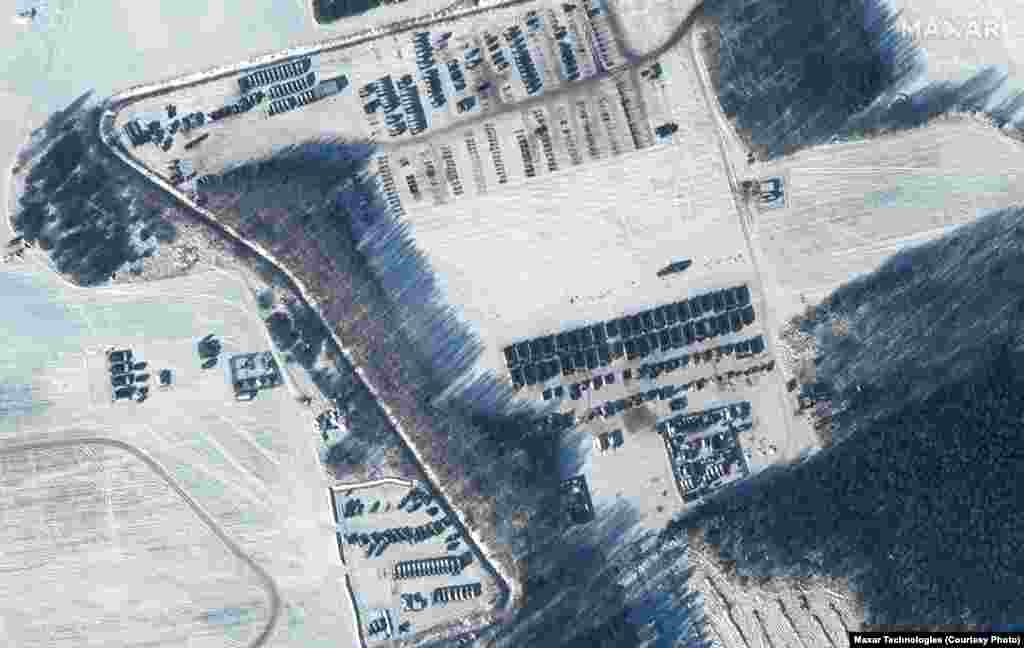
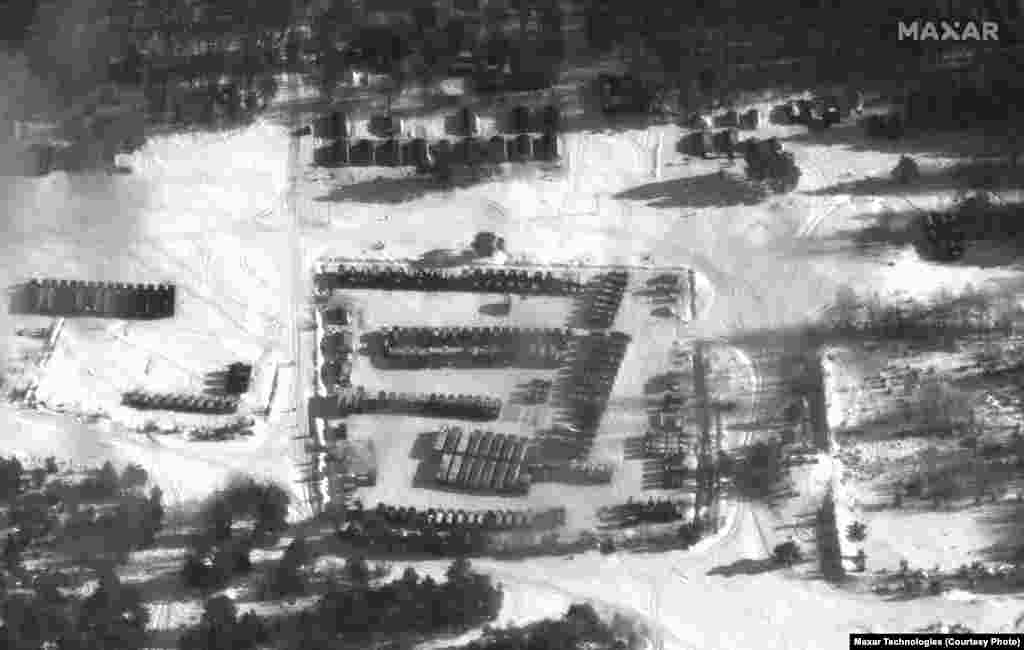
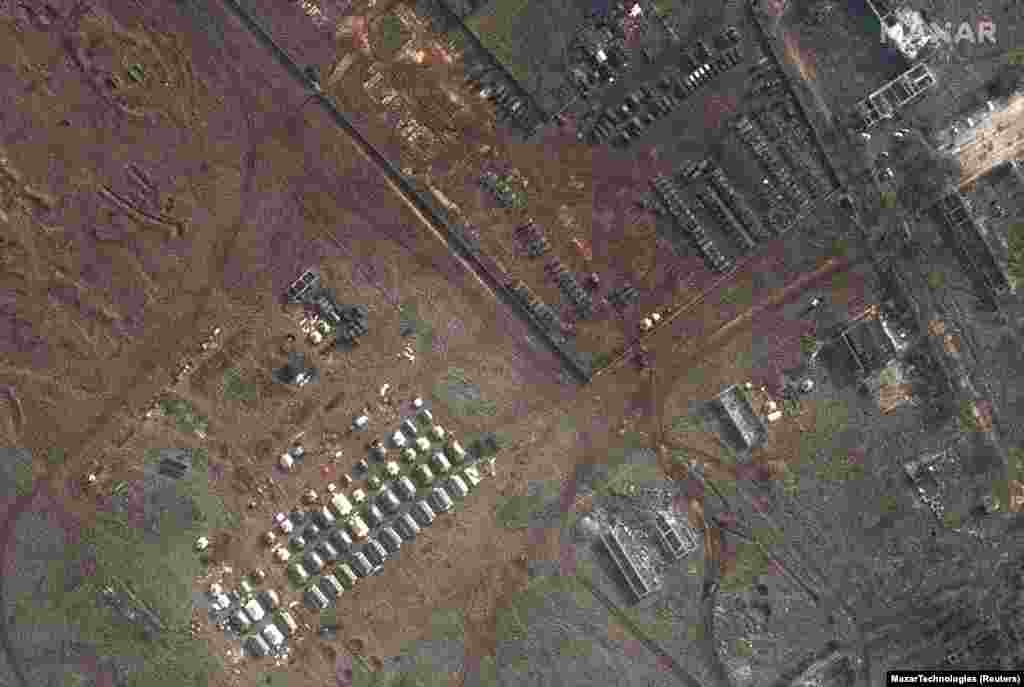
Satellite photos from February 10 and earlier show a massive Russian buildup of military hardware, reportedly including ballistic-missile systems. Some of the buildup is in Belarus, not far from the Ukrainian border.
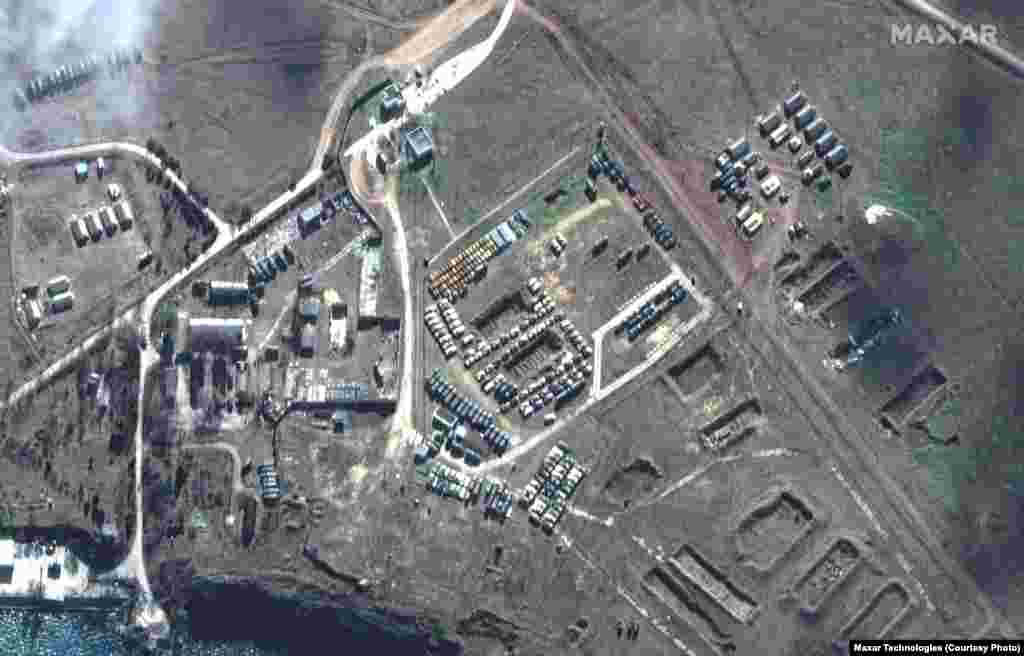
2/24Armored vehicles of a new deployment are visible in Slavne on Crimea's northwest coast on February 9.
Satellite photos from February 10 and earlier show a massive Russian buildup of military hardware, reportedly including ballistic-missile systems. Some of the buildup is in Belarus, not far from the Ukrainian border.
3/24Equipment and new deployments are visible in Novoozernoye, Crimea, on February 9.
Satellite photos from February 10 and earlier show a massive Russian buildup of military hardware, reportedly including ballistic-missile systems. Some of the buildup is in Belarus, not far from the Ukrainian border.
4/24A new deployment of troops, vehicles, and helicopters was identified on February 10 at the Zyabrovka airfield near Homel, Belarus, less than 25 kilometers from the border with Ukraine.
Satellite photos from February 10 and earlier show a massive Russian buildup of military hardware, reportedly including ballistic-missile systems. Some of the buildup is in Belarus, not far from the Ukrainian border.
5/24An overview of deployment areas near Rechytsa on February 9. Rechytsa is in Belarus's southeastern Homel region, some 55 kilometers from the Ukrainian border.
Satellite photos from February 10 and earlier show a massive Russian buildup of military hardware, reportedly including ballistic-missile systems. Some of the buildup is in Belarus, not far from the Ukrainian border.
6/24Armored vehicles and transporters arrive at Russia's Kursk training area on February 9, about 100 kilometers east of Ukraine.
Satellite photos from February 10 and earlier show a massive Russian buildup of military hardware, reportedly including ballistic-missile systems. Some of the buildup is in Belarus, not far from the Ukrainian border.
7/24Multiple battle groups and troop housing areas are visible at the Kursk training area on February 9.
Satellite photos from February 10 and earlier show a massive Russian buildup of military hardware, reportedly including ballistic-missile systems. Some of the buildup is in Belarus, not far from the Ukrainian border.
8/24Six SU-25 ground-attack aircraft are shown at Luninets airfield in Belarus. The image was taken on February 4. Luninets is in the southwestern Brest region, about 50 kilometers from the Ukrainian border.
Satellite photos from February 10 and earlier show a massive Russian buildup of military hardware, reportedly including ballistic-missile systems. Some of the buildup is in Belarus, not far from the Ukrainian border.
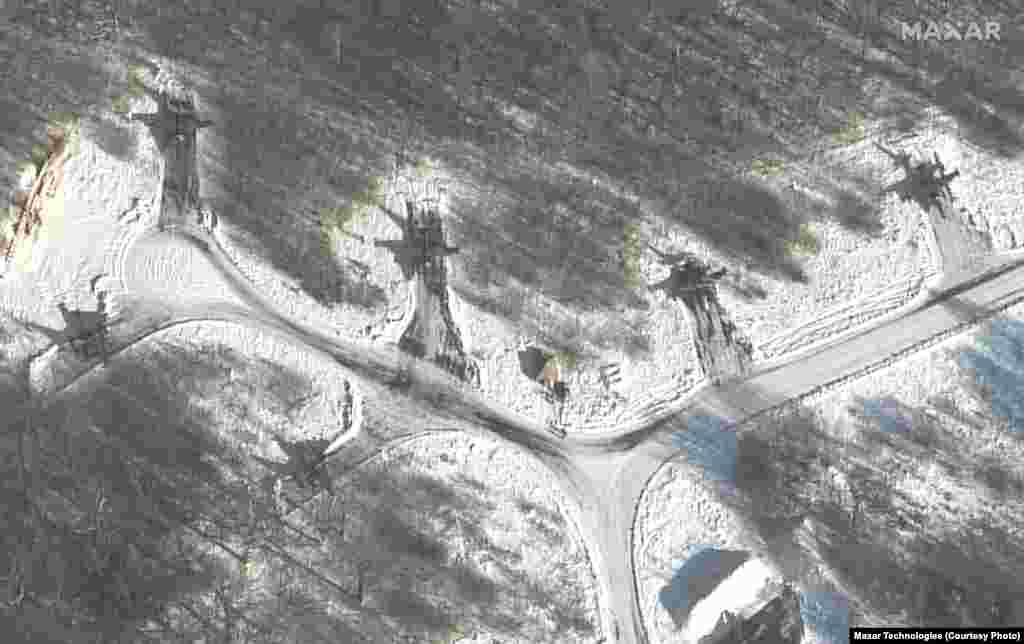
9/24Probable S-400 air-defense deployments at the Luninets airfield on February 4.
Satellite photos from February 10 and earlier show a massive Russian buildup of military hardware, reportedly including ballistic-missile systems. Some of the buildup is in Belarus, not far from the Ukrainian border.
10/24Probable SS-26 Iskander and multiple-rocket launchers deployed northwest of Yelsk on February 4. Yelsk is in Belarus's Homel region, about 20 kilometers from the Ukrainian border.
Satellite photos from February 10 and earlier show a massive Russian buildup of military hardware, reportedly including ballistic-missile systems. Some of the buildup is in Belarus, not far from the Ukrainian border.
11/24Troops and logistics-material-support units northwest of Yelsk on February 4.
Satellite photos from February 10 and earlier show a massive Russian buildup of military hardware, reportedly including ballistic-missile systems. Some of the buildup is in Belarus, not far from the Ukrainian border.
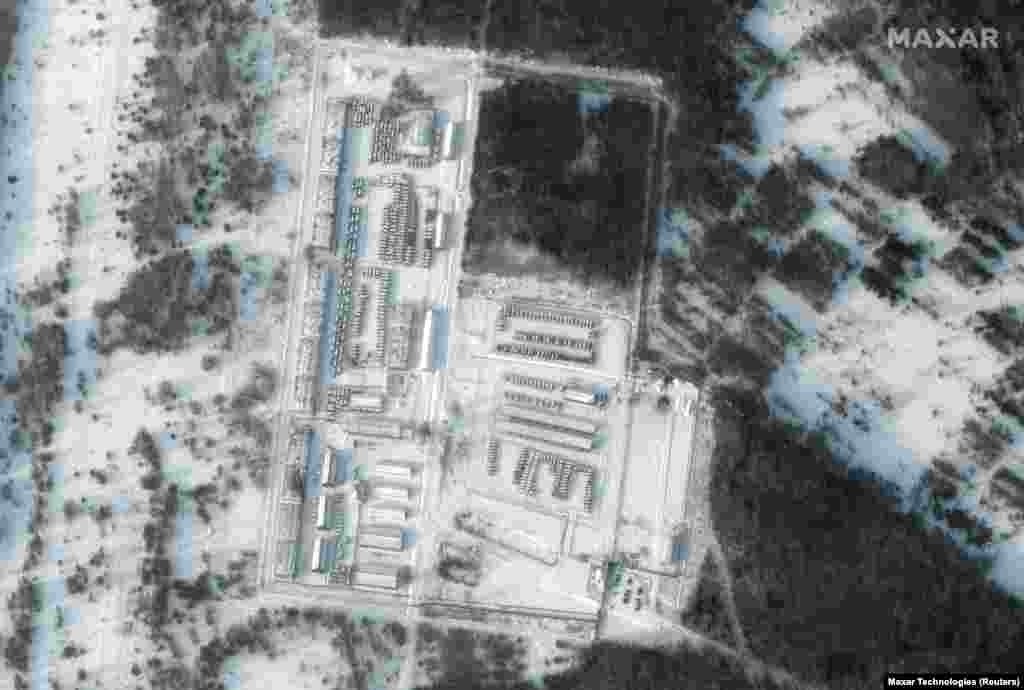
12/24A troop-housing area and vehicle park in Rechytsa on February 4.
Satellite photos from February 10 and earlier show a massive Russian buildup of military hardware, reportedly including ballistic-missile systems. Some of the buildup is in Belarus, not far from the Ukrainian border.
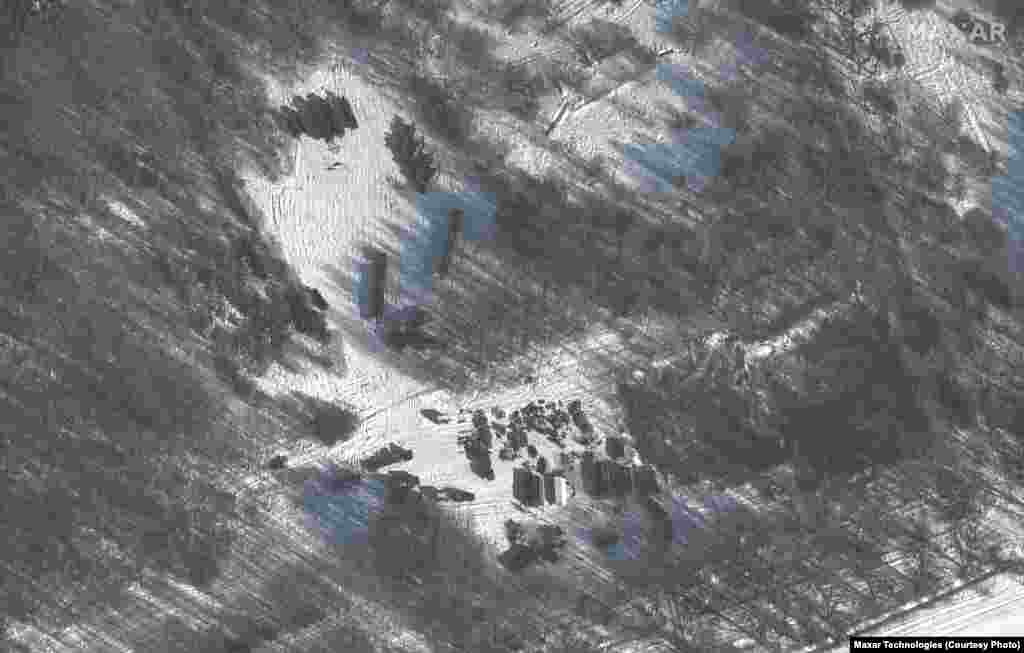
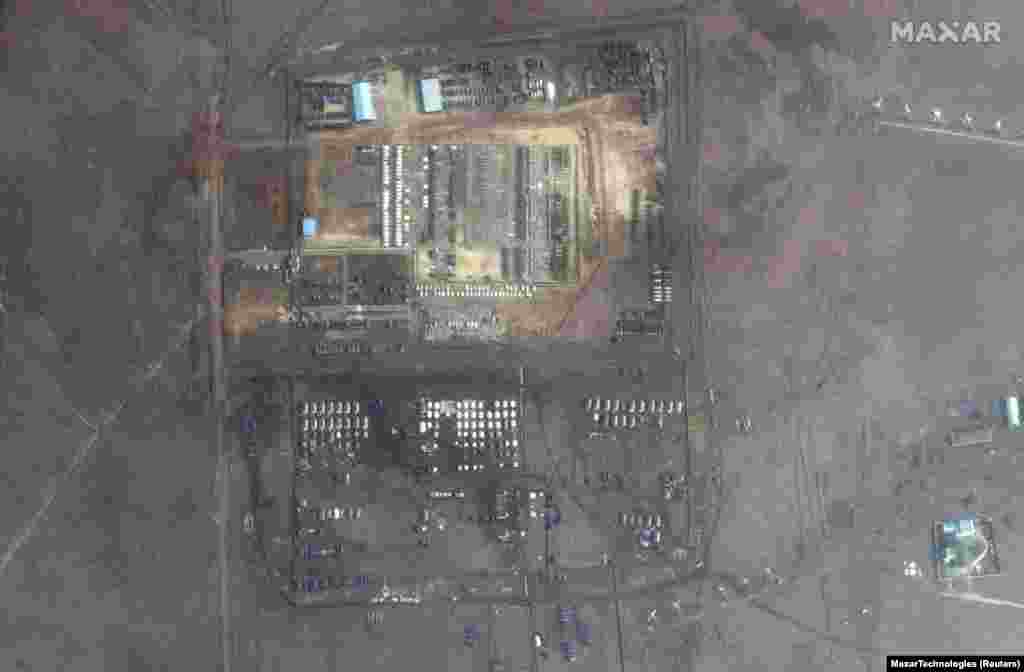
13/24A cluster of vehicles that reportedly includes truck-launched Iskander missile systems at the Osipovichi military training area, just south of Minsk. The image was taken on February 1.
Satellite photos from February 10 and earlier show a massive Russian buildup of military hardware, reportedly including ballistic-missile systems. Some of the buildup is in Belarus, not far from the Ukrainian border.
14/24A wider view of the Osipovichi military facility on February 1. Russian-made Iskander missiles are capable of precise strikes on targets up to 500 kilometers away.
Satellite photos from February 10 and earlier show a massive Russian buildup of military hardware, reportedly including ballistic-missile systems. Some of the buildup is in Belarus, not far from the Ukrainian border.
15/24An overview of vehicles and housing for troops near Baranovichi, Belarus, on January 29. Russia has placed troops and equipment inside Belarus in recent days as the countries prepare to hold joint military exercises.
Satellite photos from February 10 and earlier show a massive Russian buildup of military hardware, reportedly including ballistic-missile systems. Some of the buildup is in Belarus, not far from the Ukrainian border.
16/24A crowded military base in Bakhchisaray on the Russian-occupied Crimean Peninsula on February 1.
Satellite photos from February 10 and earlier show a massive Russian buildup of military hardware, reportedly including ballistic-missile systems. Some of the buildup is in Belarus, not far from the Ukrainian border.
17/24Massed vehicles at a military base in Novoozernoye, Crimea, as photographed by satellite on February 1.
Satellite photos from February 10 and earlier show a massive Russian buildup of military hardware, reportedly including ballistic-missile systems. Some of the buildup is in Belarus, not far from the Ukrainian border.
18/24Military tents and armored vehicles in Yevpatoria, Crimea, on February 1.
Satellite photos from February 10 and earlier show a massive Russian buildup of military hardware, reportedly including ballistic-missile systems. Some of the buildup is in Belarus, not far from the Ukrainian border.
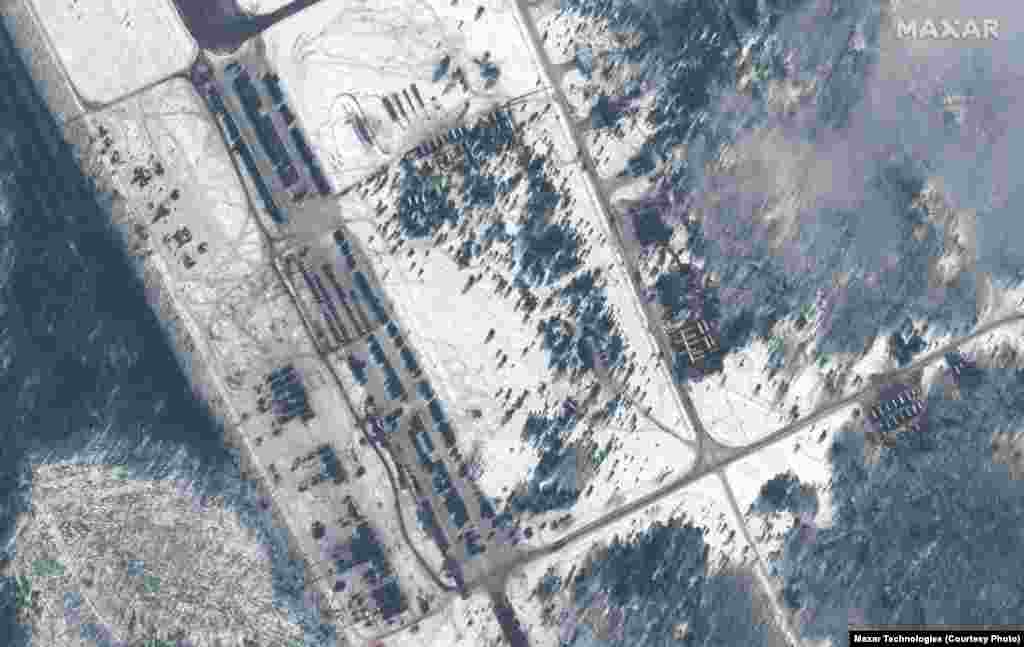
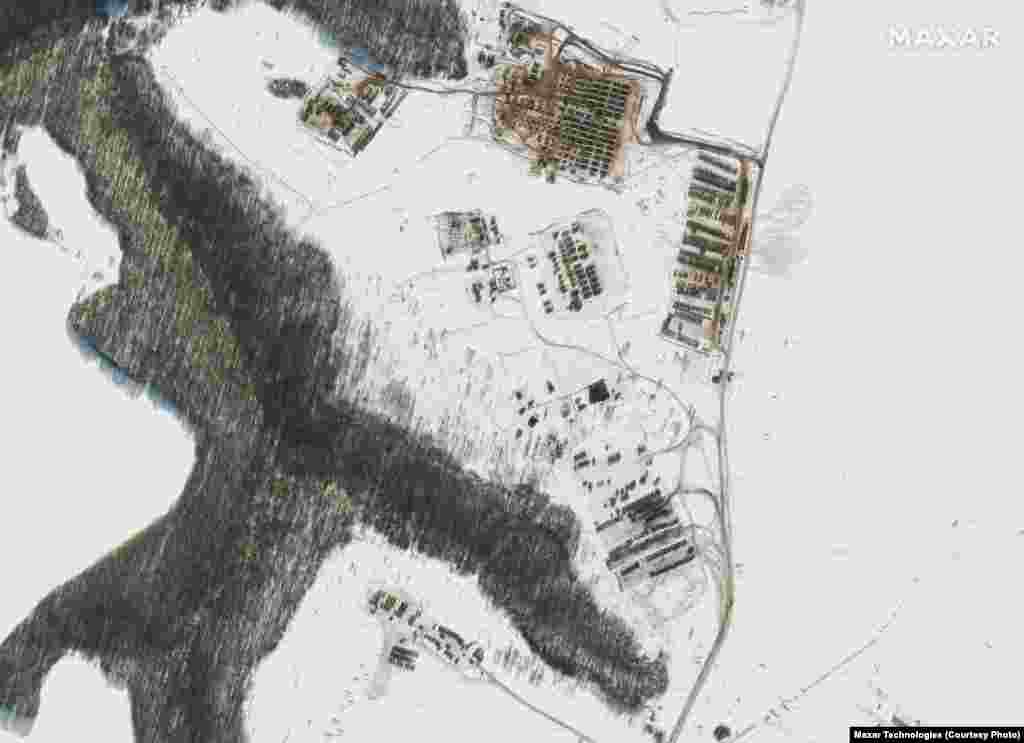
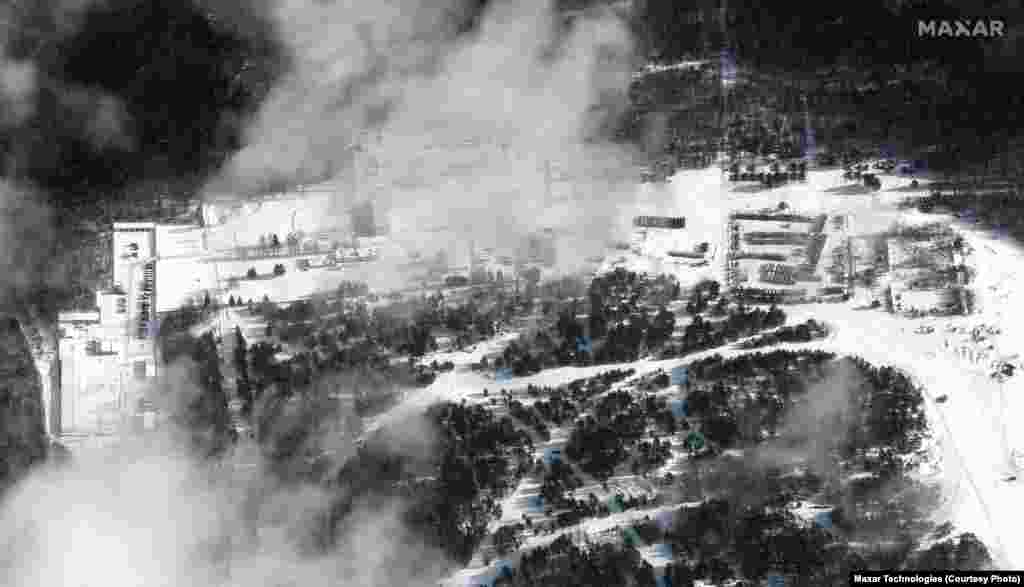
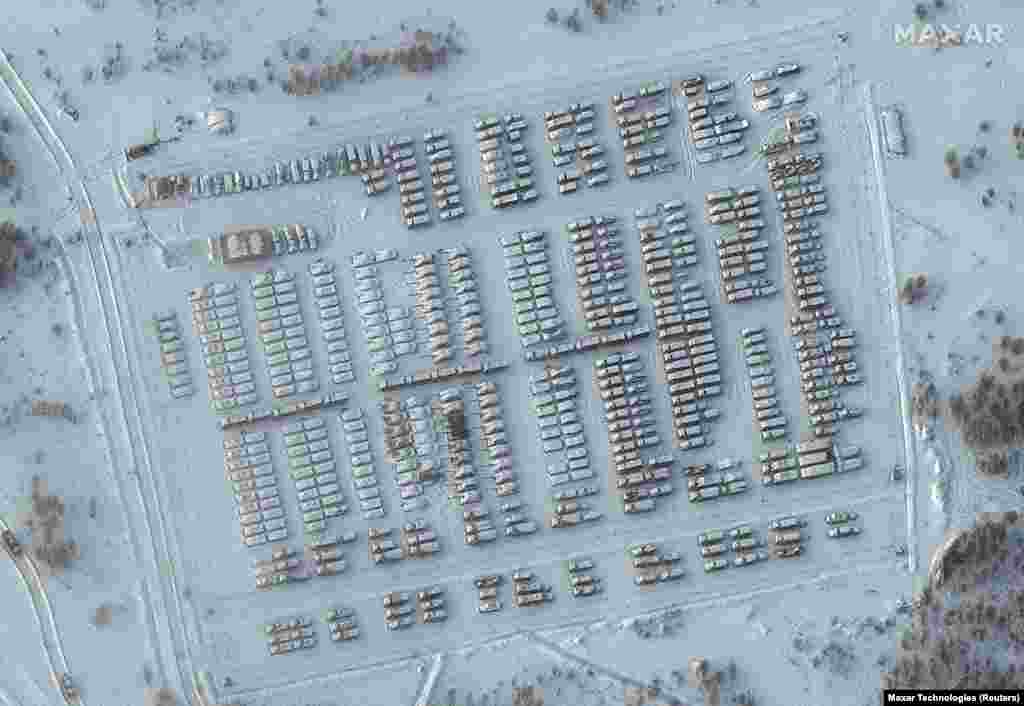
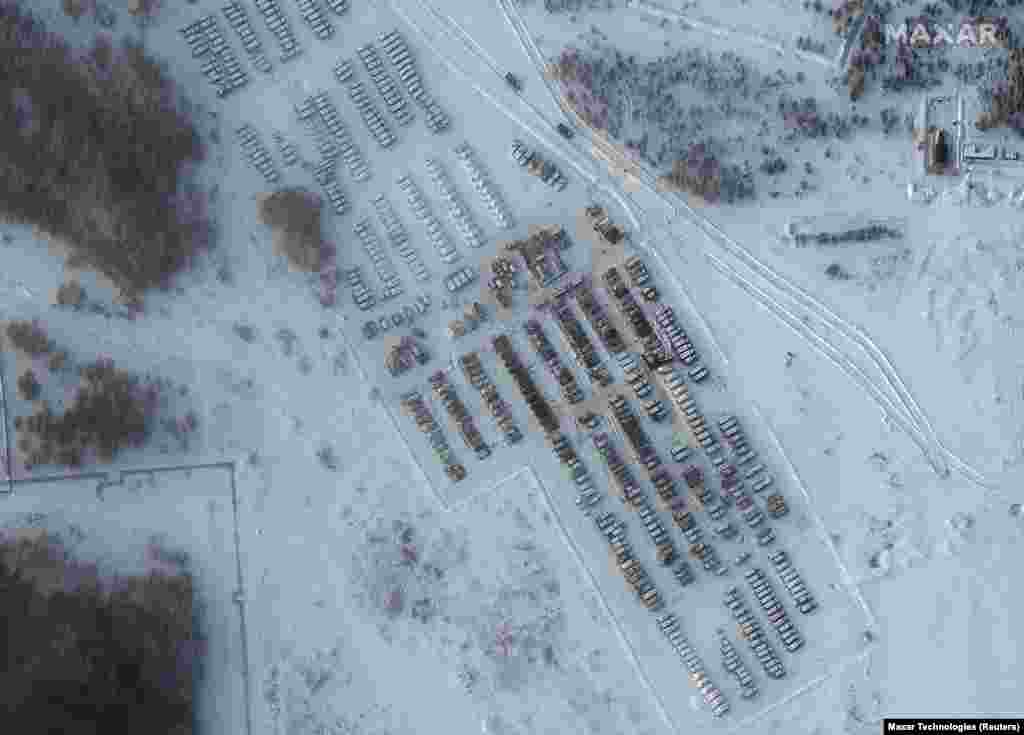
19/24An older satellite image shows snow-dusted Russian military vehicles parked in Yelnya, Russia, on January 19. Yelnya is in Russia's northwestern Smolensk region, around 120 kilometers from the border with Belarus and 260 kilometers from Ukraine.
Satellite photos from February 10 and earlier show a massive Russian buildup of military hardware, reportedly including ballistic-missile systems. Some of the buildup is in Belarus, not far from the Ukrainian border.
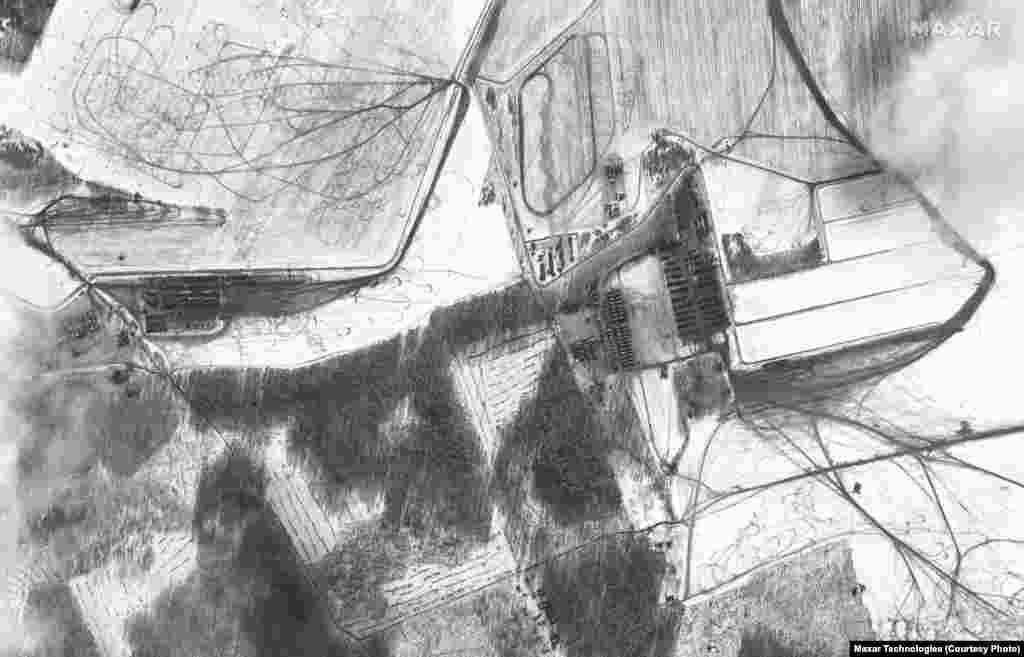
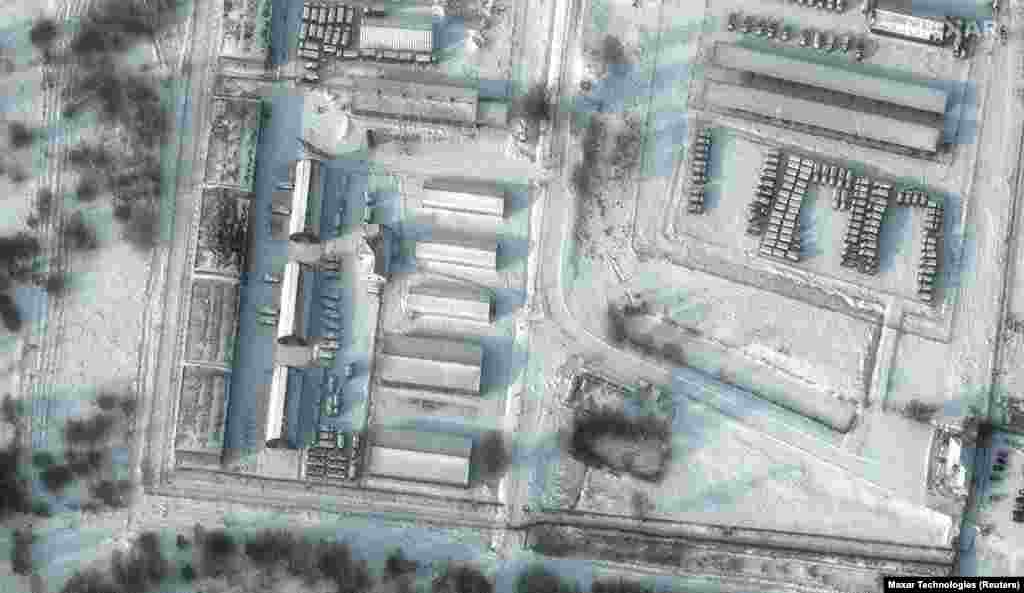
20/24Armored personnel carriers and trucks at Klimovo on January 19. The Klimovo military storage facility is located just 35 kilometers from the Ukrainian border.
Satellite photos from February 10 and earlier show a massive Russian buildup of military hardware, reportedly including ballistic-missile systems. Some of the buildup is in Belarus, not far from the Ukrainian border.
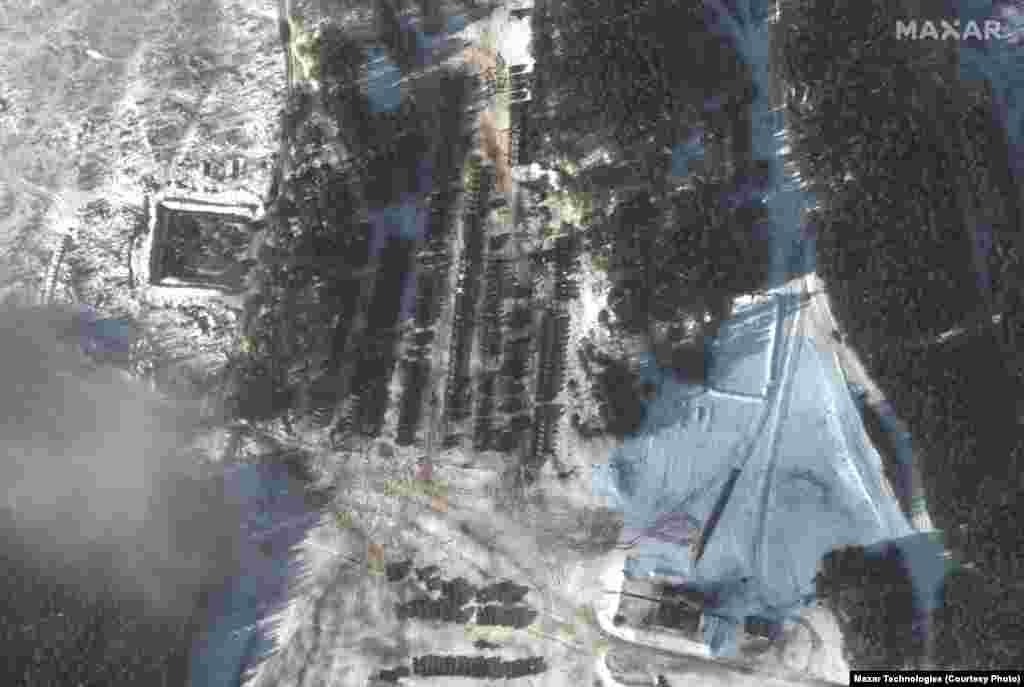
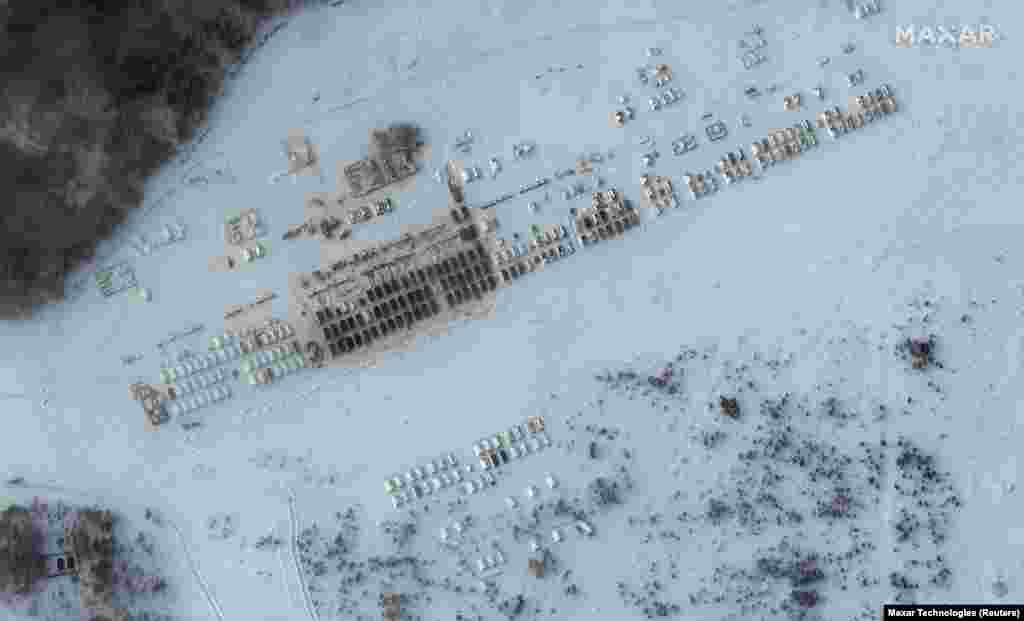
21/24Tents and housing for Russian troops in Yelnya on January 19.
Satellite photos from February 10 and earlier show a massive Russian buildup of military hardware, reportedly including ballistic-missile systems. Some of the buildup is in Belarus, not far from the Ukrainian border.
22/24Russian tanks and artillery-support equipment, some of which was apparently in use recently, parked in Yelnya on January 19.
Satellite photos from February 10 and earlier show a massive Russian buildup of military hardware, reportedly including ballistic-missile systems. Some of the buildup is in Belarus, not far from the Ukrainian border.
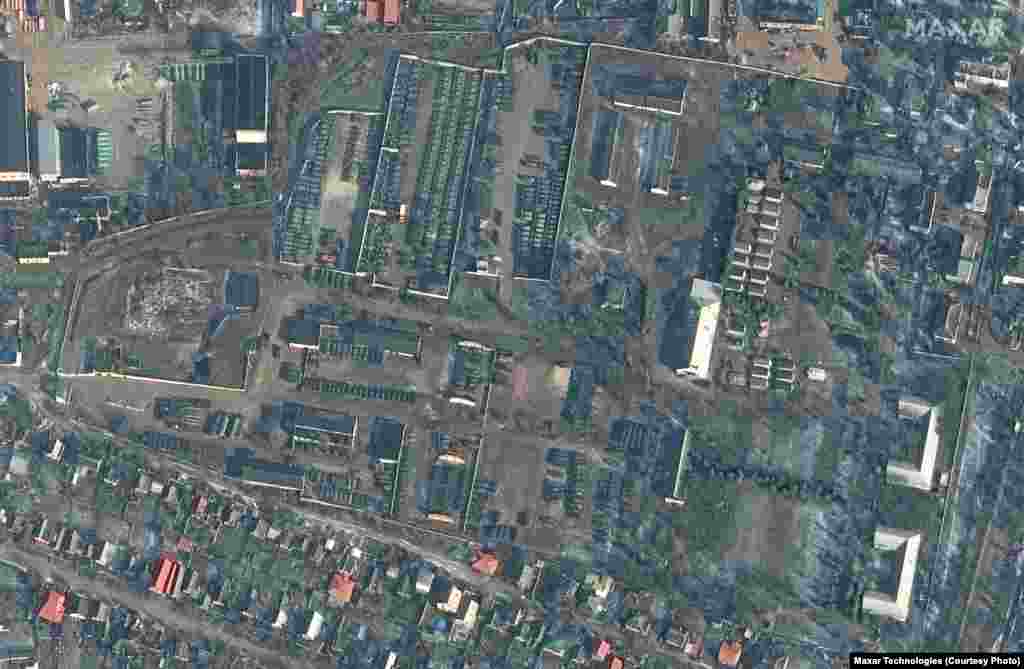
23/24Military equipment massed at the Klimovo storage facility on January 19. Older imagery from Google Maps of the same locationshows a fraction of the military vehicles present.
Satellite photos from February 10 and earlier show a massive Russian buildup of military hardware, reportedly including ballistic-missile systems. Some of the buildup is in Belarus, not far from the Ukrainian border.
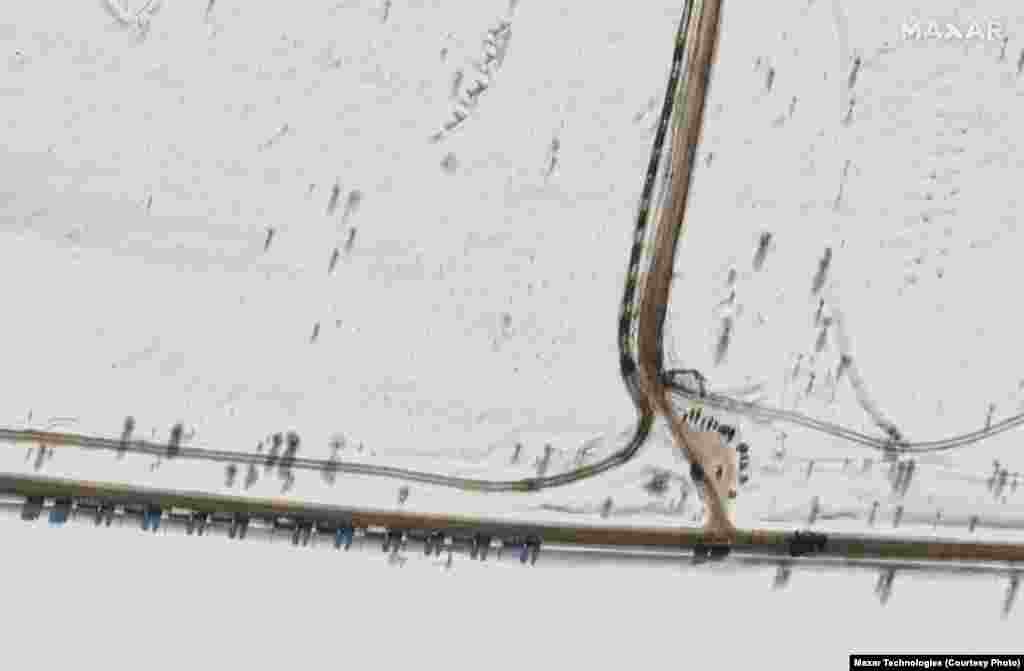
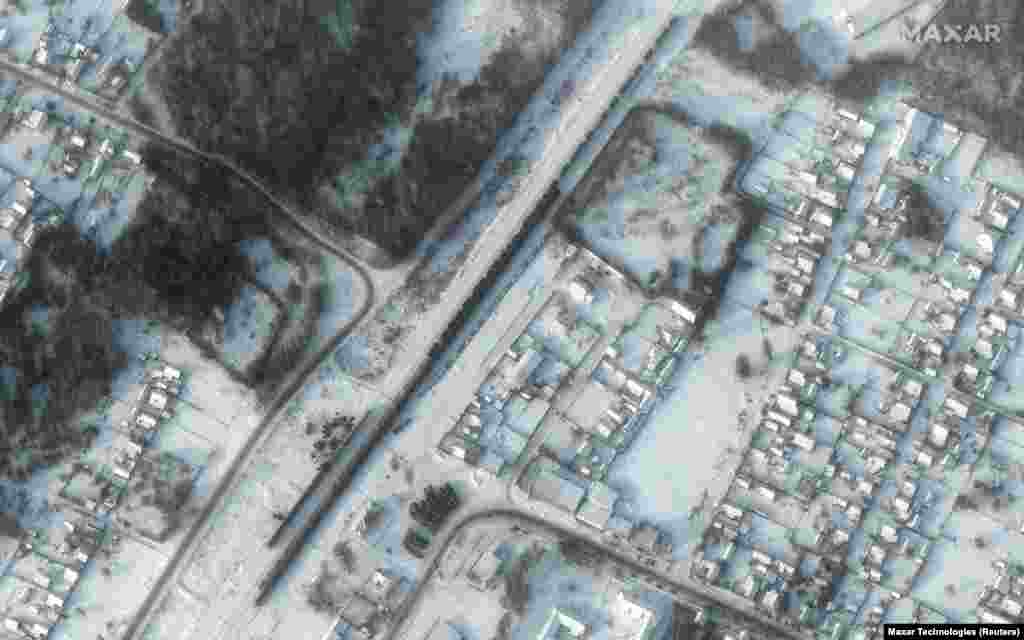
24/24Military hardware at a railway yard in Klimovo on January 19. Recent videos have captured massive amounts of military hardware being transported by rail in western Russia.
Satellite photos from February 10 and earlier show a massive Russian buildup of military hardware, reportedly including ballistic-missile systems. Some of the buildup is in Belarus, not far from the Ukrainian border.
Previous slide
Next slide
If anything, quite the opposite: Asked on January 19 whether a pledge to keep Ukraine and Georgia out of NATO for a long but limited period of time would satisfy Moscow, Deputy Foreign Minister Sergei Ryabkov said it would not -- and he said earlier that they must “never, ever” join the alliance.
In fact, Moscow’s demands go far beyond that. If Russia gets its way, NATO would be barred forever from admitting any new members. It would also be barred from deploying weapons and troops in countries that joined the alliance after May 1997 -- in other words, all NATO members in Central and Eastern Europe -- and required to reverse all such deployments that have occurred since then.
With an emphasis on Ukraine, Russian officials have called the no-NATO-expansion demand an “absolute imperative,” seeming to leave no room for compromise and stoking suspicions that the proposals are designed to fail, giving Putin a pretext -- at least in his own mind -- for a new offensive against Ukraine.
In Kyiv on January 19 ahead of talks with German, French, and British officials in Berlin the following day, U.S. Secretary of State Antony Blinken said that some of Russia’s demands are “absolute nonstarters.” That, he suggested, has made it hard to determine what Moscow believes it can achieve through talks.
“It’s not clear what Russia’s central demand is,” Blinken said, adding, “I think we’ll have a better idea, maybe, after Friday” -- a reference to a planned meeting with Lavrov in Geneva on January 21.
Maybe.
Lavrov and other Russian officials have said they do not want the United States and the West to drag diplomacy out, but some analysts suspect that’s actually what Russia wants: a place at talks that it hopes could eventually change the security architecture of Europe, even if its biggest demands go unmet.
Russian officials have repeatedly said they have no plans to invade Ukraine -- though, for the most part, these statements have left the door open to what Moscow could claim was a response to aggression. That means they have little currency in the West, which has accused Russia of laying the groundwork to create a pretext for an offensive.
The Belarus Factor
And despite such assurances, fears that Russia could launch a new offensive have deepened since the January 9-13 talks ended without a positive result. Russia has positioned some 127,000 troops near its border with Ukraine, according to Kyiv’s latest estimate, and has started sending units to Belarus -- Ukraine’s northern neighbor, whose border is about 150 kilometers from Kyiv -- ahead of what the countries say will be joint military drills in February.
And on January 20, in imposing sanctions on four Ukrainians it charged were involved in “Russian government-directed influence activities to destabilize Ukraine,” the U.S. Treasury Department made a striking claim about those alleged efforts.
“Russia has directed its intelligence services to recruit current and former Ukrainian government officials to prepare to take over the government of Ukraine and to control Ukraine's critical infrastructure with an occupying Russian force," it said.
In Moscow, the Kremlin-controlled lower parliament house prepared for discussions next week on a bill that would call on Putin to recognize the territories in eastern Ukraine held by Russia-backed separatists as independent states, another form of pressure on Kyiv and the West.
Tensions have risen even in Ukraine, where the nearly eight-year war against Moscow-backed forces in the Donbas region has inured many people to the persistent Russian threatand President Volodymyr Zelenskiy has played down the possibility of a new Russian invasion, including in an address on January 19.
Zelenskiy’s words have contrasted noticeably with warnings from Western officials, and particularly the United States, that a new Russian attack could be imminent.
Speaking on January 19, U.S. President Joe Biden said that Putin may not have made up his mind to launch an offensive against Ukraine, but added: “My guess is he will move in.”
The United States and its European allies have warned that they will impose strong sanctions on Russia if it launches a new offensive against Ukraine.
“So, we’ve laid out the consequences clearly for Russia, but also the far preferable path of resolving differences diplomatically,” Blinken told Voice of America in an interview in Kyiv on January 19. “And we’ll see which path President Putin decides to take.”
For Russia watchers, if not for most Russians, the tension over Moscow’s military buildup and its jaw-dropping demands on the West have drawn attention away from domestic issues.
'This Is Our Country'
The government’s clampdown on political opponents, civil society, independent media, and dissent persisted as a milestone was passed: Aleksei Navalny, the anti-corruption crusader who has been Putin’s most prominent foe for more than a decade, started his second year behind bars.
Navalny was arrested at a Moscow airport upon his return to Russia on January 17, 2021, following treatment in Germany for a near-fatal nerve-agent poisoning he blames on Putin. He was sentenced to 2 1/2 years in prison two weeks later on a parole-violation charge that he dismisses as absurd.
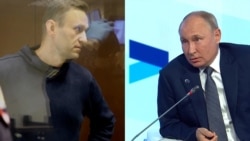
Navalny’s arrest marked the start of an escalation of the government’s crackdown, and 2021 ended with another momentous step in what some see as a transformation from authoritarian to totalitarian rule: the closure of Memorial, a human rights and historical research group that worked hard to expose state crimes past and present.
"Having served my first year in prison, I want to tell everyone exactly what I shouted to those gathered outside the court when a convoy led me to a police van: Don't be afraid of anything," a post on his Instagram account said.
“This is our country and we have no other," he added.

Meanwhile, coronavirus cases skyrocketed as the omicron variant spread among Russians, less than half of whom are fully vaccinated following what Kremlin critics call a botched response to the pandemic some estimates suggest has killed more than 1 million people since it first hit the country nearly two years ago.
The official number of new COVID-19 cases rose to 38,850 on January 20,more than twice the number 10 days earlier, drawing closer tothe record highs -- over 40,000 cases -- set in early November.
At a meeting on January 11, amid what the World Health Organization has called a "west-to-east tidal wave" of omicron infections, members of the government's coronavirus task force warned that Russia could soon rise above 100,000 new cases daily if social distancing and other precautionary measures aren't followed.
Steve Gutterman is the editor of the Russia/Ukraine/Belarus Desk in RFE/RL's Central Newsroom in Prague and the author of The Week In Russia newsletter. He lived and worked in Russia and the former Soviet Union for nearly 20 years between 1989 and 2014, including postings in Moscow with the AP and Reuters. He has also reported from Afghanistan and Pakistan as well as other parts of Asia, Europe, and the United States.