




President Donald Trump said Washington will help choose the next leader of Iran as US and Israeli forces continued air strikes amid growing concerns of a broader conflict after drones launched from Iran struck Azerbaijan and Israel pushed into southern Lebanon.
With the United States and Israel currently engaged in a sixth day of war against Iran, the number of countries in the region to suffer Tehran's retaliatory strikes, which have targeted both military and civilian infrastructure, grew again on March 5.

Trump, speaking to Reuters in a phone interview, said he wants to be involved in choosing Iran's next leader, while ruling out Mojtaba Khamenei, the son of the late Supreme Leader Ali Khamenei - a hardliner who has been considered a favorite to succeed his father.
"We want to be involved in the process of choosing the person who is going to lead Iran into the future," he was quoted by the agency as saying.
"We don't have to go back every five years and do this again and again...Somebody that's going to be great for the people, great for the country."
The supreme leader was killed last weekend in air strikes as US and Israeli military operations pummeled the country.
Since then, a steady barrage of strikes have decimated Iran's military, communications infrastructure, and other key facilities across the country.
Iran has retaliated with attacks on US military bases across the Middle East, dragging Arab Gulf states -- and others such as Turkey and Azerbaijan -- onto the frontlines of a war they have long tried to avoid.
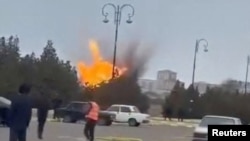
Iran's neighbor Azerbaijan, which has longstanding ties with Israel, reported attacks launched from Iranian territory on March 5.

Two people were injured after drones have struck Azerbaijan's Nakhchivan autonomous region, with one damaging the region's airport and a second landing near a school, according to Azerbaijan's Foreign Ministry.
President Ilham Aliyev said that "Iran committed an act of terror against the territory of Azerbaijan, against the state of Azerbaijan" with the attack, while the Foreign Ministry said Baku "reserves the right to respond."
Later in the day, Iran's Foreign Ministry denied that the country had targeted Azerbaijan.
Millions of ethnic Azerbaijanis live in Iran. Azerbaijan is also one of the main oil suppliers to Israel, while Israel has been a key defense partner for Baku for years.
Many in Azerbaijan see Israel's military supplies as critical during country's campaign to regain control of the Karabakh region from Armenia.


A day earlier, a ballistic missile launched from Iran was heading toward Turkish airspace and was intercepted by NATO air defense systems, according to Turkish officials.
NATO Secretary-General Mark Rutte condemned Iran but said the incident does not provide immediate reason to trigger the alliance's mutual defense clause, Article 5.
"The most important thing is that our adversaries have seen yesterday that NATO is so strong and so vigilant, and even more vigilant, if possible, since Saturday," Rutte said on March 5, referring to when the US-Israeli strikes began on February 28.
Earlier, a State Department spokesman said US Secretary of State Marco Rubio had spoken with Turkish Foreign Minister Hakan Fidan to discuss recent developments and had pledged "full support" for the NATO ally.
Ukraine To Provide Expertise Against Iran's Drones
As air travel disruptions continued across the Middle East with Iran firing missiles and drones against Israel and other regional countries, Ukrainian President Volodymyr Zelenskyy said his offers to provide support in countering Tehran's Shahed drones were accepted.
"We received a request from the United States for specific support in protection against Shaheds in the Middle East region," Zelenskyy said on his social media on March 5.
Tehran has long been an ally of Russia, supplying it with military equipment and technology and fueling Moscow's war effort against Ukraine. Zelenskyy said earlier that Russia's military had used at least 57,000 Shahed drones in attacks on his country, including against its civilian and energy infrastructure.
Now, the Ukrainian president said Kyiv will help its partners with expertise: "I gave instructions to provide the necessary means and ensure the presence of Ukrainian specialists who can guarantee the required security."
Ukraine, which has just entered the fifth year of repelling Russia's full-scale invasion, has been suggesting to share its experience in defending against Iranian-made drones since the first Iranian attacks across the Gulf.
Asked on the matter, US President Donald Trump, who has previously criticized some of the European leaders for failing to provide enough support for US military actions said he'll take "any assistance from any country."
Trump: US Holds 'Strong Position'
Trump on March 4 vowed that there would be no let up with the joint air campaign that has killed Iranian Supreme Leader Ali Khamenei and other security, military, and political leaders.
He added that Tehran's arsenal of ballistic missiles was being "wiped out rapidly."

Trump has said he ordered the attack on Iran to prevent the country from developing a nuclear weapon but has also said he wanted Tehran to cease its ballistic missile program and to end violence against anti-government protesters, thousands of whom were killed in a brutal crackdown in recent weeks.
Seeking to counter concerns of American '"boots on the ground" in the war, the White House on March 4 said deployment of US ground troops in Iran is "not part of the plan for this operation at this time."
Instead, Trump backed the Kurds in launching their own offensive, saying he thinks it’s "wonderful that they want to do that." Asked by Reuters if the United States would offer air cover for such an operation, Trump refused to answer.
Earlier in the week, sources told Axios that the president spoke with Kurdish leaders, who sought consultation on whether and how to attack Tehran's security forces.
Netanyahu Claims 'Historic Gains'
Israeli Prime Minister Benjamin Netanyahu's office said the two allies had made "historic gains" in their war against Iran, which is in its sixth day.
"Israel and the United States have together made historic gains to protect our citizens and the civilized world," government spokeswoman Shosh Bedrosian said in a video message.
As Bedrosian also claimed the attack on Iran was necessary as Tehran was rebuilding its nuclear weapons program in "new underground bunkers" and that there were signs it planned "to attack Israel and US forces in the region," without providing details.
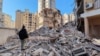
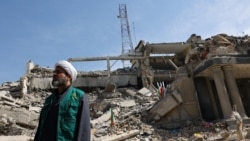
Separately, Israel stepped up its attacks on strongholds of Iran-allied Hezbollah forces in Lebanon after the group launched missiles into northern Israel. According to Israeli military, Tel Aviv's goal was to create "a buffer...between our residents and any threat,"
French President Emmanuel Macron on March 4 said he urged Netanyahu to refrain from launching a ground offensive in Lebanon.
"I reiterated the necessity for Hezbollah to immediately cease its attacks on Israel and beyond. This escalatory strategy is a grave mistake that puts the entire region at risk," Macron wrote on X.
"I also called on the Israeli Prime Minister to preserve the integrity of Lebanese territory and to refrain from launching a ground offensive. It is crucial for the parties to return to the ceasefire agreement," Macron added.

Reports indicate that Israeli ground forces have already crossed the border into Lebanon, although details remain unclear.
On March 5, Israeli military warned residents in Beirut's southern suburbs to evacuate immediately. "Save your lives and evacuate your residences immediately," Israel's military forces spokesman Avichay Adraee said on X.