


Accessibility links

Breaking News

OSCE Envoy: Russian Proposals Are Slippery Slope To A World Where 'Might Makes Right'

“If we start to go down that path of negotiating on the very core principles of the international order, then we end up in a world where might makes right and missiles and tanks and troops decide whether a country gets to choose its own future,” Michael Carpenter told RFE/RL. 

Russia's core European security proposals delivered to the West at the end of last year represent a slippery slope toward a new, dangerous world order, a senior U.S. diplomat said.

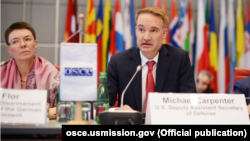
Michael Carpenter, the U.S. ambassador to the Organization for Security and Cooperation in Europe (OSCE), said in an interview with RFE/RL on January 31 that the West simply cannot negotiate key principles like the sovereignty and territorial integrity of nations.
“If we start to go down that path of negotiating on the very core principles of the international order, then we end up in a world where might makes right and missiles and tanks and troops decide whether a country gets to choose its own future,” Carpenter told RFE/RL.

Russia in December demanded NATO end its eastern expansion and withdraw troops and armaments from Central and Eastern Europe as Moscow seeks a clear sphere of influence in its near abroad and a reversal of the post-Cold War order on the continent.

It did so as it amassed more than 100,000 combat-ready troops near its border with Ukraine in what experts and Western officials have said is an attempt by Moscow to negotiate with a “gun on the table."

Russia is seeking to block Ukraine from joining NATO, something the Kremlin has called a “red line.”

Three rounds of negotiations earlier this month between the West and Russia on Moscow’s proposals were inconclusive, raising concerns that an invasion of Ukraine could be imminent.

Russia has denied that it intends to invade Ukraine.

During those meetings -- and afterward -- the United States and its European allies warned Russia that it will face “massive” economic sanctions if it invades Ukraine again. The West has also repeatedly said it will strengthen NATO forces in Eastern Europe and supply Ukraine with more weapons in the event of a military escalation by Moscow.
Carpenter, who represented the United States at an OSCE meeting with Russia on January 13, said the threat of powerful Western sanctions are meant to “sharpen” the Kremlin's choices between diplomacy and invasion.

“What we judge as the most effective way of approaching the situation is to widen the gulf between those two choices so it becomes very, very clear” to Russia, he said.

However, there is concern about divisions within the West over how to respond to Russian aggression. Germany, Europe’s largest economy, has deep trade ties to Russia and stands to lose more than others from sanctions against Russia.

Carpenter said that not every country may be “aligned 100 percent” on every measure being discussed among allies and partners, but he said he believes there is “rock solid” unity on the need to impose tough sanctions in the event of an invasion.

“I do believe we have that [unity] right now, thanks to very, very robust diplomacy from the United States and from our allies. We are in a very firm position to be able to impose those tough, severe consequences,” he said.

He said it is “impossible” to see a scenario where Russia’s $11 billion Nord Stream 2 natural-gas pipeline to Germany is allowed to begin operations should Moscow choose to attack Ukraine.

Carpenter said Russia would only undermine its own goals by invading Ukraine, pushing Kyiv ever closer into Europe’s orbit.

While he called the military buildup near Ukraine very concerning, Carpenter still holds out hope for diplomacy, saying the West and Russia could make progress on some of Moscow’s demands, such as arms limitations and transparency of military exercises.

Those issues are of concern to the West, as well, he said.

At The Front Lines, Ukrainian Soldiers And Civilians Endure Cold, Wait For A Possible War With Russia
Ukrainian servicemen install a machine gun at an outpost on the front line in the Luhansk region in eastern Ukraine on January 29.
1/12 Ukrainian servicemen install a machine gun at an outpost on the front line in the Luhansk region in eastern Ukraine on January 29.
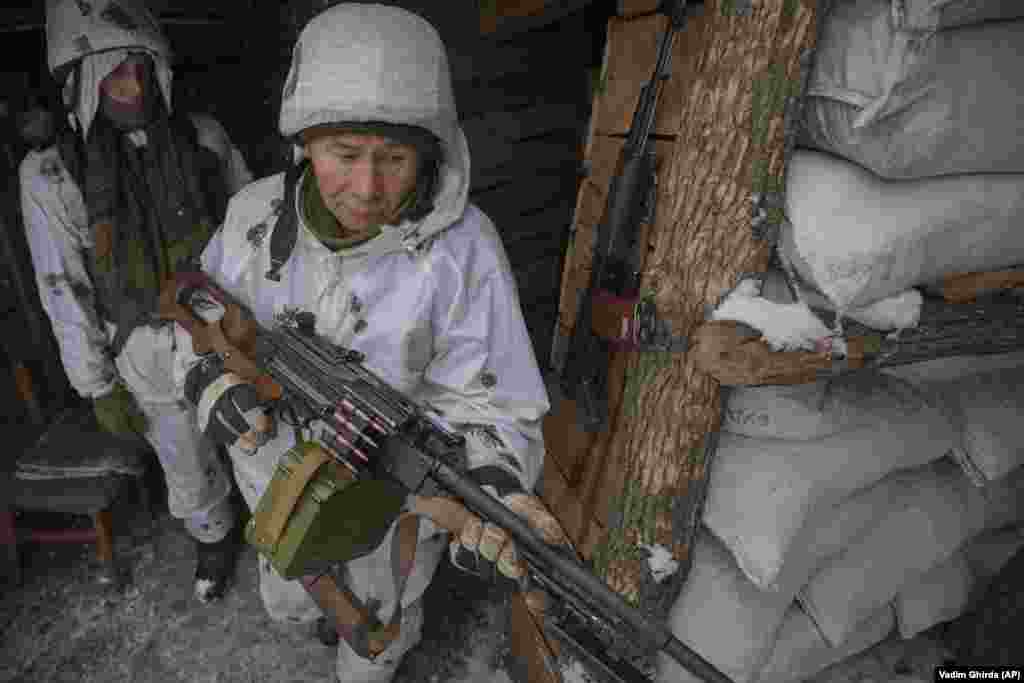
With freezing temperatures hardening the ground and a lack of foliage, midwinter is considered an optimal time for military action -- a fear shared by Ukrainian soldiers and civilians near the front lines in the east as Russia masses more than 100,000 troops around the country's borders.
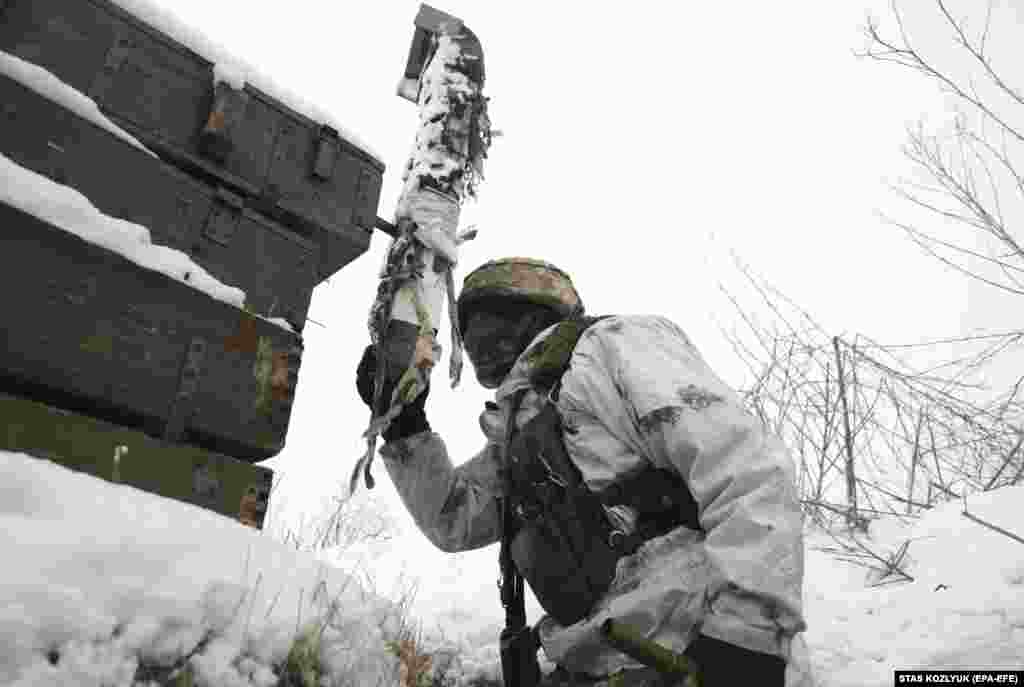
A Ukrainian soldier wearing winter camouflage walks to an outpost in the Luhansk region.
2/12 A Ukrainian soldier wearing winter camouflage walks to an outpost in the Luhansk region.
With freezing temperatures hardening the ground and a lack of foliage, midwinter is considered an optimal time for military action -- a fear shared by Ukrainian soldiers and civilians near the front lines in the east as Russia masses more than 100,000 troops around the country's borders.
3/12
With freezing temperatures hardening the ground and a lack of foliage, midwinter is considered an optimal time for military action -- a fear shared by Ukrainian soldiers and civilians near the front lines in the east as Russia masses more than 100,000 troops around the country's borders.
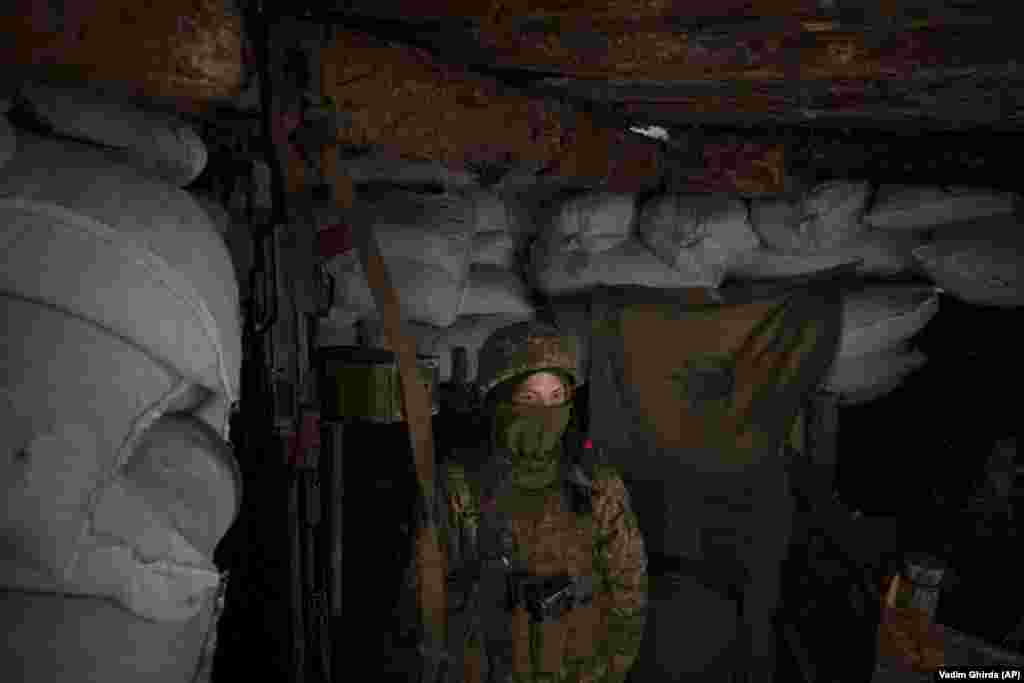
A soldier in the trenches
4/12 A soldier in the trenches
With freezing temperatures hardening the ground and a lack of foliage, midwinter is considered an optimal time for military action -- a fear shared by Ukrainian soldiers and civilians near the front lines in the east as Russia masses more than 100,000 troops around the country's borders.
A Ukrainian soldier monitors the situation on January 29 from a trench using a periscope near the city of Donetsk, which is controlled by Kremlin-backed separatists.
5/12 A Ukrainian soldier monitors the situation on January 29 from a trench using a periscope near the city of Donetsk, which is controlled by Kremlin-backed separatists.
With freezing temperatures hardening the ground and a lack of foliage, midwinter is considered an optimal time for military action -- a fear shared by Ukrainian soldiers and civilians near the front lines in the east as Russia masses more than 100,000 troops around the country's borders.
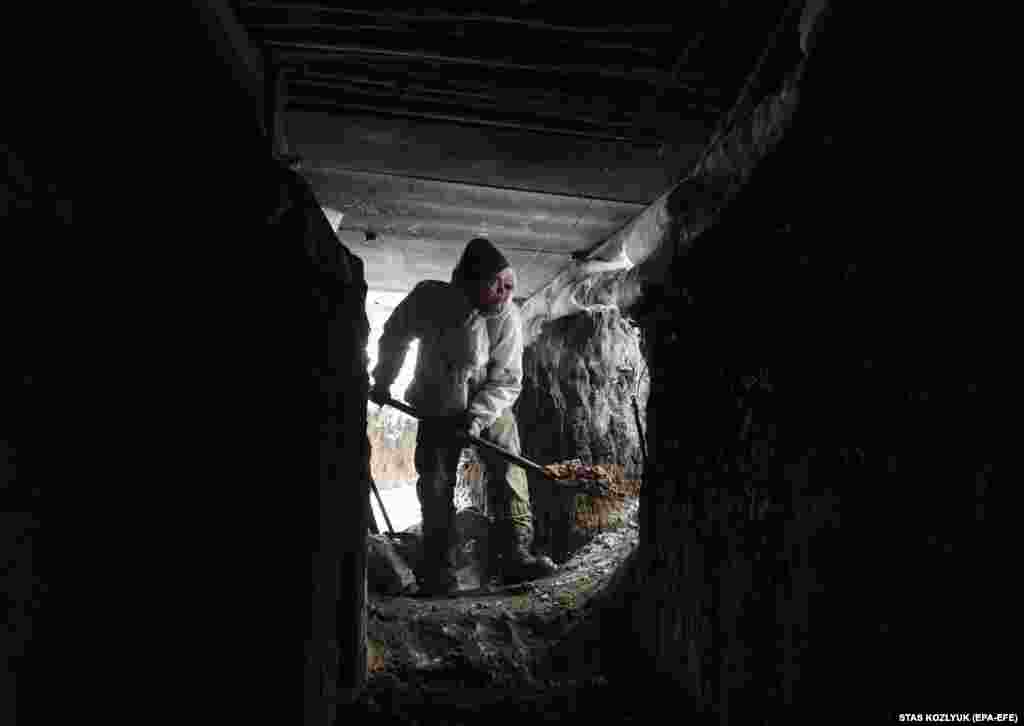
A soldier repairs a trench near Donetsk.
6/12 A soldier repairs a trench near Donetsk.
With freezing temperatures hardening the ground and a lack of foliage, midwinter is considered an optimal time for military action -- a fear shared by Ukrainian soldiers and civilians near the front lines in the east as Russia masses more than 100,000 troops around the country's borders.
7/12
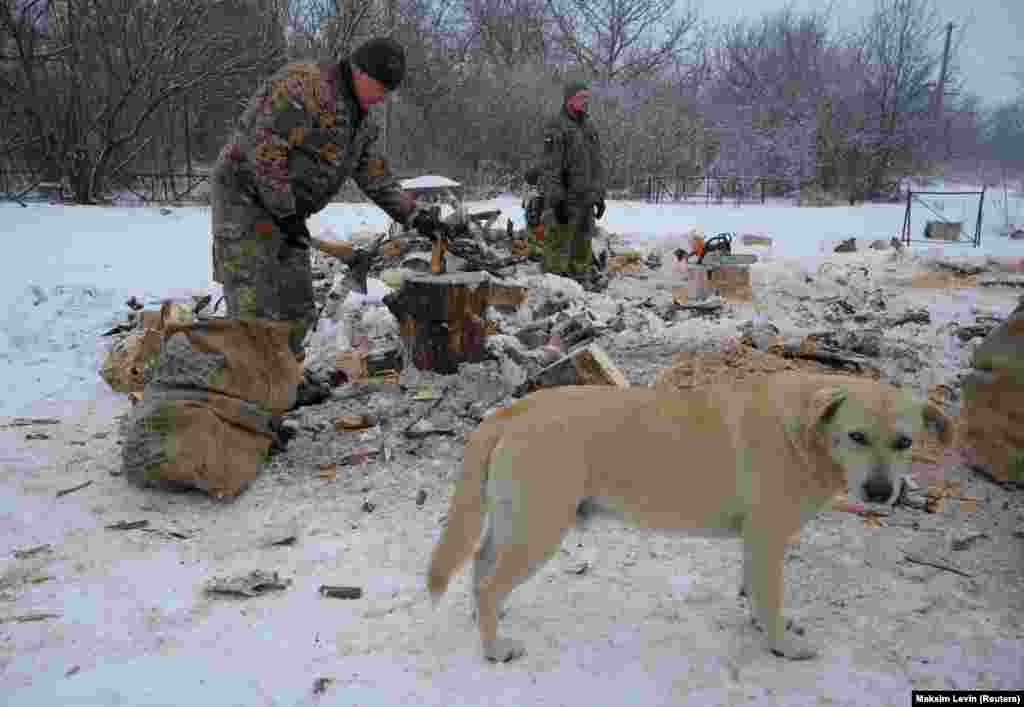
With freezing temperatures hardening the ground and a lack of foliage, midwinter is considered an optimal time for military action -- a fear shared by Ukrainian soldiers and civilians near the front lines in the east as Russia masses more than 100,000 troops around the country's borders.
A Ukrainian soldier chops firewood on the front line near the village of Pisky in the Donetsk region on January 29.
8/12 A Ukrainian soldier chops firewood on the front line near the village of Pisky in the Donetsk region on January 29.
With freezing temperatures hardening the ground and a lack of foliage, midwinter is considered an optimal time for military action -- a fear shared by Ukrainian soldiers and civilians near the front lines in the east as Russia masses more than 100,000 troops around the country's borders.
9/12
With freezing temperatures hardening the ground and a lack of foliage, midwinter is considered an optimal time for military action -- a fear shared by Ukrainian soldiers and civilians near the front lines in the east as Russia masses more than 100,000 troops around the country's borders.
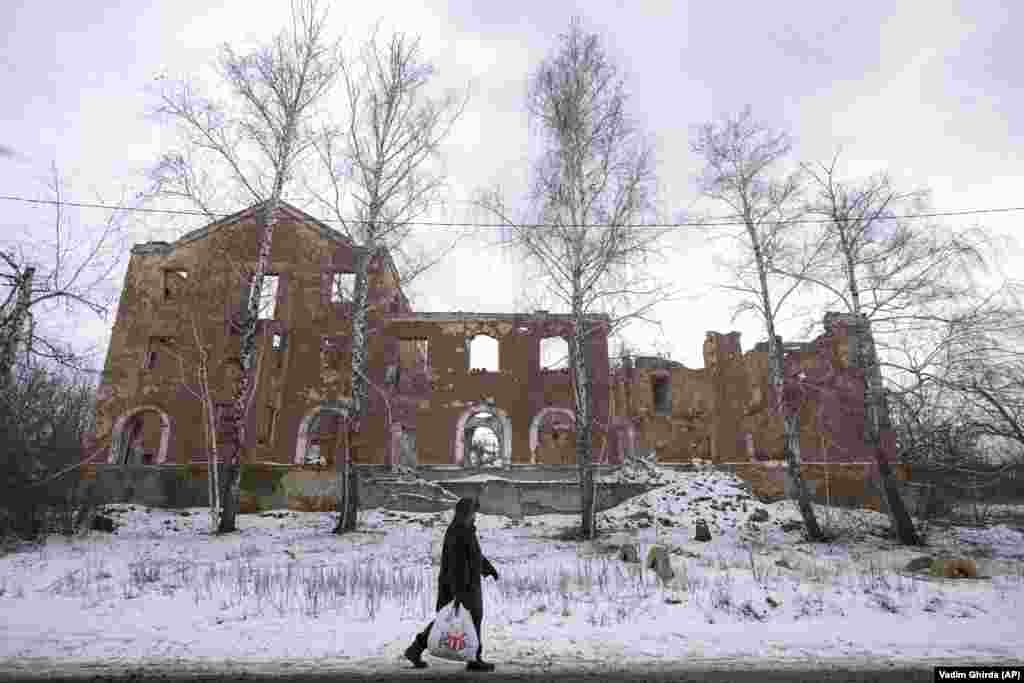
A local woman walks past a building destroyed during fighting between the Ukrainian military and the separatists in 2014. The photo was taken on the outskirts of Slovyansk in the Donetsk region on January 30.
10/12 A local woman walks past a building destroyed during fighting between the Ukrainian military and the separatists in 2014. The photo was taken on the outskirts of Slovyansk in the Donetsk region on January 30.
With freezing temperatures hardening the ground and a lack of foliage, midwinter is considered an optimal time for military action -- a fear shared by Ukrainian soldiers and civilians near the front lines in the east as Russia masses more than 100,000 troops around the country's borders.
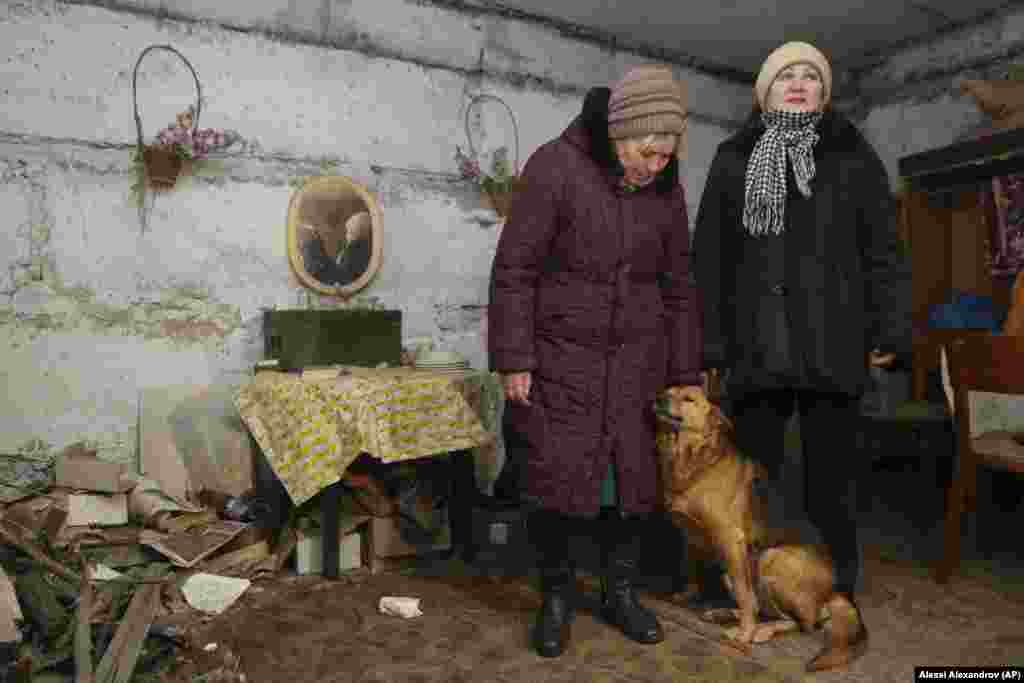
Lilia (left) and Tetyana, both residents of a village on the outskirts of Donetsk, speak to a journalist in a basement used as a bomb shelter on January 30. They live in an area controlled by the separatists, not far from the front line with government forces. Lilia and five other people live in a five-story apartment building without heat or water. Many houses in the region were abandoned because of heavy damage incurred during the military conflict in 2014-15. 
11/12 Lilia (left) and Tetyana, both residents of a village on the outskirts of Donetsk, speak to a journalist in a basement used as a bomb shelter on January 30. They live in an area controlled by the separatists, not far from the front line with government forces. Lilia and five other people live in a five-story apartment building without heat or water. Many houses in the region were abandoned because of heavy damage incurred during the military conflict in 2014-15. 
With freezing temperatures hardening the ground and a lack of foliage, midwinter is considered an optimal time for military action -- a fear shared by Ukrainian soldiers and civilians near the front lines in the east as Russia masses more than 100,000 troops around the country's borders.
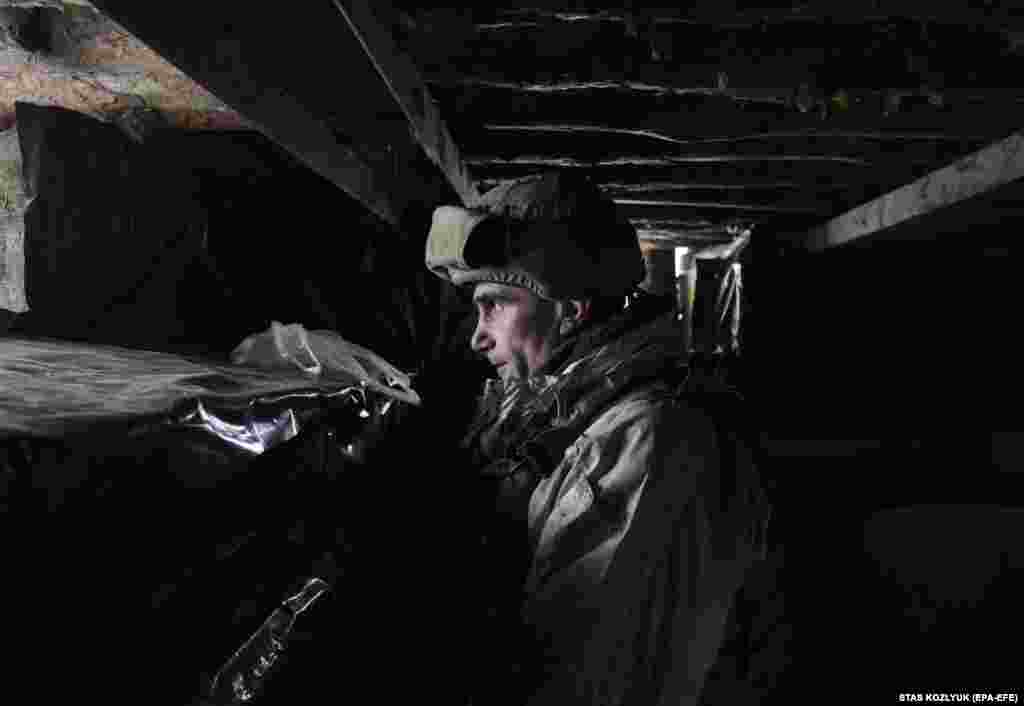
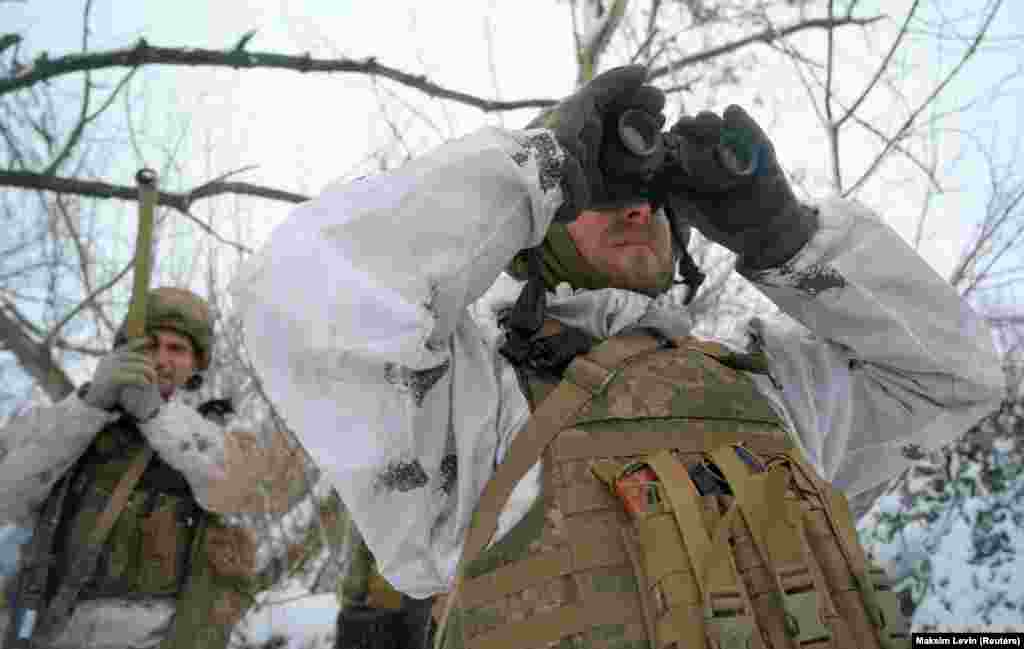
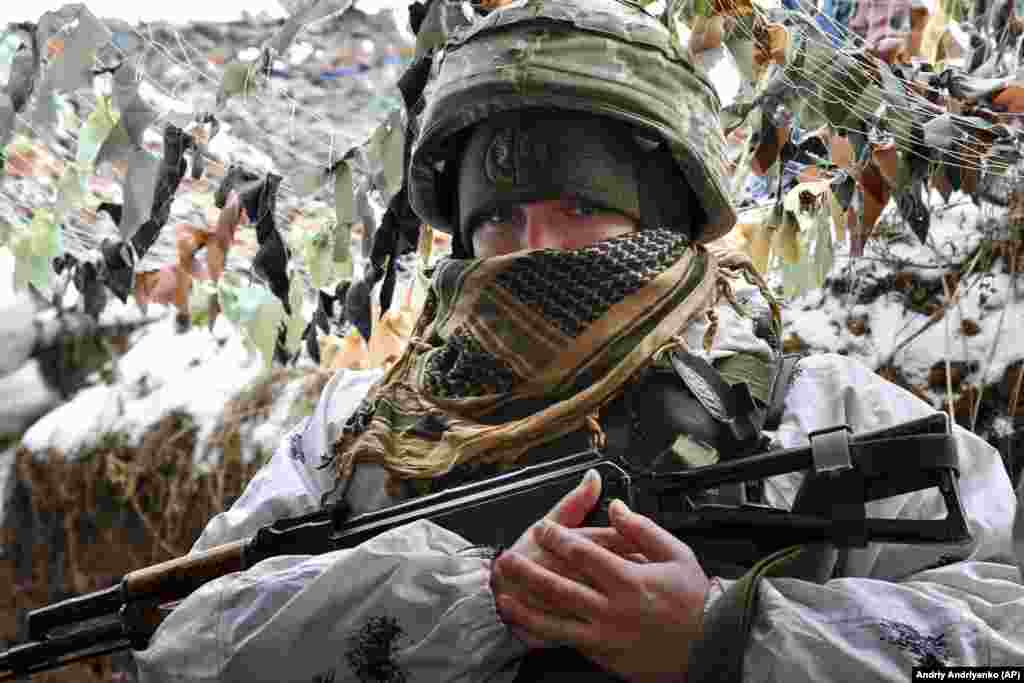
A Ukrainian soldier keeps watch in a trench on January 29 at the front line with the separatists in the village of Verkhnotoretske in the Donetsk region.
12/12 A Ukrainian soldier keeps watch in a trench on January 29 at the front line with the separatists in the village of Verkhnotoretske in the Donetsk region.
With freezing temperatures hardening the ground and a lack of foliage, midwinter is considered an optimal time for military action -- a fear shared by Ukrainian soldiers and civilians near the front lines in the east as Russia masses more than 100,000 troops around the country's borders.
Previous slide
Next slide

Carpenter also said the United States backs the continuation of peace talks to resolve the fighting in eastern Ukraine between government forces and Russia-backed separatists.

Russia in 2014 fomented a war in two provinces in eastern Ukraine, supplying money, weapons, and troops. The war, which still simmers, has killed more than 13,200 people.

Ukraine and Russia have signed several agreements that offer a path to a peace settlement, but Russia has failed to carry out its part, including withdrawing armaments and opening the region to inspection by the OSCE.

“So far, those conditions have not been fulfilled by one party and that party is Russia,” he said. “Until those basic elements are fulfilled, it's difficult to talk about the other aspects of the agreement.”

  • 16x9 Image

    RFE/RL's Georgian Service

    RFE/RL's Georgian Service is a trusted source of politically and financially independent journalism in a country where much of the media is aligned with the government or the opposition.

This item is part of
XS
SM
MD
LG