




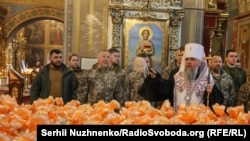
Kyiv and Moscow pledged to halt fighting for 32 hours to mark Orthodox Easter, as US-backed peace negotiations to end Russia's four-year war falter and Washington focuses on its own war with Iran.
President Volodymyr Zelenskyy said Ukraine had repeatedly proposed a holiday truce and that it will "act accordingly" after Russian President Vladimir Putin also ordered his troops to halt fire during the holiday.
The truce was set to begin at 3 p.m. Central European Time on April 11 and run through the end of the day on April 12, which is when Orthodox Christians celebrate Easter.
"People need an Easter without threats and a genuine move toward peace, and Russia has no chance to return to attacks even after Easter,” Zelenskyy said in a post to Telegram on April 10.
The Kremlin said Putin had instructed Russian military command "to cease combat operations in all directions for this period." Russia's forces were prepared to "counter any possible provocations by the enemy," the statement said.
Speaking to Current Time on April 10, some local residents in Ukraine's major eastern city of Kramatorsk in Donetsk region said that while they were trying to be hopeful, they doubted that the fighting would indeed stop.
"This is a holy day… I hope [it will happen]," one woman said. She burst out laughing shortly after being asked how many of such truces had actually been realized.
"It is hard to believe…We need to have our [Easter bread] blessed. But it means putting the lives of our loved ones at risk," another man said, standing behind an anti-drone net stretched across the street.
Other people who spoke with Current Time further emphasized that the Easter truce would last only a little more than a day, saying they did not expect it to make a significant difference in the four-year-old conflict.
Russia has repeatedly rejected longer-term or indefinite cease-fires, saying a comprehensive deal is needed to end the conflict -- which became an all-out war in February 2022.
During earlier truces, both sides accused the other of using the time to resupply and redeploy troops.
Efforts to negotiate an end the Russian war have ground to a halt as US President Donald Trump's administration shifts focus to the conflict with Iran.
Despite multiple meetings between Ukrainian, Russian, and US negotiators, there has been no definitive breakthrough, with talks stalling over Moscow's hardline territorial demands and international security guarantees for Kyiv.

The Kremlin's lead envoy, Kirill Dmitriev, traveled to the United States on April 9 for talks with US counterparts. Dmitriev would not be meeting any Ukrainian negotiators, and talks would focus on economic issues, spokesman Dmitry Peskov said.
There was no immediate confirmation of the talks from the White House.
Fighting on the ground in Ukraine has bogged down, with Russia occasionally capturing additional Ukrainian territory but suffering massive losses in the process.
Ukraine has also suffered heavy losses, although neither side regularly discloses casualty figures. Western estimates say the combined dead and wounded tally for both sides could top 2 million by the summer.
Russia controls an estimated 19 percent of Ukrainian territory, most of it taken early following the February 2022 invasion. Its demands for a peace settlement include the withdrawal of all Ukrainian forces from sliver of Donetsk territory that remains under Ukrainian control. That territory contains a critical line of defenses for Ukraine-- the so-called "fortress belt."
"I think that Putin understands he can't fully occupy Ukraine. It’s just that sometimes he shares messages with our partners that are not what he truly thinks," Zelenskyy said in a post to X.
"He suffers tremendous losses and doesn't have enough well-trained people on the battlefield. He is trying to find an off-ramp that looks like a victory," he wrote. "That's why he is trying to push us out of Donbas via diplomacy, through dialogue with the United States."
Oil In The Black
Dmitriev's meetings come on the eve of an April 11 deadline for the Trump administration to decide whether to extend sanctions waiver on Russian oil.
After US and Israeli forces attacked Iran, global oil prices skyrocketed, sending domestic gasoline prices in the United States soaring, and rattling the White House, which is girding for a tough mid-term congressional election this fall.
Seeking to push oil prices down, the Trump administration issued a limited waivers for the sale of Russian oil -- which has been critical for Moscow to fund its war on Ukraine.
The move unnerved some European allies who say the waiver sends the wrong message to Moscow. Kyiv sought to temper Moscow's oil profits by intensifying its strikes on oil infrastructure deep inside Russia.
In a new development, the Ukrainian military said on April 10 that it had struck two oil drilling platforms in a rare attack on Russia's oil production in the Caspian Sea, located around 1,000 kilometers from the front lines.
The platforms are an "important link in supplying fuel and grease materials to the Russian occupying army," the statement said. It added that Ukraine intends to continue targeting such objects until Russian military aggression stops completely.
The Kremlin did not immediately comment on the attack.



