





WASHINGTON -- In a political climate where bipartisan unity is increasingly rare, a consensus is forming among US lawmakers and foreign policy heavyweights: The relationship between Moscow and Tehran has moved far beyond diplomatic convenience.
Instead, they argue, it has hardened into a “transformational” military alliance -- a deepening axis that is drastically shaping battlefields in the Middle East and Ukraine.
At a hearing of the Helsinki Commission on April 21, the rhetoric was as sharp as the intelligence reports. Congressman Joe Wilson, a Republican from South Carolina, didn't mince words, framing the geopolitical struggle as a singular, unified threat.
“The United States is not confronting just Iran, but a broader Russia-Iran axis,” Wilson declared, arguing the two nations have transitioned from mere partners to a coordinated front, utilizing weapons transfers, intelligence sharing, and sanctions-evasion tactics to systematically dismantle American global leadership.
A 'Transformational' Partnership
The evolution of this bond has been rapid and, for Western observers, alarming.
Behnam Ben Taleblu, senior director of the Iran program at the Foundation for Defense of Democracies, described the trajectory of the relationship as shifting “from turbulent to transactional to transformational.”
The catalyst for this final shift? The 2022 full-scale invasion of Ukraine.
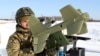
While the partnership has roots in the post-Soviet era -- beginning with Russian arms sales and the construction of the Bushehr nuclear reactor in Iran -- the war in Ukraine flipped the power dynamic. Once the junior partner, Iran has become an “indispensable enabler” for a Russian military depleted by industrial shortfalls and battlefield losses.
Ilan Berman, senior vice president of the American Foreign Policy Council, says there has been a chilling exchange of assets. Russia, he noted, has materially aided the Iranian regime in its war with the United States and Israel since the two launched air strikes on Iran on February 28.
“Russia has provided advice on how many drones to deploy per strike and at what altitudes,” Berman, a board member of RFE/RL, said, noting that Iranian attack patterns now “closely resemble Russian operations,” where waves of drones are used to saturate defenses before precision missiles strike.
This “operational know-how” is supplemented by upgraded Russian drone components that improve navigation and resistance to electronic jamming -- innovations honed directly against Ukrainian defenses.
The Human Cost Of Coordination
The implications of this “axis of upheaval” are not merely strategic; they are lethal to American personnel, according to Senator Tom Tillis, a Republican from North Carolina.
“If Putin’s responsible for one dead American service member, he might as well be responsible for 5,000,” Tillis remarked, highlighting the gravity of the Kremlin's intelligence and satellite data sharing.
In a striking contrast, Senator Sheldon Whitehouse, a Democrat from Rhode Island, pointed to the bifurcated reality of the modern global conflict. “Russia is assisting Iran in targeting American troops, while Ukraine is helping us…defend against those attacks,” he said.
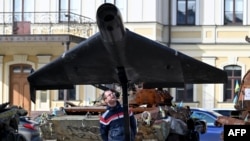
Lawmakers repeatedly underscored that Ukraine is no longer just a recipient of aid, but a vital security partner providing a “defense innovation cycle” that the West is struggling to match.
When the US requested help with drone defense, Ukraine dispatched a team of experts within 24 hours.
Aaron Zelin, a fellow at the Washington Institute for Near East Policy, highlighted Kyiv’s development of interceptor drones -- a rapid response to the very Iranian-Russian tactics now threatening the Persian Gulf.
However, the urgency felt in Kyiv isn't always mirrored in Washington. Congressman Greg Murphy, a Republican from North Carolina, voiced concerns over the long-term trajectory if Iran’s capabilities continued to swell.
“Can you paint me a picture of Iran…in the next five years?” Murphy asked, pointing to a regime that “knows no boundaries when it comes to human life.”
Speaking to RFE/RL, Murphy expressed a hardened stance: “We’re not believing their lies anymore.... I think as hard as it is, we finally said, ‘No, you cannot do this. You will endanger the entire world.’”
A Common Fight
The consensus from the hearing was clear: The era of viewing Russia as a potential partner in containing Iran is over. The two are now inextricably linked.
“The Kremlin cannot be counted on as a partner,” Berman warned, urging policymakers to recognize that "success or failure on one front will inevitably shape others."
While internal politics in Washington remain divided, the threat of this authoritarian coordination has sparked a rare moment of bipartisan unity.
As the hearing concluded, the message to the administration and the public was singular: Ukraine is the front line of a much larger global struggle.
“Ukraine is the tip of the spear,” Berman concluded. “Russia may have begun with Ukraine, but it won’t end there.”

